Of course that is not a valid claim at all and athlete safety is important on training sessions too. It even goes beyond that all the way down to amateur level and casual cyclists. Why was super tuck banned? It wasn't due to professional cyclists, it was due to not representing a bad example to copy for amateur cyclists. Testimonials of some prominent cycling personas or even regular amateurs are hence perfectly valid here.
A severe training crash just two weeks before the start of the cyclocross season could have derailed Zoe Bäckstedt's entire winter. Instead, the 21-year-old Welsh cycling star made a remarkable recove...

cyclinguptodate.com
You posted it in response to an article about the number of race crashes on opening weekend. I'm sorry, but an article about a training crash is not relevant to in-race crashes on opening weekend. Arguing that the importance of the helmet makes it relevant is completely disingenuous, when helmets have been compulsory at all times in pro cycling for 20 years, so every single rider involved in a crash during a race should be wearing a helmet.
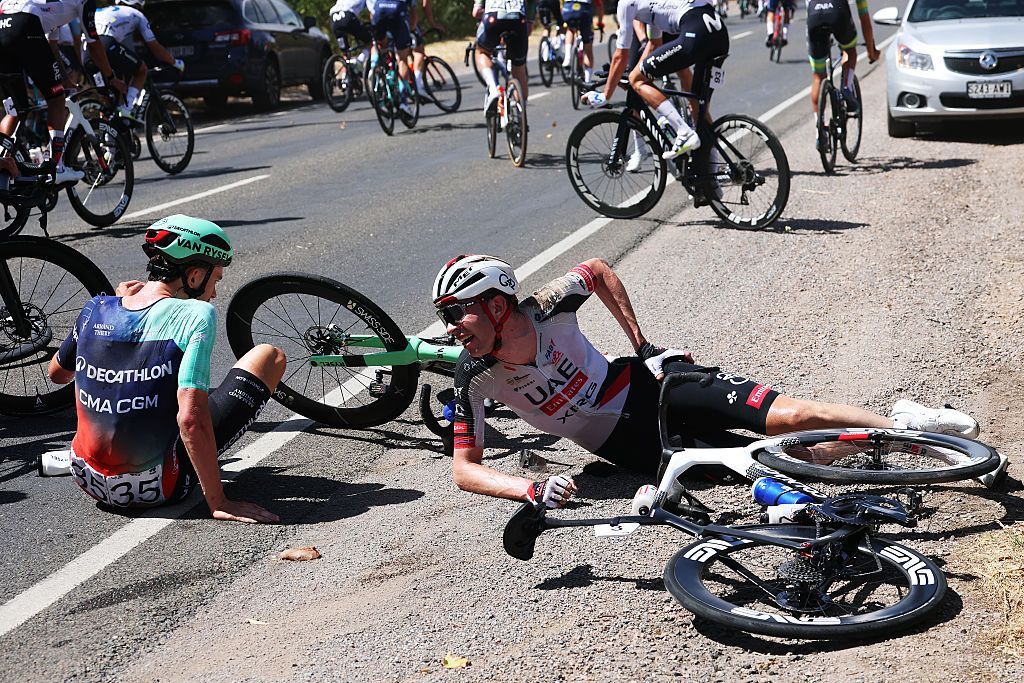
It used to be rather hard to get stats of injuries but lately even popular cycling orientated news sites report them. Kudos to that. So you feel it's sustainable to have 40 riders out in early March due to the injuries with gazillion more lucky enough to only crash?
You do realise this is actually a
weakness in your argument, right? That the number of injuries might not be going up as much, it's just that reporting of those injuries is better now?
I largely feel that we have a similar number of accidents, but the problem is that the péloton is much faster nowadays (meaning the impacts of crashes are more severe) and the focusing of the elite péloton into a smaller number of teams, increasing the depth of the pro péloton, means that the bunch stays together longer so when there
is an incident, more riders are dragged into it. This is why I actually think longer and more difficult races might actually be a
good thing, because while it introduces fatigue, it also requires more effort management, and the riders can't just go full send at 100% at all times, so the consequences of an error will be lower on average.
This is something that won't start to represent a real issue to pro road peloton, maybe even existential one? At least in terms of positioning it as a mainstream sport.
Why wouldn't it?
You're tilting at windmills, Abi. You're inventing a situation in your head, imagining the worst possible outcome to it, and screaming that everybody needs to believe in your invented apocalyptic scenario. There have been a high number of injuries in the early season this year that mean that the people in charge of the sport need to consider whether any action can or should be taken. Nothing more, nothing less. It doesn't present a danger to the existence of professional cycling any more than a few high-profile players getting their legs broken presents a danger to the existence of professional soccer.
I expected some backlash on this one and some of your concerns are valid but you have to understand that so far i haven't seen any discussion about it and one could i guess need some guidance on where to put a discussion on women periods.
The decision, on why i posted is here is:
- It has to be discussed somewhere.
- It shouldn't be discussed in some obscure topic.
- We somehow determined that at least in near future nobody will do anything to prevent actual crashes.
- Ultimately mid term strategy will be to mitigate, that is to reduce injuries.
- Health is hence what we can do, the thing we can do about crashes.
- Health is what we can furthermore substantially improve, at least on the woman side, by settings such rules and conditions, for biological processes to be ongoing as normal.
So in short, by athletes getting better apparel and by that reducing the number of injuries and by setting some thresholds, as for example minimal percentage of body fat still allowed to enter a GT, by doing that we can substantially improve athlete health.
As for somebody doing anything to actually reduce number of crashes. Who? It's riders fault anyway, isn't it? So all in all health it is then, beyond that forget it, to much reluctance involved for now.
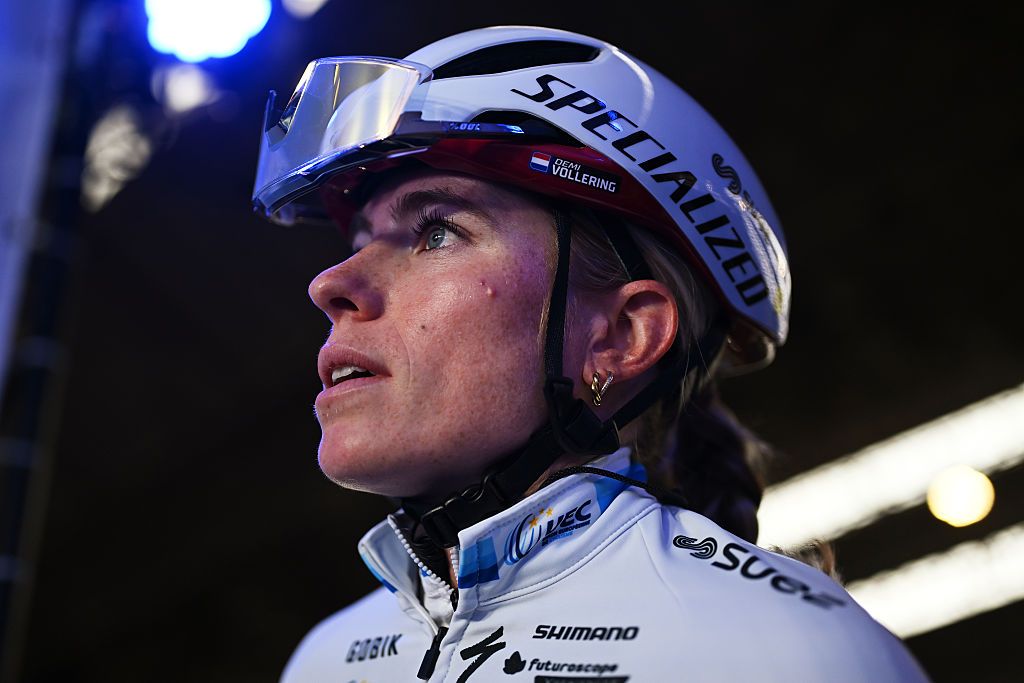
But the article has nothing to do with crashes, and has absolutely nothing to do with apparel. It's completely off-topic for this thread. You could put it in the general women's cycling thread, you could put it in the Demi Vollering thread, you could make a new thread to discuss it.
What's more, you didn't add the article to say "and here's a completely different issue that I think we need to discuss", you added it pretending it was somehow a related issue to the number of crashes in the early season in 2026 and backed up your point.
And then turning around and summarising by throwing your crusade about protective apparel in at the end as though what Vollering was talking about had
anything whatsoever to do with your obsession with airbags is
exactly what I mean by how your disingenuous arguments detract from the actual good points you have.
And I still remember how when you first came into this thread, you didn't actually care about rider safety in the slightest, since you spent the whole time arguing about ways to stop GC riders losing time when accidents happened, because you were upset that Primož Roglič falls over a lot.







 Facebook
 Twitter
 Instagram