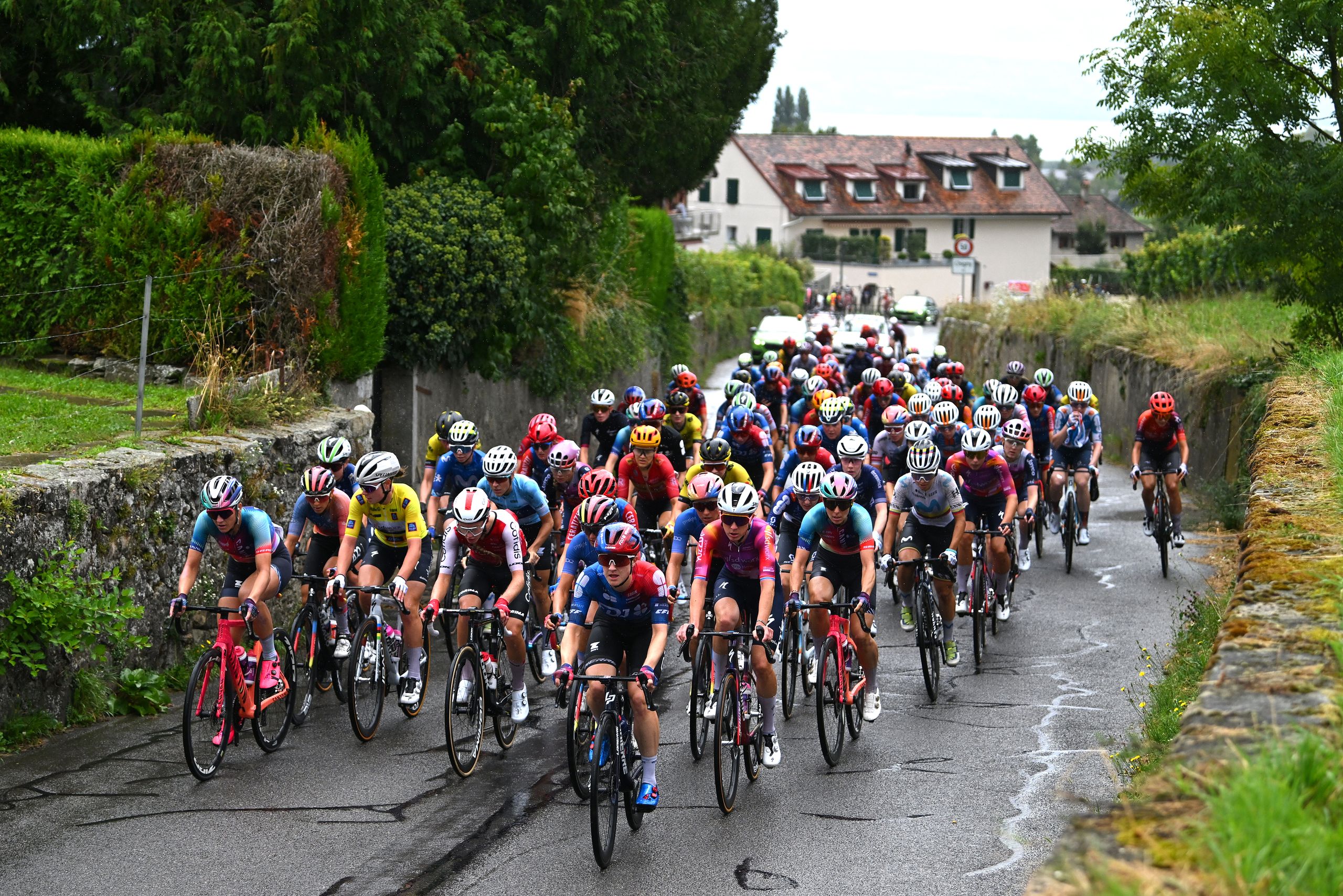
Crashes, what can be done?

Page 78 - Get up to date with the latest news, scores & standings from the Cycling News Community.
May 29, 2019
11,543
11,886
23,180

AFAIK first dedicated article on CN, another milestone. I agree with the sentiment, that is a whole lot of UAE riders already crashed and got injured this year and Jonas did hit the deck too on a training ride. Narváez highly likely could have walked away from the crash and to continue with the race, wearing it.
 
May 29, 2019
11,543
11,886
23,180
Let's first see if it actually  works.

For sure.

Many owe CyclistAbi an apology, first Gee gets away with it now this.


No need for any apology we made it together.

A friendly pat at the back, and it's activated.

Yeah, basically the only buddy you have in the time of need.

Will it be used for amazing aerodynamics for the ITT.;) LOL Would Rem co. lose his advantage :). I know it's CyclistAbi's dream but could be shenanigans too. :cool:

It was the same thing with helmet if i still remember correctly. You gain advantage and not to lose it, wearing it. As for Remco i don't want for him to lose any advantage, we are teammates now. Hopefully Specialized will bring even better equipment now.

I really hope we'll get to something like this in France this season:

bULWYIr.jpeg

First mass deployment IMHO will be special.

Hardly new or unproven. Every back country skier either has one...or should. Anyone on an FIS level speed discipline has had them for years and yes, they work.
It does nothing for the shoulder or injuries to the handlebars. If some helmet modifications are made to protect from backwards crash momentum it will be a life saver. Not a career saver, though. Cyclists hit their ribs, face, hands and almost everything that contributes to navigation. Saving lives is a good thing, though.
Next step: make ranking UCI officials and Race promoters ride Ebikes at race speeds through urban street furniture in a pack with local Cat 4 riders. That might clear up the major issue for pointless injuries.
Then make packs smaller.

Indeed, technology is there already now it needs to penetrate pro peloton.

I'd like to see it work, but it's way harder to implement in cycling than in skiing. In addition to the need to be able to deflate it very quickly that's already been discussed, if it adds weight to the jersey, negatively impacts aerodynamics and/or interferes with the body's ability to deal with excess heat, that would be a big problem in cycling when it isn't in skiing.

You could mitigate some of that by making everyone wear an airbag, because tbh I think that if it was implemented today, wearing one would negatively impact your performances compared to other riders. And as we've seen time and again, if cyclists have to choose between optimising performance and maximising safety, they'll choose the former over and over. The problem is that I doubt the technology is even close to ready for a sport-wide rollout.

The truth is not all that hard at all, deflation is not a real problem, weight is negligible, aerodynamics can actually improve and heat is not a real issue either. Somewhere in the range of carrying a gel or two in the back pocket.
 
  • Like
Reactions: Oldman
Jun 19, 2009
6,215
1,240
20,680
IMO, the single element impacting actual use will be heat management. It's surely possible they could make a breathable jersey liner that can be inflated via motion monitors like the helmet crash sensors. The "deflation" could also be a product of the liner's breathability as pressure could exit both the fabric and a release valve that opens after a number of seconds past the impact. Hopefully it could resist abrasion and still be printable with the same garish color combinations we enjoy in jersey design.
Realistically a jersey-configured element will primarily protect the chest, back and internal organs to prevent catastrophic injuries. It can't do much for impalement or cuts from hitting roadside risks or bike parts. Since the head is the most sensitive part of anatomy it also can't increase vulnerability there.

The real risk as we all keep pointing out: the human factor of race course design and obstacles. Unseen curbs, signs and super-slick pavement markings are more dangerous than most cyclist behavior; most erratic riding is a product of those obstacles anyway.
 
May 29, 2019
11,543
11,886
23,180
@Oldman

Heat will prove to be much lesser issue then anticipated and besides for now this system can be used on races such as PR. On where the impact of the most common potential issues people mention is basically non existent. As for the summer, at first this likely won't be mandatory so it's up to the teams and riders to wear it or not. It will be interesting to see if teams and riders will chose to wear it or not. As for protection i feel that the hip area will be incorporated too. Injuries there are rather common and a bit of air should do miracles for the hip area also. Merckx, crashed recently, would benefit from wearing it but unfortunately we were not there yet.
 
  • Like
Reactions: Oldman
Might be a good time to ask how the airbag system might have helped minimize what this crash resulted in? Davide Stella with horrendous road rash :( . Not a cure all I guess.


But what caused this crash and how could it have been avoided? Lanterne Rouge says its the worst he's seen. The UCI gear restriction for "rider safety" certainly didn't help.
 
May 29, 2019
11,543
11,886
23,180
Might be a good time to ask how the airbag system might have helped minimize what this crash resulted in? Davide Stella with horrendous road rash :( . Not a cure all I guess.


But what caused this crash and how could it have been avoided? Lanterne Rouge says its the worst he's seen. The UCI gear restriction for "rider safety" certainly didn't help.

Rex highly likely wouldn't have broken his spine 3 times, as for Stella an airbag could make a difference if it would be already extended to the hip area. But ultimately more road rash resistant fabric should be used here. It's on the market already it's just that the teams haven't yet opt-in to use it. But of course a bit of air would almost always reduce the severity of road rash and bruising compared to a piece of fabric.
 
Sep 5, 2016
5,465
8,648
23,180
I know it's an almost exclusively used technique in amateur racing, but time bonus or money bonuses could have been used today in UAE race. With radios there is no reason not to have some random time bonus sprints to be announced. Something definitely needs to be done to keep peloton from becoming a big thick dangerous blob and nobody has inspiration to string it out. Offering a prime or two to spur racers into action may sound a bit much for pros but today was really scary, riders in a big reddish orange sea of seemingly endless sand, they visibly slowed ..Guys body and shoulder bumping in the middle of the race looking like bored sardines. I am just glad nobody crashed out. Who knows if offering a few @5 second bonuses would have got them going.
 
May 29, 2019
11,543
11,886
23,180
All in all it's crazy, on just how much crashing and injuries already involved, even death on training, when season just starting. This is just not sustainable and it's hurting this sport image to the extent it might go beyond repair.

I don't feel that endless debates about radios yes, radios not ... can in any meaningful way improve things. Revolutions are needed here and are needed ASAP. Before it's too late and the bad image of this sport becomes irreparable.
 
  • Like
Reactions: Wyndbrook
Oct 4, 2020
1,855
2,020
8,680
An atitude change is perhaps the most important element to reducing the amount of crashes.
Improvements in safely of courses and rider protection are important.
But there still seems to be far too much of the 'thats the way its always been' attitude from too many, be they UCI, organisers, team, riders, press and fans.
Riders are party suffering, so perhaps some straight forward action where it hurts is needed.
You cause a crash you get ban for a month or a number of races. Do it again and its six months of racing season.
 
May 29, 2019
11,543
11,886
23,180
Everybody in the peloton uses a garmin or similar. They have a gps and crash detection feature.
Is it not used or what?

There was already some controversy emerging in regards to position tracking:


Likely some privacy concerns will need to be sorted out first as i guess not all agree that such data should be collected in real time and after to be owned by some 3rd party. If primary concern is safety then i guess such transmitter can work independently, data doesn't need to be collected in real time, and in case of anomaly to send out distress signal. If it would work like that then i don't see on why anybody would object wearing it. One can even build a sustainable business around it in offering the system to recreational cyclists if there should be economic side to it also. Garmin AFAIK already offers something similar.

Looks like things are moving forward in regard to airbag systems:

The objectives of this initiative are as follows:

  • regarding airbag systems: to define a clear framework and appropriate standards to enable the development and integration of such devices into cycling (in competition and training);
  • regarding technical apparel: to study the integration of airbag solutions into clothing and to identify ways to further strengthen the protection offered by textiles.
For the UCI, it is essential to bring together the various relevant parties to:

  • analyse the relevance of this equipment across the different disciplines;
  • develop a regulatory framework defining clear and relevant standards for competitive cycling;
  • encourage coherent development of protective equipment that meets the needs of riders and teams, and is in line with the industrial realities faced by manufacturers.
The UCI invites all relevant parties to express their interest by 15 March 2026 via the following form: https://wkf.ms/4sSpdhn. The form is also available in the Equipment section of the UCI website.


Hopefully hence some fresh air to enter the pro peloton rather soon with an agreement regarding all parties involved.
 
Last edited:
What we also need is protection from road rash not just blunt force trauma prevented by airbags. In my mind that can only be achieved by avoiding crashing.

A high percentage of injuries in races occur in the final third of a race, likely due to fatigue, which affects handling and leads to muscle strains. This is also the case for professionals.
 
Aug 13, 2024
869
907
4,180
What we also need is protection from road rash not just blunt force trauma prevented by airbags. In my mind that can only be achieved by avoiding crashing.

A high percentage of injuries in races occur in the final third of a race, likely due to fatigue, which affects handling and leads to muscle strains. This is also the case for professionals.
Much more likely to do with increased fight for position. Speeds also likely higher towards key dangerous points in parkour last third.

Just to state the obvious: Riders are very fatigued going into Col de la Loze this year in the Tour. About zero percent chance of crashing.

I wrote a whole manifestoesque post on this thread some time ago about it. The real thing that would actually help enormously and is a complete no-brainer is: Reducing the size of the Peloton. At least by half.

It is both logically (due to race dynamics and the cost of being further back) and empirically the case that crashes would be much less frequent if that happened.

As a side benefit: It would also lead to much more open racing with smaller teams and more elite selection of riders for races.

But I got nothing but terrible counterarguments and criticism for raising that point last time, so I don't want to open that box again. Obviously unlikely to happen given the structure of the sport. The top riders should be for it, but their teammates are all against it (loose their job). Teams should be for it (less riders to pay and same visibility), but they don't really care it seems. UCI don't even do the basics right so...
 
Last edited:
May 29, 2019
11,543
11,886
23,180
What we also need is protection from road rash not just blunt force trauma prevented by airbags.

It seems that improvements in both areas will be encouraged in the future:

regarding technical apparel: to study the integration of airbag solutions into clothing and to identify ways to further strengthen the protection offered by textiles.

In my mind that can only be achieved by avoiding crashing.

Indeed but realistically i feel that high volume of crashes when racing and training is here to stay for a while. So likely it makes sense to work on mitigating that ASAP, reducing injuries. For that to be No.1 priority and the rest likely to improve over time with better education and guidance. Likely involving behaviour changes, this usually takes time. Up to a generation or a few.
 
  • Like
Reactions: Cookster15
May 29, 2019
11,543
11,886
23,180
Reducing the size of the Peloton. At least by half.

It's doable in bunch sprints but somehow there seems to be resistance in implementing this change. Maybe they should try it out on a race or two as people might not even understand on what that would mean. And basically act emotionally. There really is no need for cyclist not contesting the stage to be there, hence last couple of km could easily be neutralised and only the elite to contest it.
 
Much more likely to do with increased fight for position. Speeds also likely higher towards key dangerous points in parkour last third.

Just to state the obvious: Riders are very fatigued going into Col de la Loze this year in the Tour. About zero percent chance of crashing.

I wrote a whole manifestoesque post on this thread some time ago about it. The real thing that would actually help enormously and is a complete no-brainer is: Reducing the size of the Peloton. At least by half.

It is both logically (due to race dynamics and the cost of being further back) and empirically the case that crashes would be much less frequent if that happened.

As a side benefit: It would also lead to much more open racing with smaller teams and more elite selection of riders for races.

But I got nothing but terrible counterarguments and criticism for raising that point last time, so I don't want to open that box again. Obviously unlikely to happen given the structure of the sport. The top riders should be for it, but their teammates are all against it (loose their job). Teams should be for it (less riders to pay and same visibility), but they don't really care it seems. UCI don't even do the basics right so...
Does the recent increase in incidence of crashes correlate with size of the peloton? I don't think so? Currently grand tours have 184 starters (23 teams). The largest number of starters in a single Tour de France was 210 in 1986 (21 teams of 10). Evidence suggests that there are more frequent and severe crashes in professional cycling today compared to the mid-1980s when there were bigger pelotons.

Although reducing by half I am sure will have a big effect.

Speeds and number of riders jostling for position in sprint finishes are definitely an issue. Maybe limit the gearing - we now have 10 tooth rear sprockets? 53/12 was enough. But most high profile crashes of recent years were not sprints - e.g. Froome, Vingegaard and Pogacar (LBL). Fabio Jakobsen an obvious exception.
 
Aug 13, 2024
869
907
4,180
It's doable in bunch sprints but somehow there seems to be resistance in implementing this change. Maybe they should try it out on a race or two as people might not even understand on what that would mean. And basically act emotionally. There really is no need for cyclist not contesting the stage to be there, hence last couple of km could easily be neutralised and only the elite to contest it.
Sure, that would make total sense. But then just implement it across the board in every race by reducing the peloton size from 180 to 90.

What there is no reason to is having 180 guys fight for their lives (almost literally) to get to a tight corner in a small french town 20 km from the finish line. What happens at 60 kph on a 4 meter wide road with 180 cyclists? Some people crash and when they do - they bring many others down with them. Which is BAD.

The 90 worst riders even in in the tour contribute almost nothing to the race in terms of spectator value. In fact, I would say that they make the races easier to control and thus more negative almost always, and increase crash risk.
 
May 29, 2019
11,543
11,886
23,180
@Pozzovivo

Changes implemented likely shouldn't kill the ethos of this sport. And even with 90 riders i do feel that there would still be some bunch riding in the middle of the stages. What comes to mind is maybe one could choose to not ride irrationally over there? But here i guess one has to understand this are humans, athletes at their prime, some power play is to be expected. So all in all if 9 riders would be riding, instead of 180, we would still get some of that.
 
Aug 13, 2024
869
907
4,180
Does the recent increase in incidence of crashes correlate with size of the peloton? I don't think so? Currently grand tours have 184 starters (23 teams). The largest number of starters in a single Tour de France was 210 in 1986 (21 teams of 10). Evidence suggests that there are more frequent and severe crashes in professional cycling today compared to the mid-1980s when there were bigger pelotons.
YES. YES THEY DO!!! But here I go again. The last time I spent hours explaining to people why comparing era's are such a noisy way to determine this. But empirically, the bigger the peloton at any given phase and speed, the bigger the danger of crashes.

Now, which stages have big bad crashes with a lot of riders involved and which don't? The ones were the peloton is large vs are in small bunches? Even breakaway groups of 30-40 almost never crash, and when they do it typically only involves one or two riders. Because the rest can move out of the way...

And you can't count only number of crashes - number of crashed riders is a better measure, and the impact of the crashes matter a lot because it's the human that we actually care about.

But here I go again. I can't do this to myself again.
 
Last edited: