


- Sep 20, 2017
- 12,776
- 23,938
- 28,180
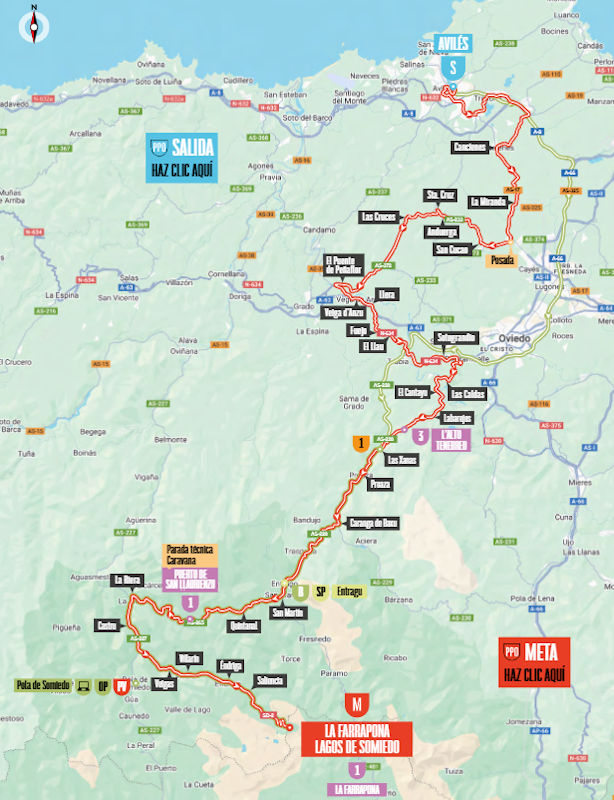
The first of a whopping two stages where attacking from distance makes some degree of sense. However, with a pretty easy run-in to the penultimate climb and a suboptimal GC situation, this stage could also go the way of Pal and Cerler.
Map and profile

Start
A transfer to the coast has taken the riders to Avilés, the third-largest city in Asturias. Although the area had likely been settled previously, the first evidence of Avilés as anything resembling a town is from the 10th century. In 1085, Avilés was officially granted city rights by the king of León. The charter with which he did so is significant in its own right, as it is the oldest known document in the Asturian language (although the surviving copy is a 1155 reaffirmation). Avilés grew to be the most important of the Asturian ports, with the salt trade in particular thriving. In 1479, a large part of the town burned down. The royal response was on the one hand to invest in reconstruction and on the other hand to waive a number of duties, which shows the importance of the town to the monarchy. The weekly market on Monday which was established as a part of this program exists to this day.
In the 17th century, Avilés was overtaken by Gijón/Xixón, in part because the navigability of its estuary seems to have deteriorated around this time. In the 19th century, the estuary was partially reclaimed from the sea, with the remainder being canalised and effectively turned into a dock. This, in combination with some early industrialisation, reversed the town’s decline, however there was no space to expand the port and thus truly competing with Gijón was impossible. Thus, Avilés remained a somewhat minor port and industrial town until after the Second World War, when it became a centrepiece of the Francoist government’s industrial investments. The arrival of steel, aluminium, zinc and glass works, causing the population to almost quadruple to over 80000 people between 1950 and 1970 but also making Avilés one of the most polluted cities in Western Europe. With the arrival of the industrial crises from the 1970s onwards, the city has stagnated somewhat, on the one hand still heavily leaning on its industries but on the other hand feeling the need to redevelop. The most visible sign of the latter is the Oscar Niemeyer Cultural Centre, named for its modernist architect, who is most famous as the lead designer of Brasília. It was one of his last projects, with Niemeyer drawing up the design in his late nineties and the opening taking place in 2011, when he was 103. The city has attempted to promote the complex by attracting various celebrities. To quote the English Wikipedia article:
…oops.
On the subject of controversial people, Avilés’ most notable son is Pedro Menéndez de Avilés, who in 1565 founded St. Augustine in Florida. This city is the oldest continuously inhabited place founded by Europeans in the United States (if you disregard Puerto Rico). This will be the seventh time the city hosts the Vuelta, the last two outings being the starts of the 2011 and 2013 Angliru stages.
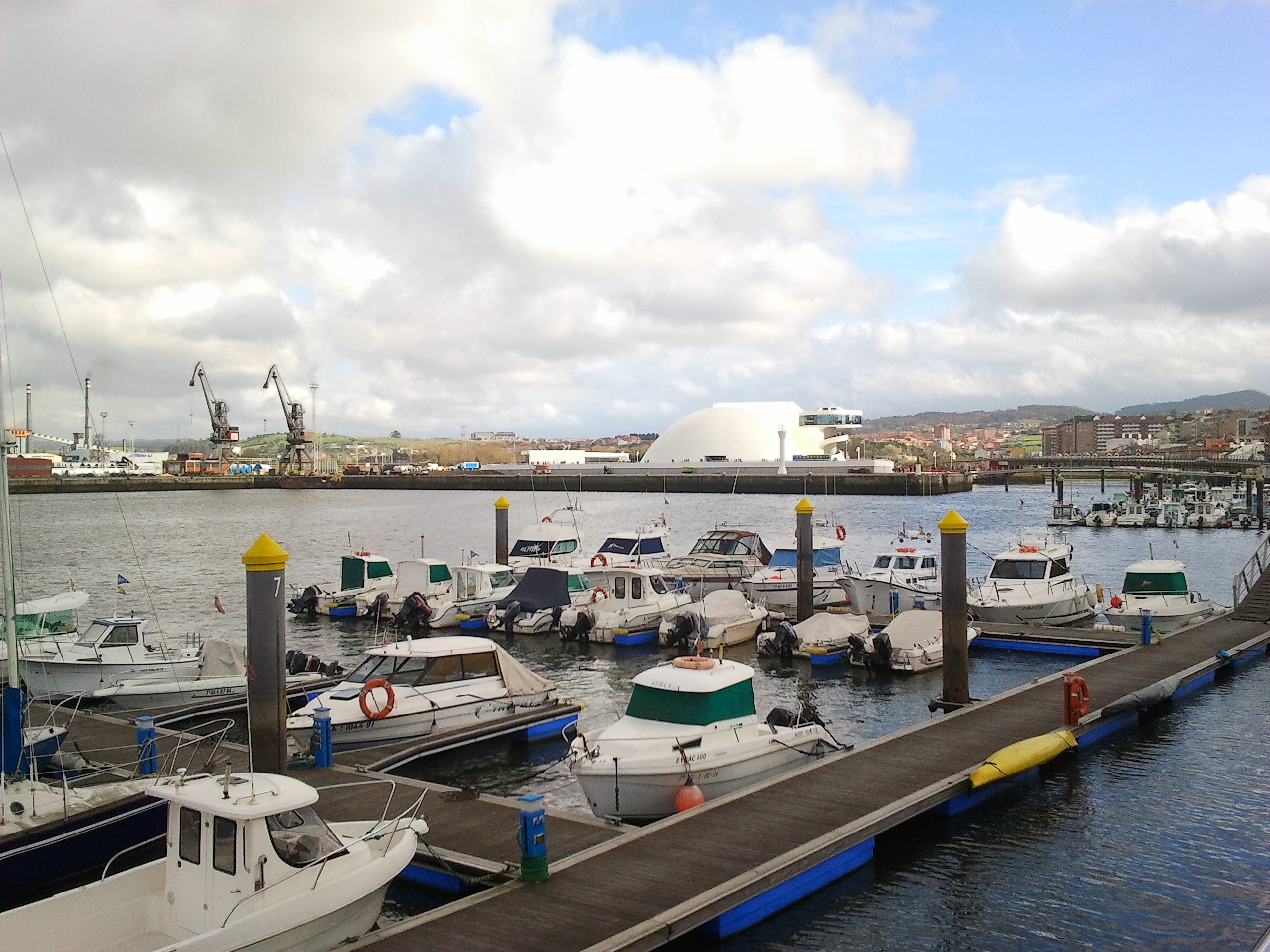
The Niemeyer Centre is in the middle of the picture (by SurfAst at Wikimedia Commons)
The route
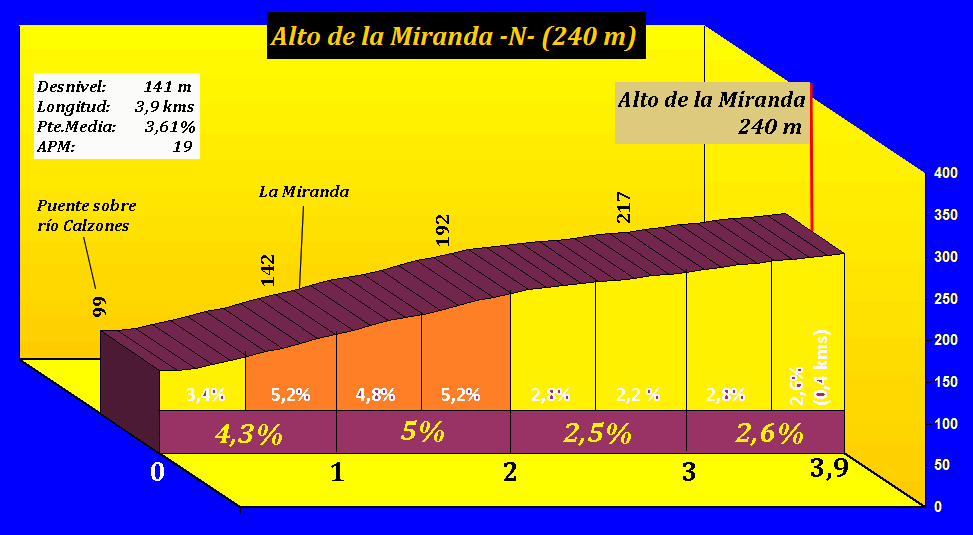
The start of the stage is rolling, but never tough. The main climb in the first 45 kilometres is the one before Posada, and goes by the name of Alto/Altu de la Miranda. As you can see, it’s pretty easy.
After said 45 kilometres, the riders reach the valley of the Nalón, one of the main rivers in the region. However, the road doesn’t follow the valley floor, and thus the going actually gets slightly hillier. Up first is the Alto de Fuejo/Altu de Fuexu, followed by the Alto de Sograndio de Arriba/Altu de Sograndio Riba. I only have a profile of the latter.

(source - reuploaded externally because the forum software won't take Blogspot hotlinks/Google blocks Blogspot hotlinks, not sure which)
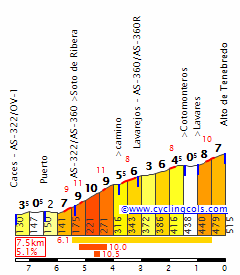
After this, it’s time for actual climbing. Unipublic have gone for a strange Spanish-Asturian hybrid official name – had they committed to either, it would have been labeled as either Alto de Tenebredo or Altu Tenebreo. Either way, the side we are descending is far steeper, but even this side is not a bad climb at all.
And then, after a very steep but wide downhill, we get to the part of the stage that’s simply bad. If you turn north at the end of the descent, you soon reach the bottom of the side of Cruz de Linares/Llinares that was climbed in 2023, whereas if you turn south (which is where we’re headed), you quickly pass the road they descended on that stage. This is the most obvious of the many ways they could have added hard climbs to this stage, but instead we get 20 kilometres of valley road into the penultimate climb of the day, passing through the intermediate sprint in Entragu/Entrago. Said climb is the fourth-hardest of the race, the Puertu de San Ḷḷaurienzu/Puerto de San Lorenzo (the Vuelta is using the Asturian name on the map and profile and the Spanish name in the time schedule – make it make sense). Since its introduction in 2006, it has become one of the most common Vuelta climbs of the past 20 years – and rightly so, it’s hard from both sides and it connects to a host of other good climbs.

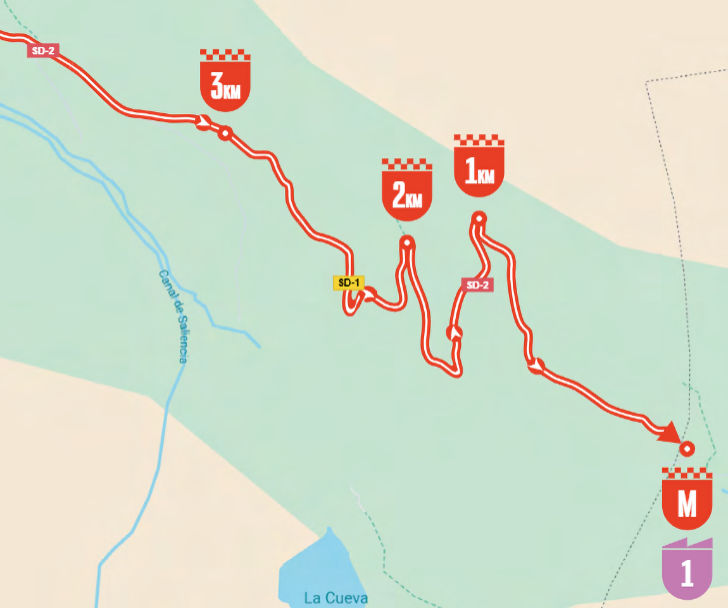
At the bottom of the multi-stepped descent, there are 23.8 kilometres left to race, all of them being uphill. The first 5.2 kilometres of this final part of the stage are uncategorised, and rightly so: they average just 2.4% and aside from a tiny ramp peaking at 10%, it’s all false flat. Then, the categorised part of the Alto/Altu de la Farrapona begins. The second section of the finale is the irregular road that heads up into the narrow Saliencia valley: it’s irregular, with the steepest section of the whole climb, but for the most part not overly selective. At 6.1 kilometres to go, the riders reach the end of the valley, from where the road kicks up at a highly consistent 8.9%.

Finish
La Farrapona is the main gateway to the Lagos de Somiedo/Llagos de Somiedu, a cluster of post-glacial mountain lakes just south of the border with León. Together with the higher Ubiña massif just to its east, this region forms a pretty spectacular part of the Asturian mountains that is quite underdiscussed compared to the much more touristic Picos de Europa. In that light, it makes sense that the regional government is trying to promote the area, and thus we are headed here for the fourth time since its introduction in 2011. Both that year’s stage and the 2020 one were the day before Angliru and didn’t really deliver as a result, whereas the 2014 stage came at the end of a mountain bloc (as is the case here) and was raced quite aggressively. However, it should be noted that the 2014 stage (although sharing the same penultimate climb) was much harder, so there is no guarantee of a similar scenario unfolding on this stage.

(picture by Fernando García Redondo at Flickr)
Map and profile
Start
A transfer to the coast has taken the riders to Avilés, the third-largest city in Asturias. Although the area had likely been settled previously, the first evidence of Avilés as anything resembling a town is from the 10th century. In 1085, Avilés was officially granted city rights by the king of León. The charter with which he did so is significant in its own right, as it is the oldest known document in the Asturian language (although the surviving copy is a 1155 reaffirmation). Avilés grew to be the most important of the Asturian ports, with the salt trade in particular thriving. In 1479, a large part of the town burned down. The royal response was on the one hand to invest in reconstruction and on the other hand to waive a number of duties, which shows the importance of the town to the monarchy. The weekly market on Monday which was established as a part of this program exists to this day.
In the 17th century, Avilés was overtaken by Gijón/Xixón, in part because the navigability of its estuary seems to have deteriorated around this time. In the 19th century, the estuary was partially reclaimed from the sea, with the remainder being canalised and effectively turned into a dock. This, in combination with some early industrialisation, reversed the town’s decline, however there was no space to expand the port and thus truly competing with Gijón was impossible. Thus, Avilés remained a somewhat minor port and industrial town until after the Second World War, when it became a centrepiece of the Francoist government’s industrial investments. The arrival of steel, aluminium, zinc and glass works, causing the population to almost quadruple to over 80000 people between 1950 and 1970 but also making Avilés one of the most polluted cities in Western Europe. With the arrival of the industrial crises from the 1970s onwards, the city has stagnated somewhat, on the one hand still heavily leaning on its industries but on the other hand feeling the need to redevelop. The most visible sign of the latter is the Oscar Niemeyer Cultural Centre, named for its modernist architect, who is most famous as the lead designer of Brasília. It was one of his last projects, with Niemeyer drawing up the design in his late nineties and the opening taking place in 2011, when he was 103. The city has attempted to promote the complex by attracting various celebrities. To quote the English Wikipedia article:
Other Hollywood stars such as Kevin Spacey visited the town several times in collaboration with the center (premieres, conferences, and theatre plays)
…oops.
On the subject of controversial people, Avilés’ most notable son is Pedro Menéndez de Avilés, who in 1565 founded St. Augustine in Florida. This city is the oldest continuously inhabited place founded by Europeans in the United States (if you disregard Puerto Rico). This will be the seventh time the city hosts the Vuelta, the last two outings being the starts of the 2011 and 2013 Angliru stages.
The Niemeyer Centre is in the middle of the picture (by SurfAst at Wikimedia Commons)
The route
The start of the stage is rolling, but never tough. The main climb in the first 45 kilometres is the one before Posada, and goes by the name of Alto/Altu de la Miranda. As you can see, it’s pretty easy.
After said 45 kilometres, the riders reach the valley of the Nalón, one of the main rivers in the region. However, the road doesn’t follow the valley floor, and thus the going actually gets slightly hillier. Up first is the Alto de Fuejo/Altu de Fuexu, followed by the Alto de Sograndio de Arriba/Altu de Sograndio Riba. I only have a profile of the latter.
(source - reuploaded externally because the forum software won't take Blogspot hotlinks/Google blocks Blogspot hotlinks, not sure which)
After this, it’s time for actual climbing. Unipublic have gone for a strange Spanish-Asturian hybrid official name – had they committed to either, it would have been labeled as either Alto de Tenebredo or Altu Tenebreo. Either way, the side we are descending is far steeper, but even this side is not a bad climb at all.
And then, after a very steep but wide downhill, we get to the part of the stage that’s simply bad. If you turn north at the end of the descent, you soon reach the bottom of the side of Cruz de Linares/Llinares that was climbed in 2023, whereas if you turn south (which is where we’re headed), you quickly pass the road they descended on that stage. This is the most obvious of the many ways they could have added hard climbs to this stage, but instead we get 20 kilometres of valley road into the penultimate climb of the day, passing through the intermediate sprint in Entragu/Entrago. Said climb is the fourth-hardest of the race, the Puertu de San Ḷḷaurienzu/Puerto de San Lorenzo (the Vuelta is using the Asturian name on the map and profile and the Spanish name in the time schedule – make it make sense). Since its introduction in 2006, it has become one of the most common Vuelta climbs of the past 20 years – and rightly so, it’s hard from both sides and it connects to a host of other good climbs.
At the bottom of the multi-stepped descent, there are 23.8 kilometres left to race, all of them being uphill. The first 5.2 kilometres of this final part of the stage are uncategorised, and rightly so: they average just 2.4% and aside from a tiny ramp peaking at 10%, it’s all false flat. Then, the categorised part of the Alto/Altu de la Farrapona begins. The second section of the finale is the irregular road that heads up into the narrow Saliencia valley: it’s irregular, with the steepest section of the whole climb, but for the most part not overly selective. At 6.1 kilometres to go, the riders reach the end of the valley, from where the road kicks up at a highly consistent 8.9%.
Finish
La Farrapona is the main gateway to the Lagos de Somiedo/Llagos de Somiedu, a cluster of post-glacial mountain lakes just south of the border with León. Together with the higher Ubiña massif just to its east, this region forms a pretty spectacular part of the Asturian mountains that is quite underdiscussed compared to the much more touristic Picos de Europa. In that light, it makes sense that the regional government is trying to promote the area, and thus we are headed here for the fourth time since its introduction in 2011. Both that year’s stage and the 2020 one were the day before Angliru and didn’t really deliver as a result, whereas the 2014 stage came at the end of a mountain bloc (as is the case here) and was raced quite aggressively. However, it should be noted that the 2014 stage (although sharing the same penultimate climb) was much harder, so there is no guarantee of a similar scenario unfolding on this stage.
(picture by Fernando García Redondo at Flickr)






































 Facebook
 Twitter
 Instagram