You should start your own thread with your own list, and explanations how you calculate. Enough from me in this thread.To me personally the best climber does not only win but uses the least amount of effort in doing so. This i guess could theoretically mess with the perception of tiers. As i guess some couldn't care less if it takes 10 or 9 minutes, to finish on top. For as long as you take the win and preferably for others to do most of the work. That is IMHO a pinnacle of a proper climber. Maximising the results while minimising the effort.


Comprehensive Climbers Ranking
Page 16 - Get up to date with the latest news, scores & standings from the Cycling News Community.
You are using an out of date browser. It may not display this or other websites correctly.
You should upgrade or use an alternative browser.
You should upgrade or use an alternative browser.
- May 29, 2019
- 11,914
- 12,215
- 23,180
You don't have an opinion on what a proper climber is. Your opinion is that Roglic is the greatest thing ever, and everything else follows from that.To me personally the best climber does not only win but uses the least amount of effort in doing so. This i guess could theoretically mess with the perception of tiers. As i guess some couldn't care less if it takes 10 or 9 minutes, to finish on top. For as long as you take the win and preferably for others to do most of the work. That is IMHO a pinnacle of a proper climber. Maximising the results while minimising the effort.

- May 29, 2019
- 11,914
- 12,215
- 23,180

- Feb 20, 2012
- 55,389
- 46,696
- 28,180
Saw a chart that had Pog gaining 30s immediately then giving it back over the easier part of the climb as he attacked very hard to drop Evenepoel very close to the bottom.How much slower was the Pogacar group in EC compared with the Seixas group on saturday the first km of (long french name) climb?
Video by the channel called 'Charlie, Carbs & Cycling' or something

- Aug 13, 2024
- 979
- 1,048
- 5,180
Thanks! I realized while reading your response that I can just go on strava to get an idea.Saw a chart that had Pog gaining 30s immediately then giving it back over the easier part of the climb as he attacked very hard to drop Evenepoel very close to the bottom.
Video by the channel called 'Charlie, Carbs & Cycling' or something
- After 1,2 kms Pogacar group is 28 seconds behind.
- Pogacar attacks and have made up 15 seconds at the time Evenepoel loses his wheel.
- Pogacar continues to close the gap, bringing it to even at 4km.
- Remco go back to being 30+ seconds behind.
- The gaps remian relatively stable last 2 kms. Remco lose maybe 10 seconds more on both.

- Apr 30, 2011
- 48,897
- 31,539
- 28,180
Saw a chart that had Pog gaining 30s immediately then giving it back over the easier part of the climb as he attacked very hard to drop Evenepoel very close to the bottom.
Video by the channel called 'Charlie, Carbs & Cycling' or something

labrosse went ham for the first ~1'40"
- Feb 20, 2012
- 55,389
- 46,696
- 28,180
Guess I misread the chart
labrosse went ham for the first ~1'40"
- Apr 30, 2011
- 48,897
- 31,539
- 28,180
yes its very dumb to have the slower rider at -28s ( the clue is that the speed is also lower )Guess I misread the chart
- Feb 20, 2012
- 55,389
- 46,696
- 28,180
I only very briefly watched the image pass by tbh. I don't have Strava premium so I cann't make those comparisons myself.yes its very dumb to have the slower rider at -28s ( the clue is that the speed is also lower )
Anyway, I think everything really points to Pogacar doing a veeery suboptimal climb despite the race being harder, leading me to believe this climb in particular is way overindexed
- Feb 7, 2026
- 244
- 418
- 1,630
Pogacar clearly did a suboptimal climb with Belgium pacing slowly at the beginning. Absolutely nuking the bottom like Seixas is not optimal either. Seixas also lost a bit of time in the flatter section with Jorgenson in the wheel.
Irregular climbs like this are seldom paced consistently, which is why I give bonus points. I am reasonably certain about the watts Seixas pushed, so it was a phenomenal performance regardless of the exact adjustment.
He obviously was on a great day, let's see if he can repeat it on a longer climb. Carapaz also did a one-off performance like this in the Giro last year that he could not repeat (yet).
Irregular climbs like this are seldom paced consistently, which is why I give bonus points. I am reasonably certain about the watts Seixas pushed, so it was a phenomenal performance regardless of the exact adjustment.
He obviously was on a great day, let's see if he can repeat it on a longer climb. Carapaz also did a one-off performance like this in the Giro last year that he could not repeat (yet).
- Feb 20, 2012
- 55,389
- 46,696
- 28,180
I don't doubt the numbers were huge, but I also think conditions (sea level, perfect temperatures, and only like 140km into a race with the previous climb being done at super easy pace) all help out a lot.Pogacar clearly did a suboptimal climb with Belgium pacing slowly at the beginning. Absolutely nuking the bottom like Seixas is not optimal either. Seixas also lost a bit of time in the flatter section with Jorgenson in the wheel.
Irregular climbs like this are seldom paced consistently, which is why I give bonus points. I am reasonably certain about the watts Seixas pushed, so it was a phenomenal performance regardless of the exact adjustment.
He obviously was on a great day, let's see if he can repeat it on a longer climb. Carapaz also did a one-off performance like this in the Giro last year that he could not repeat (yet).
I'm curious what numbers you have for Blatten in Switserland 2024 as a reference for absolutely perfectly easy lead in to a W/kg bazooka
- Apr 30, 2011
- 48,897
- 31,539
- 28,180
almeida was just 4" quicker than yatesI don't doubt the numbers were huge, but I also think conditions (sea level, perfect temperatures, and only like 140km into a race with the previous climb being done at super easy pace) all help out a lot.
I'm curious what numbers you have for Blatten in Switserland 2024 as a reference for absolutely perfectly easy lead in to a W/kg bazooka
so blatten was better without adjustmentAdam Yates | 83.7 | PB: 88 (-9): 7.12 W/kg for 19:31 on Blatten R.I.P. (Suisse 2024)
- Feb 7, 2026
- 244
- 418
- 1,630
Of course the circumstances were not bad for a high performance, but absolutely nothing compared to Blatten which was almost better for performance than a pure MTT.
Adam Yates | 88 (-9): 7.12 W/kg for 19:31 on Blatten R.I.P. (Suisse 2024)
Almeida had slightly worse watts due to draft.
Adjustment 'only' (-9) since the climb is at middle altitude, would be even bigger otherwise. The absolute most I might go to on Saint Romain would be (-5) instead of the (-2 / -3) I gave. And this is only if I intentionally play with some parameters. It was definitely a better performance than Blatten (see gaps).
Edit: @Netserk you have studied my rankings better than Red Rick. In raw w/kg Blatten was slightly better (97 vs. 96), but almost the same.
Adam Yates | 88 (-9): 7.12 W/kg for 19:31 on Blatten R.I.P. (Suisse 2024)
Almeida had slightly worse watts due to draft.
Adjustment 'only' (-9) since the climb is at middle altitude, would be even bigger otherwise. The absolute most I might go to on Saint Romain would be (-5) instead of the (-2 / -3) I gave. And this is only if I intentionally play with some parameters. It was definitely a better performance than Blatten (see gaps).
Edit: @Netserk you have studied my rankings better than Red Rick. In raw w/kg Blatten was slightly better (97 vs. 96), but almost the same.
Last edited:
- Feb 7, 2026
- 244
- 418
- 1,630
An additional point I wanted to mention:
I started this work maybe half a year ago, and I am happy enough with my results that I feel comfortable posting them on this forum. But I still make slight adjustments to my general method and also to specific climbs from time to time.
Especially if a climb has not been used much, I get new info every time it is done competitively which can lead to retroactive adjustments.
So the Indexes I post here are not final and I plan to update my rankings at the end of the year. (These changes will probably be just 1 point here or there, nothing major).
I started this work maybe half a year ago, and I am happy enough with my results that I feel comfortable posting them on this forum. But I still make slight adjustments to my general method and also to specific climbs from time to time.
Especially if a climb has not been used much, I get new info every time it is done competitively which can lead to retroactive adjustments.
So the Indexes I post here are not final and I plan to update my rankings at the end of the year. (These changes will probably be just 1 point here or there, nothing major).
Last edited:
- Feb 20, 2012
- 55,389
- 46,696
- 28,180
Blatten is a natural negative split climb and they did the climb at a negative split, which is gonna bring down both the climbing time and the gaps at the end.
And I'm not really saying the model would be improved by increasing the discount because the number is too high, because there's many unknowns and you're never gonna adjust perfectly every time.
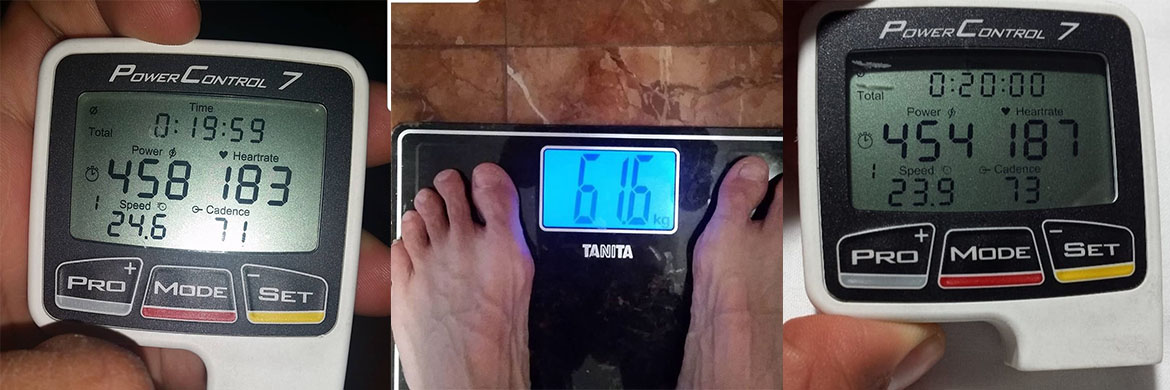
I tend to think we underestimate the W/kg riders can do when completely fresh in perfect conditions (ie: Contador doing 458 watts for 20 minutes) and as a result we may overrate performances when conditions were better than anticipated or riders were fresher than expected.
There was also a scientific study at one point where they had training data of TdF podium riders - one of which was Nibali in his TdF winning year by process of elimination and the 20 minute numbers he had were way higher than anything he did in races.
And I'm not really saying the model would be improved by increasing the discount because the number is too high, because there's many unknowns and you're never gonna adjust perfectly every time.
I tend to think we underestimate the W/kg riders can do when completely fresh in perfect conditions (ie: Contador doing 458 watts for 20 minutes) and as a result we may overrate performances when conditions were better than anticipated or riders were fresher than expected.
There was also a scientific study at one point where they had training data of TdF podium riders - one of which was Nibali in his TdF winning year by process of elimination and the 20 minute numbers he had were way higher than anything he did in races.
- Feb 7, 2026
- 244
- 418
- 1,630
The pool of riders who can do good w/kg completely fresh is much greater than the pool of rider who can do it in a normal race situation (which are basically the successfull riders).Blatten is a natural negative split climb and they did the climb at a negative split, which is gonna bring down both the climbing time and the gaps at the end.
And I'm not really saying the model would be improved by increasing the discount because the number is too high, because there's many unknowns and you're never gonna adjust perfectly every time.
I tend to think we underestimate the W/kg riders can do when completely fresh in perfect conditions (ie: Contador doing 458 watts for 20 minutes) and as a result we may overrate performances when conditions were better than anticipated or riders were fresher than expected.
There was also a scientific study at one point where they had training data of TdF podium riders - one of which was Nibali in his TdF winning year by process of elimination and the 20 minute numbers he had were way higher than anything he did in races.
I can see in my data that many riders who have never won anything (much) have their climbing PB in MTTs, while all of the top riders have their PB in road stages.
The fresh data from Contador (and Nibali) is actually a bit crazy and I would take it with a grain of salt. In my system, perfect conditions are (-15) = -0.375 w/kg adjustment, I doubt many current top riders could do a PB after my adjustment completely fresh.
Indurain in his hour record apparently pushed 509.5 Watts at 81 kg for 60 minutes. (Ganna beat that by like 3 kph with 50 Watts less, crazy how bad Indurain's CdA was)
These are 6.29 real w/kg. If he pushes the same on a climb, depending on the gradient, this would be ~6.6-6.7 eW/kg which is a raw Index of 109-113. But with an adjustment of (-14), it is still only an Index of 95-99 (Effort not at sea level, thus not maximum adjustment).
This is a very high number for Indurain, but not his PB.
Last edited:
- Feb 20, 2012
- 55,389
- 46,696
- 28,180
I actually think the generation of Nibali and Contador probably had the largest gap between fresh training performance and race performance. So it's not that crazy to me.The pool of riders who can do good w/kg completely fresh is much greater than the pool of rider who can do it in a normal race situation (which are basically the successfull riders).
I can see in my data that many riders who have never won anything (much) have their climbing PB in MTTs, while all of the top riders have their PB in road stages.
The fresh data from Contador (and Nibali) is actually a bit crazy and I would take it with a grain of salt. In my system, perfect conditions are (-15) = -0.375 w/kg adjustment, I doubt many current top riders could do a PB after my adjustment completely fresh.
Indurain in his hour record apparently pushed 509.5 Watts at 81 kg for 60 minutes. (Ganna beat that by like 3 kph with 50 Watts less, crazy how bad Indurain's CdA was)
These are 6.29 real w/kg. If he pushes the same on a climb, depending on the gradient, this would be ~6.6-6.7 eW/kg which is a raw Index of 109-113. But with an adjustment of (-14), it is still only an Index of 95-99 (Effort not at sea level, thus not maximum adjustment).
This is a very high number for Indurain, but not his PB.
Nibali was in the study listed at 6.9 W/kg for 20 minutes, which would be super high at that time, especially considering Nibali was known to be the opposite of a fresh W/kg monster. Contador meanwhile I always wonder if his weight wasn't underestimated, because even today 7.5W/kg for 20 minutes fresh (if we go by PCS weight) is crazy.
I don't have much to comment on Indurain's watts, but the CdA difference does not surprise me at all, TT positions from the past just look so bad to me. Even someone like Tom Dumoulin's position from when he won the Giro doesn't look good now.
Last edited:
- Feb 7, 2026
- 244
- 418
- 1,630
The best 20 minute effort I have for Nibali is Verbier (6.54 W/kg for 21:43), so 6.9 for 20 under perfect conditions does not seem impossible.I actually think the generation of Nibali and Contador probably had the largest gap between fresh training performance and race performance. So it's not that crazy to me.
Nibali was in the study listed at 6.9 W/kg for 20 minutes, which would be super high at that time, especially considering Nibali was known to be the opposite of a fresh W/kg monster. Contador meanwhile I always wonder if his weight wasn't underestimated, because even today 7.5W/kg for 20 minutes fresh (if we go by PCS weight) is crazy
For Contador: His style is also not aerodynamic, especially in a pure power test he probably stood on the pedals a lot.
I recently tried to calculate the effort of Andrew Feather from GCN in the Pogi Challenge last year. I think his measured power was around 6.2 w/kg for 44 minutes at 65kg. my estimation gave him 5.9 eW/kg, which would be more like 5.8 w/kg at 65 kg.
This is a guy that always stands on the pedals while climbing. If his measured power and my estimate are roughly correct, this is a difference of 0.4 w/kg for standing most of the climb compared to the standard CdA I use.
- Apr 30, 2011
- 48,897
- 31,539
- 28,180
- Feb 20, 2012
- 55,389
- 46,696
- 28,180
Those are 2009 and 2014?
But yeah, definitely fully standing judging by the meme cadence. My pet theory is that once he started to do it even more the endurance and the TT went to ***.
- Feb 7, 2026
- 244
- 418
- 1,630
- Apr 30, 2011
- 48,897
- 31,539
- 28,180
from what i can find , it was from 2014 before the tourThose are 2009 and 2014?
But yeah, definitely fully standing judging by the meme cadence. My pet theory is that once he started to do it even more the endurance and the TT went to ***.
- Feb 20, 2012
- 55,389
- 46,696
- 28,180
Makes sense, that was when he looked clearly the lightest IMO.from what i can find , it was from 2014 before the tour
He looked considerably bulkier in 2009 IMO. Just more muscle in the upper body
TRENDING THREADS
-
 Paris-Roubaix 2026, one day monument, April 12
- Started by Lequack
- Replies: 2K
-
 Itzulia Basque Country 2026, April 6-11
- Started by Dazed and Confused
- Replies: 2K
-
 Ronde van Vlaanderen 2026, monument, April 5 (men's)
- Started by Krzysztof_O
- Replies: 1K
-

-
 Teams & Riders The Remco Evenepoel is the next Eddy Merckx thread
- Started by DNP-Old
- Replies: 39K
-
 Teams & Riders Tadej Pogačar discussion thread
- Started by Lequack
- Replies: 43K
-
 Milan San Remo, March 21, 2026, 298 km monument
- Started by topcat
- Replies: 1K


Cyclingnews is part of Future plc, an international media group and leading digital publisher. Visit our corporate site.
© Future Publishing Limited Quay House, The Ambury, Bath BA1 1UA. All rights reserved. England and Wales company registration number 2008885.
 Facebook
 Twitter
 Instagram