


- Feb 20, 2010
- 33,224
- 15,730
- 28,180
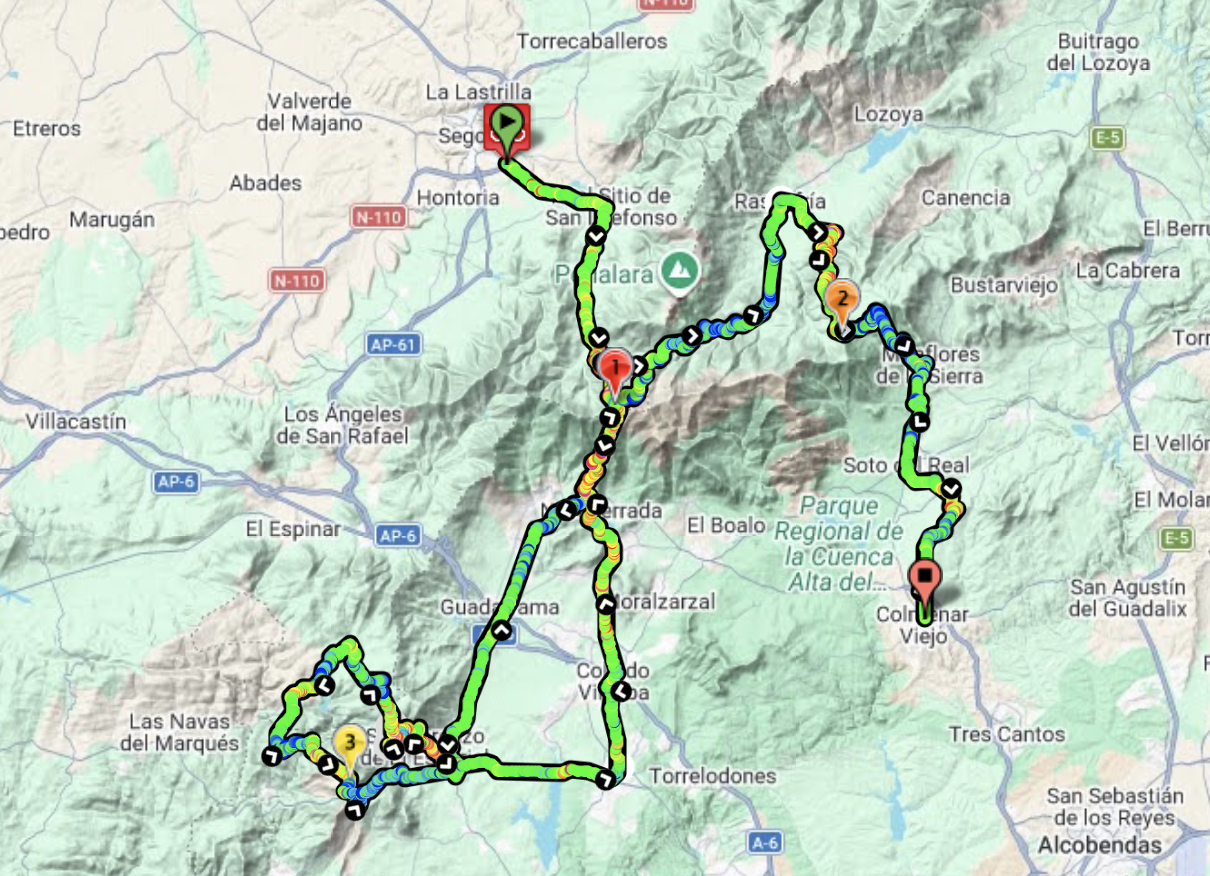
Stage 20: Segovia - Colmenar Viejo, 208km
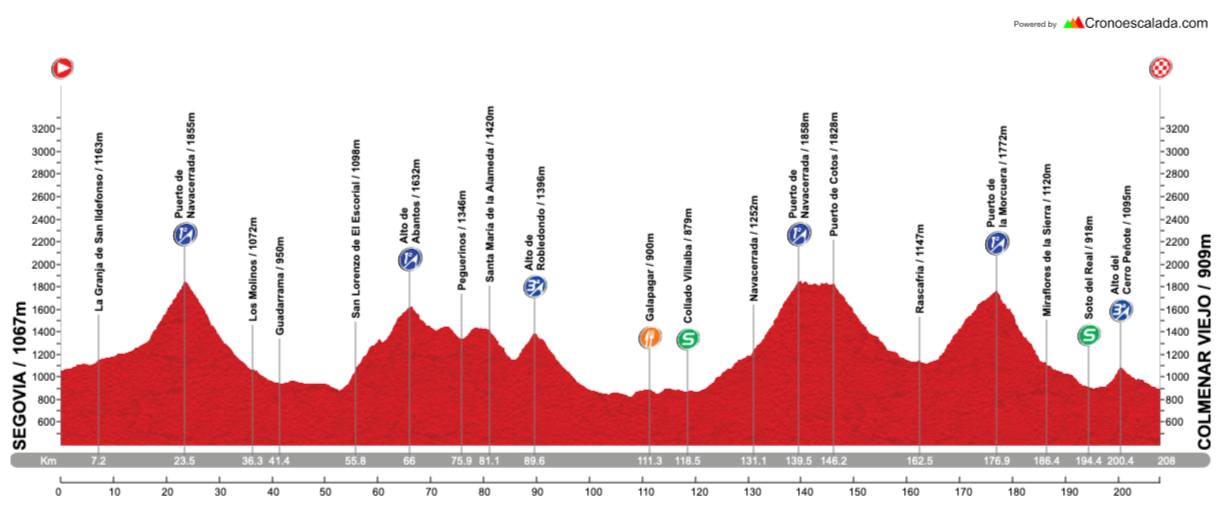
GPM:
Puerto de Navacerrada (cat.1) 13,6km @ 4,9%
Alto de Abantos (cat.1) 11,5km @ 5,4%
Alto de Robledondo (cat.3) 4,3km @ 5,5%
Puerto de Navacerrada (cat.1) 18,4km @ 5,3%
Puerto de la Morcuera (cat.1) 11,5km @ 5,5%
Alto del Cerro Peñote (cat.3) 2,7km @ 6,9%
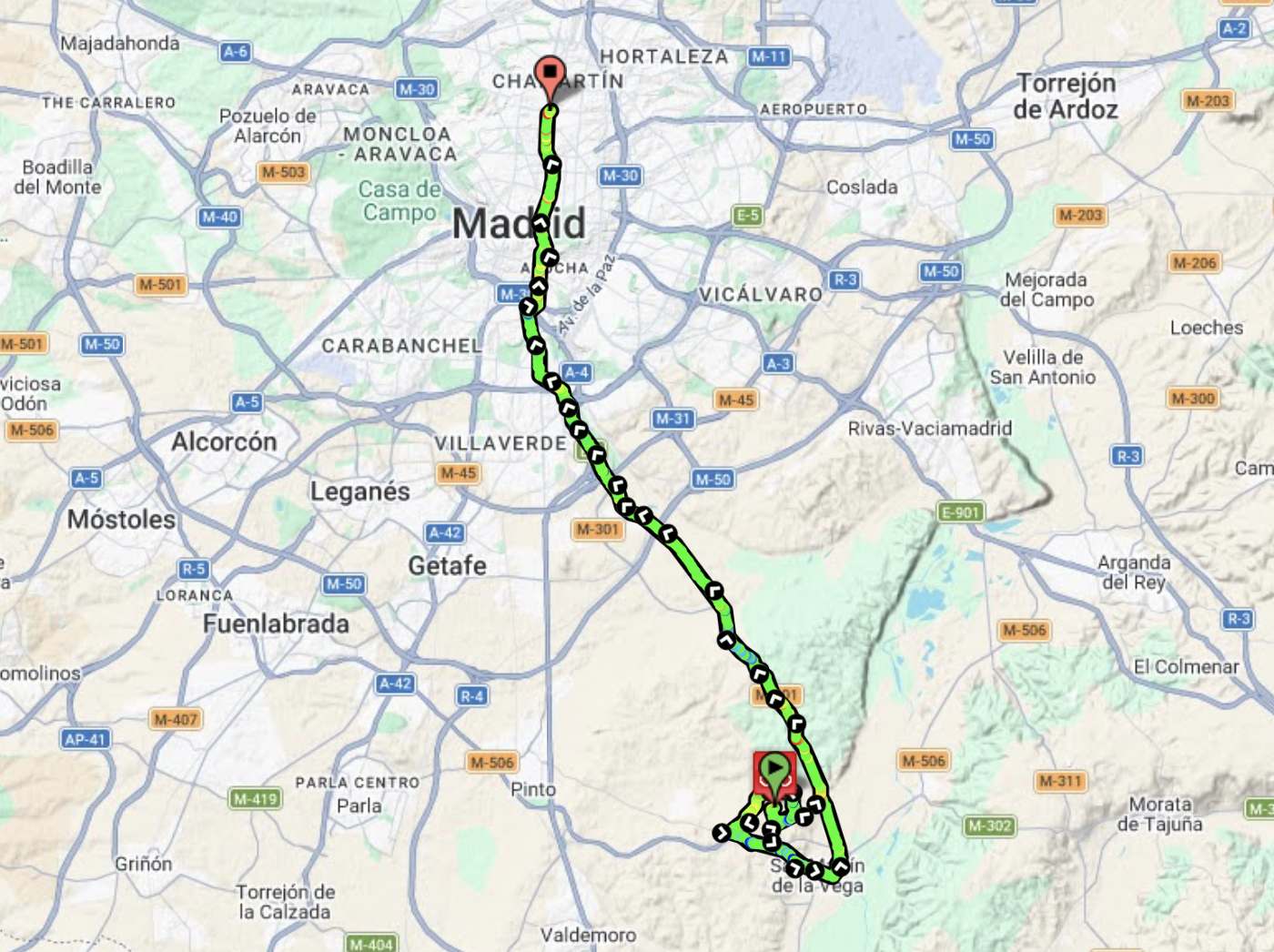
A final mountain stage in true 2000s fashion: the Sierra de Guadarrama was almost invariably the site of final mountains in the era (2006 the sole exception, which had flat stages and an ITT after La Pandera in week 3), often including Abantos which appeared several times during the decade. I’ve added a little twist, but this is otherwise somewhat along the lines of what we would frequently see in the era, such as 2005 and 2009’s stages to La Granja de San Ildefonso, or 2004’s Navacerrada MTF after a sequence of similar climbs. Admittedly this type of descent finish may have more to do with the rash of 80s and 90s finishes at the Destilerías DYC distillery in Palazuelos de Eresma when they were sponsoring the race, but those La Granja finishes and the Collado Villalba descent finish on the antepenultimate stage in 2003 (they had an Abantos MTT on stage 20 that year, uncharacteristically for the time not finishing with an ITT in Madrid) show that this format was still living on through the 2000s.

The stage starts in the historic city of Segovia, so we will get those iconic shots of its aqueduct and actually cross over yesterday’s stage, which passed south of here. We do see a bit of overlapping of stages around the Sierra de Guadarrama throughout the 90s and 2000s in the Vuelta, so I don’t see too much trouble with this. Segovia hosted the Vuelta twice in the 2000s, a stage start mid-race in 2002, and the late-race intermediate stage I referenced during the last write-up in 2008, which reprised the circuit from the national championships of 1995. That 2008 stage I remember well - Caisse d’Épargne were monitoring the break with David Arroyo for the express and stated purpose that he was there to tank the break for Valverde to go for a stage win behind. Except they hadn’t banked on how strong Vasil Kiryienka was, and the Tinkoff Credit Systems man (back when that was a ProConti team rather than when Tinkoff took over as sponsor of the old CSC/Saxo Bank team) dropped his break mates and kept a lead over everybody - bar Arroyo, who hadn’t done a single turn. Arroyo then took advantage to take the stage win at the line to disappointment from the crowd and commentators. Unzué went to apologise to Kiryienka… and offer him a contract.
2008 Segovia stage
Climbing starts early, as we head through La Granja (which hosted a couple of downhill finishes in the era) and ascend the northern face of the Vuelta classic that is the Puerto de Navacerrada. This is the shorter side - essentially divided into a false flat half and a steeper - 7-8% mainly - half. It’s, like much of these Sierra de Guadarrama ascents, kind of a generous cat.1 but difficult for a cat.2; these are often elevated to cat.1 for historic reasons more than to say that they are equivalent in difficulty to some of the climbs from earlier in the race that were also given that rating - certainly I wouldn’t say Navacerrada north matches up to, say, Peyresourde east, Fumanyà north or Portichuelo de Cástaras, but it’s tougher than most of the cat.2 ascents we’ve used. It is however here an early stage climb that won’t impact the stage results other than by selecting who will be in the breakaway for the day.
After descending into Navacerrada itself, we head southward through Guadarrama to the town of El Escorial, which sits below the more famous San Lorenzo de El Escorial. We could have gone straight to San Lorenzo, but that would be no fun. After all, we all know of the great murito in the great monastic city, but while the road has since fallen into disrepair that makes it an unlikely race host without a bit of time and money being invested into to its tarmac, the city is also the base of the Alto de Abantos, which hasn’t been seen in pro racing since 2007 but during the early 2000s was an absolute staple and was an essential inclusion for me as a result. Abantos itself is not the most frightening climb you’ll ever see - it’s only just a cat.1 in all honesty, 11,5km at 5,4% although that’s with a short flat and descent in the middle. But like a lot of the climbs in the Sierra de Guadarrama, it gets over-categorised due to its usual race-ending prominence.
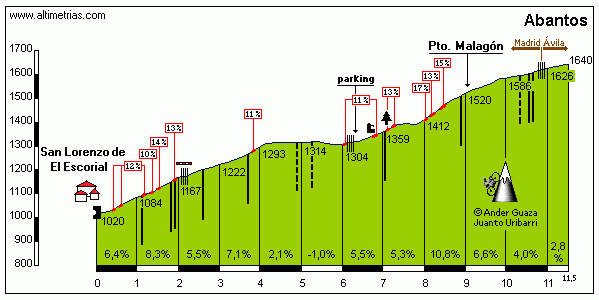
Abantos was first introduced to the Vuelta in the 1980s, usually as a mid-stage climb linked to El León by the Collado de la Mina, a cat.2 climb which is no longer suitable for passage by road bike. 1989 and 1990 saw identical stages over Morcuera, Cotos, Abantos, Mina and Navacerrada to finish at the DYC distillery in Palazuelos, for example. The loss of La Mina meant that the climb sat out until 1999, and from then on it could only be used as either a mountaintop finish, or via a multi-stepped descent via a couple of either uncategorised or cat.3 climbs back toward San Lorenzo de El Escorial. The race got its money’s worth out of the climb, however, with a 1999 mountaintop finish (won by Roberto Laiseka), a 2000 functionally Unipuerto stage (won by race leader Roberto Heras in a two-up sprint against Gilberto Simoni), and then in 2001 introducing the same sequence of downhill that I use here, as they went for a double climb (misleading profile) of Abantos, won by Simoni in a two-up against José María Jiménez (the very last time Chava would be seen in his playgrounds of the mountains). 2003 was the climb’s most iconic moment, however, as it was seen on stage 20, with a mountain time trial. ONCE’s Isidro Nozal had been grinding his way up the motley collection of 4-5% climbs of that edition, merrily dodging both his opposition and the shower along the way. The first cracks in his armour came on stage 19 when Roberto Heras gained over a minute, but Nozal had almost 2 minutes ahead of the cronoescalada… whereupon he completely choked, melting down and losing all of his advantage and more on this otherwise rather unthreatening ascent. Heras would pull on the maillot oro for the first time on the final parade. In 2004, it would be a mid-stage climb on a transitional stage, and then in 2007 it would see its final inclusion, as a mountaintop finish won by Samuel Sánchez, ahead of Dani Moreno, Carlos Sastre and the race leader - and eventual winner - Denis Menchov. After that, Abantos went out of vogue, and the road rapidly deteriorated due to weathering, which has rendered it off-limits for many years. A Vuelta focusing on the 2000s needs to include it, though, so here it is.
We return to El Escorial via the uncategorised ascent into San Martín de la Alameda and then the cat.3 climb to Robledondo. We don’t cross over or retrace our steps from earlier, but we do head for an intermediate sprint in Collado Villalba, which hosted stages of the Vuelta in 2002, 2003, 2004 and the race’s penultimate-day ITT in 2007. And then it’s on to the always-classic Puerto de Navacerrada, pretty much an ever-present from when Unipublic acquired the race until the early 2010s where the preference for a long transfer to have final mountains somewhere other than the Sistema Central meant these climbs around Madrid fell from prominence. It has still had its moments - the 2015 Cercedilla stage springs to mind - but it has been used more in recent years for its being the greater part of the ascent to the Bola del Mundo summit.
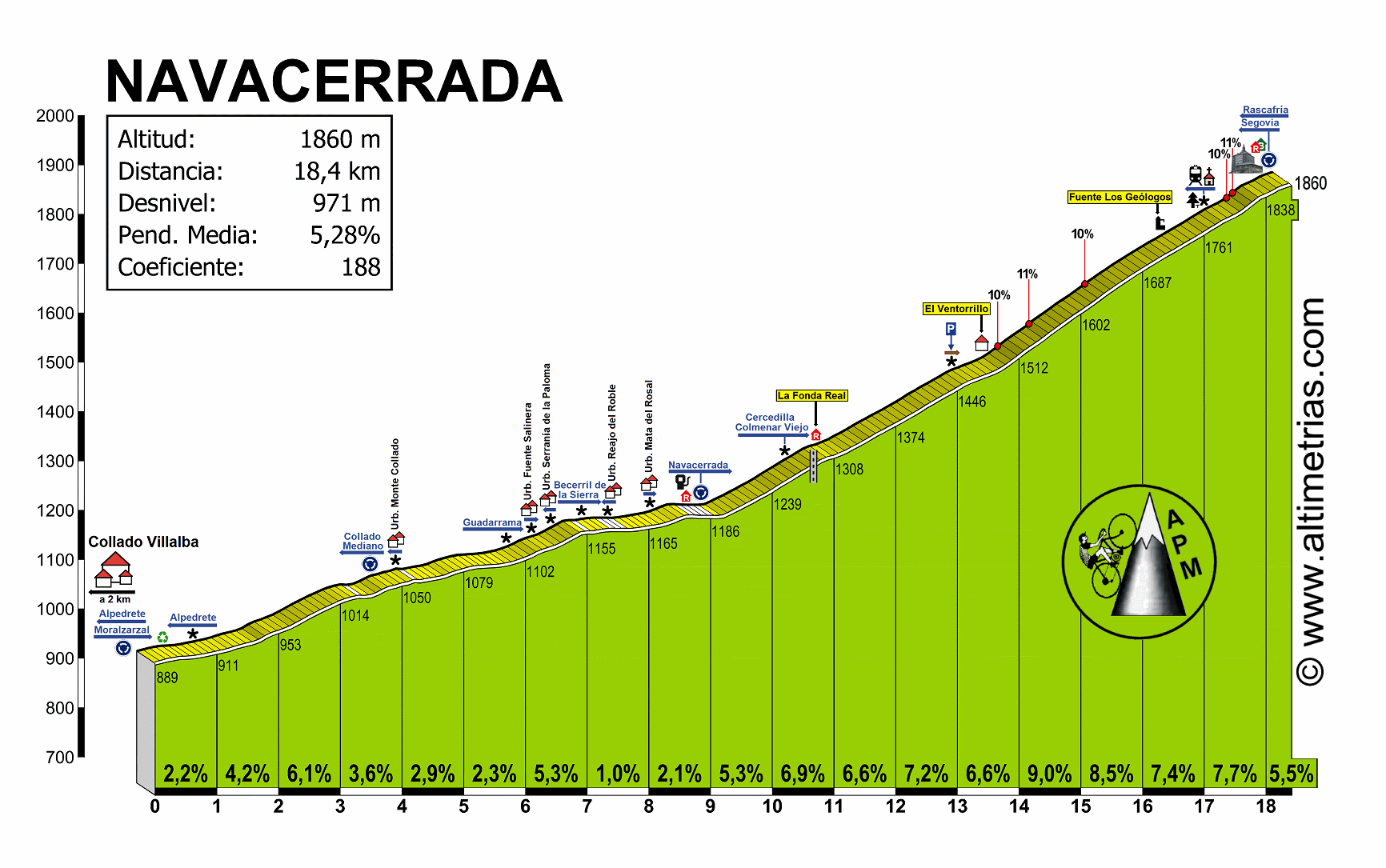
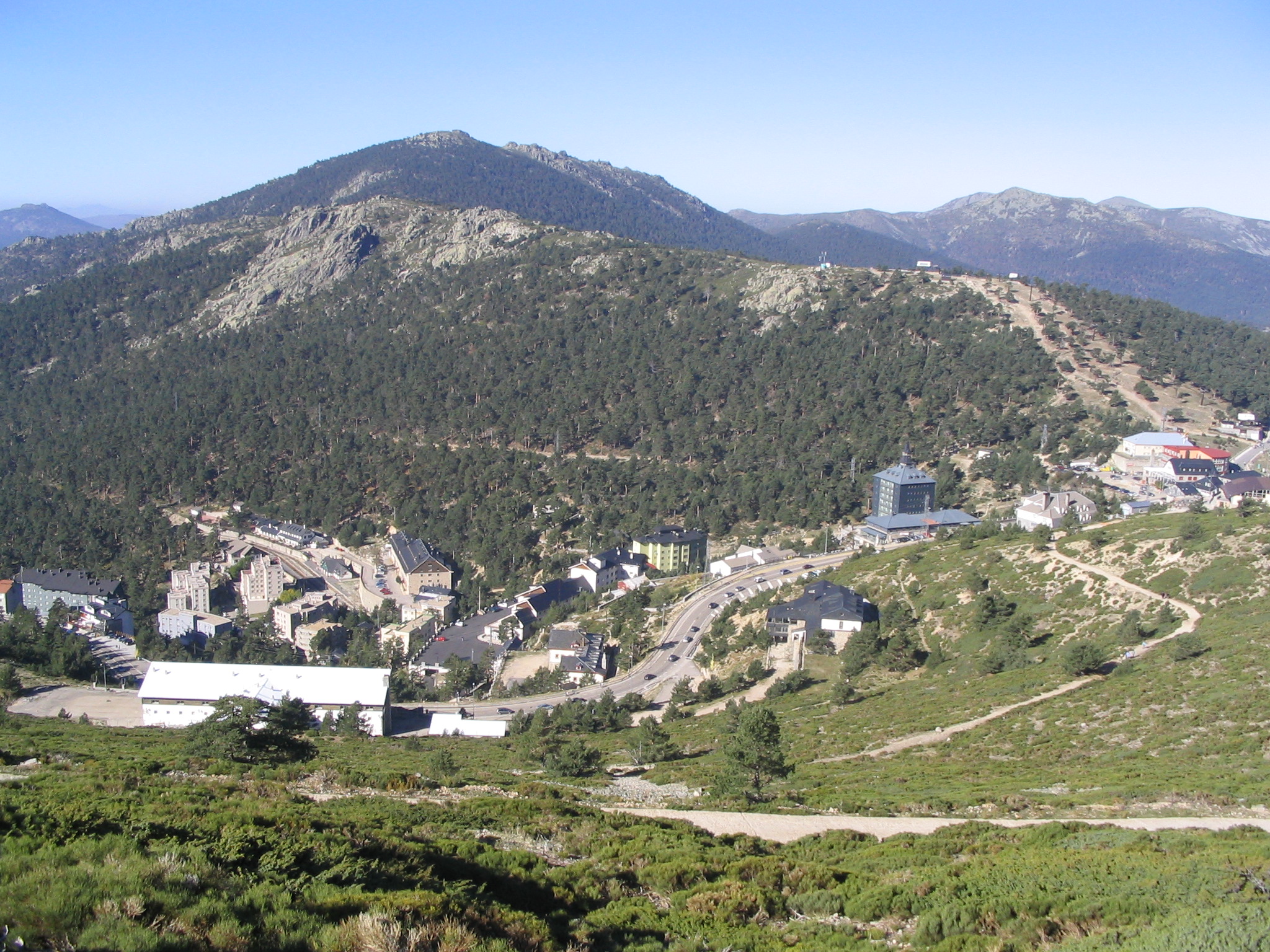
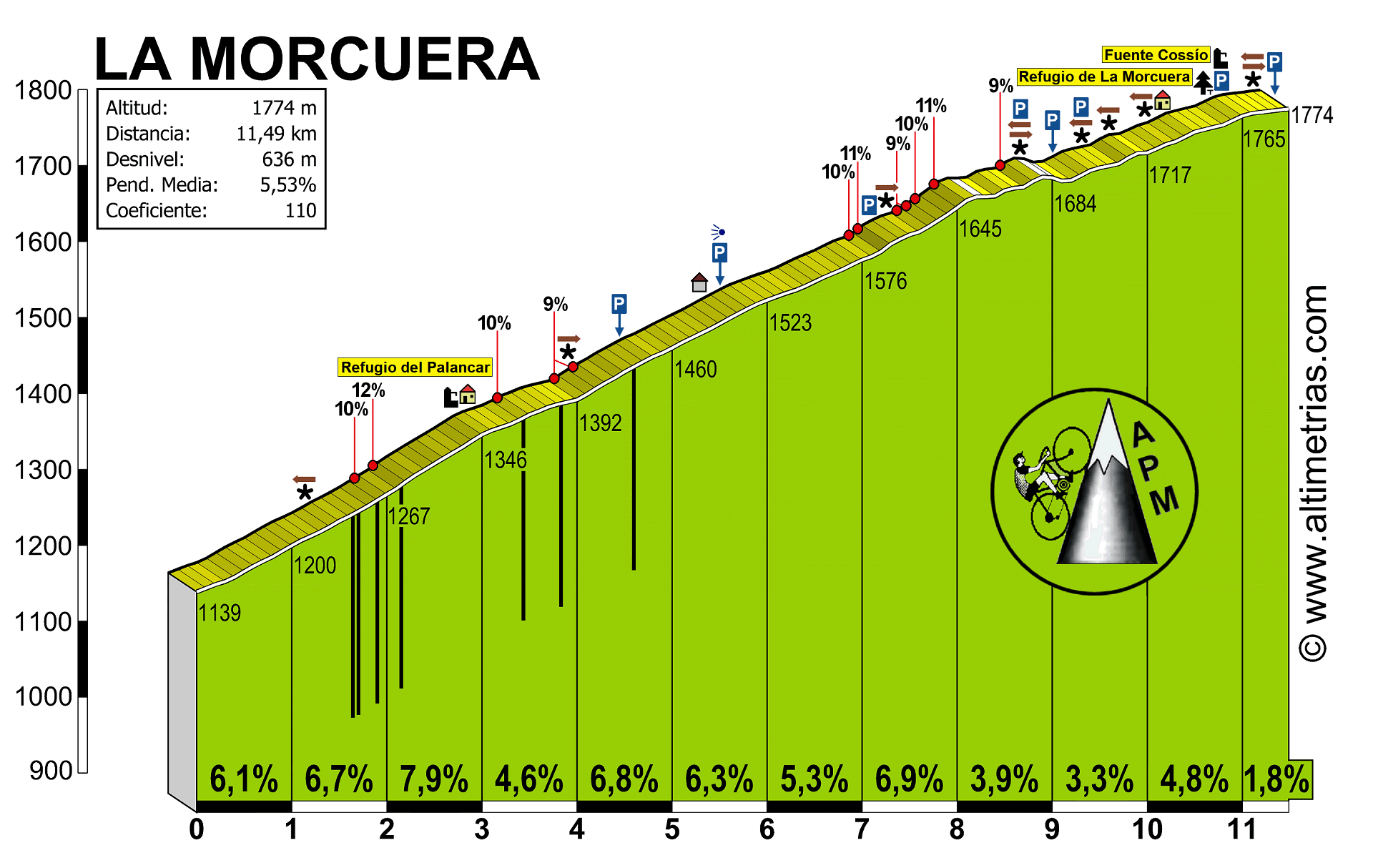
There’s still 68km to go at the summit here, but if anybody is going to dare on this stage, this would be when to go for it, unless there are smaller-than-expected gaps in the GC. That last 8km at over 7% are our last real sustained uphill threats at difficult gradients, and the fact we are descending via the Puerto de Cotos (retracing backward our steps from stage 19) means that there’s a plateau to deal with rather than immediate respite at the summit. This also means that the descent is slightly less trodden than the north face that we climbed at the start of the stage - but should still be familiar to many. We then climb the - easier - northern face of the Puerto de la Morcuera. The southern side is actually one of the better climbs in this mountain range, but unfortunately only links to Navafría - which doesn’t have a logical stage host at the summit or at the end of its descent - or Cotos, which is one of the least threatening climbs in the area. This is the single most generous cat.1 climb in the race - statistically it actually looks slightly harder than Abantos, but this is much more consistent and does not have that notable kilometre at 10%+ partway through. It is, however, only 31km from the line, and with its hardest gradients at the bottom, so there’s that.
The descent from Morcuera sees us into a final intermediate sprint just 14km from the line in Soto del Real, and then we have a little sting in the tail that I discovered via 39x28 Altimetrias, a site which usually doesn’t play in this kind of mountain range, preferring to map España Verde, in particular Asturias - and often doesn’t pay much mind to whether a climb is reasonably achievable for a road bike either, so can sometimes be misleading. However, the site did make me aware of this small but potentially interesting obstacle - to date unused by the Vuelta (I can’t find it in the annals of the Vuelta a la Comunidad de Madrid, but that doesn’t necessarily mean it hasn’t been seen as records that I can find are incomplete, and in some cases it may have been uncategorised as well). 2,7km @ 6,9% doesn’t sound very threatening, but the last 1700m are at over 8%, which could make it a good option for stage hunting if the GC guys aren’t bothered too much (definitely a possibility) or to make gaps from small groups if they have decided to make it active. Their proposed stage uses the same combination as the second half of my stage, but frankly unless you went over Navafría then Morcuera, or just offered a much less challenging climb from a mountain perspective (if you wanted a hilly-to-medium-mountain Worlds prep type stage, for example, you could go La Trampa-Bustarviejo-Cerro Peñote, or for a medium mountain type stage you could do a loop from Soto, with Morcuera sur and Canencia before this same finish. The hill on which this summit lies was used as part of the loop between the two passes of Morcuera in the 2015 stage, but not from the side used here.
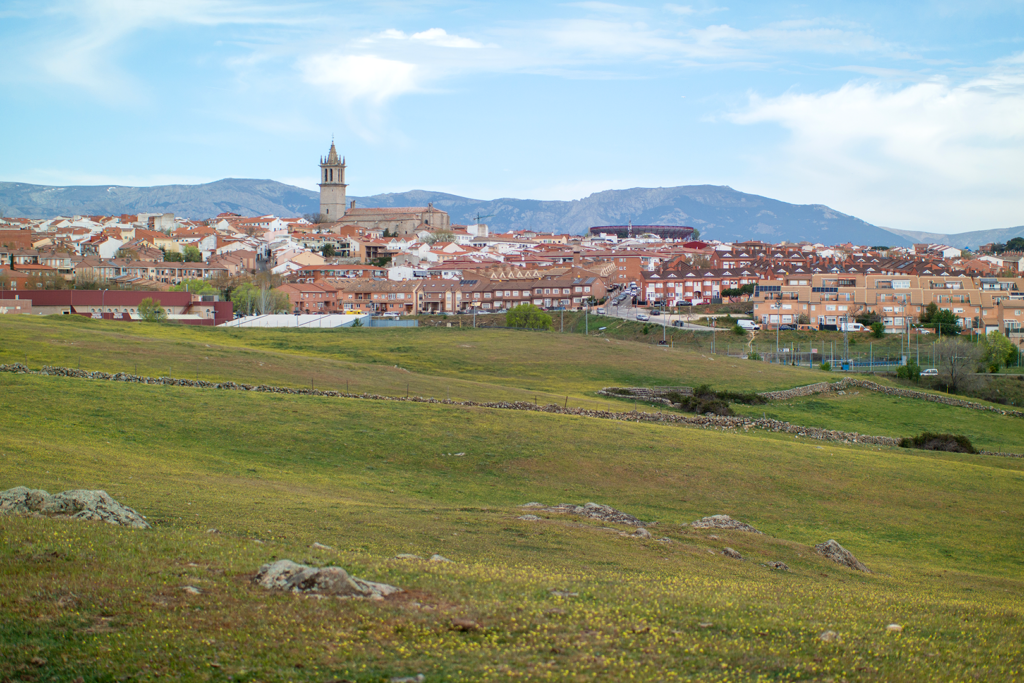
And then, it’s just a descent into Colmenar Viejo, a city of just under 50.000 inhabitants in the north of Comunidad de Madrid, which strangely enough was never a Vuelta host until 2019; it did, however, in the late 2000s and early 2010s, feature heavily in the Vuelta a Madrid, with the likes of Javier Moreno and Ángel Vicioso winning in the city, and also featuring as a start for stages to Puerto de la Morcuera during the era when that was the race’s main MTF, with Giovanny Báez winning there, along with a couple of hilarious sputnik performances, such as 2012 when Sergey Firsanov - pre-Rusvelo but still 29 years old - somehow lost no time on the climb despite being in the break of the day to Nairo Quintana, Mikel Landa and the most heavily charged José Belda that we ever saw - and trust me, José Belda in 2012 was a sight to behold as this 37-year-old amateur just went full Alarcón in the amateur scene - to win the GC by two minutes. Its only Vuelta appearance is the 2019 Becerril stage where they tried to recapture 2015’s lightning in a bottle to predictably disappointing effect. This is however the last chance for any decisive climbing so we shall see how things go.
GPM:
Puerto de Navacerrada (cat.1) 13,6km @ 4,9%
Alto de Abantos (cat.1) 11,5km @ 5,4%
Alto de Robledondo (cat.3) 4,3km @ 5,5%
Puerto de Navacerrada (cat.1) 18,4km @ 5,3%
Puerto de la Morcuera (cat.1) 11,5km @ 5,5%
Alto del Cerro Peñote (cat.3) 2,7km @ 6,9%
A final mountain stage in true 2000s fashion: the Sierra de Guadarrama was almost invariably the site of final mountains in the era (2006 the sole exception, which had flat stages and an ITT after La Pandera in week 3), often including Abantos which appeared several times during the decade. I’ve added a little twist, but this is otherwise somewhat along the lines of what we would frequently see in the era, such as 2005 and 2009’s stages to La Granja de San Ildefonso, or 2004’s Navacerrada MTF after a sequence of similar climbs. Admittedly this type of descent finish may have more to do with the rash of 80s and 90s finishes at the Destilerías DYC distillery in Palazuelos de Eresma when they were sponsoring the race, but those La Granja finishes and the Collado Villalba descent finish on the antepenultimate stage in 2003 (they had an Abantos MTT on stage 20 that year, uncharacteristically for the time not finishing with an ITT in Madrid) show that this format was still living on through the 2000s.
The stage starts in the historic city of Segovia, so we will get those iconic shots of its aqueduct and actually cross over yesterday’s stage, which passed south of here. We do see a bit of overlapping of stages around the Sierra de Guadarrama throughout the 90s and 2000s in the Vuelta, so I don’t see too much trouble with this. Segovia hosted the Vuelta twice in the 2000s, a stage start mid-race in 2002, and the late-race intermediate stage I referenced during the last write-up in 2008, which reprised the circuit from the national championships of 1995. That 2008 stage I remember well - Caisse d’Épargne were monitoring the break with David Arroyo for the express and stated purpose that he was there to tank the break for Valverde to go for a stage win behind. Except they hadn’t banked on how strong Vasil Kiryienka was, and the Tinkoff Credit Systems man (back when that was a ProConti team rather than when Tinkoff took over as sponsor of the old CSC/Saxo Bank team) dropped his break mates and kept a lead over everybody - bar Arroyo, who hadn’t done a single turn. Arroyo then took advantage to take the stage win at the line to disappointment from the crowd and commentators. Unzué went to apologise to Kiryienka… and offer him a contract.
Climbing starts early, as we head through La Granja (which hosted a couple of downhill finishes in the era) and ascend the northern face of the Vuelta classic that is the Puerto de Navacerrada. This is the shorter side - essentially divided into a false flat half and a steeper - 7-8% mainly - half. It’s, like much of these Sierra de Guadarrama ascents, kind of a generous cat.1 but difficult for a cat.2; these are often elevated to cat.1 for historic reasons more than to say that they are equivalent in difficulty to some of the climbs from earlier in the race that were also given that rating - certainly I wouldn’t say Navacerrada north matches up to, say, Peyresourde east, Fumanyà north or Portichuelo de Cástaras, but it’s tougher than most of the cat.2 ascents we’ve used. It is however here an early stage climb that won’t impact the stage results other than by selecting who will be in the breakaway for the day.
After descending into Navacerrada itself, we head southward through Guadarrama to the town of El Escorial, which sits below the more famous San Lorenzo de El Escorial. We could have gone straight to San Lorenzo, but that would be no fun. After all, we all know of the great murito in the great monastic city, but while the road has since fallen into disrepair that makes it an unlikely race host without a bit of time and money being invested into to its tarmac, the city is also the base of the Alto de Abantos, which hasn’t been seen in pro racing since 2007 but during the early 2000s was an absolute staple and was an essential inclusion for me as a result. Abantos itself is not the most frightening climb you’ll ever see - it’s only just a cat.1 in all honesty, 11,5km at 5,4% although that’s with a short flat and descent in the middle. But like a lot of the climbs in the Sierra de Guadarrama, it gets over-categorised due to its usual race-ending prominence.
Abantos was first introduced to the Vuelta in the 1980s, usually as a mid-stage climb linked to El León by the Collado de la Mina, a cat.2 climb which is no longer suitable for passage by road bike. 1989 and 1990 saw identical stages over Morcuera, Cotos, Abantos, Mina and Navacerrada to finish at the DYC distillery in Palazuelos, for example. The loss of La Mina meant that the climb sat out until 1999, and from then on it could only be used as either a mountaintop finish, or via a multi-stepped descent via a couple of either uncategorised or cat.3 climbs back toward San Lorenzo de El Escorial. The race got its money’s worth out of the climb, however, with a 1999 mountaintop finish (won by Roberto Laiseka), a 2000 functionally Unipuerto stage (won by race leader Roberto Heras in a two-up sprint against Gilberto Simoni), and then in 2001 introducing the same sequence of downhill that I use here, as they went for a double climb (misleading profile) of Abantos, won by Simoni in a two-up against José María Jiménez (the very last time Chava would be seen in his playgrounds of the mountains). 2003 was the climb’s most iconic moment, however, as it was seen on stage 20, with a mountain time trial. ONCE’s Isidro Nozal had been grinding his way up the motley collection of 4-5% climbs of that edition, merrily dodging both his opposition and the shower along the way. The first cracks in his armour came on stage 19 when Roberto Heras gained over a minute, but Nozal had almost 2 minutes ahead of the cronoescalada… whereupon he completely choked, melting down and losing all of his advantage and more on this otherwise rather unthreatening ascent. Heras would pull on the maillot oro for the first time on the final parade. In 2004, it would be a mid-stage climb on a transitional stage, and then in 2007 it would see its final inclusion, as a mountaintop finish won by Samuel Sánchez, ahead of Dani Moreno, Carlos Sastre and the race leader - and eventual winner - Denis Menchov. After that, Abantos went out of vogue, and the road rapidly deteriorated due to weathering, which has rendered it off-limits for many years. A Vuelta focusing on the 2000s needs to include it, though, so here it is.
We return to El Escorial via the uncategorised ascent into San Martín de la Alameda and then the cat.3 climb to Robledondo. We don’t cross over or retrace our steps from earlier, but we do head for an intermediate sprint in Collado Villalba, which hosted stages of the Vuelta in 2002, 2003, 2004 and the race’s penultimate-day ITT in 2007. And then it’s on to the always-classic Puerto de Navacerrada, pretty much an ever-present from when Unipublic acquired the race until the early 2010s where the preference for a long transfer to have final mountains somewhere other than the Sistema Central meant these climbs around Madrid fell from prominence. It has still had its moments - the 2015 Cercedilla stage springs to mind - but it has been used more in recent years for its being the greater part of the ascent to the Bola del Mundo summit.
There’s still 68km to go at the summit here, but if anybody is going to dare on this stage, this would be when to go for it, unless there are smaller-than-expected gaps in the GC. That last 8km at over 7% are our last real sustained uphill threats at difficult gradients, and the fact we are descending via the Puerto de Cotos (retracing backward our steps from stage 19) means that there’s a plateau to deal with rather than immediate respite at the summit. This also means that the descent is slightly less trodden than the north face that we climbed at the start of the stage - but should still be familiar to many. We then climb the - easier - northern face of the Puerto de la Morcuera. The southern side is actually one of the better climbs in this mountain range, but unfortunately only links to Navafría - which doesn’t have a logical stage host at the summit or at the end of its descent - or Cotos, which is one of the least threatening climbs in the area. This is the single most generous cat.1 climb in the race - statistically it actually looks slightly harder than Abantos, but this is much more consistent and does not have that notable kilometre at 10%+ partway through. It is, however, only 31km from the line, and with its hardest gradients at the bottom, so there’s that.
The descent from Morcuera sees us into a final intermediate sprint just 14km from the line in Soto del Real, and then we have a little sting in the tail that I discovered via 39x28 Altimetrias, a site which usually doesn’t play in this kind of mountain range, preferring to map España Verde, in particular Asturias - and often doesn’t pay much mind to whether a climb is reasonably achievable for a road bike either, so can sometimes be misleading. However, the site did make me aware of this small but potentially interesting obstacle - to date unused by the Vuelta (I can’t find it in the annals of the Vuelta a la Comunidad de Madrid, but that doesn’t necessarily mean it hasn’t been seen as records that I can find are incomplete, and in some cases it may have been uncategorised as well). 2,7km @ 6,9% doesn’t sound very threatening, but the last 1700m are at over 8%, which could make it a good option for stage hunting if the GC guys aren’t bothered too much (definitely a possibility) or to make gaps from small groups if they have decided to make it active. Their proposed stage uses the same combination as the second half of my stage, but frankly unless you went over Navafría then Morcuera, or just offered a much less challenging climb from a mountain perspective (if you wanted a hilly-to-medium-mountain Worlds prep type stage, for example, you could go La Trampa-Bustarviejo-Cerro Peñote, or for a medium mountain type stage you could do a loop from Soto, with Morcuera sur and Canencia before this same finish. The hill on which this summit lies was used as part of the loop between the two passes of Morcuera in the 2015 stage, but not from the side used here.
And then, it’s just a descent into Colmenar Viejo, a city of just under 50.000 inhabitants in the north of Comunidad de Madrid, which strangely enough was never a Vuelta host until 2019; it did, however, in the late 2000s and early 2010s, feature heavily in the Vuelta a Madrid, with the likes of Javier Moreno and Ángel Vicioso winning in the city, and also featuring as a start for stages to Puerto de la Morcuera during the era when that was the race’s main MTF, with Giovanny Báez winning there, along with a couple of hilarious sputnik performances, such as 2012 when Sergey Firsanov - pre-Rusvelo but still 29 years old - somehow lost no time on the climb despite being in the break of the day to Nairo Quintana, Mikel Landa and the most heavily charged José Belda that we ever saw - and trust me, José Belda in 2012 was a sight to behold as this 37-year-old amateur just went full Alarcón in the amateur scene - to win the GC by two minutes. Its only Vuelta appearance is the 2019 Becerril stage where they tried to recapture 2015’s lightning in a bottle to predictably disappointing effect. This is however the last chance for any decisive climbing so we shall see how things go.


 Facebook
 Twitter
 Instagram