


- Oct 5, 2010
- 4,337
- 383
- 16,180
Tour of the Great Lakes | Stage 4: Detroit - Detroit, 17.4km (ITT)
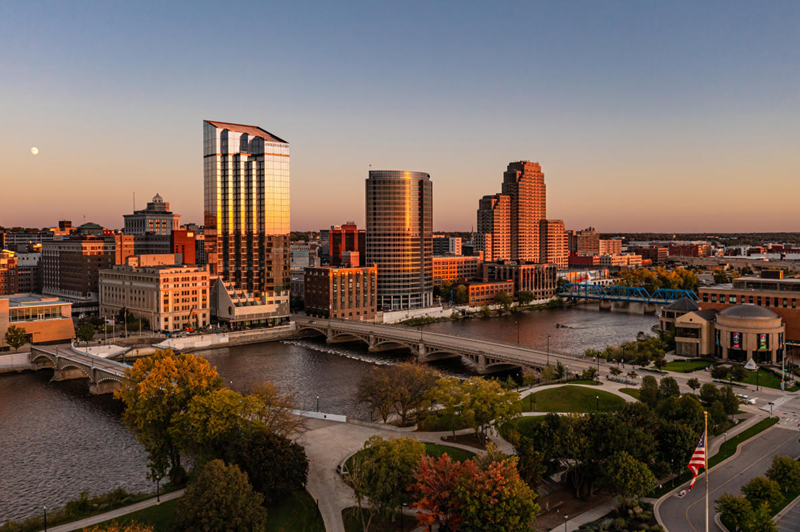
The race needs an ITT, and it needs to hit Detroit. Just an hour up the road from Toledo is the third largest metro area in the megaregion that is the Great Lakes. The urban sprawl is massive, but there is a great historic downtown core that was sadly bulldozed for motor vehicles. Ironically, Detroit had a fantastic tram system up until the 1950's despite being the Motor City (as a caveat: there is a new tram line in Downtown since 2017). Either way, the home of the GM, Ford and Chrysler was of course the first city to build a highway right through the city. This did help initially with congestion, but as we are all too familiar with - the long term effects include induced demand, splitting neighborhoods apart, removing walkability etc. Metro Detroit has been an absolute monstrosity for the past half century, to which the effects of de-industrialization and the financial crisis of 2008 didn't help. The City of Detroit lost hundreds of thousands of residents and even went bankrupt in 2013. Despite all of the setbacks, Metro Detroit has continued to grow.
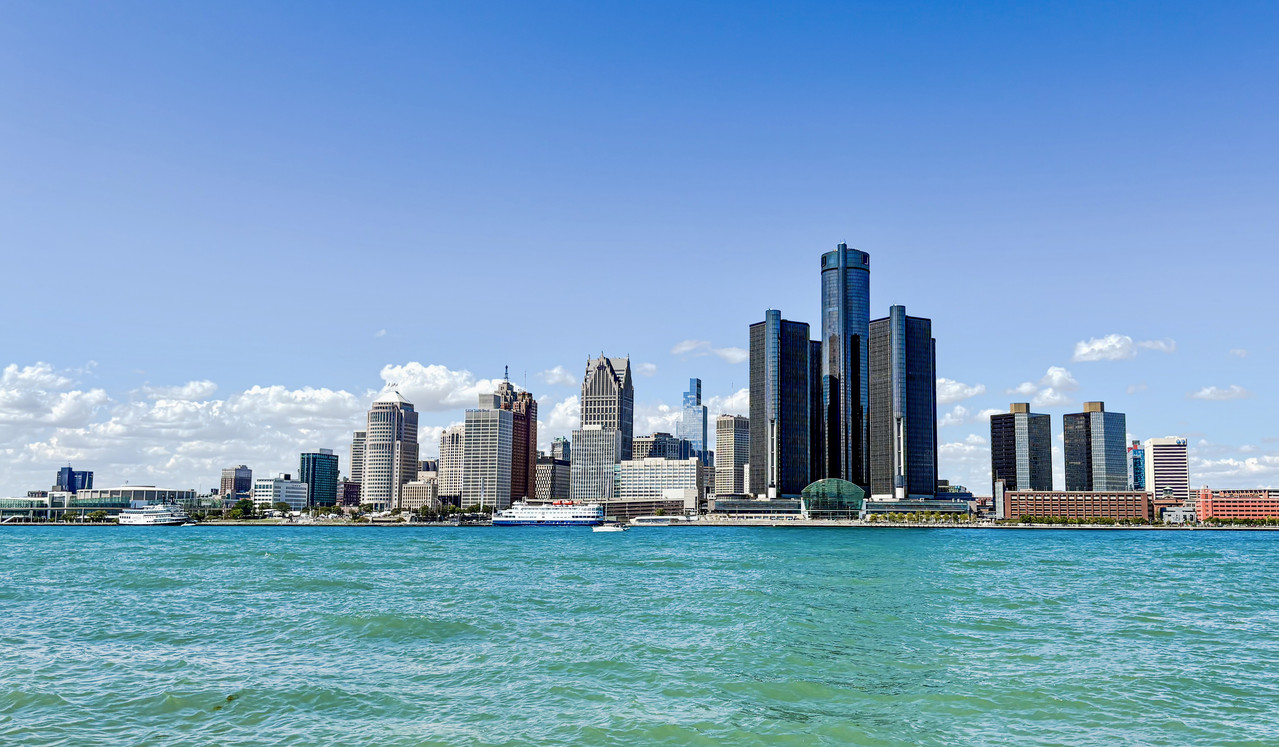
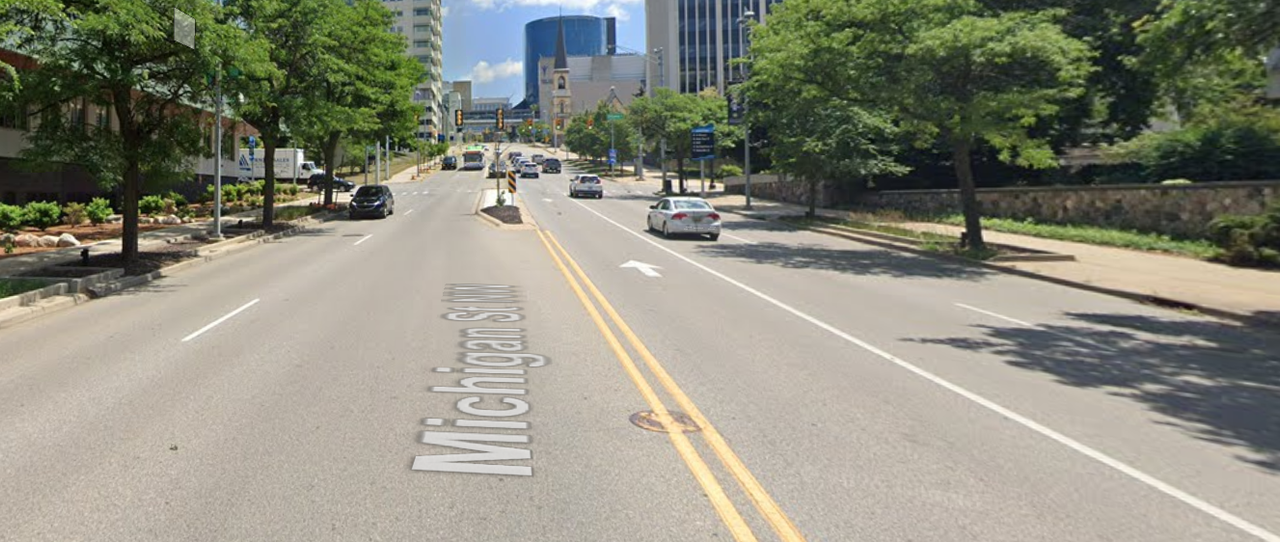
Downtown Detroit
Because of the enormity of Detroit, the many highways passing through the city, and the recently added tram tracks - deciding where to host the TT was a tougher decision than I would necessarily like to admit. I contemplated having the start on the Canadian side of the border in Windsor, but didn't want to hassle of having to close a bridge for the vanity of a cycling race, which would be wildly impopular - it being the second busiest international crossing in North America. I also wanted to avoid using highways, so I settled on what I think is quite a beautiful and non-disturbing location.
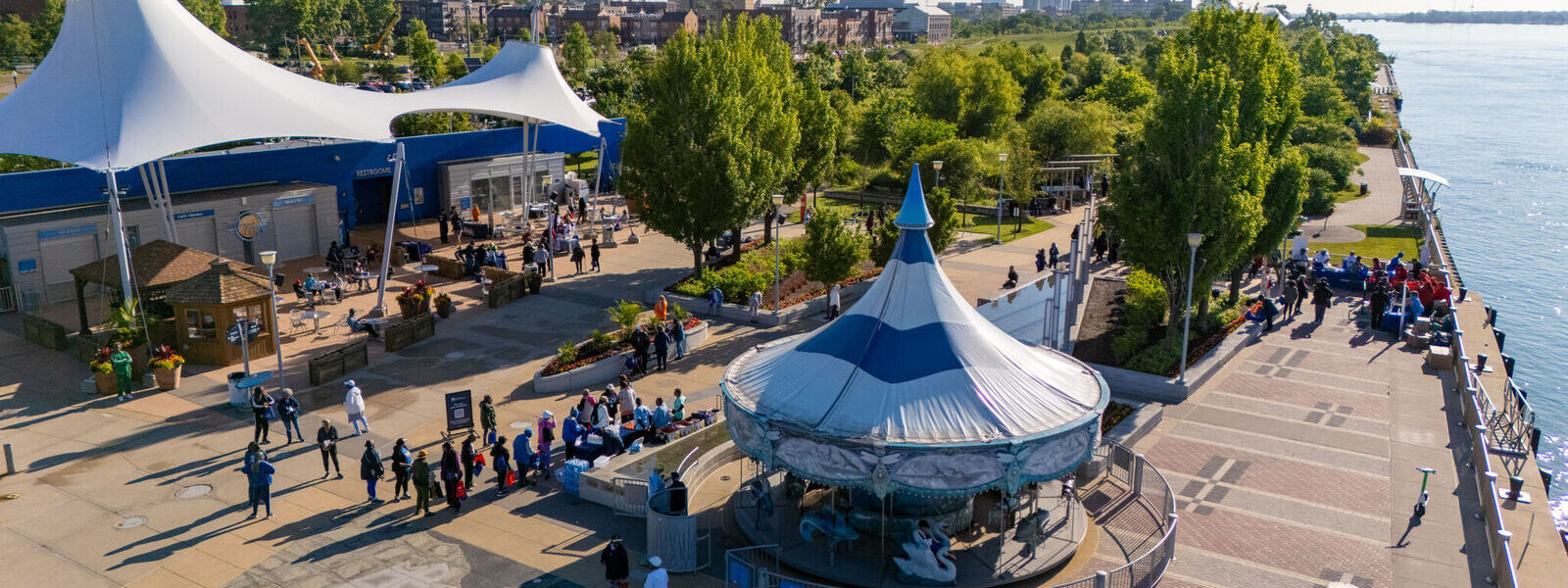
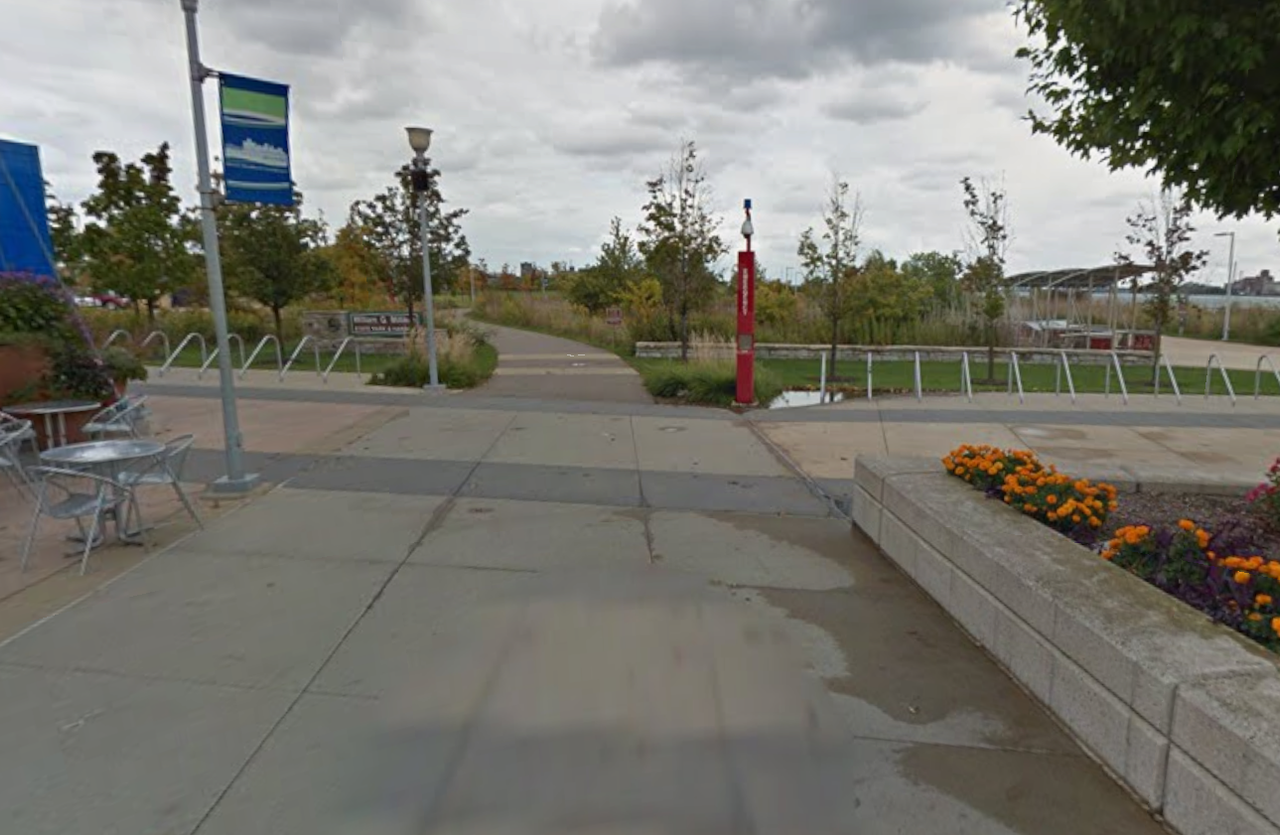
Cullen Plaza & start line
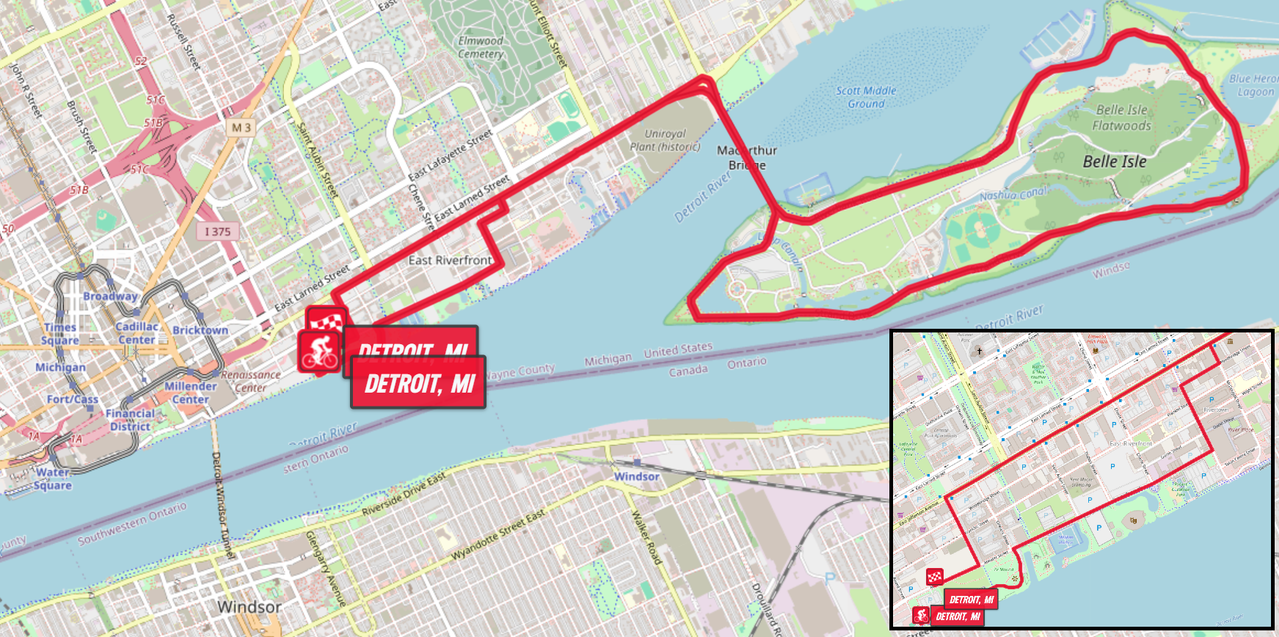
The start and the finish are both a stone's throw away from each other at the Cullen Plaza, one of the many highlights of the Detroit Riverwalk, voted the best riverwalk in the country in 2021. While the Street View images don't do it justice, we will be beginning on what is a very narrow walkable path for about 600m before turning right and eventually ending up on East Jefferson avenue before turning right again onto the MacArthur bridge. After crossing the bridge, we do a counterclockwise lap around most of Belle Isle. This is what we want to highlight the very most.
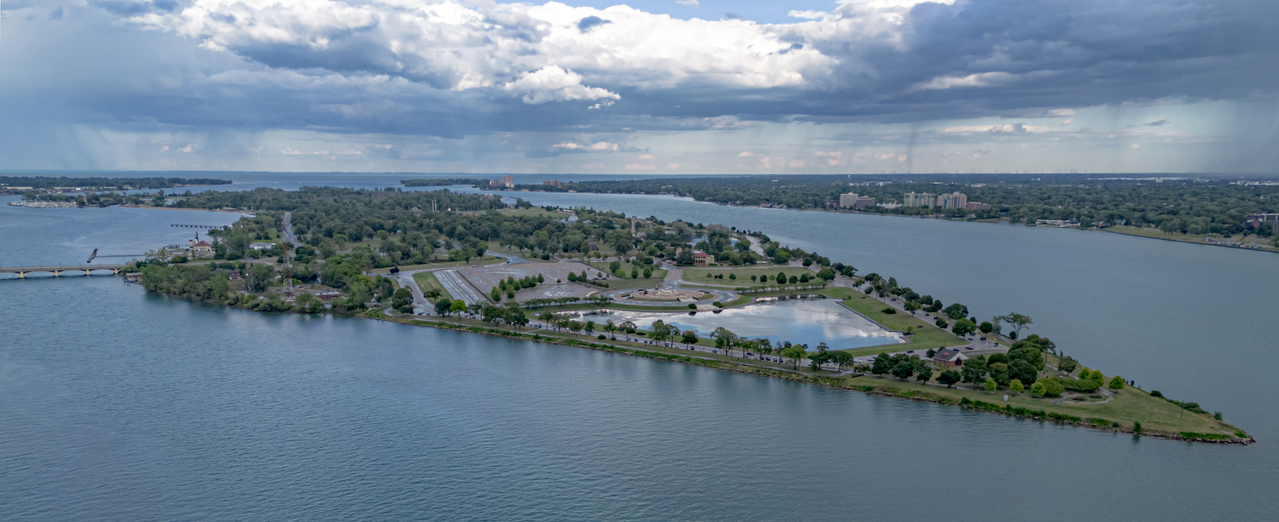
Belle Isle
The settlement of Detroit was founded as part of New France in 1701, and Belle Isle was colonized sometime the same century. It has gone through periods of being more or less an estate with livestock to eventually becoming a park in the 1880s. It has long been an area for recreation, and hosts an aquarium, a botanical garden, a golf course and fountains among other things. It will make for some great helicopter shots. After finishing the loop, the riders head back nearly where they started, ending with a two 90-degree turns in the last 500 meters to keep the speed down a bit yet finishing near the same park and parking complex as the finish.
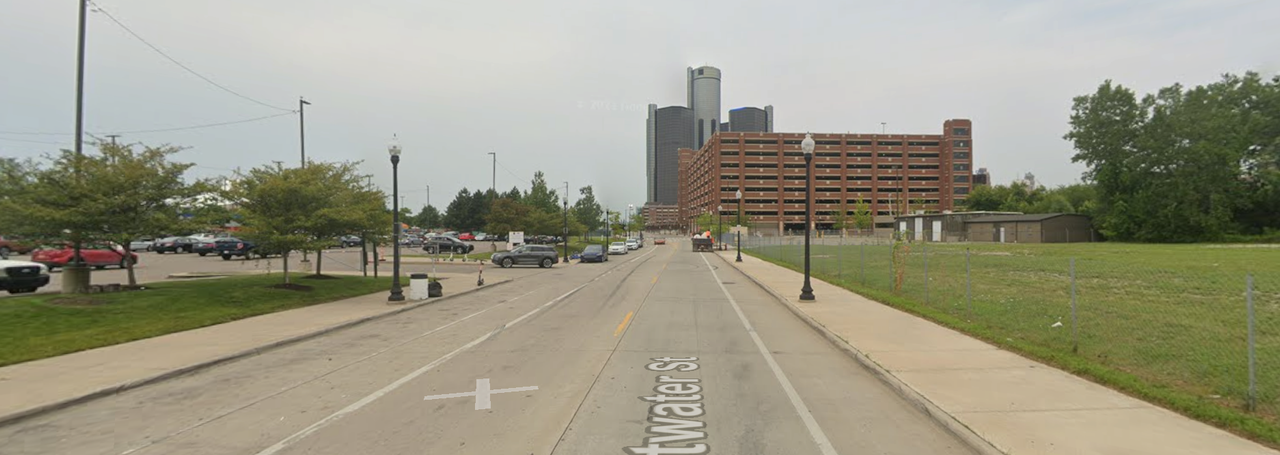
Finish line
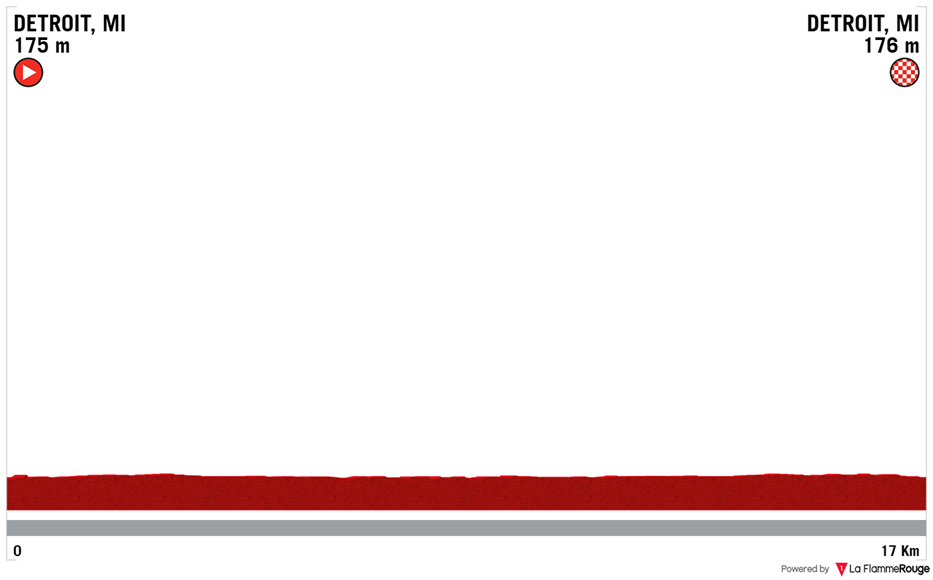
Is it a particularly challenging ITT in any way? No. Does it need to be? Also no, imho. It's perfectly OK to have a more or less pan flat one, just not an absurdly long one in what is approx. a week-long stage race.
The race needs an ITT, and it needs to hit Detroit. Just an hour up the road from Toledo is the third largest metro area in the megaregion that is the Great Lakes. The urban sprawl is massive, but there is a great historic downtown core that was sadly bulldozed for motor vehicles. Ironically, Detroit had a fantastic tram system up until the 1950's despite being the Motor City (as a caveat: there is a new tram line in Downtown since 2017). Either way, the home of the GM, Ford and Chrysler was of course the first city to build a highway right through the city. This did help initially with congestion, but as we are all too familiar with - the long term effects include induced demand, splitting neighborhoods apart, removing walkability etc. Metro Detroit has been an absolute monstrosity for the past half century, to which the effects of de-industrialization and the financial crisis of 2008 didn't help. The City of Detroit lost hundreds of thousands of residents and even went bankrupt in 2013. Despite all of the setbacks, Metro Detroit has continued to grow.
Downtown Detroit
Because of the enormity of Detroit, the many highways passing through the city, and the recently added tram tracks - deciding where to host the TT was a tougher decision than I would necessarily like to admit. I contemplated having the start on the Canadian side of the border in Windsor, but didn't want to hassle of having to close a bridge for the vanity of a cycling race, which would be wildly impopular - it being the second busiest international crossing in North America. I also wanted to avoid using highways, so I settled on what I think is quite a beautiful and non-disturbing location.
Cullen Plaza & start line
The start and the finish are both a stone's throw away from each other at the Cullen Plaza, one of the many highlights of the Detroit Riverwalk, voted the best riverwalk in the country in 2021. While the Street View images don't do it justice, we will be beginning on what is a very narrow walkable path for about 600m before turning right and eventually ending up on East Jefferson avenue before turning right again onto the MacArthur bridge. After crossing the bridge, we do a counterclockwise lap around most of Belle Isle. This is what we want to highlight the very most.
Belle Isle
The settlement of Detroit was founded as part of New France in 1701, and Belle Isle was colonized sometime the same century. It has gone through periods of being more or less an estate with livestock to eventually becoming a park in the 1880s. It has long been an area for recreation, and hosts an aquarium, a botanical garden, a golf course and fountains among other things. It will make for some great helicopter shots. After finishing the loop, the riders head back nearly where they started, ending with a two 90-degree turns in the last 500 meters to keep the speed down a bit yet finishing near the same park and parking complex as the finish.
Finish line
Is it a particularly challenging ITT in any way? No. Does it need to be? Also no, imho. It's perfectly OK to have a more or less pan flat one, just not an absurdly long one in what is approx. a week-long stage race.
Last edited:





 Facebook
 Twitter
 Instagram