Tadej Pogacar and Mauro Giannetti

Page 528 - Get up to date with the latest news, scores & standings from the Cycling News Community.
Jul 15, 2021
1,147
2,333
7,680
The thing is with Hatch etc. they're between a rock and a hard place. Most of them are self employed so why would they start shouting the odds? Plus they do that and they're open to liable stuff.
I've made this point before: journalism now works way different than back in the 90s or 00s. Independent journalism? It's still here, but largely underfunded to the point that there's still independent journalism, but hardly any investigative journalism. And the news outlets certainly don't let their investigative journalists focus on something admittedly unimportant in the grand scheme of things like sports.

And independent journalism is now a small part of the media. Most are nowadays, like MartinGT said, self employed and entirely dependant on the popularity of the sport. Focussing on doping and possibly revealing a big scandal would just mean they'd be shooting themselves in the foot.
 
Feb 27, 2023
797
941
6,180
There's talk about synthetic hemoglobin, gene doping, papers in science of sport/medical journals about the limitations of the bio passport and ex riders stating they are at loss about what is happening. That's not nothing.

That can help explain how they are able to output high average power during the whole race and how they are able to output insane effort at the end of a long hard race, but it can't explain the oxygen consumption needed to do so, Redoute and RAF yesterday were just alien even for a completely fresh athlete.
Sure, there is talk in scientific papers but in the past there was talk about riders using it, people being riders using it, whole teams getting caught and so on... I hope you can see the difference. And, of course, the bio passport is not the best at detecting and catching dopers, but there are still direct blood and urine tests which can detect the presence of banned substances. All of them in combination work much better than whatever they were doing 20 years ago.
On the topic of oxygen consumption: I have read the calculations but it is a bit vague in my opinion. I would like to see more data on the efficiency of top endurance athletes and also the physiological processes are not well investigated.
 
Jun 30, 2009
612
103
10,180
Well, the difference is that even though that is how it was marketed it was widely known that EPO was still being used even after the Festina scandal. Nowadays, I do not believe EPO or blood transfusions are being done. I do not know what is being done and that is why I am saying it is different nowadays. To be clear, I do think that they are still using some grey area stuff and possibly some illegal stuff but I do not know exactly what is is and there are no credible rumors either. The most credible one was the CO rebreather as fast as as I can tell, but I think that stopped as well.

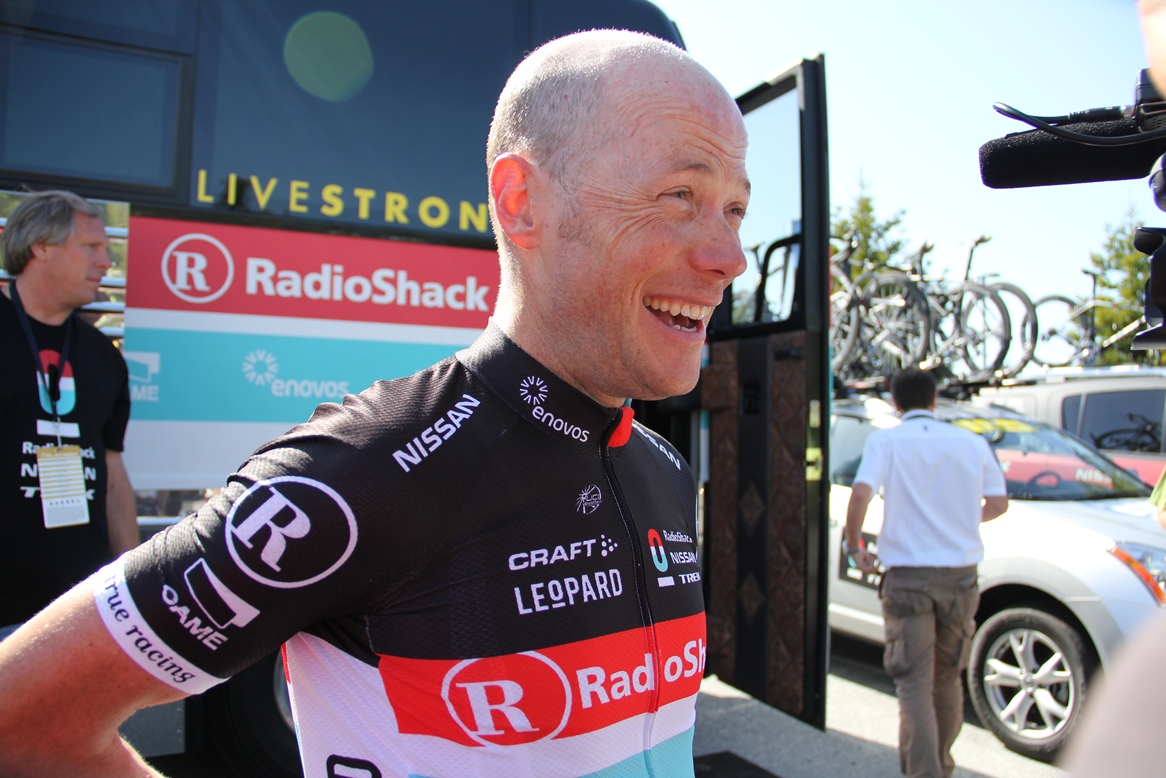
chris-horner-atoc-2012.jpg
 
Sep 15, 2016
354
238
9,680
Sure, there is talk in scientific papers but in the past there was talk about riders using it, people being riders using it, whole teams getting caught and so on... I hope you can see the difference. And, of course, the bio passport is not the best at detecting and catching dopers, but there are still direct blood and urine tests which can detect the presence of banned substances. All of them in combination work much better than whatever they were doing 20 years ago.
On the topic of oxygen consumption: I have read the calculations but it is a bit vague in my opinion. I would like to see more data on the efficiency of top endurance athletes and also the physiological processes are not well investigated.
Can you point at that "talk" during the 90's/00's? The only instances that i can think of are the Ferrari comments about orange juice, Kimmage/Walsh asking questions, and the rare case when someone was either caught by the police or felt that they were treated unfairly (Manzano/Landis). I might be mistaken but in your recollection it seems like doping was a completely open secret at the time.
 
Feb 27, 2023
797
941
6,180
Can you point at that "talk" during the 90's/00's? The only instances that i can think of are the Ferrari comments about orange juice, Kimmage/Walsh asking questions, and the rare case when someone was either caught by the police or felt that they were treated unfairly (Manzano/Landis). I might be mistaken but in your recollection it seems like doping was a completely open secret at the time.
Here is what a quick search gave me. This is certainly much more than what is known today.
Got it — you’re asking for a strictly historical reconstruction of what was actually *known, reported, or evidenced at the time (≈1980–2005), not what we learned later through confessions (e.g., Armstrong-era revelations post-2010).

That distinction changes things a lot. Here’s the cleanest possible timeline based only on contemporaneous evidence: press reports, positive tests, police cases, scientific publications, and official investigations available up to ~2005.


1) 1980s: blood transfusions — known, suspected, weakly evidenced

What was publicly documented at the time​

  • Blood transfusions were:
    • Scientifically known to improve endurance
    • Banned by the IOC in 1984
  • Widely reported example:
    • Francesco Moser and his 1984 Hour Record
      • Publicly associated with blood manipulation methods (openly discussed in media)

What evidence actually existed (pre-1990)​

  • No reliable testing method
  • No positive tests (impossible to detect autologous transfusions)
  • Evidence consisted of:
    • Admissions framed as “medical preparation”
    • Press speculation
    • Occasional insider claims

Testosterone / steroids (1980s)​

  • Detected and provable
  • Positive tests occurred across cycling
  • But:
    • Seen as secondary substances
    • Not tied to race-winning endurance in reporting

Bottom line (1980s, as known then)​

  • Blood doping:
    • Known technique
    • Lightly evidenced, rarely proven
  • Steroids:
    • Proven via tests, but not seen as decisive for cycling performance

2) 1989–1994: early EPO — suspected but invisible

What was publicly known​

  • EPO became medically available around 1989
  • Governing bodies:
    • International Olympic Committee banned it in 1990
    • Union Cycliste Internationale followed in 1991

Evidence available at the time​

  • No test existed
  • No direct positives

What was reported​

  • Sudden, unexplained:
    • Performance jumps
    • Dominance shifts in peloton
  • Early 1990s media and doctors noted:
    • Abnormally high hematocrit values (indirect clue)

Medical concerns (reported in real time)​

  • Cases of unexplained deaths among endurance athletes during sleep
    → widely suspected (not proven) to be linked to EPO

Bottom line (early 90s, as known then)​

  • EPO:
    • Strong suspicion
    • Zero direct proof
    • Considered a “rumor with circumstantial signs”

3) 1994–1997: mounting suspicion, still little proof​

What governing bodies did​

  • Introduced hematocrit limits (≈50%)
    • Officially framed as “health protection,” not doping proof

What evidence existed​

  • Riders exceeding limits were:
    • Suspended on health grounds
    • Not declared doping positives

Media and expert narrative (at the time)​

  • Increasingly explicit:
    • “EPO is widespread”
  • But still:
    • No laboratory confirmation
    • No legal proof

Testosterone / steroids​

  • Continued to be:
    • Occasionally detected
    • Not central to public doping narrative in cycling

4) 1998: the first hard evidence — Festina Affair​

The turning point​

  • Festina Affair

What was actually found (at the time)​

  • Police seized:
    • EPO
    • Growth hormone
    • Testosterone
  • From Festina team staff

Why this matters​

  • First material proofof:
    • Organized, team-wide doping
    • EPO use in elite cycling

What became public immediately​

  • Confessions from riders and staff
  • Documentation of systematic doping programs

Evidence quality​

  • Extremely strong:
    • Physical evidence
    • Police investigation
    • Admissions

5) 2000–2005: scientific proof era (EPO testing begins)​

Major development​

  • First EPO detection test introduced around 2000

What changed​

  • EPO use became:
    • Scientifically provable
    • Legally sanctionable

Key events (known at the time)​

2001​

  • Tour de France 2001 samples later reanalyzed
    • Early test development phase

2004​

  • French Anti-Doping Agency retrospective testing:
    • 1999 Tour samples linked to EPO use
    • First time older samples showed clear biochemical evidence

What evidence existed by 2005​

  • Lab-confirmed EPO positives
  • Retrospective confirmation that:
    • EPO had been widely used in late 1990s

6) Blood transfusions in the 1990s (as known by 2005)​

Public knowledge at the time​

  • Acknowledged as:
    • Older method (1980s)
  • Less discussed in 90s media because:
    • EPO dominated narrative

Evidence status​

  • Still:
    • Undetectable (autologous transfusions)
  • Therefore:
    • Rarely proven
    • Mostly speculative in reporting

7) Testosterone (1980s–2005, as known then)​

Evidence level​

  • Unlike EPO:
    • Directly testable
  • Regular (though not dominant) positives

How it was viewed at the time​

  • Performance enhancer, but:
    • Not the main explanation for endurance dominance
  • Often mentioned as:
    • Part of “cocktails” after 1998 investigations

8) Clean summary: what was actually proven vs suspected (by 2005)​

Proven (by 2005)​

  • Steroid/testosterone use → via positive tests
  • EPO use →
    • Proven from 1998 (Festina evidence) onward
    • Scientifically confirmed after ~2000
  • Organized doping systems → proven (Festina)

Strongly suspected but weakly proven​

  • Widespread EPO use before 1998
  • Extremely high hematocrit levels as indirect evidence

Known but rarely provable​

  • Blood transfusions (especially autologous)

Final takeaway (strictly “what people knew then”)​

  • 1980s:
    Blood doping known, rarely provable; steroids detectable but secondary
  • Early 1990s:
    EPO widely suspected but essentially invisible to enforcement
  • 1998:
    First hard proof of EPO and systematic doping
  • 2000–2005:
    Transition to scientific confirmation era with EPO testing
 
Jul 15, 2023
290
944
4,230
Fifth, one second behind second place. What a failure.
He’s pretty decent usually on a time trial. Occasionally, depending on the course, he can be tops. However, he is nowhere near as dominant as he is on the standard bike. He’s still up there but nowhere near an Remco or a Ganna. And then there’s this repeated pattern with him where he has, out of nowhere, a quite bad performance on the TT bike. The World Championship in Rwanda was well weird for example.
 
May 23, 2009
10,266
1,461
25,680
There's talk about synthetic hemoglobin, gene doping, papers in science of sport/medical journals about the limitations of the bio passport and ex riders stating they are at loss about what is happening. That's not nothing.

That can help explain how they are able to output high average power during the whole race and how they are able to output insane effort at the end of a long hard race, but it can't explain the oxygen consumption needed to do so, Redoute and RAF yesterday were just alien even for a completely fresh athlete.
Exactly. Without the oxygen uptake the carbon in are useless
 
Feb 20, 2026
1,375
1,171
5,180
He’s pretty decent usually on a time trial. Occasionally, depending on the course, he can be tops. However, he is nowhere near as dominant as he is on the standard bike. He’s still up there but nowhere near an Remco or a Ganna. And then there’s this repeated pattern with him where he has, out of nowhere, a quite bad performance on the TT bike. The World Championship in Rwanda was well weird for example.
Let's all forget he didn't practise his TT due to illness before Rwanda.
 
May 23, 2009
10,266
1,461
25,680
One has to be careful when comparing what riders are doing now vs in the past. I believe that up until a few years ago the training methods were really really poor. Heck, they still are for many riders but some have leaned/discovered what works (I am not saying Pog and the likes are training optimally, but they are certainly training much better than any rider up until a few years ago). Why is it so difficult to accept that one can train the gut to absorb those quantities.
Sorry but I am totally sceptical of training methods improving that much in the last 4-5 years. We're on track to see Pantani's Alpe d'Huez record broken this year, which should be untouchable with those doping methods used at the time
 
Feb 27, 2023
797
941
6,180
Sorry but I am totally sceptical of training methods improving that much in the last 4-5 years. We're on track to see Pantani's Alpe d'Huez record broken this year, which should be untouchable with those doping methods used at the time
Well OK, that is your opinion. I will write a little anecdote here. I remember listening to G talk about how he and Froome would go around riding an extra hour after training completely starved. This is after a training whilst consuming barely any nutrition. And this was maybe 2015. I hope you will agree how ridiculous that was. Extrapolating back, what do you think they were doing in the 90s? How were they training? There are a lot of stories where riders would use races to get into shape, riders going out partying for a long period in the season, not really recovering... Stage races used to have many stages which were mere processions, some breakaway would go, nobody would really ride, people would go out during the stage races then be winning the next day. All in all it was a less professional sport with less dedicated sportsmen and some who trained semi-well during some part of the season showed some good results. Fortunately, this all changed some time around 2020 and now we are seeing what humans are really capable of doing (probably even more than this but it is a good trajectory).
Edit: I did not quite address the doping methods you mentioned. Sure, doping helped, but even a doped up to the gills and possibly very talented Pantani can only do so much after all night cocaine sessions .