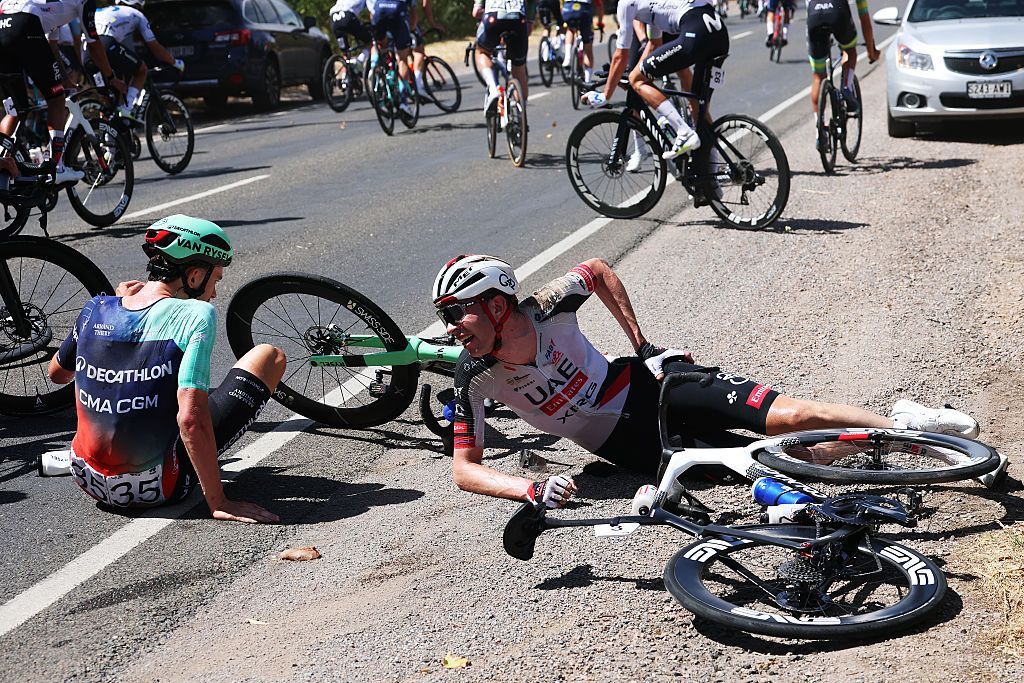
Crashes, what can be done?

Page 81 - Get up to date with the latest news, scores & standings from the Cycling News Community.
Sep 5, 2016
5,515
8,709
23,180
If you read the injury shopping list.... riders with broken teeth, collarbones, pelvis, Kung injury described so far as a fracture to thigh area? The Mads mess sounds workable, same with Wellens, but Trek and UAE are losing key riders all over the place. if Wellens gets screws and plates he can be training in @3-4 weeks limited duty. Narvaez still a wait and see..TDF squad for UAE will surely change if rate of attrition keeps up.
 
May 3, 2023
86
118
1,880
If you read the injury shopping list.... riders with broken teeth, collarbones, pelvis, Kung injury described so far as a fracture to thigh area?
Airbags seem to be a good idea, but which one of these injuries would have been prevented if the riders had worn them?

And which crashes were caused by reckless riding? The only "dumb/avoidable" crashes I saw were caused by riders trying to put on or remove their raincoats. And the consequences seemed relatively minor.

So, what can be done, really?
 
May 27, 2022
1,381
2,390
7,680
I've been saying this for a while, the biggest problem is this obsession from DS's to be at the front. I turn on KBK and the riders are fighting tooth and nail to get to some random right hand bend with over 100k to go.

However, I don't think there's much more crashes than before, I remember the opening stages of the 2010 Giro in Holland being a crash fest, 2004/11/15/21 TDF first weeks had loads of big crashes, and the 2007 GW was the worst day of crashes I have ever seen.
 
  • Like
Reactions: Oldman
May 29, 2019
11,596
11,923
23,180
Training crashes have nothing to do with the solutions to pro racing crashes. Open roads alone or in small groups has a totally different risk profile to a full péloton at race speeds on closed roads. Oftentimes the very same things that can make a road entirely unsuitable for race conditions are essential safety features of that same road when open to traffic.

Conflating the two just detracts from your point.

I don't know to whom you replied with this as at least last couple of posts didn't involve training crashes. As for possible introduction of more safety apparel in pro road peloton, that IMHO will affect training sessions too. Luckily.

As for the sport getting banned due to danger levels, the Isle of Man TT still takes place every single year.

Is Isle of Man TT a mainstream sport and/or where there ever calls involved to ban it altogether? Do you reckon does pro road peloton want to be associated with it in terms of athlete safety?

Airbags seem to be a good idea, but which one of these injuries would have been prevented if the riders had worn them?

Likely most.

And which crashes were caused by reckless riding? The only "dumb/avoidable" crashes I saw were caused by riders trying to put on or remove their raincoats. And the consequences seemed relatively minor.

Even if it would be true, that still doesn't mean it can continue go on.

So, what can be done, really?

A lot of things but currently not much is being done about it. Some jerking around with a tape measure and similar and that is it.
 
Aug 13, 2024
910
954
4,180
I've been saying this for a while, the biggest problem is this obsession from DS's to be at the front. I turn on KBK and the riders are fighting tooth and nail to get to some random right hand bend with over 100k to go.

However, I don't think there's much more crashes than before, I remember the opening stages of the 2010 Giro in Holland being a crash fest, 2004/11/15/21 TDF first weeks had loads of big crashes, and the 2007 GW was the worst day of crashes I have ever seen.
There are more crashes than before. Probably the strongest correlate is increased speed but it all hangs together with evrything else. The race is "on" for much longer than before now. Which increases speed in turn. DS are rightly panicking about being at the front because the cost of being at the back is very high with the large peloton (also due to the risk of crashes).
 
Last edited:
May 29, 2019
11,596
11,923
23,180
broken teeth? collarbones? pelvis? thigh? The only workable prototype of a cycling airbag we have seen would have done nothing to help.
But anyway, it would at least be a step in the right direction. Better than nothing.
But not enough.

Hard to tell as the head bumped into the ground on where the teeth gave up. With activated airbaig the space in between the chest and the ground would be bigger so there is a chance for the teeth to be saved as a result. Colarbone and pelvis/hip yes, no brainer, thigh will likely be covered with an airbag too, current models that focus on pelvis/hip area could again help in some occasions with the thigh, mostly due to thigh being further away from the ground on impact, due to pelvis area being inflated. Obviously dedicated air sleeve for the tight to further reduce the possibility of injury.
 
  • Like
Reactions: Eagle_Alps
Feb 20, 2010
33,109
15,478
28,180
I don't know to whom you replied with this as at least last couple of posts didn't involve training crashes. As for possible introduction of more safety apparel in pro road peloton, that IMHO will affect training sessions too. Luckily.
Did you even read the articles you were citing? The Zoe Backstedt one was about a training crash.
Is Isle of Man TT a mainstream sport and/or where there ever calls involved to ban it altogether? Do you reckon does pro road peloton want to be associated with it in terms of athlete safety?
Motor racing is pretty mainstream, although the TT is pretty niche within it. And of course the pro road péloton doesn't want to be associated with it in terms of athlete safety. And, you know what, it isn't. Because it's a lot safer - even in its current state - than the TT is. And yet the TT runs every year and it is not under threat of being banned altogether.

And nor is professional road cycling, except in your most hare-brained hyperbole.
 
Dec 6, 2013
8,560
7,920
23,180
I've been saying this for a while, the biggest problem is this obsession from DS's to be at the front. I turn on KBK and the riders are fighting tooth and nail to get to some random right hand bend with over 100k to go.

However, I don't think there's much more crashes than before, I remember the opening stages of the 2010 Giro in Holland being a crash fest, 2004/11/15/21 TDF first weeks had loads of big crashes, and the 2007 GW was the worst day of crashes I have ever seen.
I disagree. There have always been crashes, but there are considerably more now.
 
Jun 19, 2009
6,238
1,256
20,680
broken teeth? collarbones? pelvis? thigh? The only workable prototype of a cycling airbag we have seen would have done nothing to help.
But anyway, it would at least be a step in the right direction. Better than nothing.
But not enough.
Maybe help for a collarbone; the easiest injury to heal. They can help shield the vital organs from the one organ that makes the mistakes. The helmet is supposed to protect that.
 
May 29, 2019
11,596
11,923
23,180
Did you even read the articles you were citing? The Zoe Backstedt one was about a training crash.

That explains it as the reaction was implying you were triggered by something but i didn't know what caused it. Well, the truth is it doesn't make much difference, does it?

Motor racing is pretty mainstream, although the TT is pretty niche within it. And of course the pro road péloton doesn't want to be associated with it in terms of athlete safety. And, you know what, it isn't. Because it's a lot safer - even in its current state - than the TT is. And yet the TT runs every year and it is not under threat of being banned altogether.

I mean you brought this race up, not me, likely mentioning cricket of curling wouldn't do. I assume. Anyway, i agree that pro road peloton should never be associated with it, as that would be very damaging to the reputation. As for if the event you mentioned is under threat of getting banned. It is/was, basically every year that deaths surged the calls to ban it altogether emerged. Is organiser concerned by it? IMHO they are rather concerned by that. For example in 2025 it was only second time in history on where nobody died and starting with 2026 season airbag systems will become mandatory. IMHO it could happen, if at some season going forward death toll to surge, for organisers to get raided and jailed and for event to get banned.

And nor is professional road cycling, except in your most hare-brained hyperbole.

I don't know about that, the era of naivety is IMHO over, more in depth coverage, pressure and sensitivity on the raise:


On top of that i guess that is only the tip of the iceberg:


It's a well known fact that if a woman keeps body fat percentage too low for prolonged time certain biological processes simply stop and illness such as osteoporosis surges. In modern sport such things are becoming a part of the sport, on where in the past the sport wanted to keep it out. Cycling here i guess again not on the frontiers but again likely one of the last sport to acknowledge it. For example even Isle of Man TT has beaten pro road peloton to it, on when it comes to introduction of safety apparel, such as airbag systems. This is just beyond.
 
Feb 20, 2010
33,109
15,478
28,180
That explains it as the reaction was implying you were triggered by something but i didn't know what caused it. Well, the truth is it doesn't make much difference, does it?
Yes it does, because, as I mentioned, training is entirely different from racing, and road furniture that is a danger for road racing is an essential safety feature the rest of the year. When you're debating the dangers of road racing, crashes outside of race conditions are entirely irrelevant.

I don't know about that, the era of naivety is IMHO over, more in depth coverage, pressure and sensitivity on the raise:

There is a huge, huge, insane logical leap of interpretation from "more riders have got injured early season than usual" to "people are legitimately calling for this sport to be banned".

On top of that i guess that is only the tip of the iceberg:


It's a well known fact that if a woman keeps body fat percentage too low for prolonged time certain biological processes simply stop and illness such as osteoporosis surges. In modern sport such things are becoming a part of the sport, on where in the past the sport wanted to keep it out. Cycling here i guess again not on the frontiers but again likely one of the last sport to acknowledge it.
That has absolutely nothing to do with crashes in road racing or implementing of airbags. It's literally nothing to do with the point at hand. It is a perfectly reasonable discussion point, but it's completely unrelated to your prior argument or in fact this thread as a whole.

You detract from any good points you have to make when your argument is presented in ludicrously bad faith.

You supported the point of there being too much danger in racing by including an article about someone who crashed in training. Then you claimed you didn't post an article about a crash in training. When then confronted with the evidence that, in fact, you did, you claim it still supports your point.

You claimed that cycling is on its way to being banned, a completely and utterly baseless statement, which you attempt to support by posting a link to an article that claims nothing more than "more riders than usual have got hurt so far this season", and then for some reason throw in a completely unrelated article about women's health that has absolutely nothing to do with the outcomes of crashes. Literally nothing is said in that article about rider safety in the context of crashes and injuries.

So, again, I ask you, do you actually read the articles you post in favour of your argument? Or do you just make your argument and throw hyperlinks in there in the blind hope that it supports your point?
 
Sep 5, 2016
5,515
8,709
23,180
Maybe help for a collarbone; the easiest injury to heal. They can help shield the vital organs from the one organ that makes the mistakes. The helmet is supposed to protect that.
This is a bit misleading. Fractured clavicle injuries vary widely. So does medical care. For decades in the US and much of Western Europe, the remedy for routine, clean breaks was to immobilize the injury, using an inexpensive, easy to use ,simple device that generally held the broken bone in place and @5-7 weeks later , injury area was useable and in short time frame, with no further follow up broken bone was fully healed.
Today many people, even non athletes get surgery on broken bone, again fairly simple surgical procedure to sandwich broken area with plates and screws, holds the broken bone securely together and bone fuses faster and for some , there is less of a " calcium lump ". I don't know any collar bone models but I guess they are out there.

Bicycle helmets are a utter engineering joke as I have repeated dozens of different ways. Your head doesn't know if you are falling on pavement at 50mph from a motorcycle or bicycle but bicycle industry insists that somewhere forces nobody can see or describe determine a different outcome in injury and protection.
Many water ski helmets have better engineering and protective properties.
Polo, skateboards, snow skiing, rock climbing, many are generally better than bike helmet design which have only grown more to look like ridiculous polystyrene toupees with some protection on top, none on rear held or by a strap resembling a healthy shoelace.

And as I have repeated, there is no data, none.
UCI isn't telling anyone anything if they have secret safety data.
Is there a manufacturer that is involved in disproportionate number of crashes?
Is SRAM more dangerous than Shimano? Do tell.
Does one brand of wheel, tire, tube ,seat, bars, groupo, chain ,crank, pedal factor in crashes?
Especially serious injury or the rare fatal accident.
What is the data set?
Who has it?
I often get angry thinking about the three or four major factors on the subject, no science, no data, no honesty and a deep, deep degree of things disingenuous.

If I was in discussion with friends or family, business associates and all had some knowledge of racing and my history since before my 5th birthday as a baseline. If I said out loud that I thought a starting point for the crash corrective action in bike racing was to focus in on ten tooth cog and that I had already spent years and @€300,00+ on litigation..
There would be an intervention of some kind.
Many friends who do know riding and racing would never listen or respect any thing I said. But instead of my made up story, that is actually going on in real life.

It's like rider location safety beacons. Is it a major crash issue?
Do riders often get lost?
They go off the road and nobody notices? It obviously happened, it was a terrible tragedy.
But the solution was insane for it's lack of communication. Take the problem..
Rider going off the road
..obviously, easy, least expensive solution. Tell teams, talk to teams, talk to Garmin, talk to Wahoo, other popular products being used. Does your current device have a function like that?
The answer for the majority was yes, our head end can do that.
Problem solved at lowest level, rider safety improved. And a seldom talked about or sold feature is part of a marketing angle, track your kid, wife, husband, friend while out on the bike. What happened was the opposite, UCI and others created multiple problems where there was none.
I would use real life and great engineers, engineering as examples for the path forward. If Honda, Toyota, Ford and a few others experienced wide spread problems with air bag deployment, either incorrectly or random, arbitrary activation, nobody should trust the UCI to test, approve or oversight on anything so technical and potentially dangerous and deadly. The guys have issues with socks and jerseys, have yet to come up with rain jacket safety.
Hey UCI hire me..problem riders crashing from putting on and taking off rain jackets while in motion... Wait for it..my 3 Stooges solution, riders need to stop, to put on or take off jackets and chase back on. Problem solved, thanks that will be a million dollars.
UCI couldn't keep race and riders safe during the Vuelta, they had to hold awards in a semi secret parking garage because they couldn't figure it out. Are conditions that lead to safety issues last year improved or are they worse? UCI better put their thinking cap on ..

 
May 29, 2019
11,596
11,923
23,180
Yes it does, because, as I mentioned, training is entirely different from racing, and road furniture that is a danger for road racing is an essential safety feature the rest of the year. When you're debating the dangers of road racing, crashes outside of race conditions are entirely irrelevant.

Of course that is not a valid claim at all and athlete safety is important on training sessions too. It even goes beyond that all the way down to amateur level and casual cyclists. Why was super tuck banned? It wasn't due to professional cyclists, it was due to not representing a bad example to copy for amateur cyclists. Testimonials of some prominent cycling personas or even regular amateurs are hence perfectly valid here.

Bicycle helmets are a utter engineering joke as I have repeated dozens of different ways. Your head doesn't know if you are falling on pavement at 50mph from a motorcycle or bicycle but bicycle industry insists that somewhere forces nobody can see or describe determine a different outcome in injury and protection.
Many water ski helmets have better engineering and protective properties.
Polo, skateboards, snow skiing, rock climbing, many are generally better than bike helmet design which have only grown more to look like ridiculous polystyrene toupees with some protection on top, none on rear held or by a strap resembling a healthy shoelace.

And as I have repeated, there is no data, none.


"Maybe I wouldn't be here today if I hadn't had a helmet on"

As for:

There is a huge, huge, insane logical leap of interpretation from "more riders have got injured early season than usual" to "people are legitimately calling for this sport to be banned".

It used to be rather hard to get stats of injuries but lately even popular cycling orientated news sites report them. Kudos to that. So you feel it's sustainable to have 40 riders out in early March due to the injuries with gazillion more lucky enough to only crash? This is something that won't start to represent a real issue to pro road peloton, maybe even existential one? At least in terms of positioning it as a mainstream sport.

Why wouldn't it?

That has absolutely nothing to do with crashes in road racing or implementing of airbags. It's literally nothing to do with the point at hand. It is a perfectly reasonable discussion point, but it's completely unrelated to your prior argument or in fact this thread as a whole.

You detract from any good points you have to make when your argument is presented in ludicrously bad faith.

You supported the point of there being too much danger in racing by including an article about someone who crashed in training. Then you claimed you didn't post an article about a crash in training. When then confronted with the evidence that, in fact, you did, you claim it still supports your point.

You claimed that cycling is on its way to being banned, a completely and utterly baseless statement, which you attempt to support by posting a link to an article that claims nothing more than "more riders than usual have got hurt so far this season", and then for some reason throw in a completely unrelated article about women's health that has absolutely nothing to do with the outcomes of crashes. Literally nothing is said in that article about rider safety in the context of crashes and injuries.

So, again, I ask you, do you actually read the articles you post in favour of your argument? Or do you just make your argument and throw hyperlinks in there in the blind hope that it supports your point?

I expected some backlash on this one and some of your concerns are valid but you have to understand that so far i haven't seen any discussion about it and one could i guess need some guidance on where to put a discussion on women periods.

The decision, on why i posted it here is:

  • It has to be discussed somewhere.
  • It shouldn't be discussed in some obscure topic.
  • We somehow determined that at least in near future nobody will do anything to prevent actual crashes.
  • Ultimately mid term strategy will be to mitigate, that is to reduce injuries.
  • Health is hence what we can do, the thing we can do about crashes.
  • Health is what we can furthermore substantially improve, at least on the woman side, by settings such rules and conditions, for biological processes to be ongoing as normal.
So in short, by athletes getting better apparel and by that reducing the number of injuries and by setting some thresholds, as for example minimal percentage of body fat still allowed to enter a GT, by doing that we can substantially improve athlete health.

As for somebody doing anything to actually reduce number of crashes. Who? It's riders fault anyway, isn't it? So all in all health it is then, beyond that forget it, to much reluctance involved for now.
 
Last edited:
Feb 20, 2010
33,109
15,478
28,180
Of course that is not a valid claim at all and athlete safety is important on training sessions too. It even goes beyond that all the way down to amateur level and casual cyclists. Why was super tuck banned? It wasn't due to professional cyclists, it was due to not representing a bad example to copy for amateur cyclists. Testimonials of some prominent cycling personas or even regular amateurs are hence perfectly valid here.


You posted it in response to an article about the number of race crashes on opening weekend. I'm sorry, but an article about a training crash is not relevant to in-race crashes on opening weekend. Arguing that the importance of the helmet makes it relevant is completely disingenuous, when helmets have been compulsory at all times in pro cycling for 20 years, so every single rider involved in a crash during a race should be wearing a helmet.

It used to be rather hard to get stats of injuries but lately even popular cycling orientated news sites report them. Kudos to that. So you feel it's sustainable to have 40 riders out in early March due to the injuries with gazillion more lucky enough to only crash?
You do realise this is actually a weakness in your argument, right? That the number of injuries might not be going up as much, it's just that reporting of those injuries is better now?

I largely feel that we have a similar number of accidents, but the problem is that the péloton is much faster nowadays (meaning the impacts of crashes are more severe) and the focusing of the elite péloton into a smaller number of teams, increasing the depth of the pro péloton, means that the bunch stays together longer so when there is an incident, more riders are dragged into it. This is why I actually think longer and more difficult races might actually be a good thing, because while it introduces fatigue, it also requires more effort management, and the riders can't just go full send at 100% at all times, so the consequences of an error will be lower on average.
This is something that won't start to represent a real issue to pro road peloton, maybe even existential one? At least in terms of positioning it as a mainstream sport.

Why wouldn't it?
You're tilting at windmills, Abi. You're inventing a situation in your head, imagining the worst possible outcome to it, and screaming that everybody needs to believe in your invented apocalyptic scenario. There have been a high number of injuries in the early season this year that mean that the people in charge of the sport need to consider whether any action can or should be taken. Nothing more, nothing less. It doesn't present a danger to the existence of professional cycling any more than a few high-profile players getting their legs broken presents a danger to the existence of professional soccer.

I expected some backlash on this one and some of your concerns are valid but you have to understand that so far i haven't seen any discussion about it and one could i guess need some guidance on where to put a discussion on women periods.

The decision, on why i posted is here is:

  • It has to be discussed somewhere.
  • It shouldn't be discussed in some obscure topic.
  • We somehow determined that at least in near future nobody will do anything to prevent actual crashes.
  • Ultimately mid term strategy will be to mitigate, that is to reduce injuries.
  • Health is hence what we can do, the thing we can do about crashes.
  • Health is what we can furthermore substantially improve, at least on the woman side, by settings such rules and conditions, for biological processes to be ongoing as normal.
So in short, by athletes getting better apparel and by that reducing the number of injuries and by setting some thresholds, as for example minimal percentage of body fat still allowed to enter a GT, by doing that we can substantially improve athlete health.

As for somebody doing anything to actually reduce number of crashes. Who? It's riders fault anyway, isn't it? So all in all health it is then, beyond that forget it, to much reluctance involved for now.
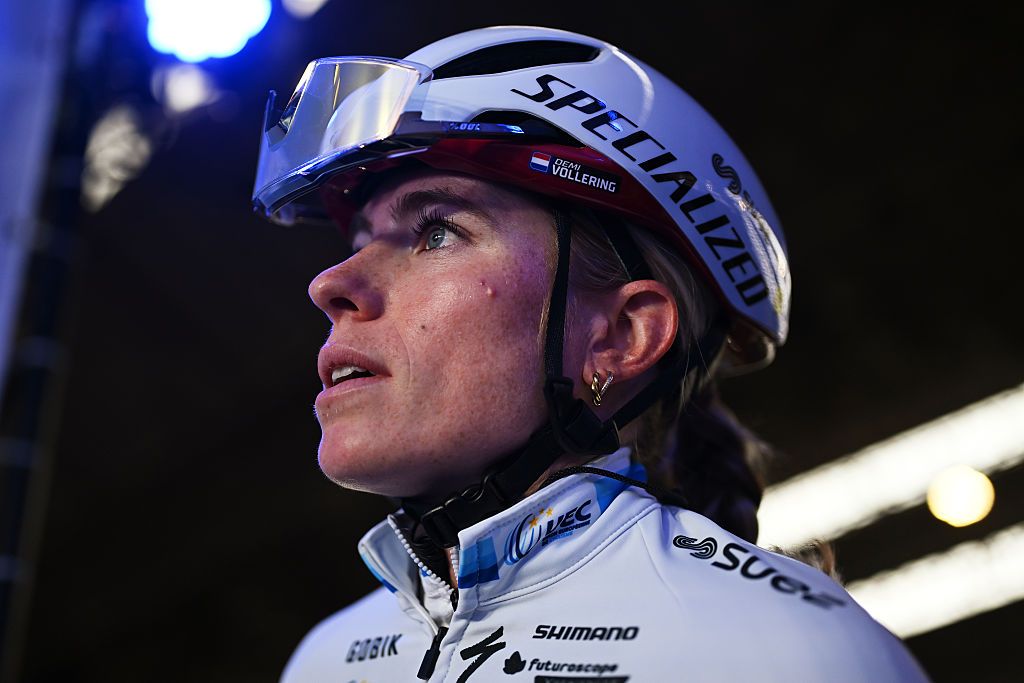
But the article has nothing to do with crashes, and has absolutely nothing to do with apparel. It's completely off-topic for this thread. You could put it in the general women's cycling thread, you could put it in the Demi Vollering thread, you could make a new thread to discuss it.

What's more, you didn't add the article to say "and here's a completely different issue that I think we need to discuss", you added it pretending it was somehow a related issue to the number of crashes in the early season in 2026 and backed up your point.

And then turning around and summarising by throwing your crusade about protective apparel in at the end as though what Vollering was talking about had anything whatsoever to do with your obsession with airbags is exactly what I mean by how your disingenuous arguments detract from the actual good points you have.

And I still remember how when you first came into this thread, you didn't actually care about rider safety in the slightest, since you spent the whole time arguing about ways to stop GC riders losing time when accidents happened, because you were upset that Primož Roglič falls over a lot.
 
  • Like
Reactions: SHAD0W93
Sep 5, 2016
5,515
8,709
23,180
Of course that is not a valid claim at all and athlete safety is important on training sessions too. It even goes beyond that all the way down to amateur level and casual cyclists. Why was super tuck banned? It wasn't due to professional cyclists, it was due to not representing a bad example to copy for amateur cyclists. Testimonials of some prominent cycling personas or even regular amateurs are hence perfectly valid here.


As for:


It used to be rather hard to get stats of injuries but lately even popular cycling orientated news sites report them. Kudos to that. So you feel it's sustainable to have 40 riders out in early March due to the injuries with gazillion more lucky enough to only crash? This is something that won't start to represent a real issue to pro road peloton, maybe even existential one? At least in terms of positioning it as a mainstream sport.

Why wouldn't it?


I expected some backlash on this one and some of your concerns are valid but you have to understand that so far i haven't seen any discussion about it and one could i guess need some guidance on where to put a discussion on women periods.

The decision, on why i posted it here is:

  • It has to be discussed somewhere.
  • It shouldn't be discussed in some obscure topic.
  • We somehow determined that at least in near future nobody will do anything to prevent actual crashes.
  • Ultimately mid term strategy will be to mitigate, that is to reduce injuries.
  • Health is hence what we can do, the thing we can do about crashes.
  • Health is what we can furthermore substantially improve, at least on the woman side, by settings such rules and conditions, for biological processes to be ongoing as normal.
So in short, by athletes getting better apparel and by that reducing the number of injuries and by setting some thresholds, as for example minimal percentage of body fat still allowed to enter a GT, by doing that we can substantially improve athlete health.

As for somebody doing anything to actually reduce number of crashes. Who? It's riders fault anyway, isn't it? So all in all health it is then, beyond that forget it, to much reluctance involved for now.
For me most " helmet saved my life comments " make me shake my head in disbelief. Almost in complete denial of basic engineering principles and practices. Majority of bicycle helmets can be damaged beyond practical use or generally destroyed in a riders hands. You can break a typical bicycle helmet with your hands. Some evolution test would be to see at what age a child couldn't break a helmet by hand as a measurement.
Just so I am perfectly clear, vast majority of bicycle helmets are completely garbage. There is little rugged or hearty about the design. The fact that they break when you crash ( by design) is only surprising or scary for someone not paying attention. If you were to do a head stand with your body weight on the helmet and a hard surface it will likely break. Why be surprised that at any speed, but certainly @20+ mph that the helmet is destroyed.
People typically just ignore or avoid why motorcycle helmets are made with such superior materials, quality and everything is just better for an identical activity, riding 2 wheels on pavement, often with vehicle traffic and at very similar speeds. When you are going @25 or 30 the pavement you are falling into does not know if you achieved the speed by kite, skateboard, motorcycle, bicycle, rollerblades, horseback.. The pavement can't react. There are millions of pictures of damaged, destroyed bicycle helmets and they are normally accompanied by some safety message, too infrequently in my opinion is the flimsy chin strap and padding design evaluated. You can often move a bicycle helmet that is secured in place, chin strap clicked closed, you can move the helmet out of position with your hands, which simulate a tiny, tiny fraction of the force that happens when you fall off going 30 or 40.
We could go back and forth in some false debate about build quality of bicycle helmets and could make another agreement even deeper and more sad about comparison between motorcycle helmets and bicycle helmets.. Again always in recognizing that when you get hit by a car , you going @20 the car going at speed, when you fall off of whatever 2 wheeler the ground or whatever you hit against doesn't really care what you fell off of.
I have lots of experience with bicycle swap meets in California, Colorado ,Arizona, Texas, Florida and New York.. Had fun at all I have ever attended.
I used to buy old SkidLids and Brancale helmets and wear them as a joke. My original Giro was a swim flotation device covered with a nylon sock..I also own some hairnets, old leather helmets like the greatest were pictured in.
Easy test, if you have a bike helmet on your head, secured and you can fiddle with it , move it around, possibly pull it off ..it's a joke. In my opinion all helmets should cover temples and ears, and greatly improve the amount of skull that is covered.
Here's a video from UCI like testing facility..
View: https://m.youtube.com/watch?v=3EIgmj6gp1I&pp=ygUNaG90IHJvZCBtb3ZpZQ%3D%3D

Variety of helmets in this movie..
 

TRENDING THREADS