
- Jul 29, 2023
- 1,163
- 2,003
- 6,680
Vingegaard out of UAE Tour according to PCS.
https://www.tntsports.co.uk/cycling...italia-tour-de-france_sto23267288/story.shtml


Vingegaard out of UAE Tour according to PCS.
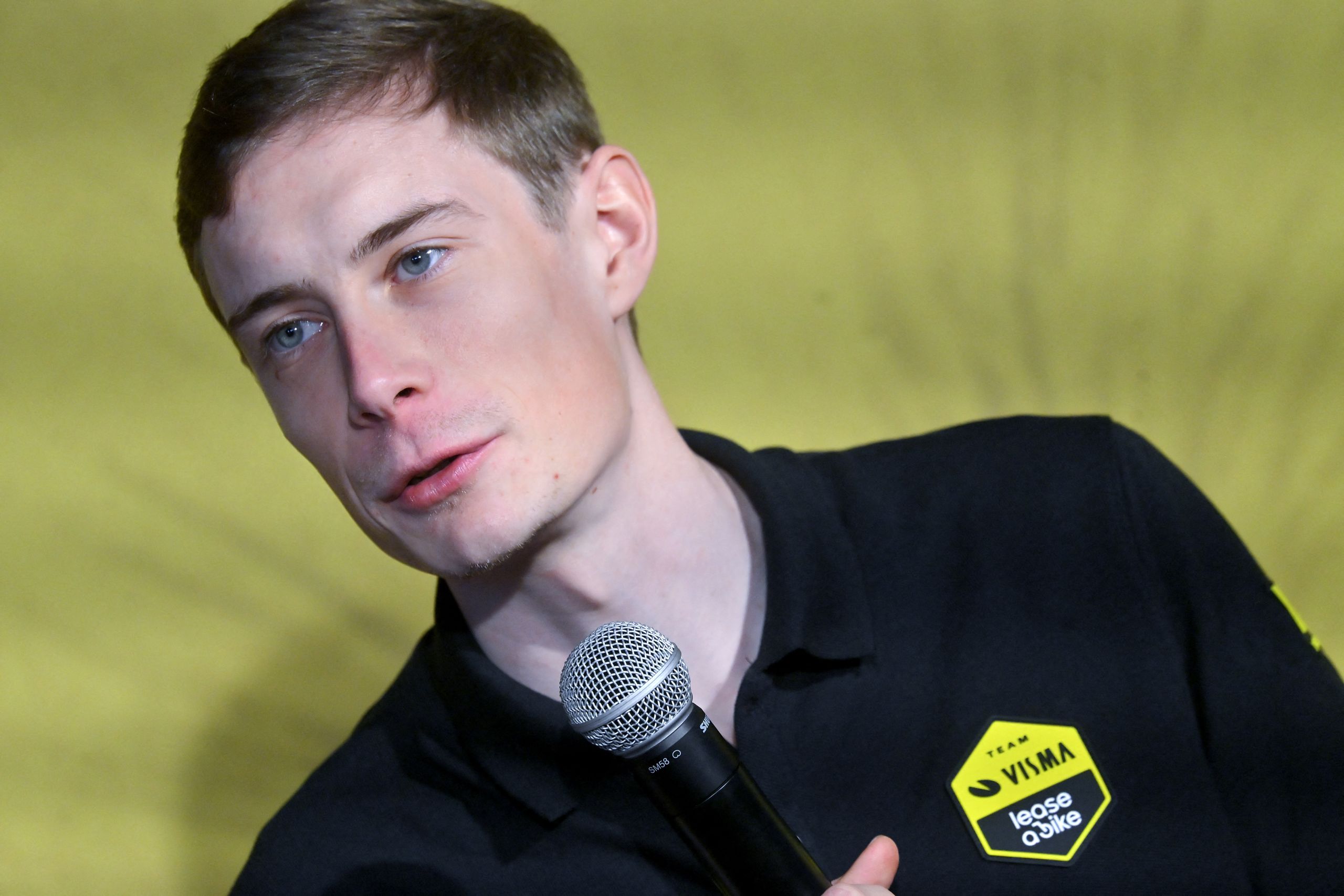
Jonas Vingegaard will miss his season debut at the UAE Tour through illness and injury. Vingegaard suffered the injury following a training crash involving an incident with an amateur rider. The Dane now has just one race scheduled before his Giro d'Italia debut as he attempts the Giro-Tour de France double.

 www.cyclingweekly.com
Measures in terms of training in a team, with a team car or when training solo to at least have some escort, for example a staff member on a electric scoter. That realistically is now becoming a need, something teams will need to start providing to assist their riders when confronted with needy fans on a long "solo" training sessions. Privacy is unfortunately not a luxury they still have.
 www.cyclingweekly.com


From the Remco thread, but replying here, @Peyresourde .My recommended strategy on the Loze stage: He was extremely explosive last year, even so much so that his explosivity was closer to Pogacar than his extended climbing level.
If he wanted to go all in, he should have (with the help of 2-3 teammates) done 10 w/kg on the steep bottom part of the first climb (Glandon). Pogacar follows Vingegaard everywhere, this can also be exploited.
After Vingegaard and Pogacar both do 10 W/kg on the bottom of the first climb of a monster stage, no one knows what would have happened later. This is the definition of going all in and either of them could have completely collapsed later on.
(If Pogacar dos not follow, just abort immediately or go for a 150km solo attempt).
Visma is great at the satellite rider game, but they were overfocused on it the last tour. Half the use of a satellite rider is to be a threat so that Pogacar has to follow (which worked great in 2022 but is not necessary anymore because Pogacar will now follow anyway.)

And they will get egg on their face again because Vingegaard has been the one getting affected by it.*According to a recent interview with Grisha Niermann, they still believe in some version of this fatigue strategy.
Yeah, well, he was mega inconsistent in the fresh efforts. The first ITT was very bad, same with Hautacam. Peyragudes and Ventoux very fresh and very good. Big mtn stages are a bit hard to judge but certaintly not very good on any of them.And they will get egg on their face again because Vingegaard has been the one getting affected by it.
I never believed in the fatigue thing, even in 2022 and 2023 (maybe there was some merit in 2023 as pogacar had a disrupted prep). The stages in 2022 where Vingegaard dropped Pogacar were not that hard. The important thing was that Vingegaard was slightly stronger anyway and that Pogacar spent more energy than Vingegaard on Galibier and Spandelles. So Vingegaard started the last climbs with a relative advantage.From the Remco thread, but replying here, @Peyresourde .
I agree with that strategy. What amuse me is when Vingegaard and others say things like, “I’m willing to sacrifice second place to go for first,” when they clearly do not mean it in an absolute sense. I think many intepret this to mean that he doiesen't care where he ends up unless he wins, but that is not was what he means.
I think what they actually mean is that they are willing to risk losing second place, but not the podium entirely. For example, attacking very hard on the Madeleine could, in theory, have cost Vingegaard time to Lipowitz if Lipowitz had ridden more intelligently. But there was almost no realistic scenario where Vingegaard would lose the podium altogether because of such a move.
Here is how I see Vingegaard’s approach on stages 18 and 19:
*According to a recent interview with Grisha Niermann, they still believe in some version of this fatigue strategy.
- He had already used a lot of energy in earlier attempts where he was beaten. There were probably not many serious attacks left in him, which we also saw in his defensive riding before and on La Plagne.
- He wanted to secure second place.
- The team still seemed to believe* in the idea that fatigue would affect Pogacar in the third week if they made the big mountain stages extremely hard. Their plan could have worked in two ways on Madeleine: either Vingegaard drops Pogacar and uses Jorgenson in the valley, or he attacks early and simply makes the stage very hard before Col de la Loze. They had not really tried this fatigue based strategy before stage 18. On the final climb, however, Vingegaard did not have the legs. That was clear from how long he waited to attack and how little explosiveness there was when he finally did.
- The La Plagne stage was shortened, so their original plan must have changed. I suspect they intended to go all in on the steep section of Col du Pré. But, as on Cime de la Bonette the year before, Vingegaard likely called it off because he did not feel strong enough. At that point, a stage win was probably the only realistic goal, and he was not strong on La Plagne. If he had been, his racing would have looked very different.

The more important thing was that Vingegaard had slighty better w/kg those 2 Tours.
The only ones with egg on their faces are UAE. They somehow lost two tours in a row with Tadej freaking PogacarAnd they will get egg on their face again because Vingegaard has been the one getting affected by it.
Generally agreed with your post but not sure about 2023: they were evenly matched until the TT and Loze collapse and Pog dropped Vingo multiple times as well. I would say his prep could've affected his 3rd week then.
Which is what Pogacar did on the cobbled stage in 22, imo. He had already spent a massive bullet for 13 seconds gain. Very arrogant riding that year in general. He rode like he was unbeatable and didn't realize that JV would be at his level or even slightly stronger. And he also had a very bad team around him while Visma was just crazy strong that year.GC rider now recovers almost 'perfectly' for the next stage unless there are circumstances involved. (bad preparation, illness, crashes, extremely excessive waste of energy compared to rivals).
They were quite poor given their talent and resources. Much has changed since, but thank the lord they are still chaotic and tactically bad. Cost them the Giro this year which was hilarious (and very nice for Simon Yates).The only ones with egg on their faces are UAE. They somehow lost two tours in a row with Tadej freaking Pogacar
How good was Puy du dome really compared to La Loze? This must be a difficult climb to rate given its peculiar profile.Yes, 2023 is the only year where it could have had an effect. Although it was also rumored that Pogacar had a stomach bug in the 3rd week. He was also really pale even the stages following Loze, which should not simply be the result of fatigue. And Pogacar had pretty equal watts to Vingegaard for 1 and a half weeks, but Vingegaard's best performances were Loze and the TT which were better than Pogacar's best in that Tour. (He could have matched it on Joux Planes without the standoff)
I think in 2022 their equipment was also crap (they already had the V4RS like in 23 and 24 but bad tires, slow wheels and no aero helmets on flat stages.) This may have cost him Flanders and 30s in the Tour cobble stage (compared to if he had used the 2023 equipment). Meanwhile Visma was on the Cervelo S5 in 2022, which is still to this date one of the fastest bikes in the peloton.Which is what Pogacar did on the cobbled stage in 22, imo. He had already spent a massive bullet for 13 seconds gain. Very arrogant riding that year in general. I rode like he was unbeatable and didn't realize that JV would be at his level or even slightly stronger. And he also had a very bad team around him while Visma was just crazy strong that year.


That’s actually great news for once from himHe is racing Paris Nice
Overrated training if you ask me. He will gain 20" on Pogacar in the best case scenario. This is nothing. I think he is doing PN just to get some miles.Paris-Nice has a 23,5 km long TTT (with Paris-Nice rules of course) so an important test before the Tour. Catalunya does not have a TTT.

Yes, tend to agree. If he wanted to train for the TTT, he would be in the start list initially.Overrated training if you ask me. He will gain 20" on Pogacar in the best case scenario. This is nothing. I think he is doing PN just to get some miles.


 Facebook
 Twitter
 Instagram