


- Jul 7, 2013
- 8,319
- 15,188
- 23,180
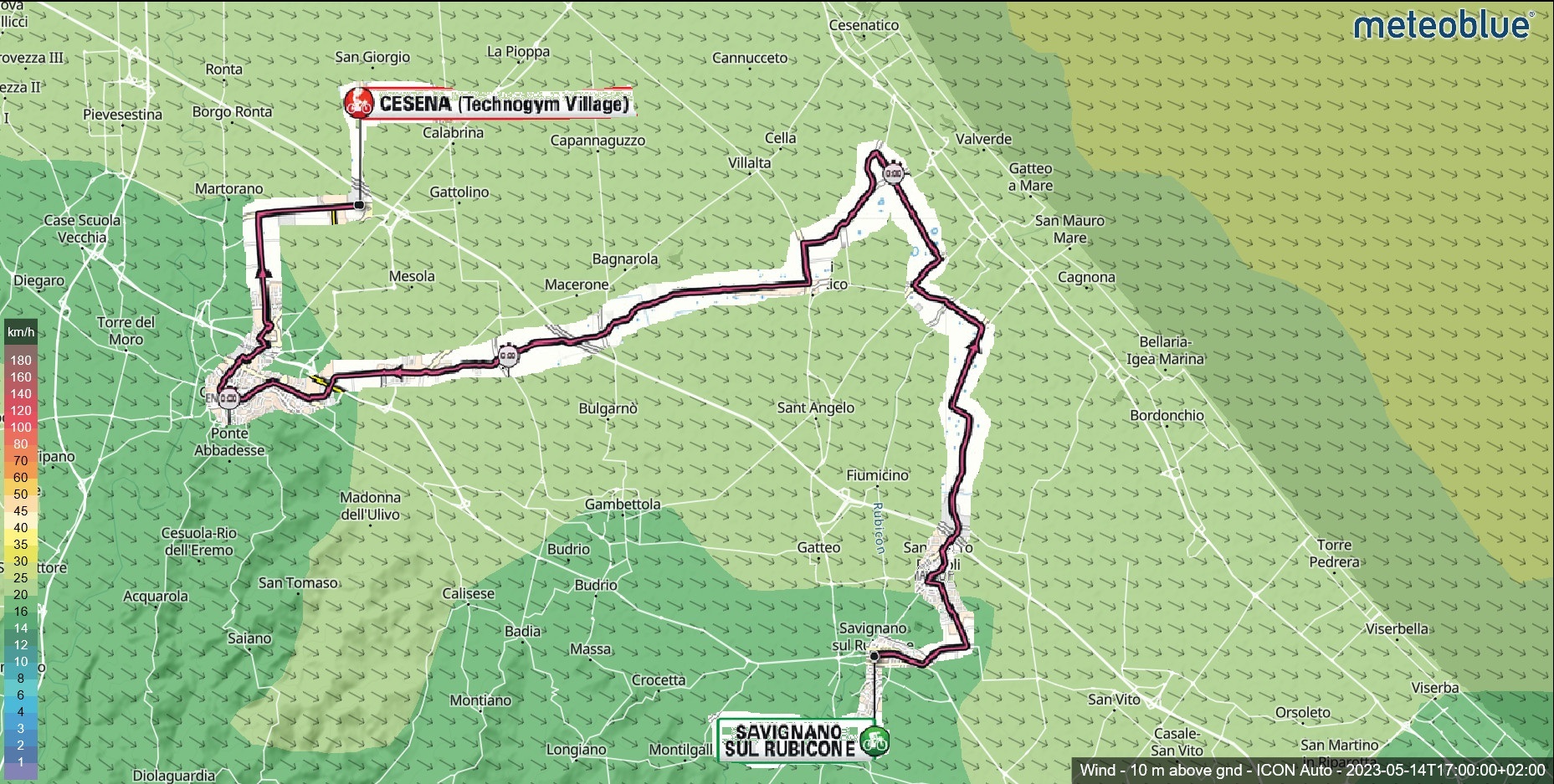
I did the computations yesterday (check one of my later posts). I used manual bisection. I was surprised how simple it was in the end - everyone goes slower for the exact same amount which is that of wind speed. Long story short: Remco wins😁
By the way - rolling resistance is the m * g * crr * … part of the equation. I only ignored gravity force (cause it’s flat) and accelerative force (cause we are assuming constant speed)
Actually cyclists shouldn't slow down exactly by wind speed: they are not airplanes (where everything depend only on aero drag). There is also rolling resistance component plus an additional velocity component (wind independent) that is present in power calculations (and is associated with pedalling speed - there should be only cyclistSpeed in your formula after P*efficiency), which is absent in jet planes (where it's all about thrust force, not power).
However, I made a program with some estimations and conclusions are generally the same. While cyclists slow down by a very similar amount (about 50-60% of wind speed) the relative difference in speed grows (and sec/km difference even more due to longer duration). I.e. for two guys with the same mass and power (one of them has CdA lower by 10%) the speeds changed from 15 vs 15.5 m/s (no wind) to 9.5 vs 10 m/s (strong head wind of 10 m/s). This translates to a significant time difference change: from 2 sec/km to 5 sec/km.
Last edited:








































 Facebook
 Twitter
 Instagram