Tadej Pogacar and Mauro Giannetti

Page 528 - Get up to date with the latest news, scores & standings from the Cycling News Community.
Jul 15, 2021
1,150
2,336
7,680
The thing is with Hatch etc. they're between a rock and a hard place. Most of them are self employed so why would they start shouting the odds? Plus they do that and they're open to liable stuff.
I've made this point before: journalism now works way different than back in the 90s or 00s. Independent journalism? It's still here, but largely underfunded to the point that there's still independent journalism, but hardly any investigative journalism. And the news outlets certainly don't let their investigative journalists focus on something admittedly unimportant in the grand scheme of things like sports.

And independent journalism is now a small part of the media. Most are nowadays, like MartinGT said, self employed and entirely dependant on the popularity of the sport. Focussing on doping and possibly revealing a big scandal would just mean they'd be shooting themselves in the foot.
 
Feb 27, 2023
797
941
6,180
There's talk about synthetic hemoglobin, gene doping, papers in science of sport/medical journals about the limitations of the bio passport and ex riders stating they are at loss about what is happening. That's not nothing.

That can help explain how they are able to output high average power during the whole race and how they are able to output insane effort at the end of a long hard race, but it can't explain the oxygen consumption needed to do so, Redoute and RAF yesterday were just alien even for a completely fresh athlete.
Sure, there is talk in scientific papers but in the past there was talk about riders using it, people being riders using it, whole teams getting caught and so on... I hope you can see the difference. And, of course, the bio passport is not the best at detecting and catching dopers, but there are still direct blood and urine tests which can detect the presence of banned substances. All of them in combination work much better than whatever they were doing 20 years ago.
On the topic of oxygen consumption: I have read the calculations but it is a bit vague in my opinion. I would like to see more data on the efficiency of top endurance athletes and also the physiological processes are not well investigated.
 
Jun 30, 2009
612
104
10,180
Well, the difference is that even though that is how it was marketed it was widely known that EPO was still being used even after the Festina scandal. Nowadays, I do not believe EPO or blood transfusions are being done. I do not know what is being done and that is why I am saying it is different nowadays. To be clear, I do think that they are still using some grey area stuff and possibly some illegal stuff but I do not know exactly what is is and there are no credible rumors either. The most credible one was the CO rebreather as fast as as I can tell, but I think that stopped as well.

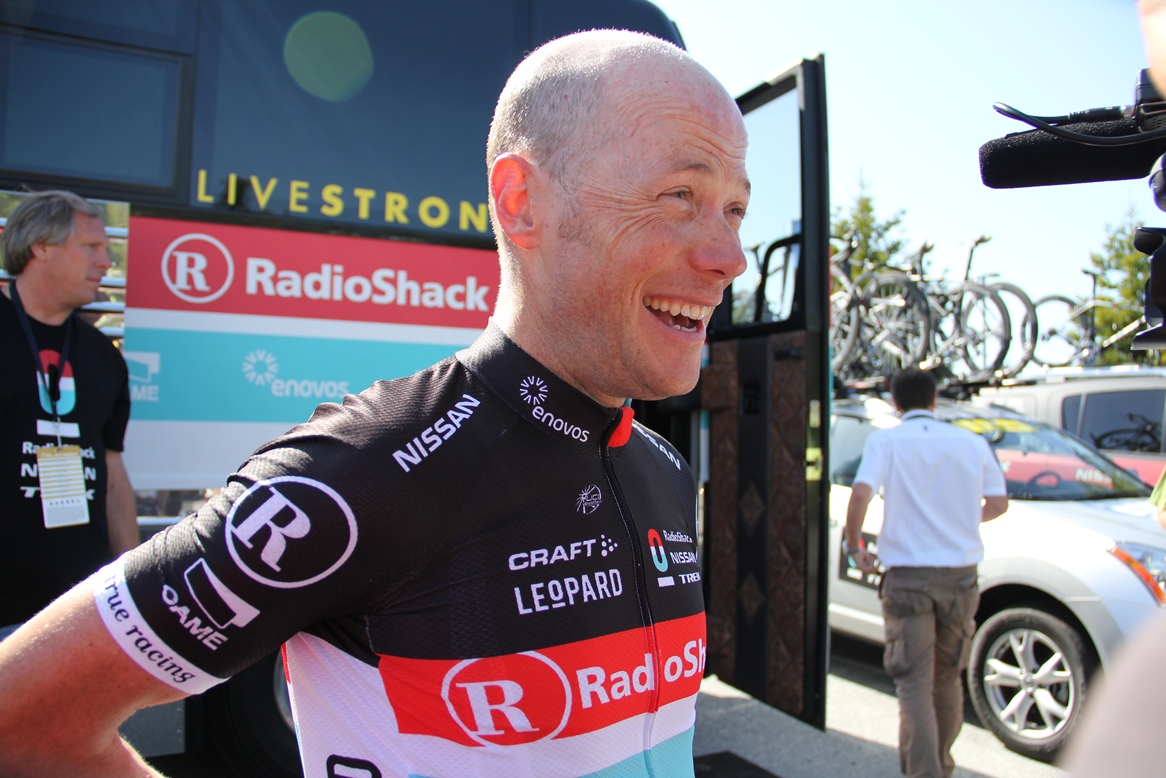
chris-horner-atoc-2012.jpg
 
Sep 15, 2016
354
238
9,680
Sure, there is talk in scientific papers but in the past there was talk about riders using it, people being riders using it, whole teams getting caught and so on... I hope you can see the difference. And, of course, the bio passport is not the best at detecting and catching dopers, but there are still direct blood and urine tests which can detect the presence of banned substances. All of them in combination work much better than whatever they were doing 20 years ago.
On the topic of oxygen consumption: I have read the calculations but it is a bit vague in my opinion. I would like to see more data on the efficiency of top endurance athletes and also the physiological processes are not well investigated.
Can you point at that "talk" during the 90's/00's? The only instances that i can think of are the Ferrari comments about orange juice, Kimmage/Walsh asking questions, and the rare case when someone was either caught by the police or felt that they were treated unfairly (Manzano/Landis). I might be mistaken but in your recollection it seems like doping was a completely open secret at the time.
 
Feb 27, 2023
797
941
6,180
Can you point at that "talk" during the 90's/00's? The only instances that i can think of are the Ferrari comments about orange juice, Kimmage/Walsh asking questions, and the rare case when someone was either caught by the police or felt that they were treated unfairly (Manzano/Landis). I might be mistaken but in your recollection it seems like doping was a completely open secret at the time.
Here is what a quick search gave me. This is certainly much more than what is known today.
Got it — you’re asking for a strictly historical reconstruction of what was actually *known, reported, or evidenced at the time (≈1980–2005), not what we learned later through confessions (e.g., Armstrong-era revelations post-2010).

That distinction changes things a lot. Here’s the cleanest possible timeline based only on contemporaneous evidence: press reports, positive tests, police cases, scientific publications, and official investigations available up to ~2005.


1) 1980s: blood transfusions — known, suspected, weakly evidenced

What was publicly documented at the time​

  • Blood transfusions were:
    • Scientifically known to improve endurance
    • Banned by the IOC in 1984
  • Widely reported example:
    • Francesco Moser and his 1984 Hour Record
      • Publicly associated with blood manipulation methods (openly discussed in media)

What evidence actually existed (pre-1990)​

  • No reliable testing method
  • No positive tests (impossible to detect autologous transfusions)
  • Evidence consisted of:
    • Admissions framed as “medical preparation”
    • Press speculation
    • Occasional insider claims

Testosterone / steroids (1980s)​

  • Detected and provable
  • Positive tests occurred across cycling
  • But:
    • Seen as secondary substances
    • Not tied to race-winning endurance in reporting

Bottom line (1980s, as known then)​

  • Blood doping:
    • Known technique
    • Lightly evidenced, rarely proven
  • Steroids:
    • Proven via tests, but not seen as decisive for cycling performance

2) 1989–1994: early EPO — suspected but invisible

What was publicly known​

  • EPO became medically available around 1989
  • Governing bodies:
    • International Olympic Committee banned it in 1990
    • Union Cycliste Internationale followed in 1991

Evidence available at the time​

  • No test existed
  • No direct positives

What was reported​

  • Sudden, unexplained:
    • Performance jumps
    • Dominance shifts in peloton
  • Early 1990s media and doctors noted:
    • Abnormally high hematocrit values (indirect clue)

Medical concerns (reported in real time)​

  • Cases of unexplained deaths among endurance athletes during sleep
    → widely suspected (not proven) to be linked to EPO

Bottom line (early 90s, as known then)​

  • EPO:
    • Strong suspicion
    • Zero direct proof
    • Considered a “rumor with circumstantial signs”

3) 1994–1997: mounting suspicion, still little proof​

What governing bodies did​

  • Introduced hematocrit limits (≈50%)
    • Officially framed as “health protection,” not doping proof

What evidence existed​

  • Riders exceeding limits were:
    • Suspended on health grounds
    • Not declared doping positives

Media and expert narrative (at the time)​

  • Increasingly explicit:
    • “EPO is widespread”
  • But still:
    • No laboratory confirmation
    • No legal proof

Testosterone / steroids​

  • Continued to be:
    • Occasionally detected
    • Not central to public doping narrative in cycling

4) 1998: the first hard evidence — Festina Affair​

The turning point​

  • Festina Affair

What was actually found (at the time)​

  • Police seized:
    • EPO
    • Growth hormone
    • Testosterone
  • From Festina team staff

Why this matters​

  • First material proofof:
    • Organized, team-wide doping
    • EPO use in elite cycling

What became public immediately​

  • Confessions from riders and staff
  • Documentation of systematic doping programs

Evidence quality​

  • Extremely strong:
    • Physical evidence
    • Police investigation
    • Admissions

5) 2000–2005: scientific proof era (EPO testing begins)​

Major development​

  • First EPO detection test introduced around 2000

What changed​

  • EPO use became:
    • Scientifically provable
    • Legally sanctionable

Key events (known at the time)​

2001​

  • Tour de France 2001 samples later reanalyzed
    • Early test development phase

2004​

  • French Anti-Doping Agency retrospective testing:
    • 1999 Tour samples linked to EPO use
    • First time older samples showed clear biochemical evidence

What evidence existed by 2005​

  • Lab-confirmed EPO positives
  • Retrospective confirmation that:
    • EPO had been widely used in late 1990s

6) Blood transfusions in the 1990s (as known by 2005)​

Public knowledge at the time​

  • Acknowledged as:
    • Older method (1980s)
  • Less discussed in 90s media because:
    • EPO dominated narrative

Evidence status​

  • Still:
    • Undetectable (autologous transfusions)
  • Therefore:
    • Rarely proven
    • Mostly speculative in reporting

7) Testosterone (1980s–2005, as known then)​

Evidence level​

  • Unlike EPO:
    • Directly testable
  • Regular (though not dominant) positives

How it was viewed at the time​

  • Performance enhancer, but:
    • Not the main explanation for endurance dominance
  • Often mentioned as:
    • Part of “cocktails” after 1998 investigations

8) Clean summary: what was actually proven vs suspected (by 2005)​

Proven (by 2005)​

  • Steroid/testosterone use → via positive tests
  • EPO use →
    • Proven from 1998 (Festina evidence) onward
    • Scientifically confirmed after ~2000
  • Organized doping systems → proven (Festina)

Strongly suspected but weakly proven​

  • Widespread EPO use before 1998
  • Extremely high hematocrit levels as indirect evidence

Known but rarely provable​

  • Blood transfusions (especially autologous)

Final takeaway (strictly “what people knew then”)​

  • 1980s:
    Blood doping known, rarely provable; steroids detectable but secondary
  • Early 1990s:
    EPO widely suspected but essentially invisible to enforcement
  • 1998:
    First hard proof of EPO and systematic doping
  • 2000–2005:
    Transition to scientific confirmation era with EPO testing
 
Jul 15, 2023
290
949
4,230
Fifth, one second behind second place. What a failure.
He’s pretty decent usually on a time trial. Occasionally, depending on the course, he can be tops. However, he is nowhere near as dominant as he is on the standard bike. He’s still up there but nowhere near an Remco or a Ganna. And then there’s this repeated pattern with him where he has, out of nowhere, a quite bad performance on the TT bike. The World Championship in Rwanda was well weird for example.
 
May 23, 2009
10,266
1,464
25,680
There's talk about synthetic hemoglobin, gene doping, papers in science of sport/medical journals about the limitations of the bio passport and ex riders stating they are at loss about what is happening. That's not nothing.

That can help explain how they are able to output high average power during the whole race and how they are able to output insane effort at the end of a long hard race, but it can't explain the oxygen consumption needed to do so, Redoute and RAF yesterday were just alien even for a completely fresh athlete.
Exactly. Without the oxygen uptake the carbon in are useless
 
Feb 20, 2026
1,387
1,181
5,180
He’s pretty decent usually on a time trial. Occasionally, depending on the course, he can be tops. However, he is nowhere near as dominant as he is on the standard bike. He’s still up there but nowhere near an Remco or a Ganna. And then there’s this repeated pattern with him where he has, out of nowhere, a quite bad performance on the TT bike. The World Championship in Rwanda was well weird for example.
Let's all forget he didn't practise his TT due to illness before Rwanda.
 
May 23, 2009
10,266
1,464
25,680
One has to be careful when comparing what riders are doing now vs in the past. I believe that up until a few years ago the training methods were really really poor. Heck, they still are for many riders but some have leaned/discovered what works (I am not saying Pog and the likes are training optimally, but they are certainly training much better than any rider up until a few years ago). Why is it so difficult to accept that one can train the gut to absorb those quantities.
Sorry but I am totally sceptical of training methods improving that much in the last 4-5 years. We're on track to see Pantani's Alpe d'Huez record broken this year, which should be untouchable with those doping methods used at the time
 
Feb 27, 2023
797
941
6,180
Sorry but I am totally sceptical of training methods improving that much in the last 4-5 years. We're on track to see Pantani's Alpe d'Huez record broken this year, which should be untouchable with those doping methods used at the time
Well OK, that is your opinion. I will write a little anecdote here. I remember listening to G talk about how he and Froome would go around riding an extra hour after training completely starved. This is after a training whilst consuming barely any nutrition. And this was maybe 2015. I hope you will agree how ridiculous that was. Extrapolating back, what do you think they were doing in the 90s? How were they training? There are a lot of stories where riders would use races to get into shape, riders going out partying for a long period in the season, not really recovering... Stage races used to have many stages which were mere processions, some breakaway would go, nobody would really ride, people would go out during the stage races then be winning the next day. All in all it was a less professional sport with less dedicated sportsmen and some who trained semi-well during some part of the season showed some good results. Fortunately, this all changed some time around 2020 and now we are seeing what humans are really capable of doing (probably even more than this but it is a good trajectory).
Edit: I did not quite address the doping methods you mentioned. Sure, doping helped, but even a doped up to the gills and possibly very talented Pantani can only do so much after all night cocaine sessions .
 
Feb 24, 2020
1,303
1,999
8,680
Well OK, that is your opinion. I will write a little anecdote here. I remember listening to G talk about how he and Froome would go around riding an extra hour after training completely starved. This is after a training whilst consuming barely any nutrition. And this was maybe 2015. I hope you will agree how ridiculous that was. Extrapolating back, what do you think they were doing in the 90s? How were they training? There are a lot of stories where riders would use races to get into shape, riders going out partying for a long period in the season, not really recovering... Stage races used to have many stages which were mere processions, some breakaway would go, nobody would really ride, people would go out during the stage races then be winning the next day. All in all it was a less professional sport with less dedicated sportsmen and some who trained semi-well during some part of the season showed some good results. Fortunately, this all changed some time around 2020 and now we are seeing what humans are really capable of doing (probably even more than this but it is a good trajectory).
Edit: I did not quite address the doping methods you mentioned. Sure, doping helped, but even a doped up to the gills and possibly very talented Pantani can only do so much after all night cocaine sessions .
What makes you think the sport was not professional prior to 2020? Marginal gains where already part of the sport. The major change was rider quality. WVA and MVDP coming from CX and talented youngsters like Evenepoel and Pogacar skipping the ranks and going directly to the Pro peleton. That influx of young talent had an impact. Nevertheless it doesn't explain the more recent crazy performances. La Redoute for example was just absurd. About 9 w/kg on a 4 min climb after almost 6 hours racing at 44 km/h is defying standard human biology. He should almost drop of the bike due to acid build up in his body! In contrast, his face shows nothing and he seems fully recovered immediately. So either the acid is neutralized using an illegal substance (most likely) or he uses a motor.
 
Apr 1, 2026
46
70
180
What makes you think the sport was not professional prior to 2020? Marginal gains where already part of the sport. The major change was rider quality. WVA and MVDP coming from CX and talented youngsters like Evenepoel and Pogacar skipping the ranks and going directly to the Pro peleton. That influx of young talent had an impact. Nevertheless it doesn't explain the more recent crazy performances. La Redoute for example was just absurd. About 9 w/kg on a 4 min climb after almost 6 hours racing at 44 km/h is defying standard human biology. He should almost drop of the bike due to acid build up in his body! In contrast, his face shows nothing and he seems fully recovered immediately. So either the acid is neutralized using an illegal substance (most likely) or he uses a motor.
Chemical doping allows you to suffer more and push harder, but you still look like you are suffering. A motor allows to soft pedal while the bike maintains high speed. Never actually "on the limit". A motor assist is less obvious when the legs are already moving fast. Standing up may create torque spikes that can be harder for a small motor to smooth out.
 
Apr 20, 2016
785
3,323
15,680
The ABP is pretty good in theory, but how well does it work in practice? Kreuziger got out of a sanction, there's plenty of scientific literature criticising it, we've seen the highly suspicious self published blood values of Horner from the 2013 Vuelta remain unsanctioned, Juanjo Cobo as mentionned above...
It only applies to the pros too, so you could try to establish an artificially high baseline on younger athletes by using blood doping before they are enrolled.

Regarding testosterone, afaik the isotope ratio test is not used routinely because it's expensive, it's more of a "smoking gun" when suspicions are high because of a high T/E ratio or of anomalies in the steroid module.
I don't know much about the Kreuziger case - is there a link to the details such as the blood values & most importantly the Off-scores? I'm assuming his Off-scores didn't meet the 99.99% specificity level that warrants a ban (I believe the threshold is it has to be less than 1 in 10,000 chance of being undoped).

On Horner, his Off-scores didn't come close enough for the 99.99% specificity level (that's probably why he self-published his blood values. Lol).

On Cobo, about a year ago or so I posted a link on the PDF of his CAS hearing that gave all the details of the case including his blood values & Off-scores. The anti-doping experts that handled his case explain why the long delay. The Off-scores from the around of the time of & during the Vuelta were high enough for a sanction. The details of the delay is long & complicated (if you've got the time & some good tea/coffee to drink, it's an interesting read).

And are you saying the CIR test for testosterone is not routinely used? I would think the top riders from the GC, classics & especially the sprinters would be subjected to routine CIR testing? That's how they busted Justin Gatlin - a U.S. world-class 100m/200m T&F sprinter & Olympic medalist. WADA didn't wait for any suspicious T/E ratios - they hit him head on with CIR testing. And his excuse was that his masseur must have used Androgel during his rub downs. LOL

And what do think about the Sample Retention and Further Analysis (SFA) which allows samples to be stored for up to 10 years for future testing? (subject to retesting as new technology becomes available). It's already been used in retesting samples years later from past Olympic events where they've nailed numerous athletes with positive findings. Here's an interesting study on SFA's effect as a deterrent in doping:


If Pogacar is biologically doping, I'm sure this would have to rest heavily on his mind?

 
Last edited:
Apr 20, 2016
785
3,323
15,680
I believe operation Aderlass has proven that old school blood doping is still doable without triggering the passport or an AAF and was done at least up to the end of the 201x. If you look at the biggest busts (Festina, Puerto, Aderlass, Armstrong, the 2008 tour) it was almost never due to some antidoping test, but because someone talked/the police got involved.
You're right, it was a disgruntled athlete (I think a XC skier?) that dropped a dime on Operation Aderlass (Dr Mark Schmidt).

Operation Aderlass was definitely old-school blood transfusions able to circumvent the ABP. However, it was sophisticated & required precision timing before & after completions (and luck!).

Aderlass was able to circumvent the ABP by the following method: Just before arrival at the starting venue on the morning of the competition, an athlete would infuse the blood and immediately after competition, withdraw the same amount out before any testing. Usually the infusion took place at the athlete's hotel or team hotel, or during the transportation to the starting location. The withdrawal had to be done quickly & efficiently right after competition before the testers would seek the athlete out.

Could there be another type Operation Aderlass programs specific to certain teams? Could a rider infuse the blood either in the hotel or on bus ride to the start line on the morning of the competition, and then be able to withdraw that same amount in the short window immediately after competition & before the testing? (Is there enough time that a rider could sneak into the team bus & withdrawal the blood before testing & podium presentations?).

Btw, there were no big name riders caught up in Aderlass.
 
Last edited:
Apr 8, 2023
6,235
7,173
17,180
I'd have to find the relevant article later, but I recall reading Schmidt's nurse did transfusions in her car and even neo-Nazi Dirk Q did transfusions. see e.g,
https://everything.explained.today/\/Operation_Aderlass/

Edit - add - Nurse Diana S. who worked with Dr Schmidt - (google translation from German)
https://web.archive.org/web/2020102...schau.de/doping/doping-marks-prozess-100.html
She drove across Europe for Mark Schmidt to take blood from athletes and feed it back in. This happened in hotel rooms, but also in places such as car back seats. In the doping trial against the Erfurt doctor, an assistant testified and stated her motives.
Diana S. was not comfortable with the matter. The athlete, whose real name she did not know and who was sitting behind her in the car late in the evening, finally wanted to get his blood. In the darkness, the nurse glowed with her cell phone and put the syringe in the cross-country skier. The athlete grabbed the attached bag and pressed half a liter of his previously taken blood into his veins. Diana S. would have preferred to examine the arm in more detail for the ideal spot, but the athlete was very annoyed "if you don't *** where he wants to," as she said.
According to Diana S., she received meticulous instructions on her cell phone about when she had to go where in which car, who she should meet when and where, who had to get how much blood. If she didn't understand a machine for blood processing, Schmidt instructed her on the phone.
Dirk Q (Quiatkowski) - Schmidt's neo-Nazi "helper" - https://rechercheportalerfurt.noblo...m-erfurter-doping-skandal-operation-aderlass/
According to the indictment, however, Quiatkowski is said to have been involved in the blood sample and injection at the 2018 Winter Olympics in Pyeongchang, among other things.
Of also greater shocking value was the use of HGH that was untested,
https://www.radsport-news.com/sport/sportnews_118462.htm
September 11, 2020
The newspaper Het Nieuwsblad reports on a new doping preparation called H7379 Hemoglobin Human, which was used by athletes in the doping scandal surrounding Operation Aderlass in 2016 and 2017. According to a Belgian professor at DoCoLab Gent interviewed by the newspaper, the agent is human hemoglobin, which has been freeze-dried and is injected back into the body.

The drug has a similar effect to EPO, but is not yet available on the pharmaceutical market, it is further reported. However, the investigating authorities in the Aderlass case have information that athletes have already doped themselves with microdoses of the new drug in 2016 and 2017. At the end of May, Het Nieuwsblad already reported that the Anti-Doping Foundation (CADF) is carrying out follow-up tests on the doping samples taken in these two years on behalf of the UCI.
https://www.sbs.com.au/sport/articl...sentenced-to-over-four-years-prison/gfpa9a6i0
The sentencing judgment included details on how Schmidt had administered a drug not approved for humans on a female athlete in a "human experiment" which was "beyond any ethical standards".

And finally, Dr Schmidt's father was alo involved - presumably as a middle man like Soler's father.
 
Last edited:
Feb 24, 2020
1,303
1,999
8,680
Chemical doping allows you to suffer more and push harder, but you still look like you are suffering.
Glycogen burning produces heavy, acidic lactate that causes a rider to grimace and pant. By changing the muscle metabolism to burning fat (e.g. using an unknown, undetected AICAR-like substance) or using advanced bicarbonate solutions that can be processed by the body (without stomach issues), you would effectively stop suffering.
 
Apr 8, 2023
6,235
7,173
17,180
Could there be another type Operation Aderlass programs specific to certain teams? Could a rider infuse the blood either in the hotel or on bus ride to the start line on the morning of the competition, and then be able to withdraw that same amount in the short window immediately after competition & before the testing? (Is there enough time that a rider could sneak into the team bus & withdrawal the blood before testing & podium presentations?).

Btw, there were no big name riders caught up in Aderlass.
As far as we know the Team Sky era was helped by Rozman (who was in contact with Dr Schmidt) and kick started by Leinders after he left Rabobank.

Alderlass leads also to Bahrain (Erzen was in touch with Dr Schmidt) and UAE. Both teams had feeder teams/scouts in Slovenia and both teams had guys busted in Operation Alderlass. UCI then went on to scrutinize various Slovenians back in 2015 which presumabley lead to the police raids on Bahrian.

Nowadays it seems it's all done in Spain with help of dodgy doctors (of which there seem to be plenty) and no testing from Friday evening until Monday morning (to begin with!).
 
Last edited: