Race Design Thread

Page 353 - Get up to date with the latest news, scores & standings from the Cycling News Community.
Oct 5, 2010
4,338
389
16,180
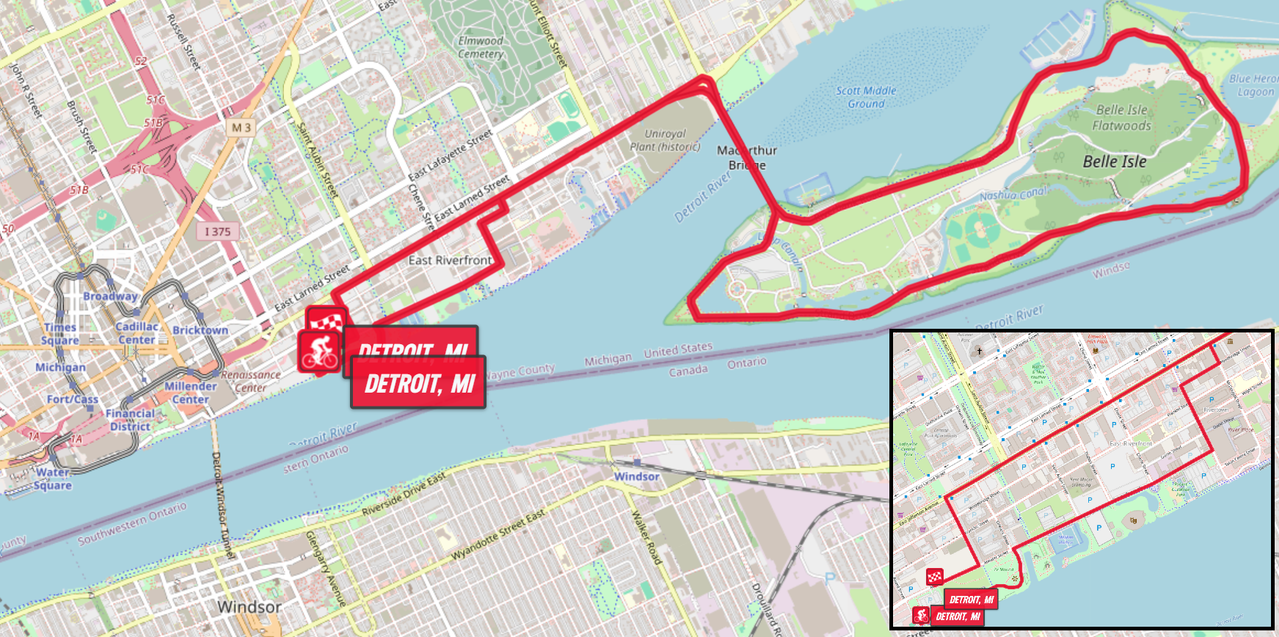
Tour of the Great Lakes | Stage 4: Detroit - Detroit, 17.4km (ITT)
stagemap.png
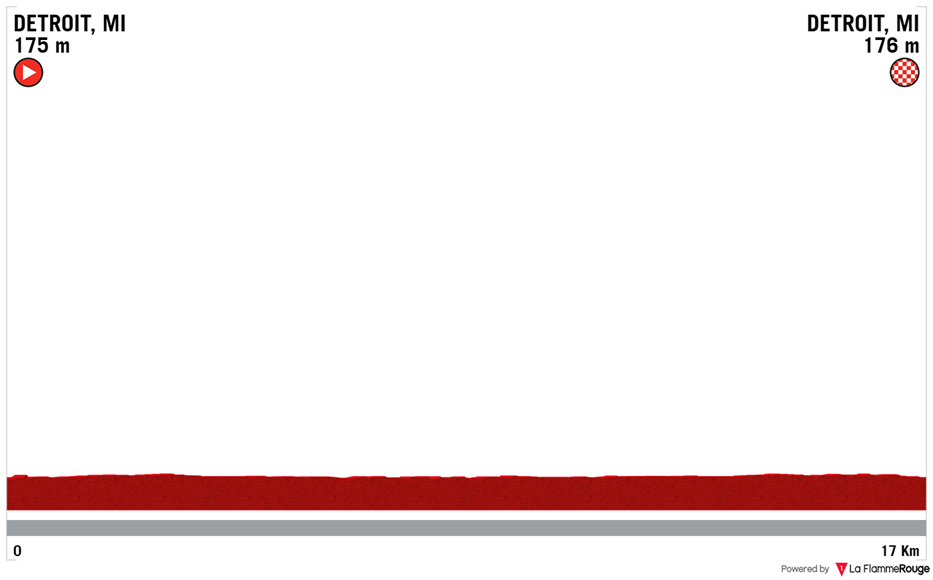
profile.png


The race needs an ITT, and it needs to hit Detroit. Just an hour up the road from Toledo is the third largest metro area in the megaregion that is the Great Lakes. The urban sprawl is massive, but there is a great historic downtown core that was sadly bulldozed for motor vehicles. Ironically, Detroit had a fantastic tram system up until the 1950's despite being the Motor City (as a caveat: there is a new tram line in Downtown since 2017). Either way, the home of the GM, Ford and Chrysler was of course the first city to build a highway right through the city. This did help initially with congestion, but as we are all too familiar with - the long term effects include induced demand, splitting neighborhoods apart, removing walkability etc. Metro Detroit has been an absolute monstrosity for the past half century, to which the effects of de-industrialization and the financial crisis of 2008 didn't help. The City of Detroit lost hundreds of thousands of residents and even went bankrupt in 2013. Despite all of the setbacks, Metro Detroit has continued to grow.

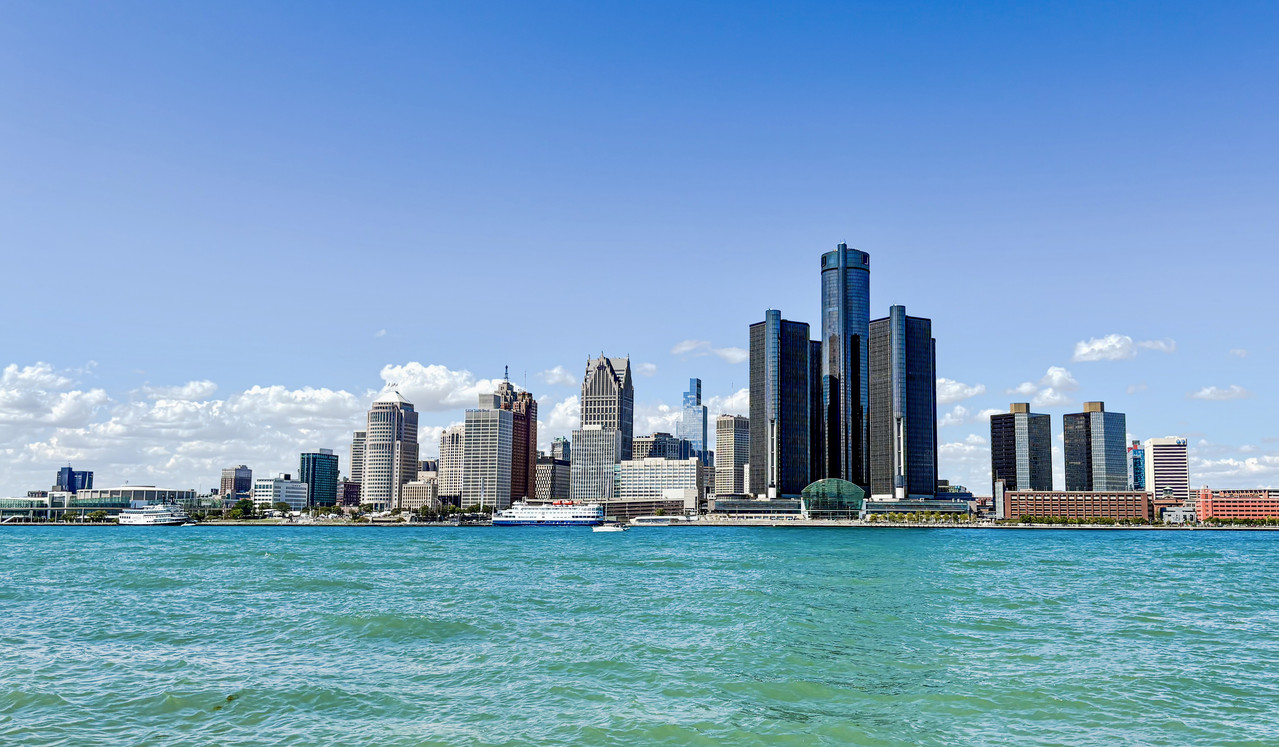
Detroit-Skyline-from-Windsor-2025-09-01.jpg

Downtown Detroit

Because of the enormity of Detroit, the many highways passing through the city, and the recently added tram tracks - deciding where to host the TT was a tougher decision than I would necessarily like to admit. I contemplated having the start on the Canadian side of the border in Windsor, but didn't want to hassle of having to close a bridge for the vanity of a cycling race, which would be wildly impopular - it being the second busiest international crossing in North America. I also wanted to avoid using highways, so I settled on what I think is quite a beautiful and non-disturbing location.

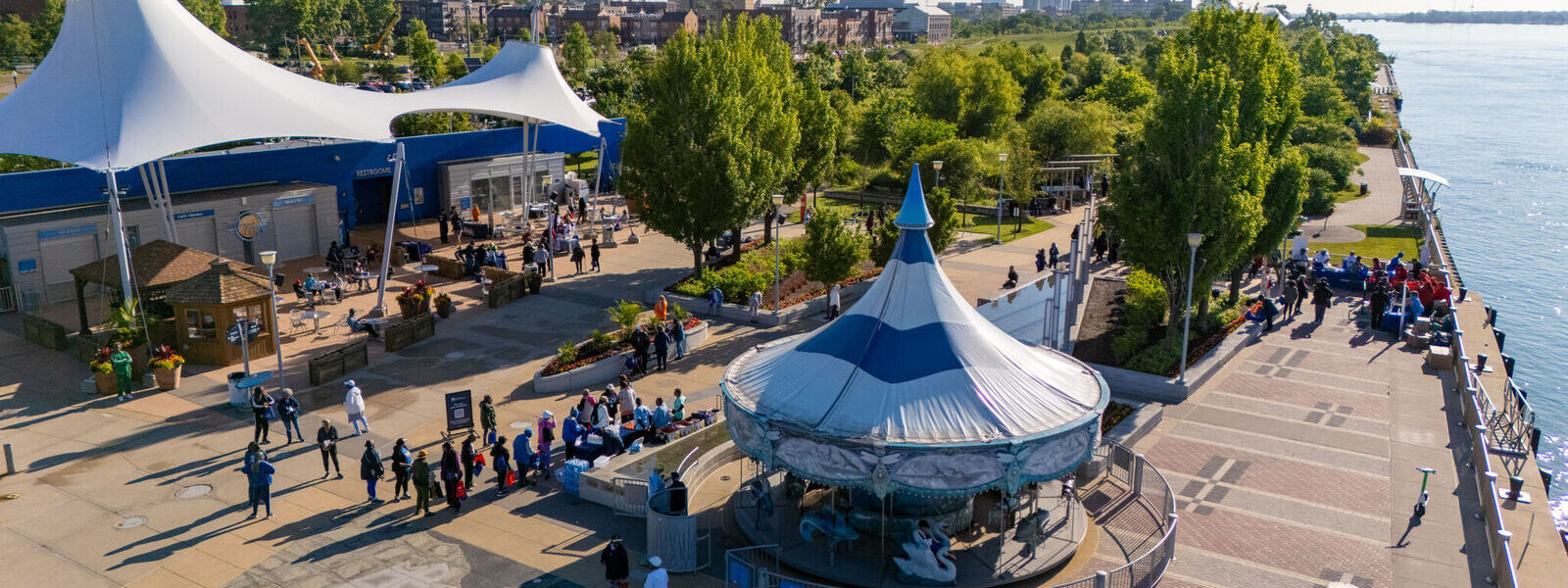
cullenplaza20242.jpg
startloc.png

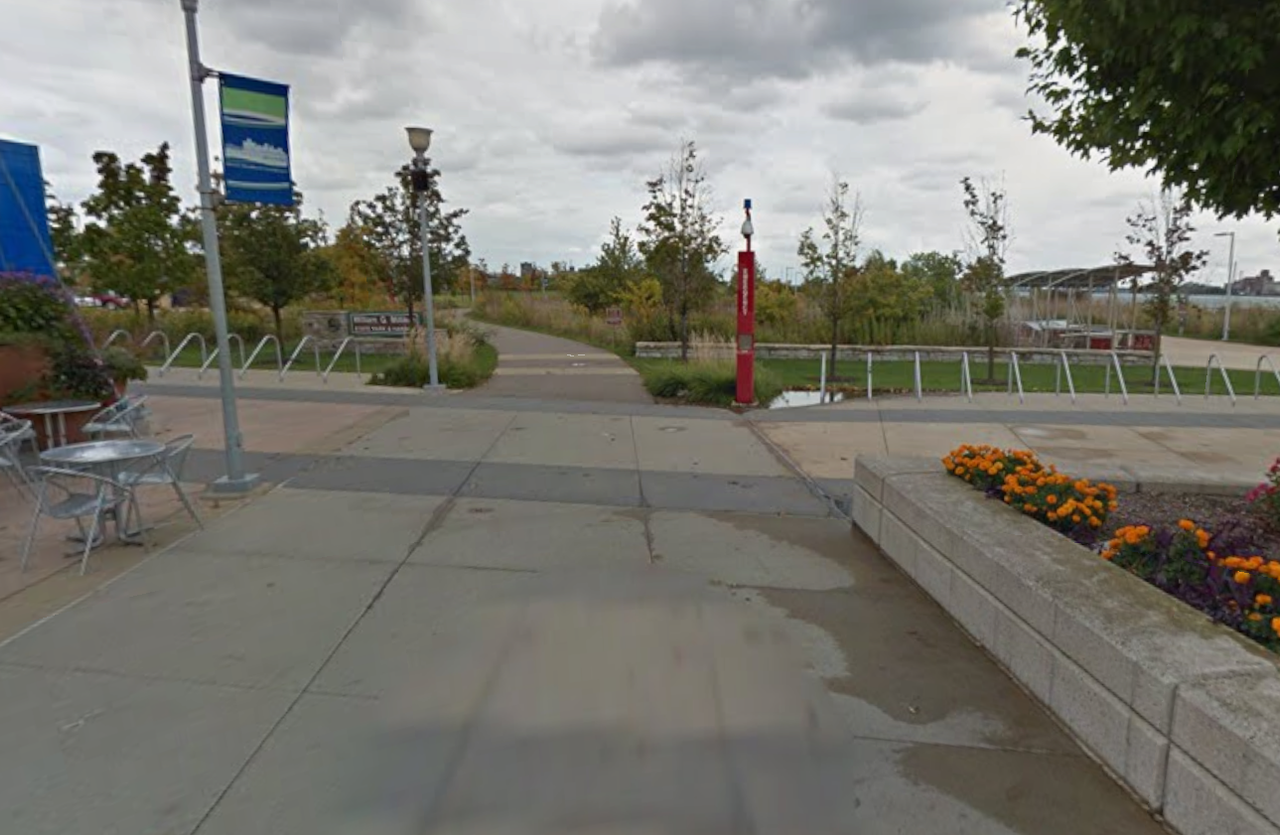
Cullen Plaza & start line

The start and the finish are both a stone's throw away from each other at the Cullen Plaza, one of the many highlights of the Detroit Riverwalk, voted the best riverwalk in the country in 2021. While the Street View images don't do it justice, we will be beginning on what is a very narrow walkable path for about 600m before turning right and eventually ending up on East Jefferson avenue before turning right again onto the MacArthur bridge. After crossing the bridge, we do a counterclockwise lap around most of Belle Isle. This is what we want to highlight the very most.

belleisle.png

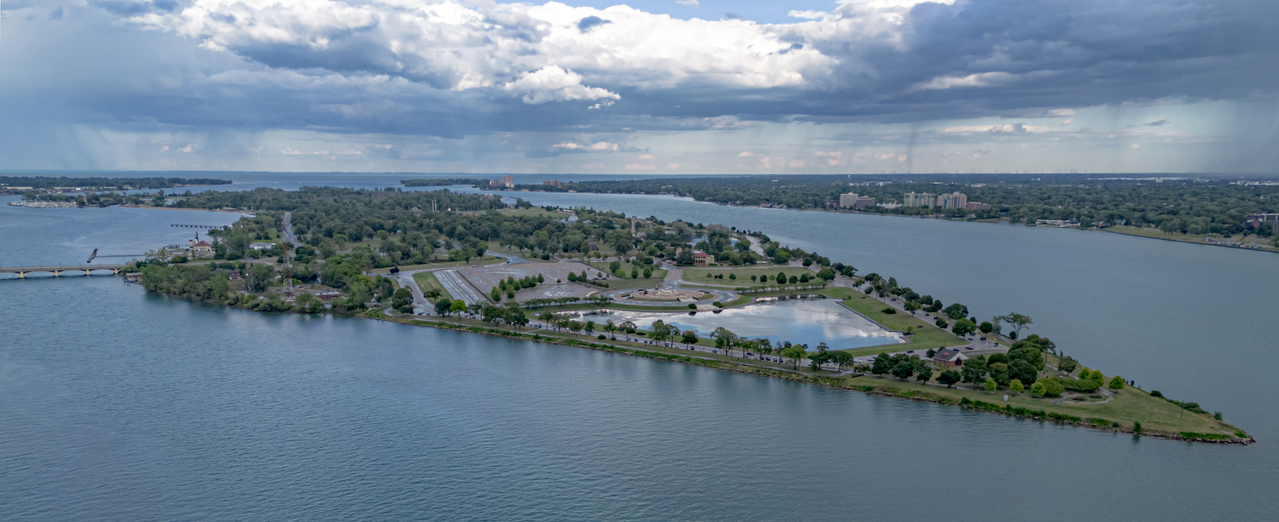
Belle Isle

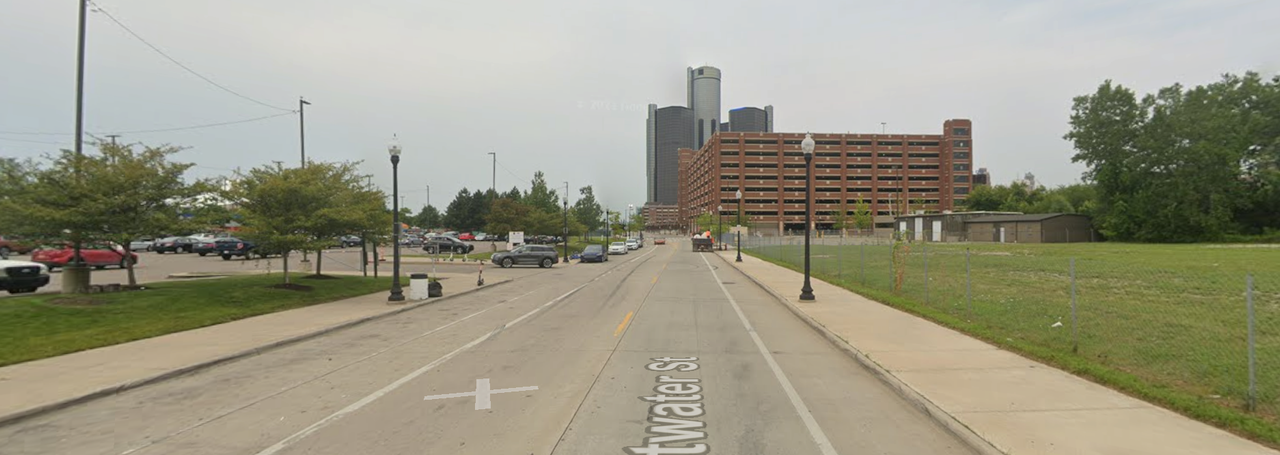
The settlement of Detroit was founded as part of New France in 1701, and Belle Isle was colonized sometime the same century. It has gone through periods of being more or less an estate with livestock to eventually becoming a park in the 1880s. It has long been an area for recreation, and hosts an aquarium, a botanical garden, a golf course and fountains among other things. It will make for some great helicopter shots. After finishing the loop, the riders head back nearly where they started, ending with a two 90-degree turns in the last 500 meters to keep the speed down a bit yet finishing near the same park and parking complex as the finish.

finishline.png

Finish line

Is it a particularly challenging ITT in any way? No. Does it need to be? Also no, imho. It's perfectly OK to have a more or less pan flat one, just not an absurdly long one in what is approx. a week-long stage race.
 
Last edited:
Oct 5, 2010
4,338
389
16,180
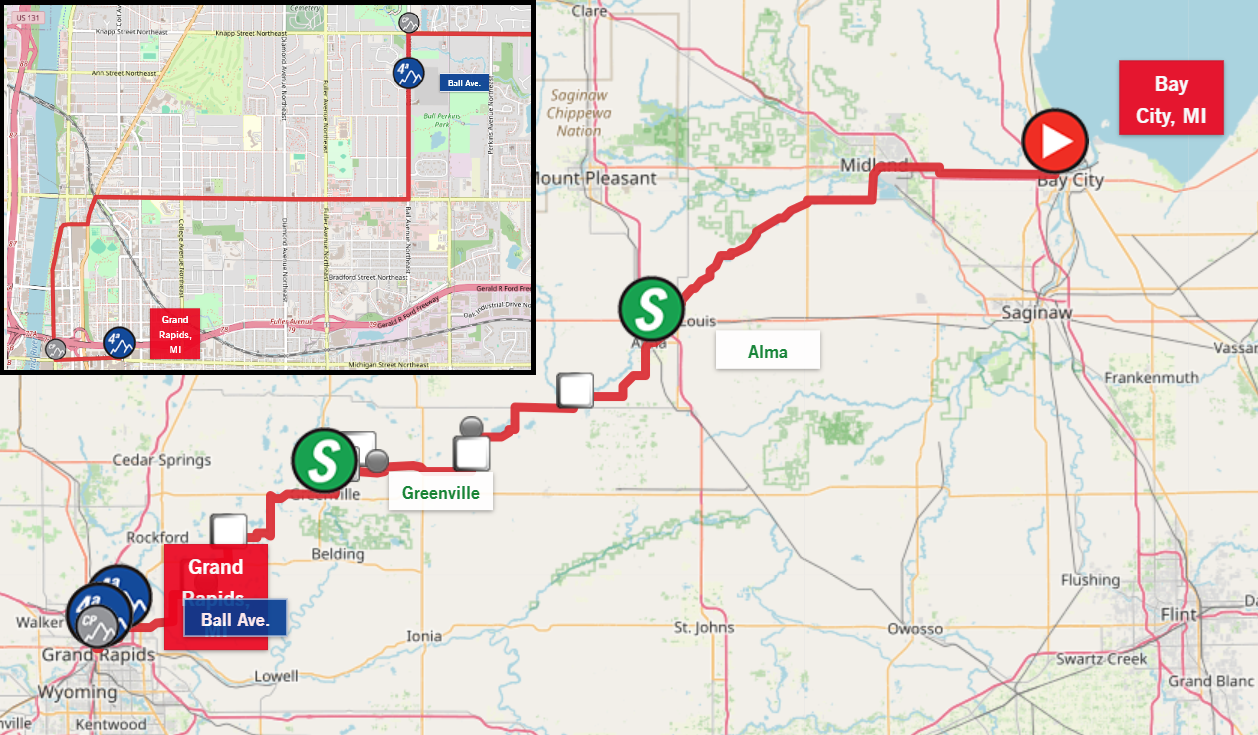
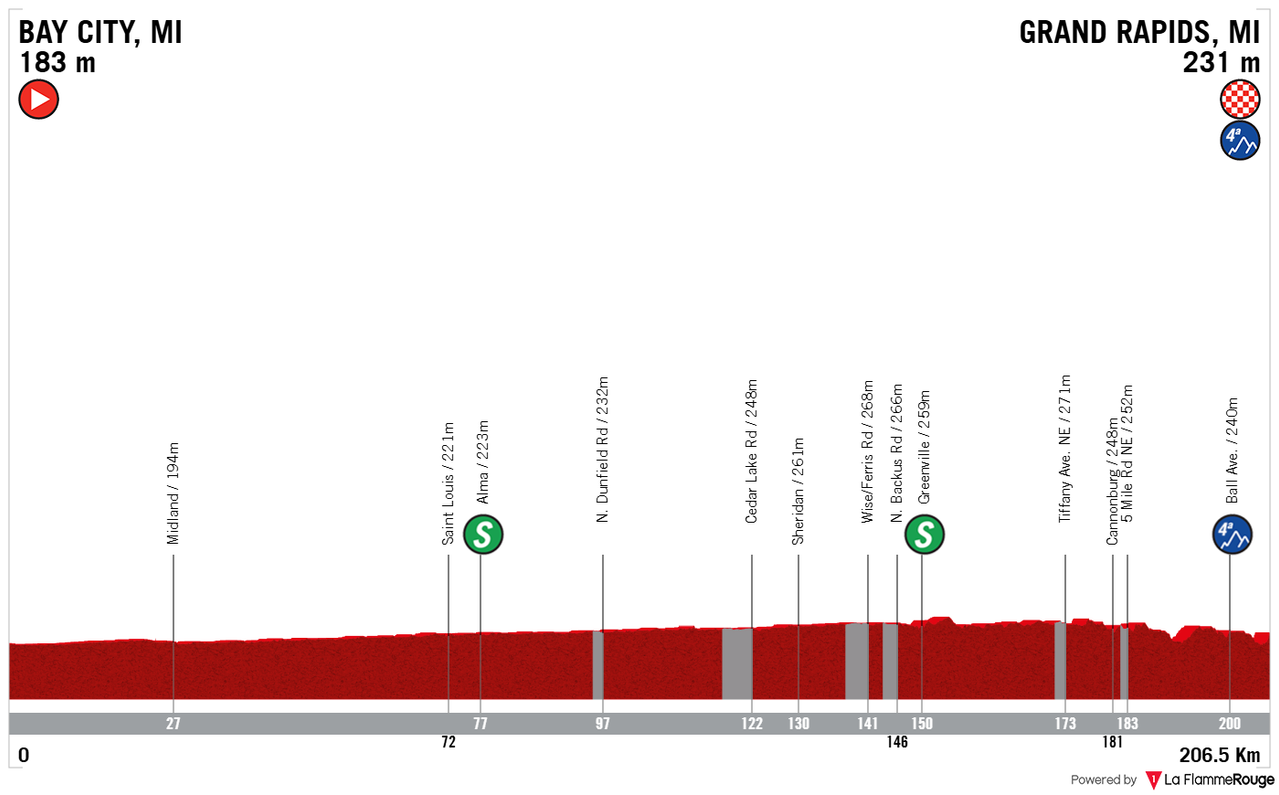
Tour of the Great Lakes | Stage 5: Bay City - Grand Rapids, 206.8km
stagemap.png

stageprofile.png

While we could have begun our next stage in Flint, the town infamous for its decade-long water crisis only recently overcome, we opt to take a bit of a longer drive to our next start town: Bay City. The reason is quite simply - I want the start location to be closer to Lake Huron, and this town is located just upriver on the Saginaw River from the Saginaw Bay, a more than 1000 square-kilometer bay on the southwestern part of the lake .

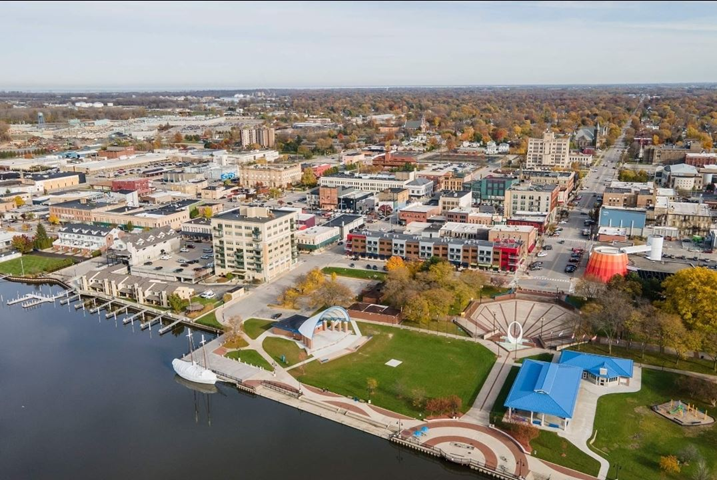
baycity.png

Bay City, MI

The city, at about 30,000 inhabitants, is not even in the top 50 most populous "cities" of the state - though many fall into Metro Detroit where it just feels ridiculous to consider Dearborn or Southfield its own cities. It is however, no slouch as it, along with the towns of Saginaw and Midland form an acute triangle of settlements with somewhere in the magnitude of 375,000 inhabitants. The site was at first merely a log cabin, but grew to a town in the 1830s. Eventually, it was the site of several sawmills and shipyards - which peaked in the 1950s and 1960s. As is the case with so many of the towns we've passed, the decline has been pretty steep since. Bay City has lost about two fifths of its peak population, and it isn't expected to rebound. It's ticking along with what's remaining of the industry.

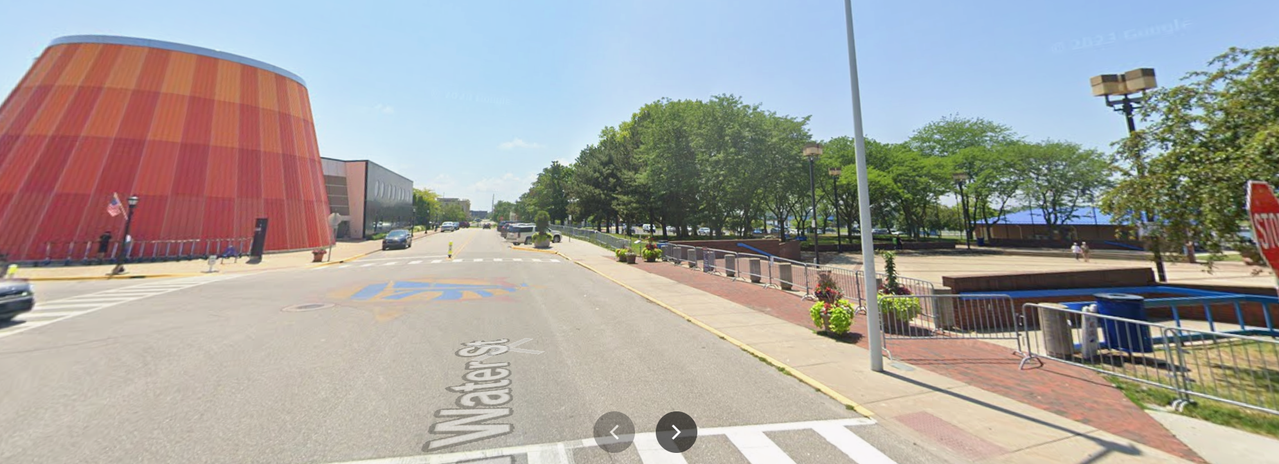
neutralstart.png
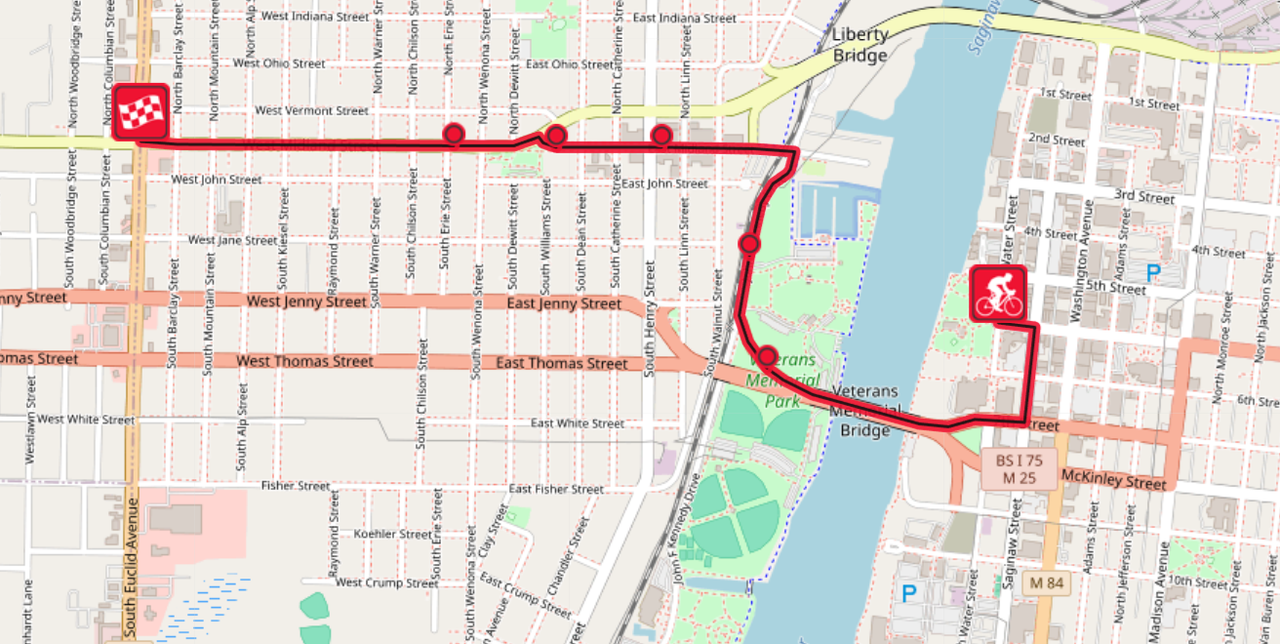
neutralstartmap.png

Neutral start location & map

Regarding the cityscape, it looks pretty typically North American to me. Wide roads, the stereotypical grid-like pattern. I did however find a pretty nice neutral start point at Wenonah Park, the pretty much only suitable candidate in the town even if Veterans Memorial Park on the other side of the river might have been a decent fit. From here, the riders only have 3km until the proper start and we're in for quite a long stage.

Pretty much the first 95km are pretty smooth sailing, mostly passing through Central Michigan. We do pass the aforementioned town of Midland, though not for a sprint - that has to wait until we have taken a pretty narrow and pretty country road along the Pine River and we head past Saint Louis into Alma, 20km after which we actually reach the first real obstacle: our first gravel sector of the stage. There are a total of six, but I will not be using the French convention of naming them backwards.

Sector 1: N. Dunfield Road, 95.8-97.4km, 1600m **
sector1.png

Nothing too insane, but gets two stars. Some loose gravel. This was merely an appetizer though, as the longest sector is 20km up ahead.

Sector 2: Cedar Lake Road, 117.1-121.9km, 4800m ***
sector2.png

Not as much loose gravel, but the length and the softness of the road make it a drag and worthy of three stars. Once again, there's quite a bit of paved road, among which is through the tiny town of Sheridan (pop. ~700), before we hit the next sector.

Sector 3: Wise/Ferris Road, 137.2-140.9km, 3700m **
sector3.png

Another two star situation. This time, the next sector is less than 3km away.

Sector 4: N. Backus Road, 143.4-145.7km, 2300m **
sector4.png

The gravel is finer, but there are some holes in the road which does mean I will rate it two stars.

I'm not sure these sectors are decisive enough to create gaps. I hope they are, because the final two sectors are shorter and we'll have to ride on paved roads for a while to get there. Before then, we do pass the town of Greenville. With a population of slightly below 9000, it's no heavyweight - but it does have the oddity of being the home of a Danish heritage festival, celebrating the large history of Danish settlers in the area from the mid 19th century. It's a proper fit for the second sprint.

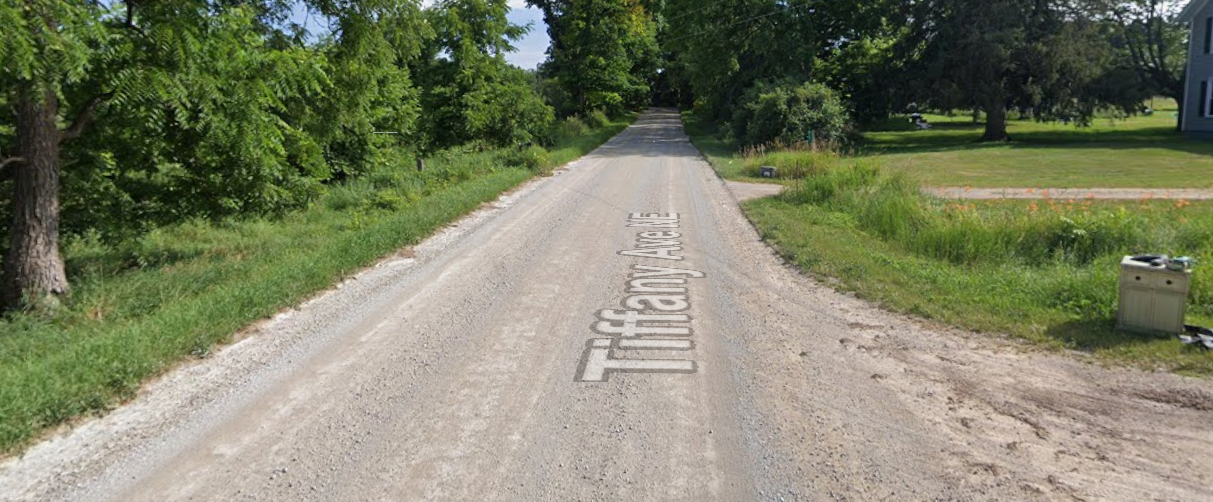
Sector 5: Tiffany Avenue, 171.6-173.3km, 1700m **
sector5.png

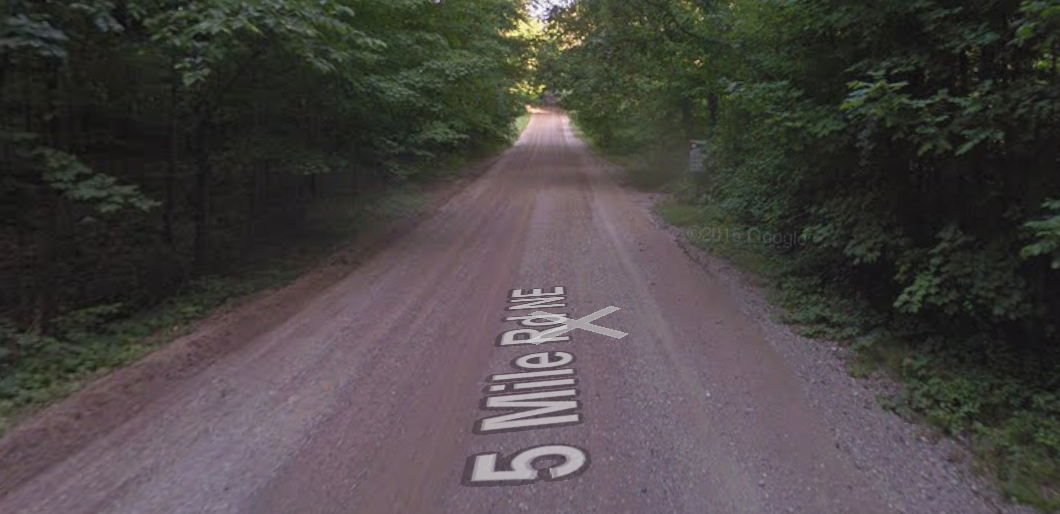
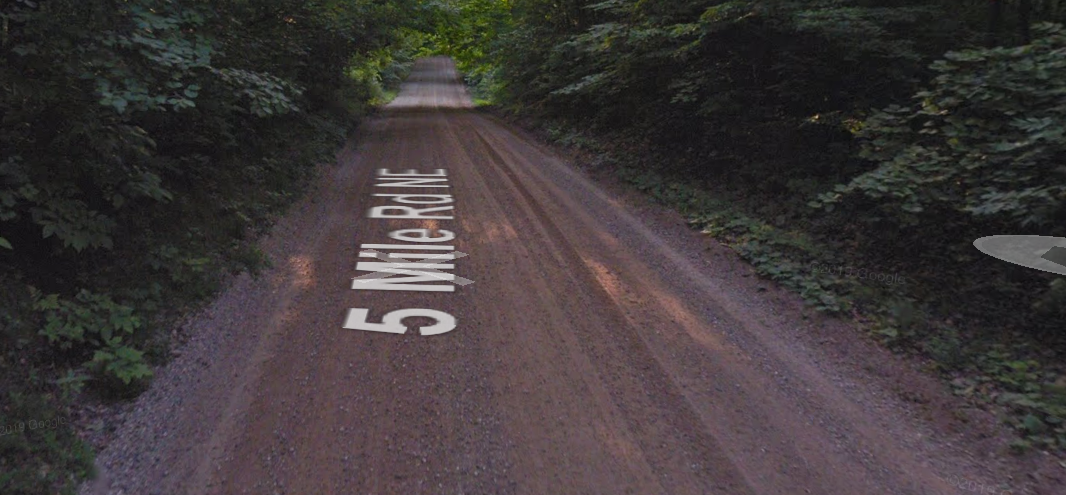
Not the longest of affairs, but the significant amount of loose gravel place it at two stars. Less than 9km separate this sector from the next, and final sector - being located right next to a great recreational area in West Michigan, being named after the town we pass right before - Cannonsburg. We will ride along 5 Mile Road, with a State Game Area to our left and a ski resort to our right, and the sector looks a bit like this:

Sector 6: 5 Mile Road, 182.3-183.5km, 1200m ***
sector6.png
mile52.png

The gravel here is definitely nastier, and is worthy of three stars. It's narrow, bumpy and softer with the mix of rough gravel. It's not the longest sector though, so I'm not sure how much damage it will do.

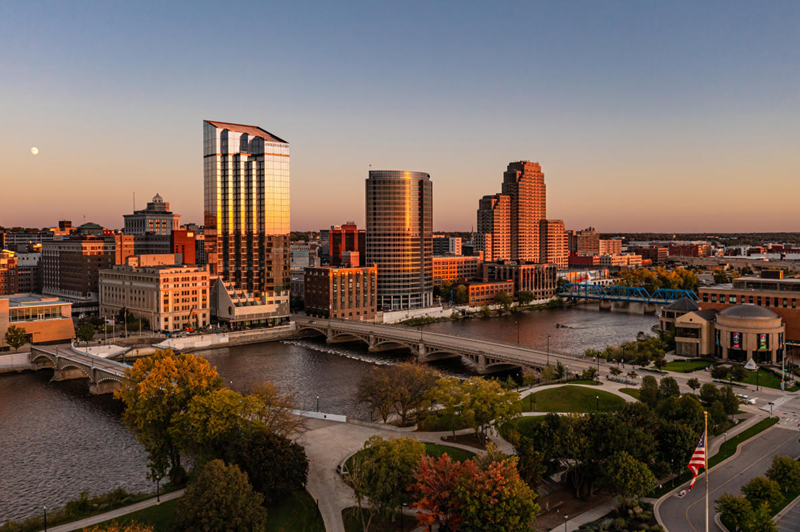
At this point, we're about 23km from the finish in Grand Rapids, the second largest city in Michigan. The city proper only houses about 200,000 inhabitants, but as is the case with urban sprawl, the metro area houses more than a million. While the town used to be primarily known for its furniture manufacturing, it has since diversified with the healthcare sector being one of the largest employers.

grandrapids.png

Grand Rapids, MI

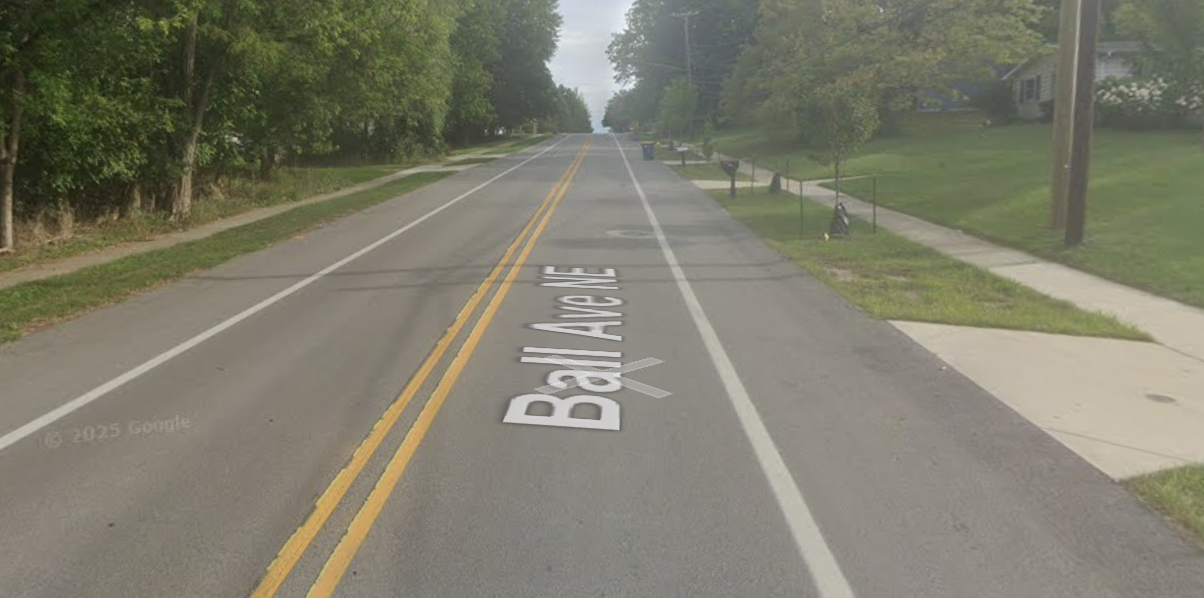
Back to the race: If there are gaps here, maybe a sprint team could bring it all back together, but there are still opportunities in town. We do have a short climb starting about 7km from the finish, that being Ball Ave. 540m at 5% isn't all that much, but it's something. The run in afterwards is very straight-forward, not really technical at all sadly. However, finish does ensure it won't be just a flat bunch sprint.

ballave.png

Ball Ave.

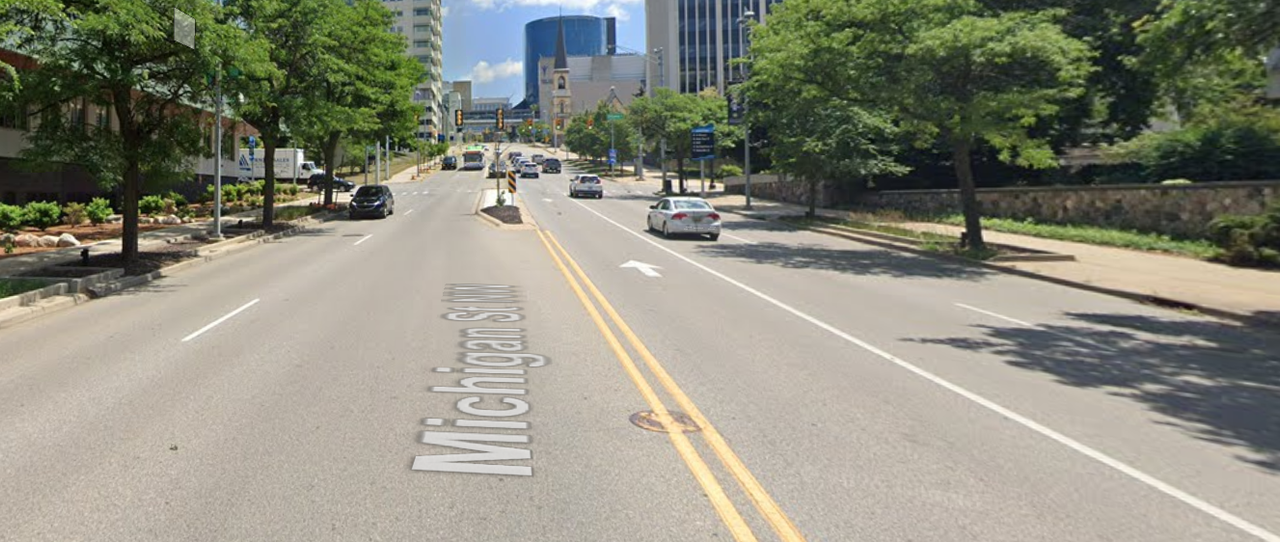
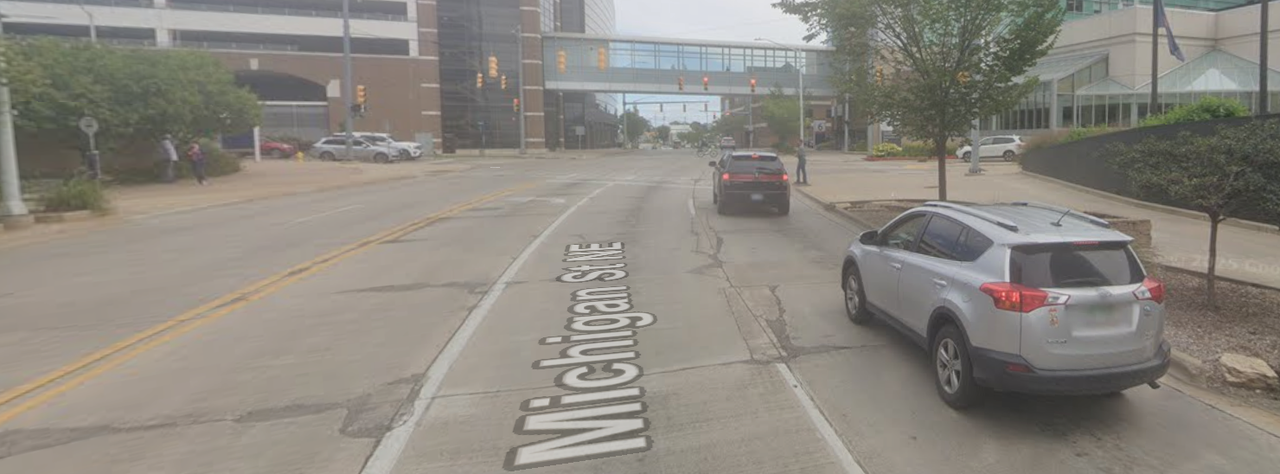
The final 1.5km sees us hit the riverfront before turning left at 620m to go for a final kick of 6.4%, with the nastiest bit being above 10%.

michave2.png
finishline.png

Michigan Ave. and the finish line location

What to expect: Maybe an attritional classics-type stage due to the gravel, especially if the weather turns sour. Maybe a nothing-burger and an uphill sprint at the end? It depends.
 
Last edited:
Oct 5, 2010
4,338
389
16,180
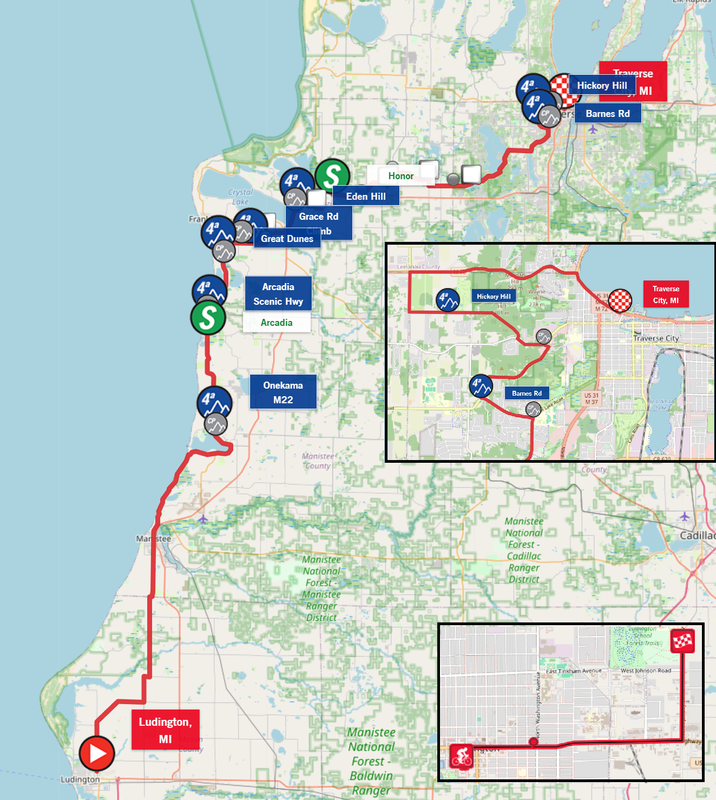
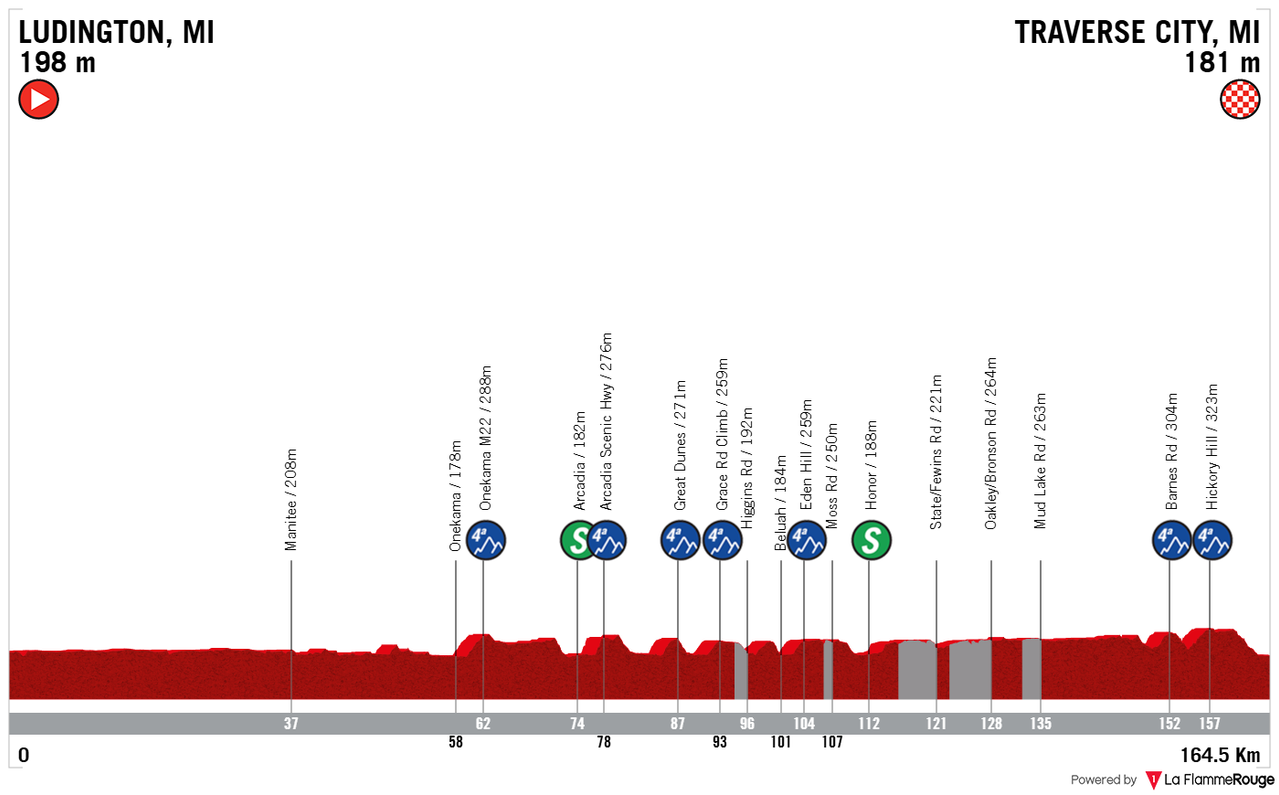
Tour of the Great Lakes | Stage 6: Ludington - Traverse City, 164.6km

fullmap.png

profile.png

Climbs:
Onekama M22 (cat.4), 2.2km @ 5.3%
Arcadia Scenic Highway (cat.4), 1.2km @ 7.8%
Great Dunes (cat.4), 1.9km @ 4.5%
Grace Road Climb (cat.4), 1.2km @ 4.7%
Eden Hill (cat. 4), 1.4km @ 5%
Barnes Road (cat.4) 1.4km @ 4.9%
Hickory Hill (cat.4), 2.7km @ 3.9%

Gravel sectors:
1. Higgins Road ** - 1.6km
2. Moss Road * - 1.1km
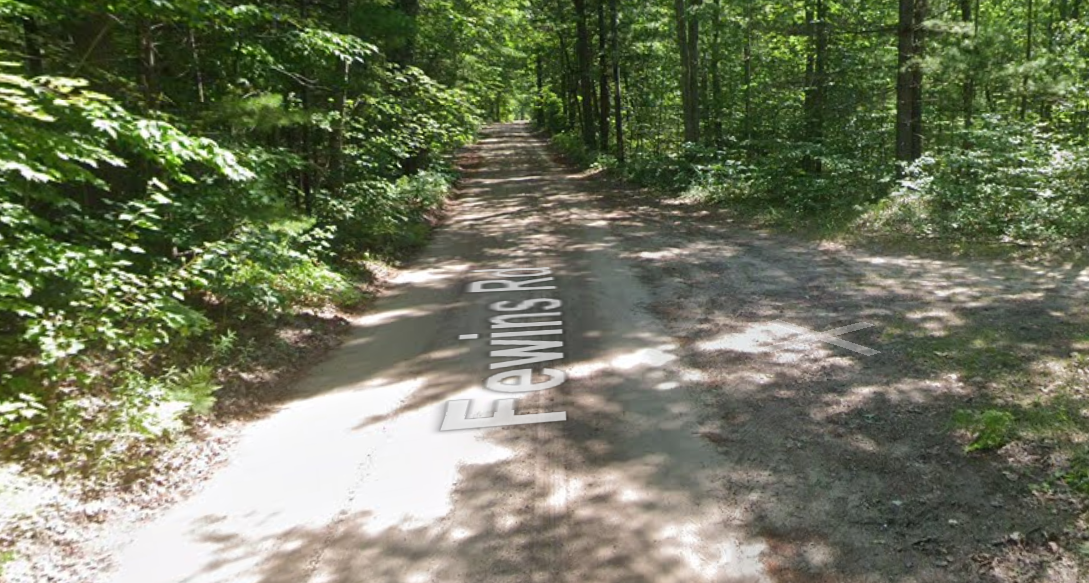
3. State/Fewins Road *** - 4.9km
4. Oakley/Bronson Road *** - 5.4km
5. Mud Lake Road **** - 2.4km
____________________________________________________________________________________________________________________________________

Despite the many categorized climbs, the stage doesn't even crack 2000m of elevation and isn't all that difficult looking at just the climbs. Because of the lack of proper mountains, I feel obliged to include even these types of bumps as categorized climbs. However, we have managed to squeeze in more than 15km of gravel roads on the course. Hopefully, this stage will not end in a bunch sprint.

ludingtonskyline.jpg

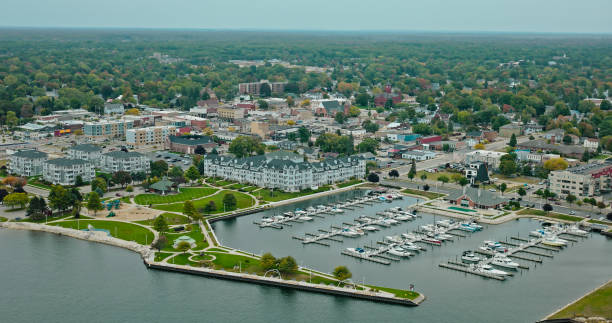
Ludington, MI

An hour an a half northwest of Grand Rapids is the quaint town of Ludington. With a population under 8000, it wouldn't be notable at all if it weren't the Michigan port of SS Badger, one of the passenger and vehicle ferries across Lake Michigan operating between Ludington, MI and Manitowoc, WI from May to October. An excellent marina to boot, it is all possible thanks to a pair of breakwaters built in the 1870s, not to mention the already existing natural harbor they were blessed with. The start location is visible in the shot above, right next to the marina. 3.7km later, we're waving the flag.

Manistee_Harbor.jpg

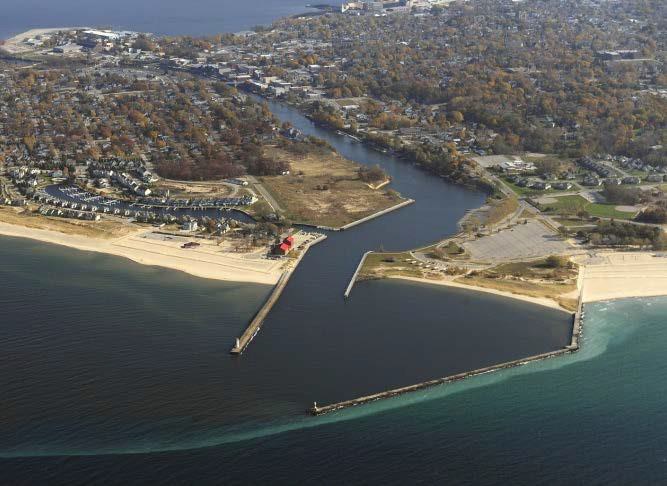
Manistee, MI

The first 60km or so are quite uneventful in terms of the racing. We do pass a few stunning spots already for the potential helicopter in Manistee, with its isthmus between the smaller Manistee Lake and Lake Michigan itself. Just before the man made channel between the next lake, Portage Lake, and Lake Michigan, we head around the lake and join the M22 into the tiny settlement of Onekama before tackling our first climb. 2.2km at 5.3% isn't all that bothersome, but it is the first of the many obstacles.

Bear+Lake+near+Onekama+Aerial+Photo+from+E-Edit20220124.jpg

Onekama, MI and Portage Lake. In the distance, the canal between Portage Lake and Lake Michigan is just about visible.

This part of the M22, in Northwestern Michigan, is part of the Pure Michigan Byway system, a series of highways designated as scenic. Much like other known scenic routes, like California's Scenic Highway, this scenic route takes us mostly along the coast of the lake. This particular section was voted by readers of USA Today in 2015 as the best scenic autumn drive in the country. Continuing along, we eventually reach the town of Arcadia, where we have our first sprint. As with the previous two towns, this one also has its own lake in Arcadia Lake, with a dredged channel connecting it to Lake Michigan. It is after passing the town we find ourselves at our second climb, Arcadia Scenic Highway, ending near Arcadia Scenic Turnout, a popular overlook.

arcadia-scenic.webp

Arcadia Scenic Hwy

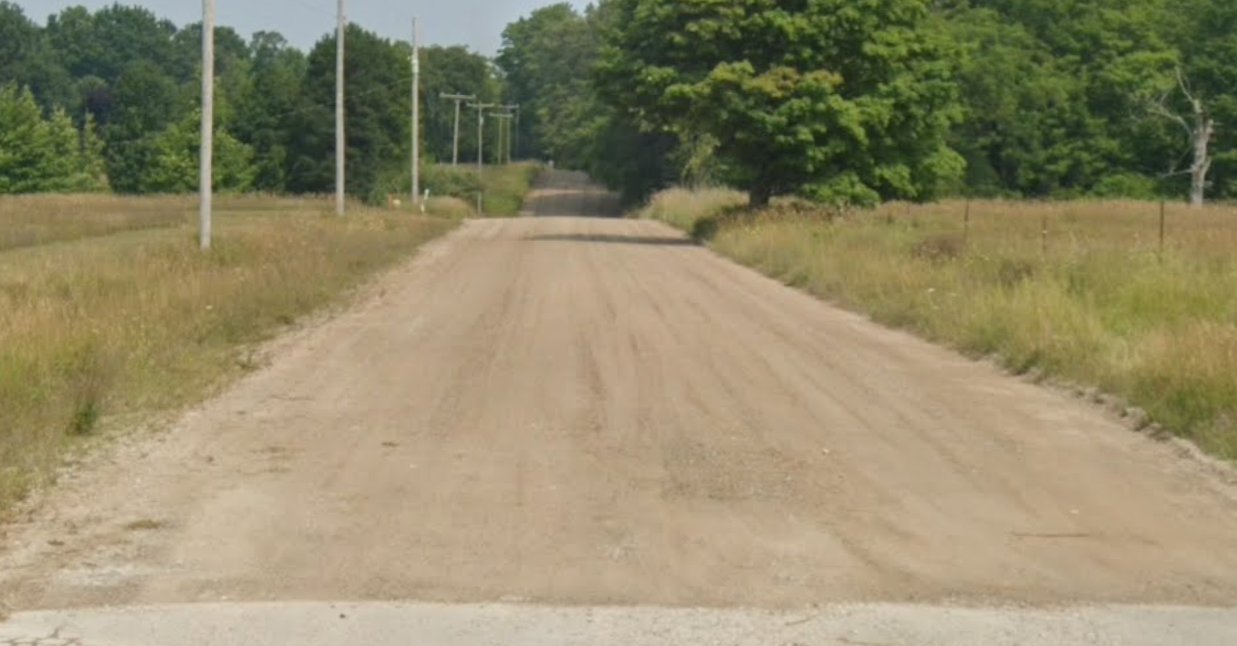
We leave the scenic route after our next climb, Great Dunes, and head east up Grace Road after which we enter our first dirt road.

Sector 1: Higgins Road, 94.8-96.4km, 1600m **
sector1.png

A pretty easy sector, but two stars because of the topography - this will go pretty fast as a it will be partly downhill. An uncategorized climb, not steep enough to register, does follow, and we do enter the town of Beluah before going up Eden Hill. The next sector comes pretty soon after.

Sector 2: Moss Road, 106.4-107.5km, 1100m *
sector-2.png

While the gravel is similar to the first sector, the length just makes this a one star affair. We now find our do a near 180-degree turn and head north towards the main road with a sprint in the town of Honor, with a population slightly above 300m, with a claim to fame being the only drive-in theater left in the state. A few kilometers later, we leave the main road US 31 onto a proper lengthy sector.

Sector 3: State/Fewins Road, 116.2-121.1km, 4900m ***
sector3.png

We're on proper country roads now, but the dirt is in pretty good shape for the most part. The real difficulty is in the fact that less than 2km separate this from the next sector, heading east keeping the private Lake Ann Airport to our left.

Sector 4: Oakley/Bronson Road, 122.8-128.2km, 5400m ***
sector4-2.png
sector4.png

The quality varies throughout the sector, hence the three stars. The road is quite wide as well, despite the surface being varied. Continuing east into the Green Lake Township, we eventually enter Mud Lake Road, the most difficult sector in the race.

Sector 5: Mud Lake Road, 132.3-134.7km, 2400m ****
sector5.png

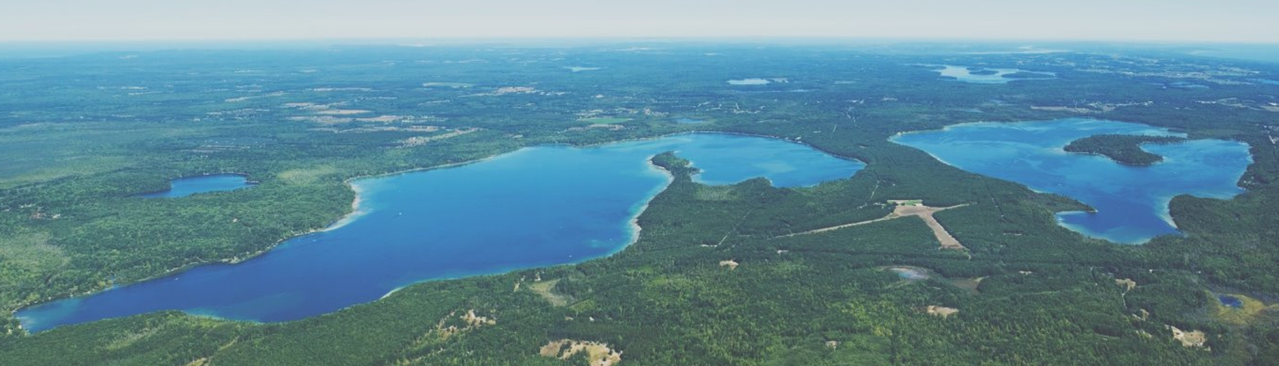
The road is way narrower, the surface poorer. Had this road been longer, five stars could have been warranted. Despite turning into asphalt after two and half kilometers, the road stays quite narrow and passes both recreational and residential areas in the county. This is truly a lake-heavy part of the state with tourism being the main economic engine.

interlochen-view.png

Green Lake Township, MI.

Past the lakes, we're race-wise in a bit of a dead zone until we hit the two climbs leading up to the finish in Traverse City. Neither of climbs are particularly hard, but could work to hamper a potential bunch sprint depending on the race situation. The first half of Barnes Road does average about 7%, and Hickory Hill also has section at around 8%, but not for long enough to be decisive. After finishing the climbs, we head into town as fast as possible down Route 72 finishing by the lake shore. Because of a divider, the finish line is quite narrow - so I would really hope the race has been split.

finishline.png

Finish line, Traverse City.

Speaking of Traverse City, the town is definitely one of the more well to do places in the state. The town itself only has about 15,000 residents, but punches well above its weight. It hosts the National Cherry Festival bringing in about half a million visitors annually, as the area is one of the primary cherry growing regions of the world. It is also the home to a part-time symphony orchestra! The name, Traverse City, alludes to the the long journey the 18th-century French explorers embarked upon when canoeing the mouth of the bay, as it is split in two parts - two "arms". Looking at a map, it is quite evident why tourism plays such an important part of the economy.

traversecity.png
500px-Grand_Traverse_Bay_432_pan_crop_15_%2832648536332%29.jpg

Traverse City, MI and the Grand Traverse Bay.


What to expect: Plenty of attacks, but not certain anything sticks 100%. Either complete carnage, or a reduced bunch sprint.
 
Last edited:
Oct 5, 2010
4,338
389
16,180
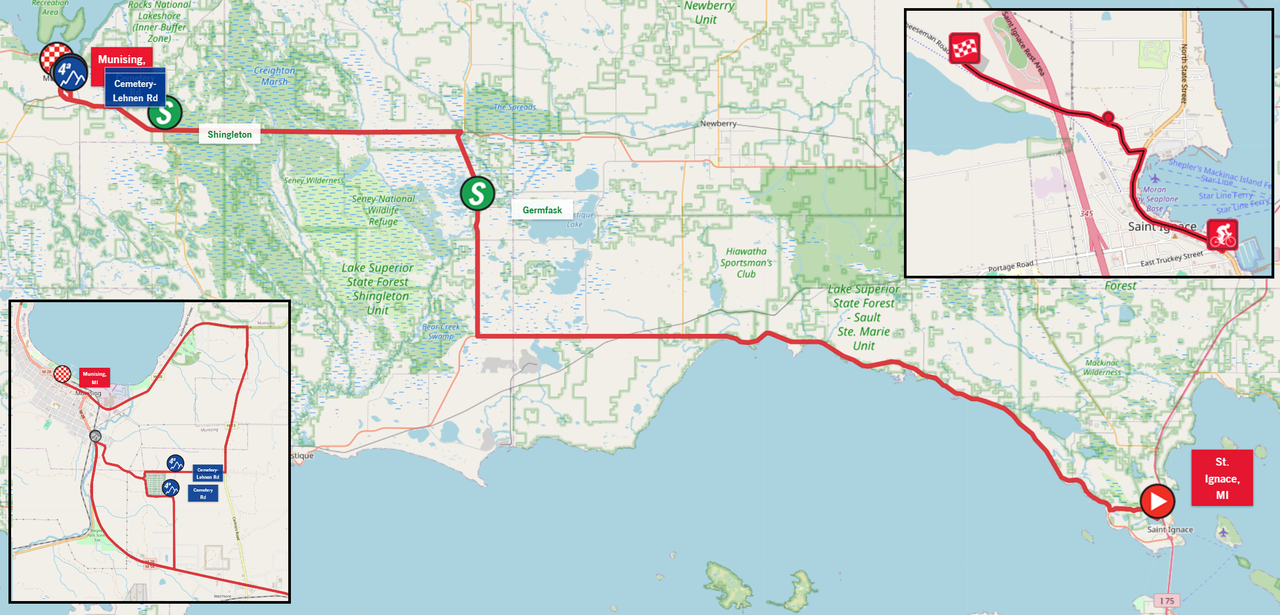
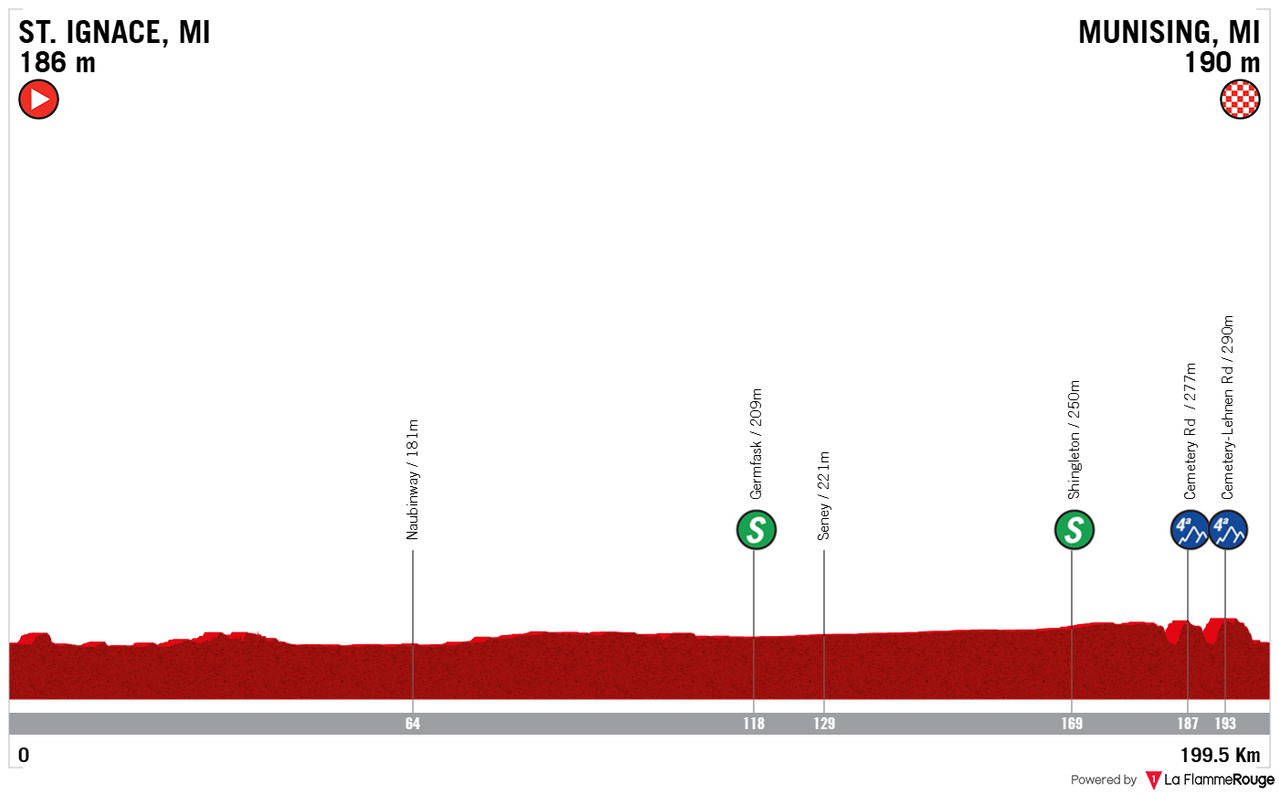
Tour of the Great Lakes | Stage 7: St. Ignace - Munising, 199.9km

map.png

profile.png

Climbs:

Cemetery Road (cat.4), 1.9km @ 5%
Cemetery-Lehnen Road (cat.4), 1.8km @ 5,9%

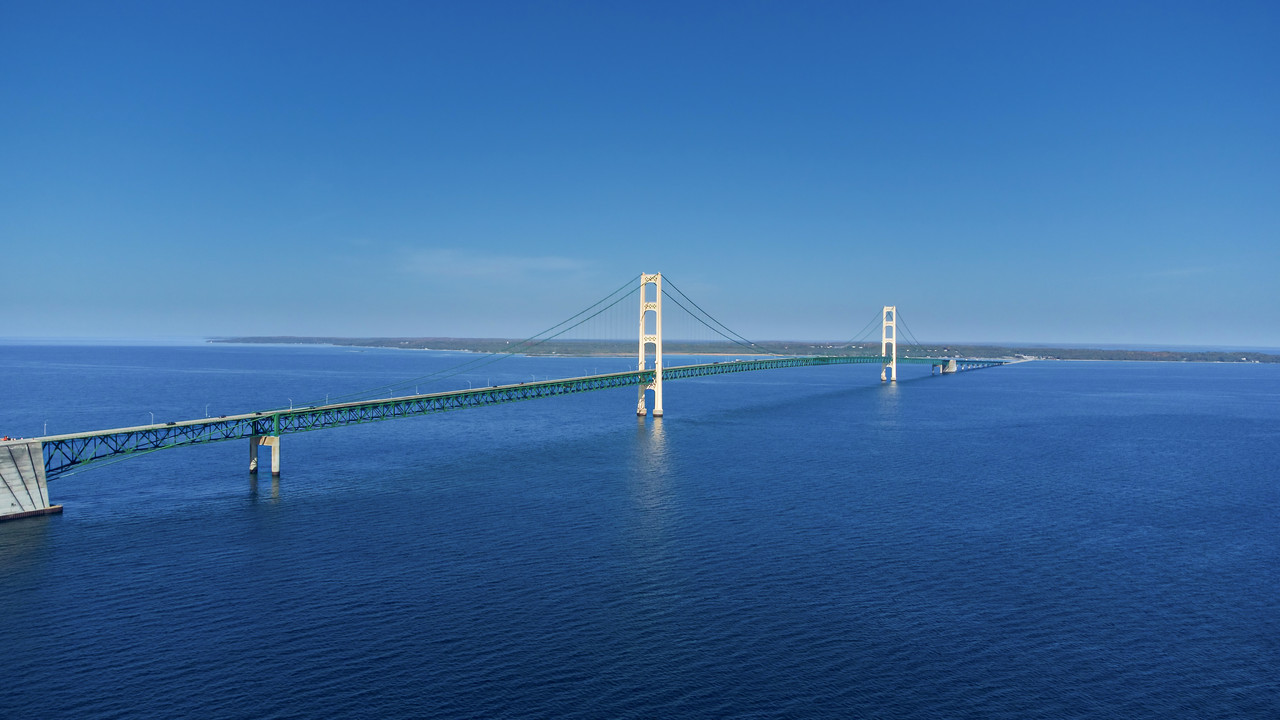
Mackinac-Bridge-2022.jpg

Mackinac Bridge

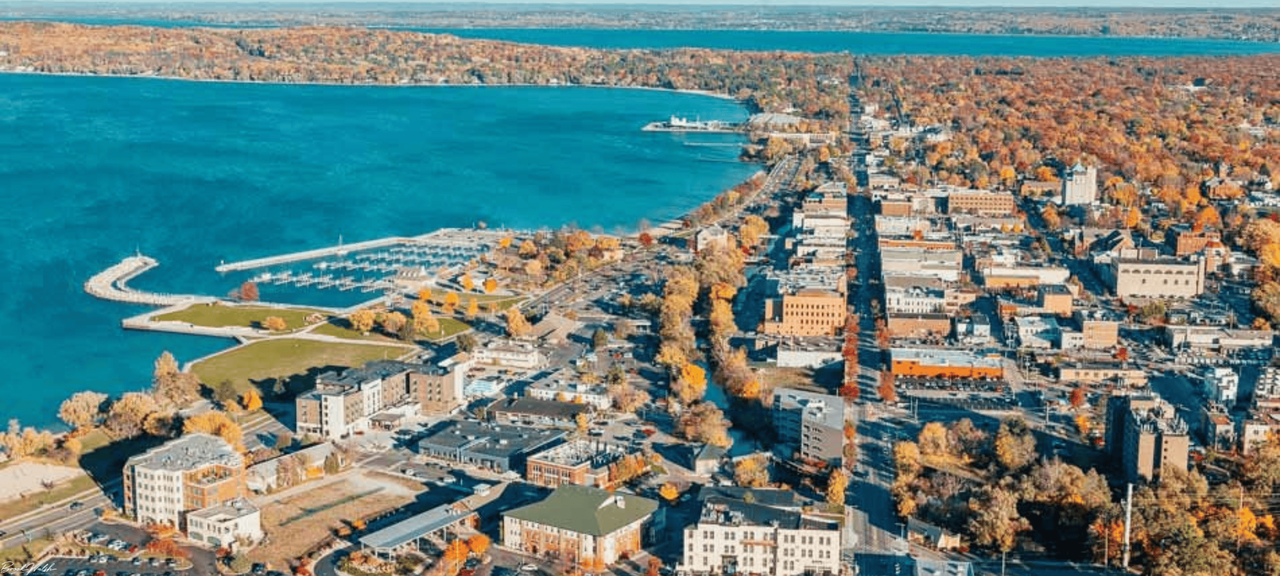
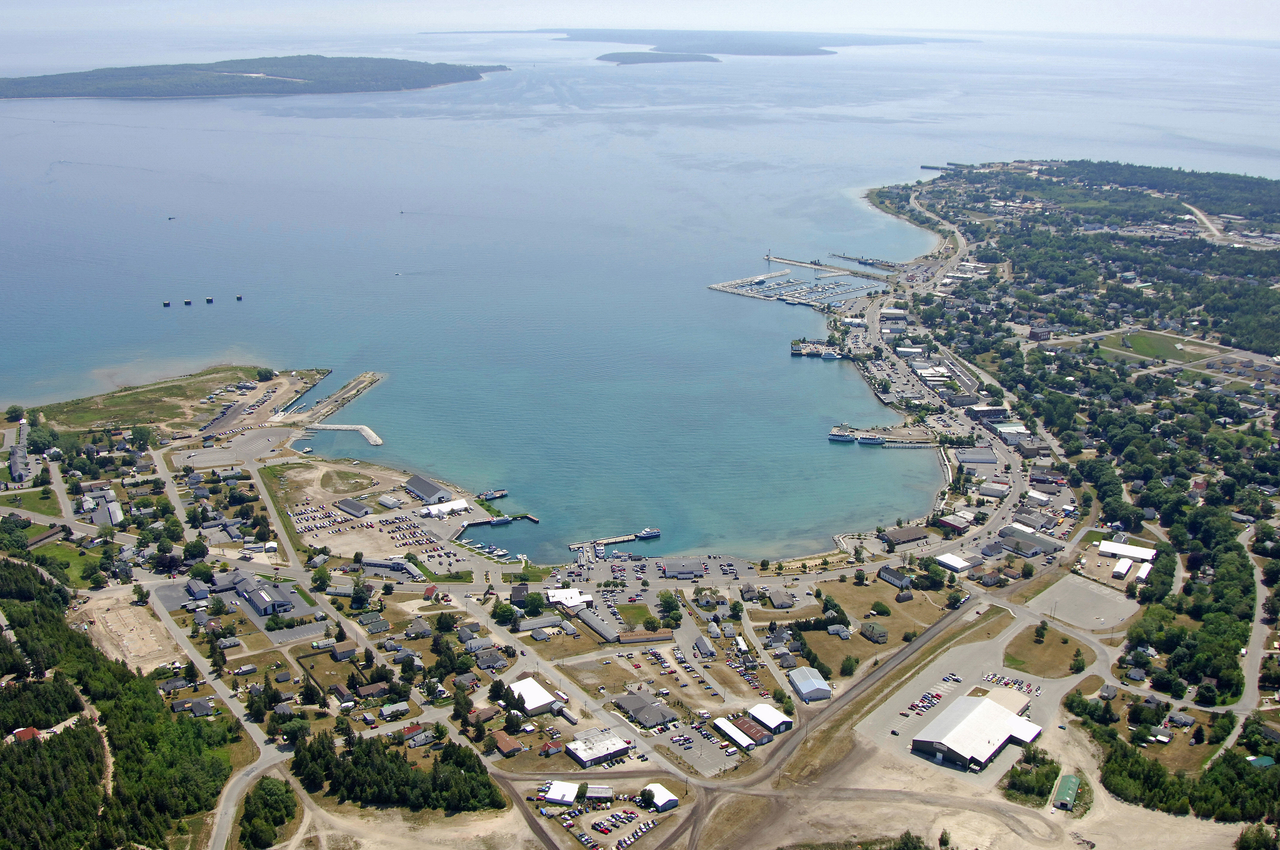
The transfer to stage 7 takes the caravan across the Mackinac Bridge. A colossus of a bridge at over 8km long, it was the longest suspension bridge in the world at the time it was built. It opened in 1957 and reduced the need for the up to nine ferries working the strait separating Lake Huron from Lake Michigan. St. Ignace, the town on the northern side of the strait, might be the oldest of our towns so far. One of the oldest continuous settlements in the state, it was founded as early as 1671 as the site of a Jesuit mission. Its founder, Jacques Marquette, spent much of his life learning both the Iroquois and the the Anishinaabe languages (from which many of the place names we have gotten accustomed to come) of the Great Lakes region, specifically in what is now Michigan, and proselytized. He was buried in St. Ignace in 1677, but the town outlived the mission - first becoming a major fur trading hub and later being a connecting point between Lower and Upper Michigan. The town itself is quite small, with just above 2,000 inhabitants, and wraps itself around a small bay facing east. Only 3.1km separate the neutral start at the town marina and km 0.

st-ignace.png

St. Ignace, MI

The stage itself offers nothing in terms of racing. Could there perhaps be crosswinds? Maybe, but it's not very likely as there aren't many roads exposed to the wind. Michigan's Upper Peninsula is sparsely populated and even more heavily forested than Lower Michigan, the entire stage is more or less a transport across Michigan's Upper Peninsula, part of the state due to a former border dispute between Ohio and Michigan in the 1830's where Ohio got hold of Toledo while Michigan settled for the Upper Peninsula.
Despite being geographically linked with Wisconsin, it had never been politically linked - even in the times before European colonization and ethnic cleansings of native tribes. The people living there now, nicknamed Yoopers do in fact have more in common with Wisconsinites in general though, but no one is really pushing for any changes to state boundaries.

The only reason for this stage even existing is that I wish to have a stage hitting our final and largest of the five great lakes - Lake Superior. While Huron+Michigan is the same body of water hydrologically, they are not usually counted together, making Lake Superior the second (or third) largest lake in the world by surface area behind the Caspian Sea. It's a mammoth, but because of its latitude, there aren't any great population centers. Thunder Bay is the largest settlement, but with a metro area population of just about 123,000. I would have loved for the race to head there, but it's on the other side of the lake and would have added even more bloat to an already bloated stage race.

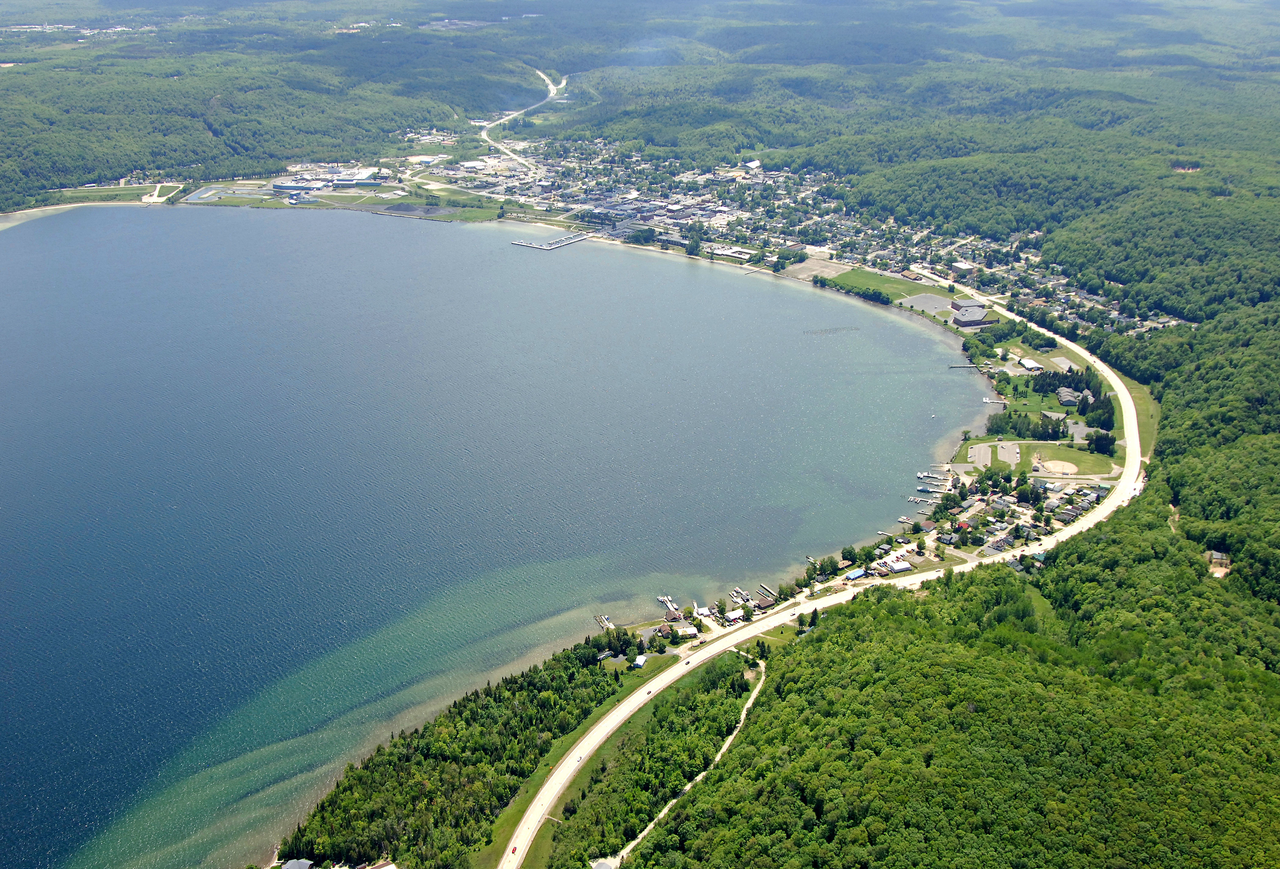
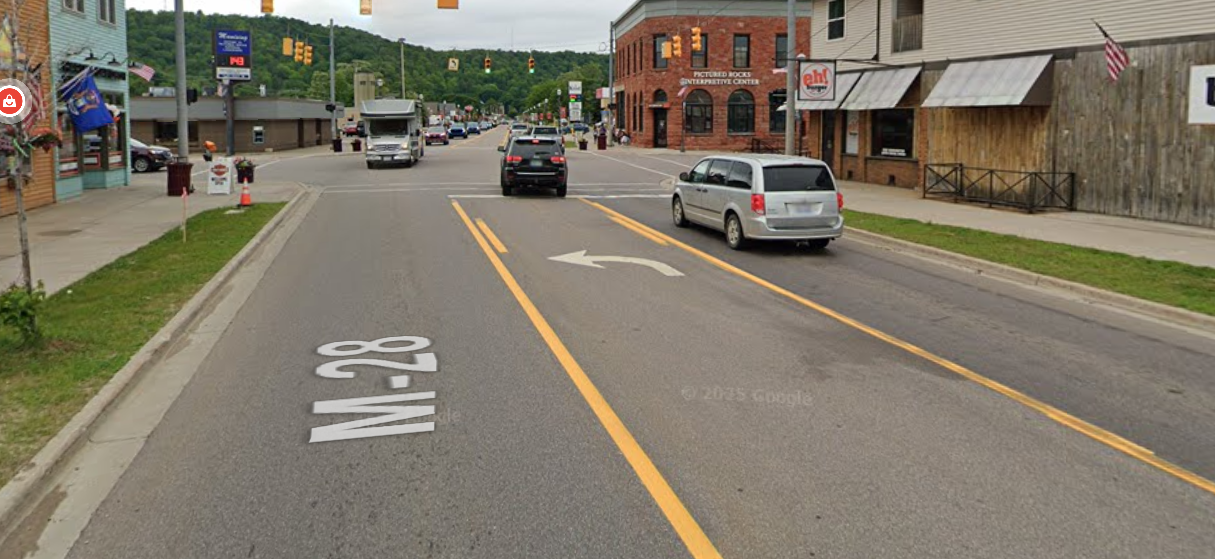
With all that being said, the stage finish is in one of few towns where there are some elevation changes nearby. Just as we pass a mini waterfall to our left heading down the US28 towards Munising, we head east up a climb towards the town cemetery. There are two ways to tackle the climb, and we make a loop of it - heading back up to the US28 tackling the climb once again but the other time taking a left turn once we reach the cemetery, swinging around coming towards the town along the lakeshore from the east towards the finish line - ending right at the marina.

munising.png
finish.png

Munising, MI and its finish line

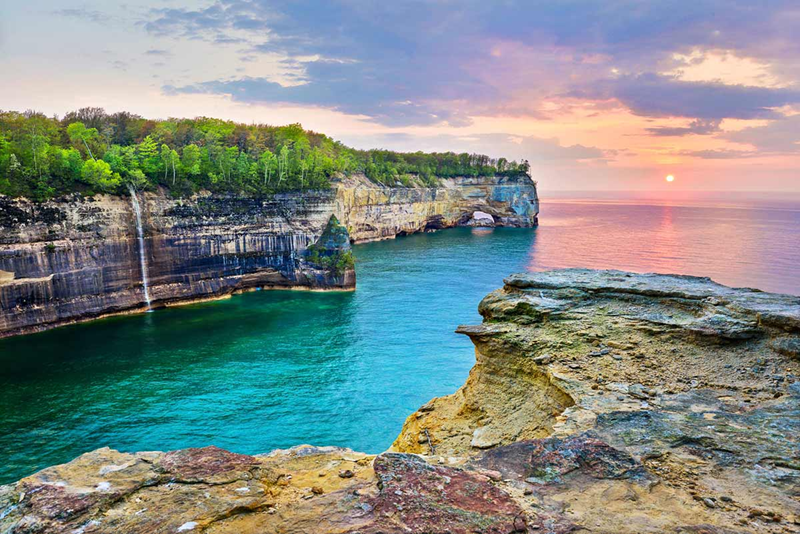
Munising has a population of just under 2,000. While the town isn't all that impressive, the helicopter shots will be quite stunning. To the east is the Pictured Rocks National Lakeshore, a nearly 70km long shoreline featuring some exquisite waterfalls, rock formations and sand dunes; while to the north is Grand Island - a national recreational island with plenty of picturesque locations.

picrock.png

Pictured Rocks National Lakeshore

What to expect: A bunch sprint or a slightly reduced bunch sprint, the top of the climb being 6km from the finish.
 
Oct 5, 2010
4,338
389
16,180
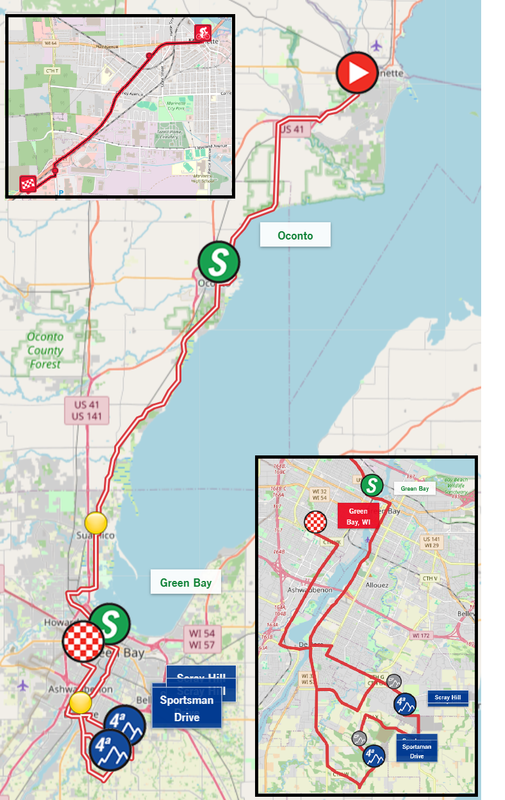
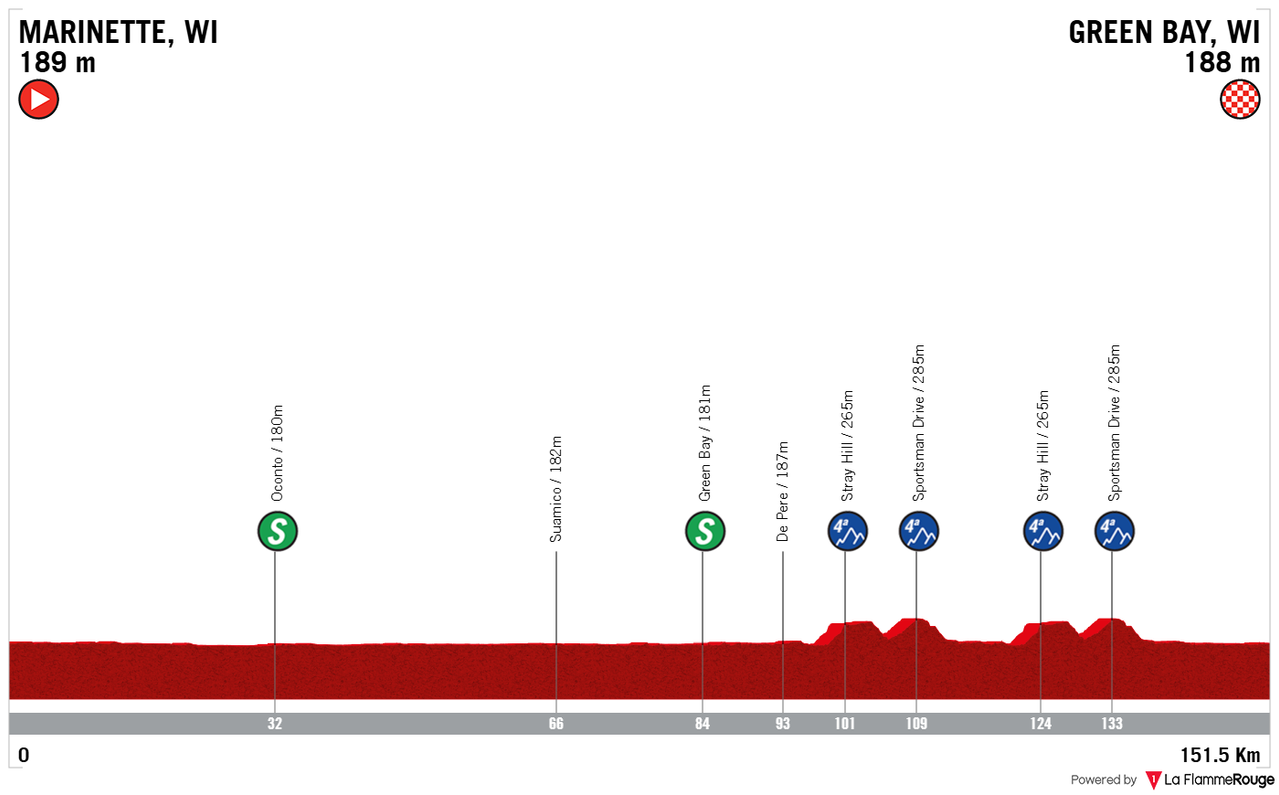
Tour of the Great Lakes | Stage 8: Marinette - Green Bay, 151.9km

map.png

profile.png


Climbs:
Scray Hill (cat.4), 1.7km @ 4%
Sportsman Drive (cat.4), 1.7km @ 3%

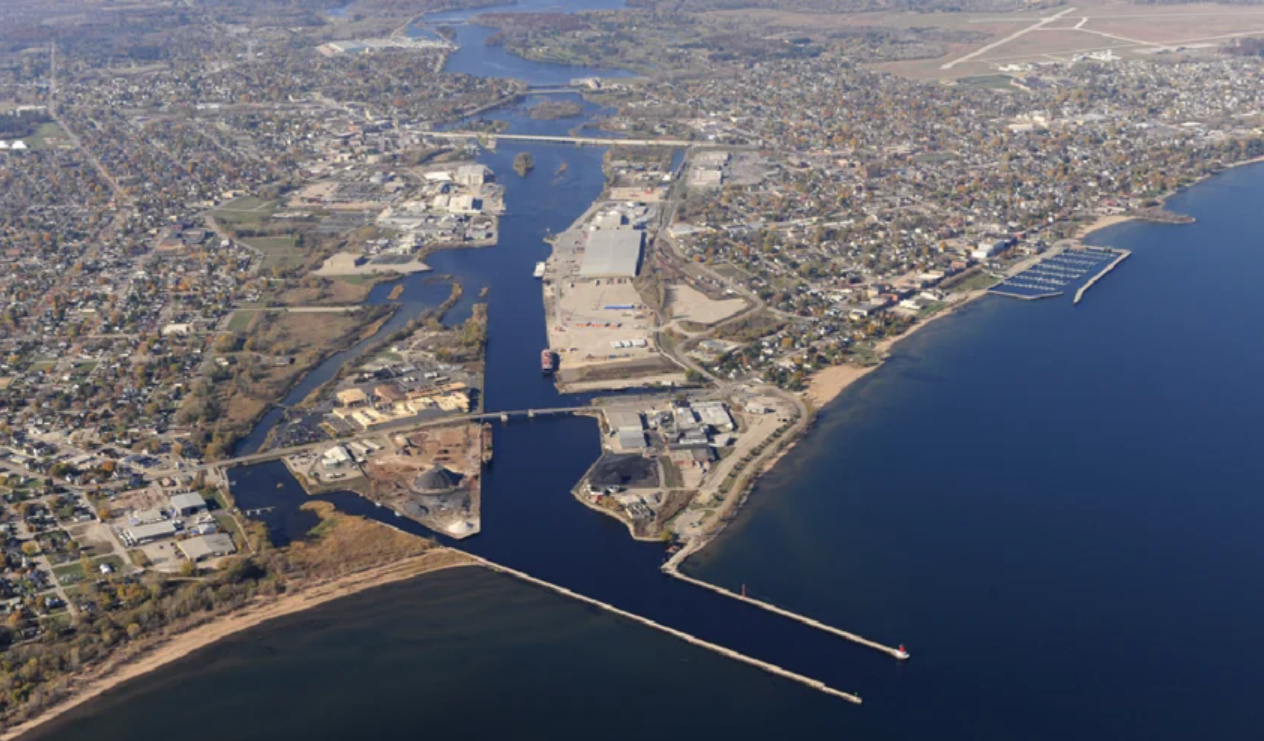
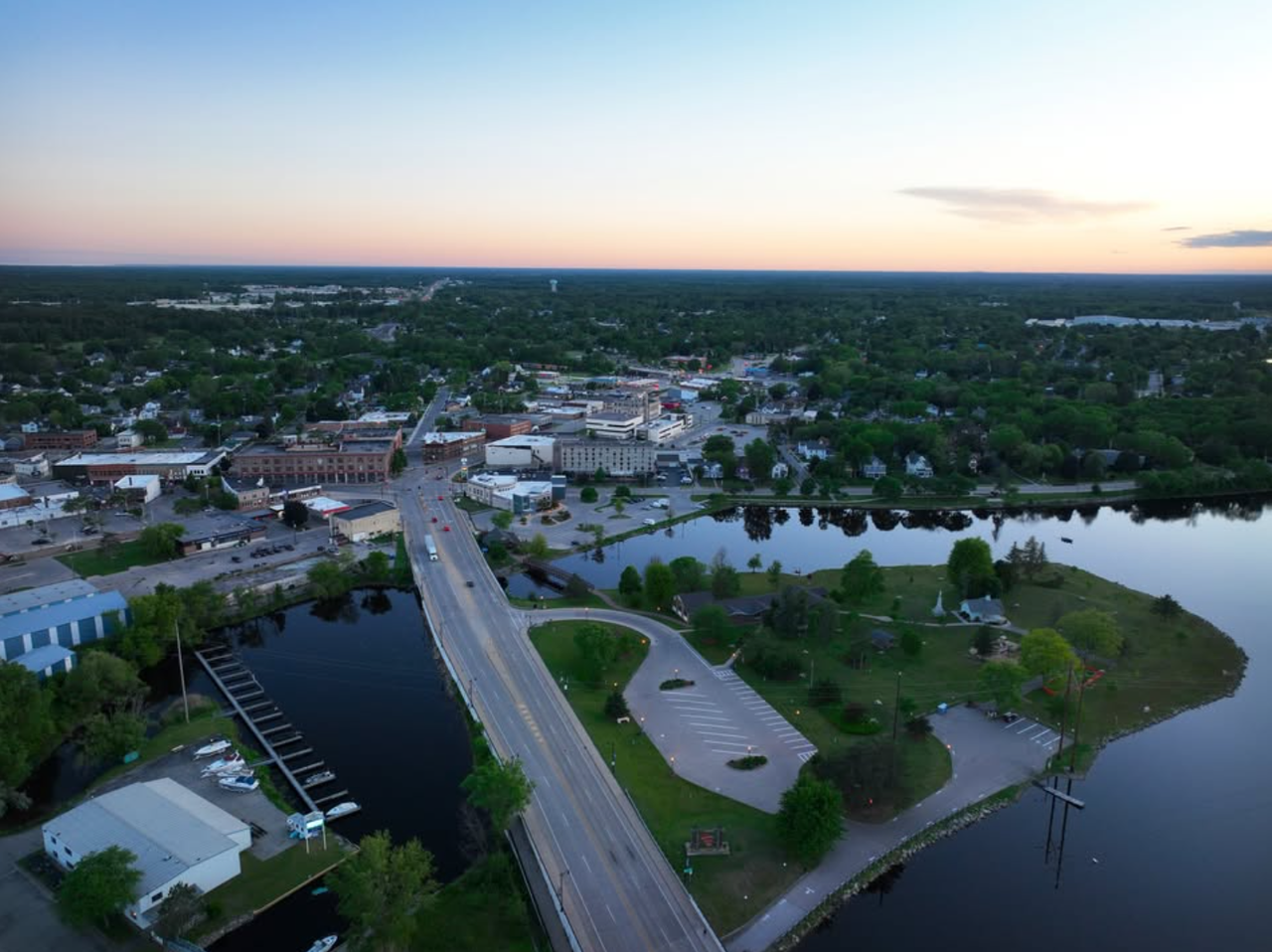
marinette-menominee.png

Menominee to the right, Marinette to the left

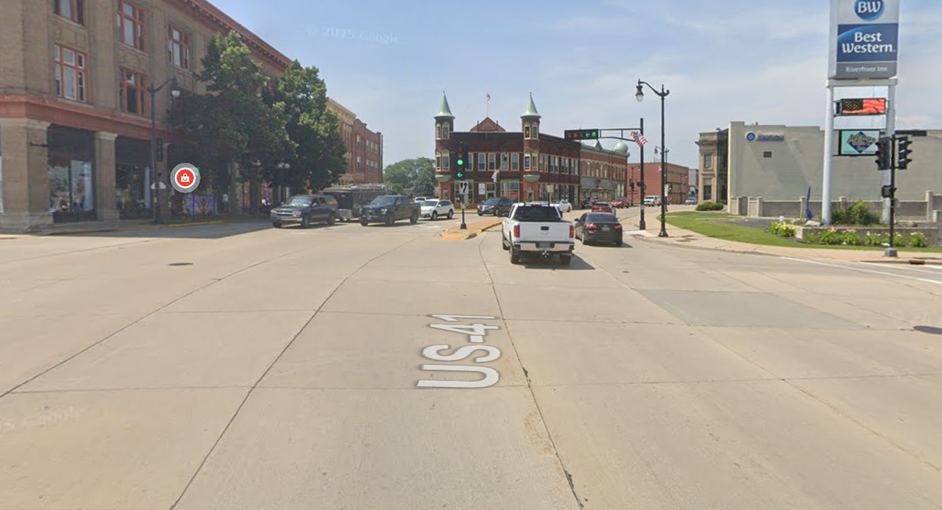
Once again, we sadly have about a two hour transfer - and this one finally sees us leaving the state of Michigan. Part of the state border is marked by the Menominee River, and at its mouth lay the two towns of Menominee and Marinette. Both towns are roughly the same size at around 10,000 inhabitants each and form what could be seen as twin cities, though not nearly the size of St. Paul/Minneapolis a few hours away. The towns had their peak population in the early 1900's at the height of the lumbering boom, and plenty of landmarks and buildings still remain from this heyday. The neutral start will take place right next to one such building, the Dunlap Square Building, a historical commercial block, with some absolutely stunning brick walls.

marinette.png
neutralstartloc.png

The start location, seen from above and the ground

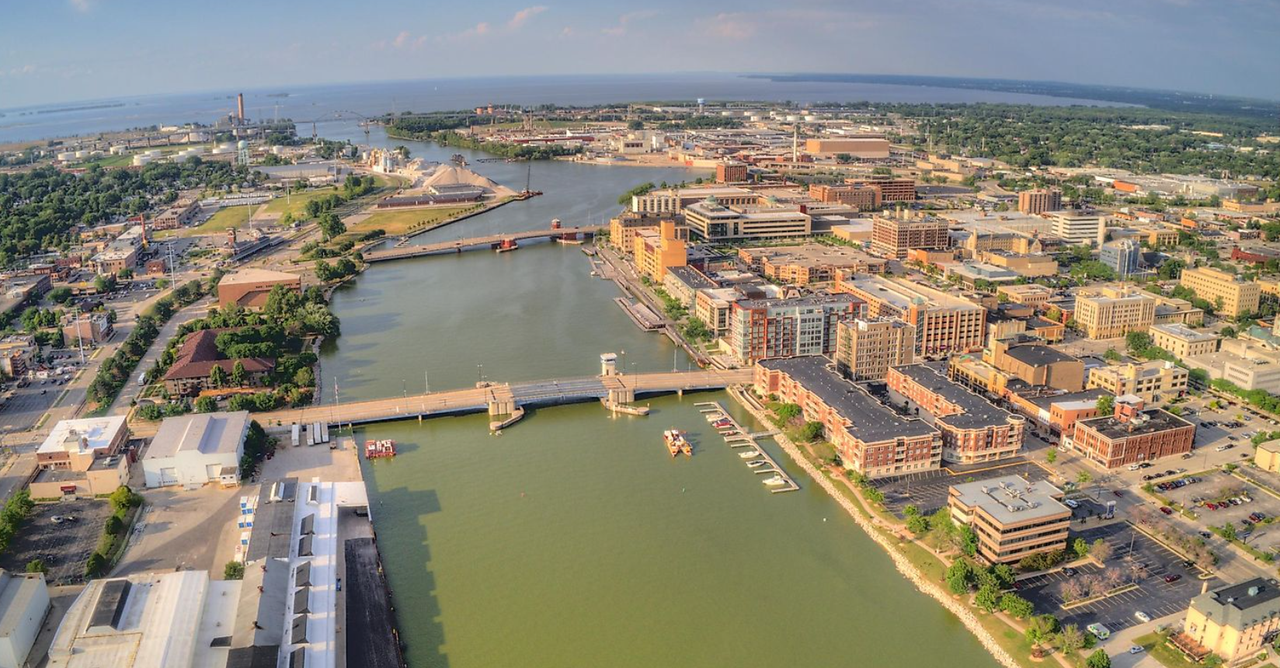
After four neutralized kilometers, we're off an running. The route mostly follows the Lake Michigan shore, but crosswind action isn't all that likely due to dense vegetation on both sides of the road for the most part. We aren't really passing any bigger population centers either, and the route is more or less the quickest way to get to Green Bay metro area. We begin by having a sprint near downtown, on the left bank of the Fox River, on which the city is located. After the sprint, we head over the river on the Ray Nitschke Memorial Bridge, a twin-leaf bascule bridge just north of downtown. Here, we immediately do a 90 degree turn heading south along the river, passing the "town" of Allouez before finding ourselves in the next town over, De Pere. To call these their own towns is kind of a relic of the past as they are more or less part of the same urban sprawl.

green-bay2.png

Green Bay, WI with the Ray Nitschke Memorial Bridge in the foreground

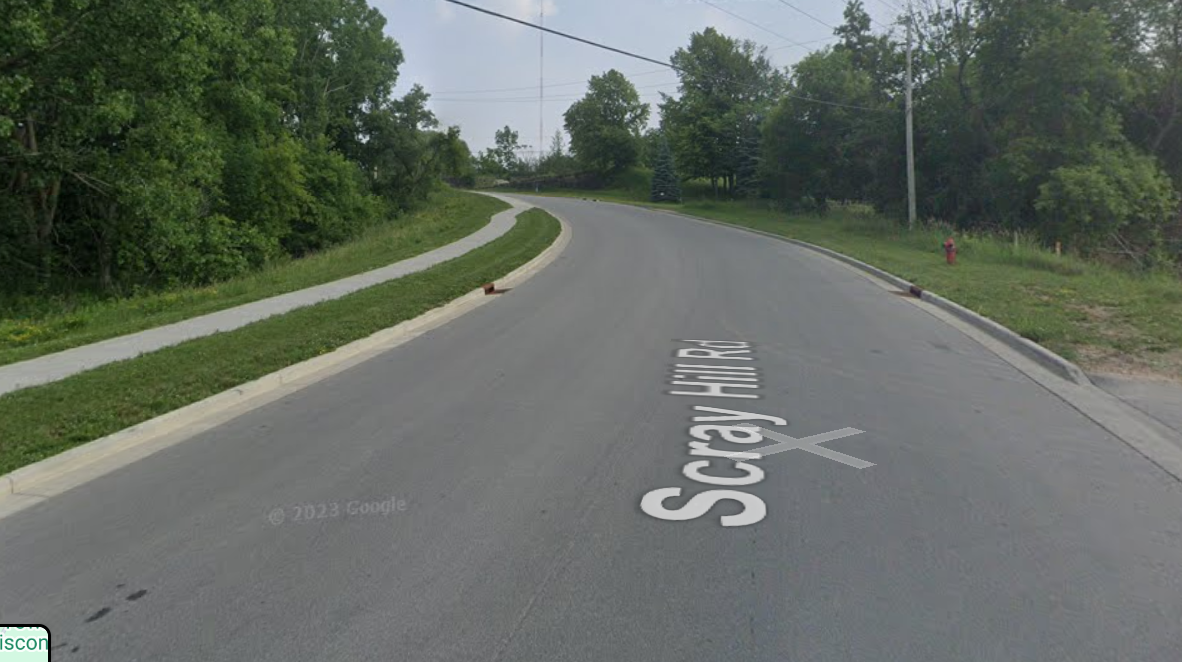
Either way, the whole reason for this excursion to the south is to find two short climbs, or speedbumps, in Scray Hill and Sportsman Drive. I'm honestly not sure if this was worth it at all, as they are hardly decisive enough to create any gaps - especially with the finish line being 18km from the top of the last hill, but I fancied not making this just a pure pancake flat stage. I contemplated moving to a more hilly part of the state, a bit further inland towards Madison, WI, but I felt it wouldn't fit with the spirit of the race to leave the vicinity of Lake Michigan. Perhaps I could have ended the stage at the top of one of these hills, but yet again - the whole point is to have a stage finish in Green Bay and hit the larger settlements.

scray.png

The steepest part of Scray Hill

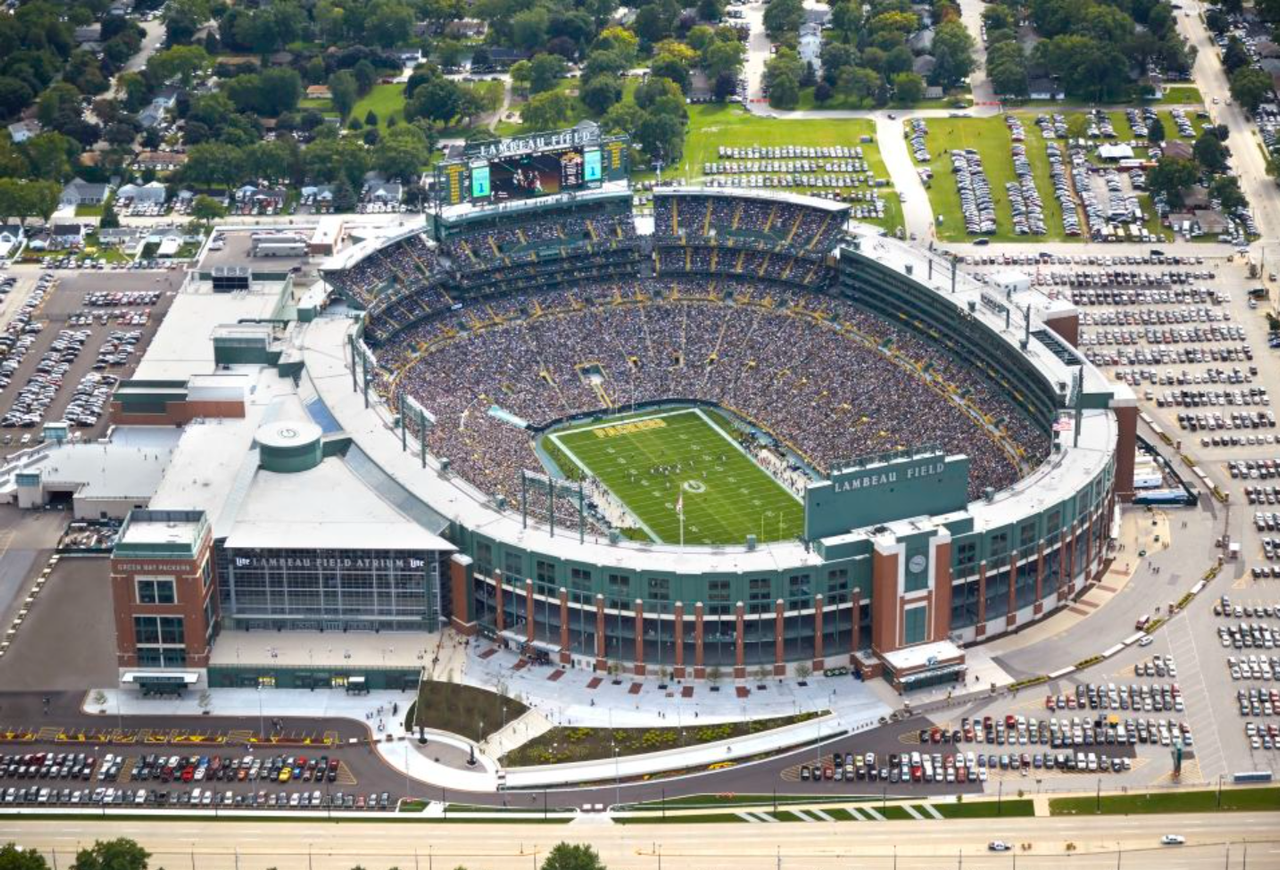
Speaking of the finish line being 18km from the last KOM - we head downhill, across the river at De Pere and then head north more or less all the way up until we take a hard left with 1.2km to go. From there on in, we are straight as an arrow until we hit the finish line at one of the great cathedrals of Midwestern sport - Lambeau Field, the home of the Green Bay Packers. I absolutely love the Packers for one simple reason: the ownership structure. While the rest of the big four North American sports teams generally have private owners, the Packers are in a league of their own being community-owned and not primarily a for-profit venture. This is akin to how European sports clubs usually operate, and had the NFL not allowed this exception for the Packers, the team would likely have relocate to a bigger market a long time ago. Instead, we are being allowed to see what could happen when a team is allowed to foster a bond to its community like no other and become a proper cultural institution. College football is the only comparison in the United States really. One additional benefit to the finish location is the massive parking lot near North American sports stadiums :cool:.

lambeau.png

Game day at Lambeau Field

What to expect: a flippin' bunch sprint.
 
Oct 5, 2010
4,338
389
16,180
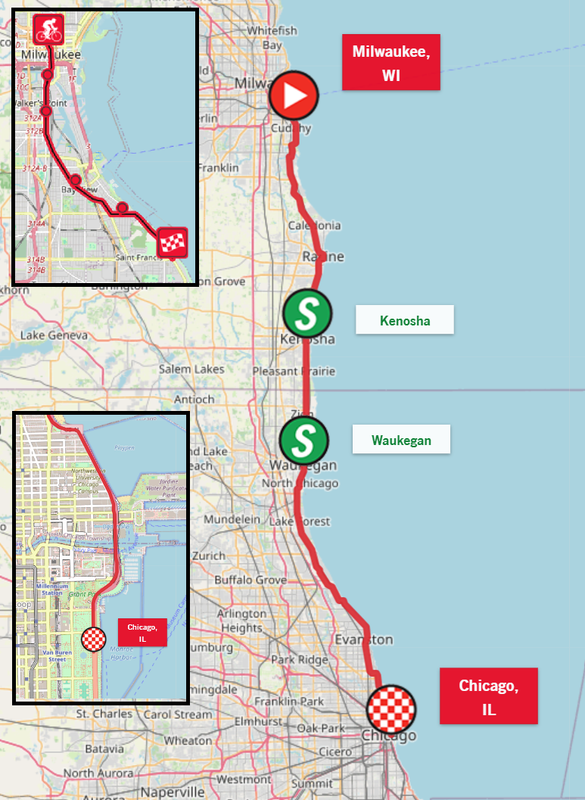
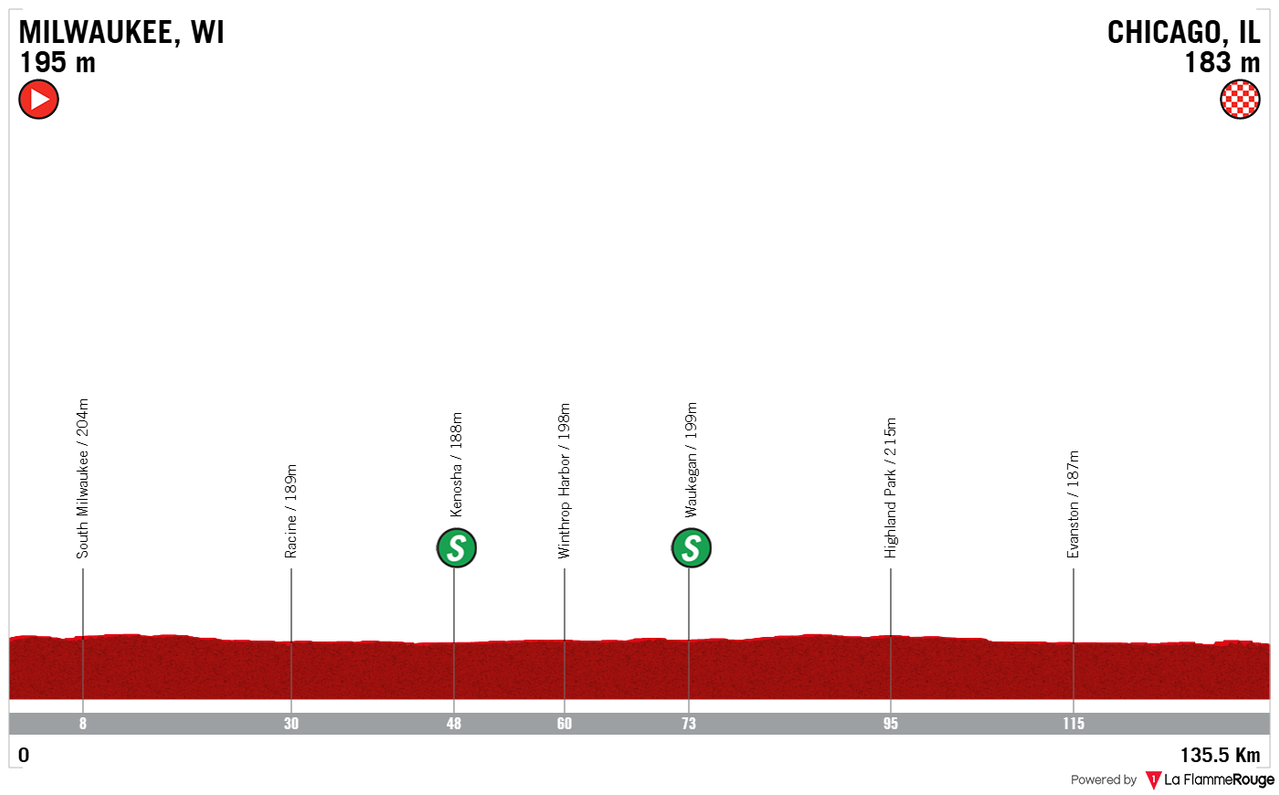
Tour of the Great Lakes | Stage 9: Milwaukee - Chicago, 135.5km

map.png

profile.png


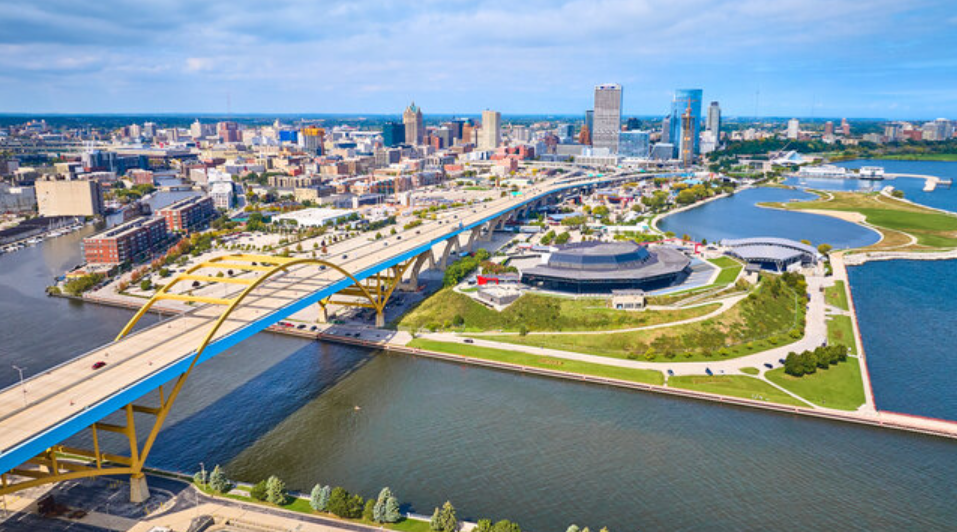
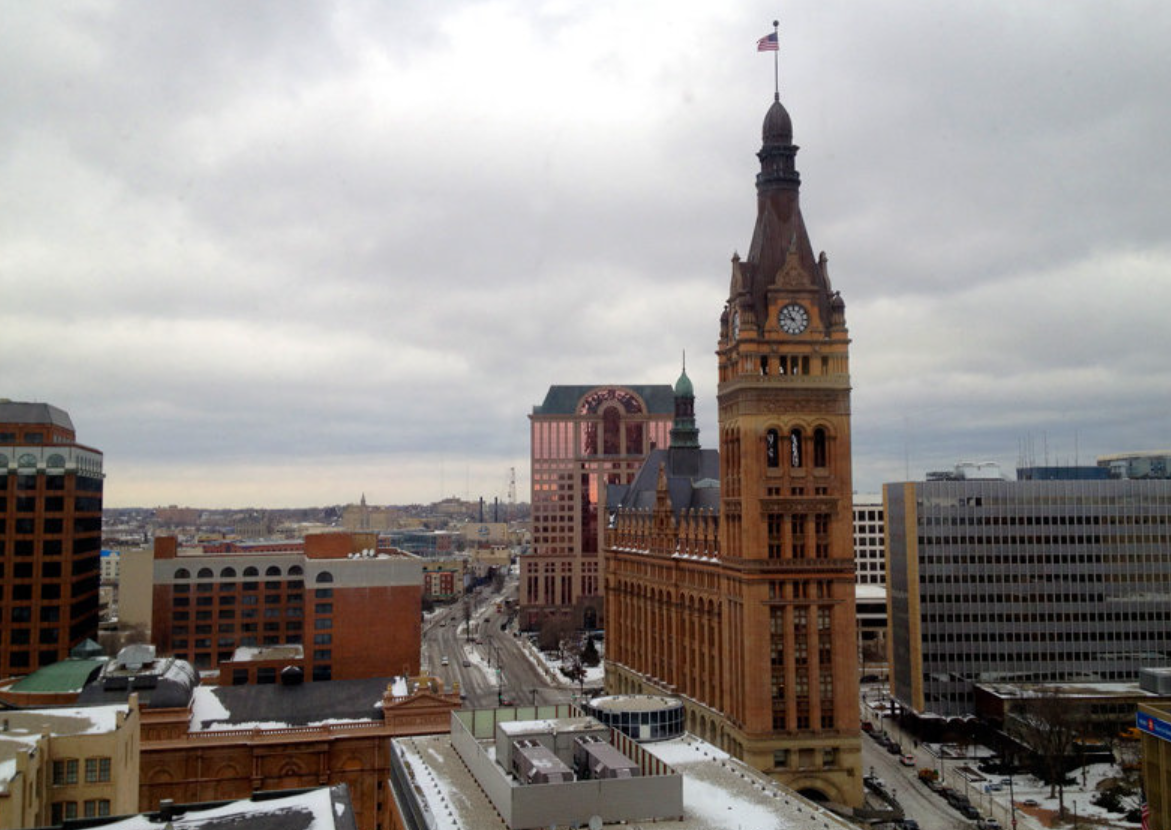
Two hours south of Green Bay is Milwaukee - located at the confluence of the Milwaukee, Menominee and Kinnickinnic (awesome name) Rivers, it is the perfect location for a large settlement, being by far the largest one in the state. While it isn't as old as many other cities we have had starts or finishes in, it grew incredibly fast in the middle of the 19th century in large part due to German and other European immigration. These Germans brought with them beer brewing, and Milwaukee came to be an industry leader in the United States - something which still characterizes the city. Just as with the famous Milwaukee cheese production being visible in the high per capita dairy consumption in the state, the same can be said about the Badger State's drinking habits - consistently putting up Hall of Fame numbers when it comes to excessive drinking. I say: watch out for the deer! Hopefully, the riders don't start the stage lit up despite this being an easy stage on paper.

milwaukee.png
cityhall.png

Milwaukee, WI and its City Hall

The start takes place near City Hall, and because of the central location we need nearly 10km of neutralized roads before the km 0. We're basically once again doing nothing but following the shore heading south towards the finish as best as possible. Despite being so close to the breeze, there is no certainty the race will be affected by it as the vegetation shields the riders. More or less the entire race takes us through urbanized areas. The first sprint takes place in Kenosha, a town mostly known for its infamous for the unrest which took place in 2020. Because of its location near both Milwaukee and Chicago, nearly half of its residents commute to work, but is otherwise a pretty average town on the Lake Michigan shore. Over the border to Illinois sees us enter the town of Waukegan for our next sprint. A similarly sized city to Kenosha with a bit less than 100,000 inhabitants, the demographics are quite different. Waukegan ends up being swallowed by the gravity of Chicago and is a more industrial and culturally diverse town, more or less a suburb of Chicago already.

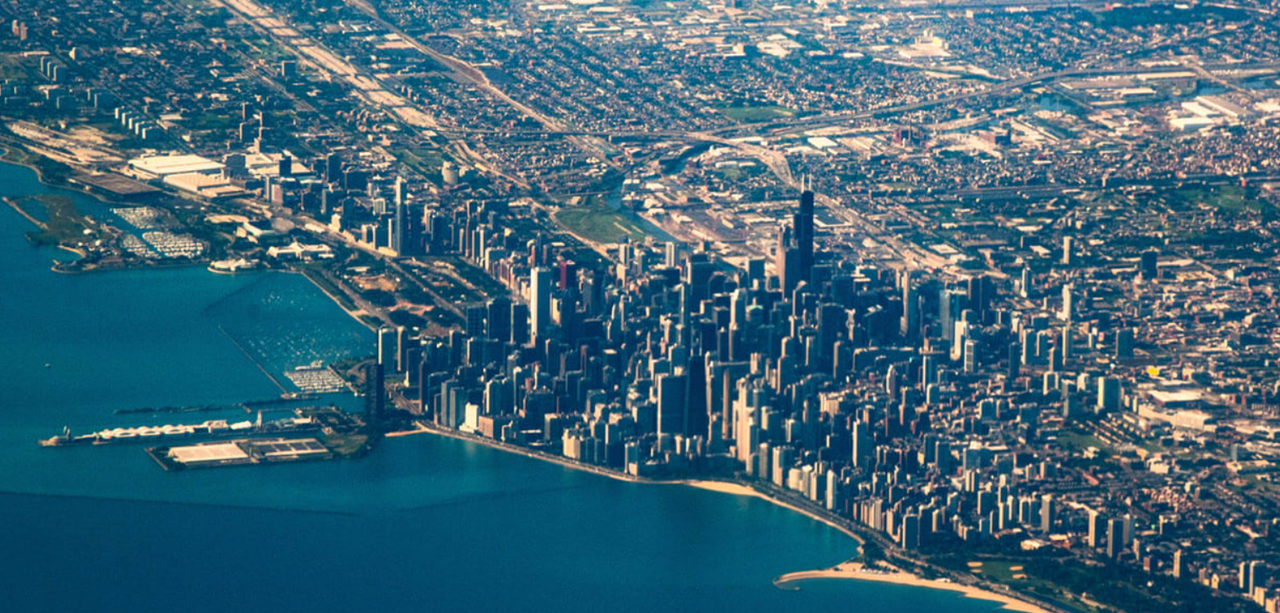
chicago.png

Chicago, IL - the finish line visible to the right of the harbor within the breakwaters

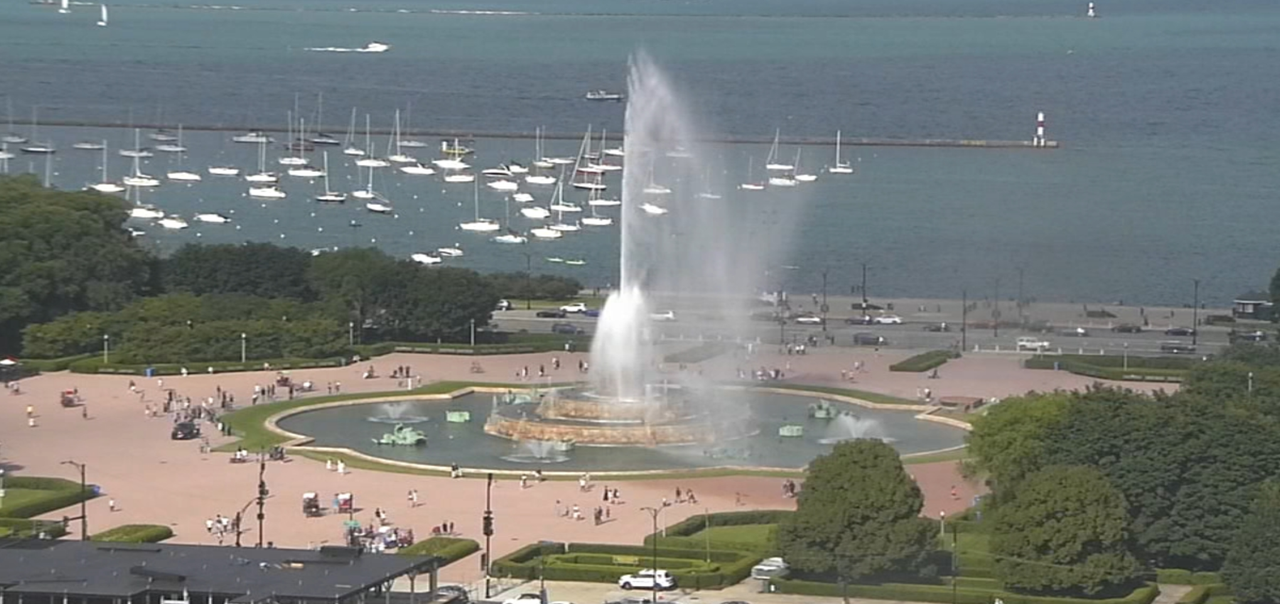
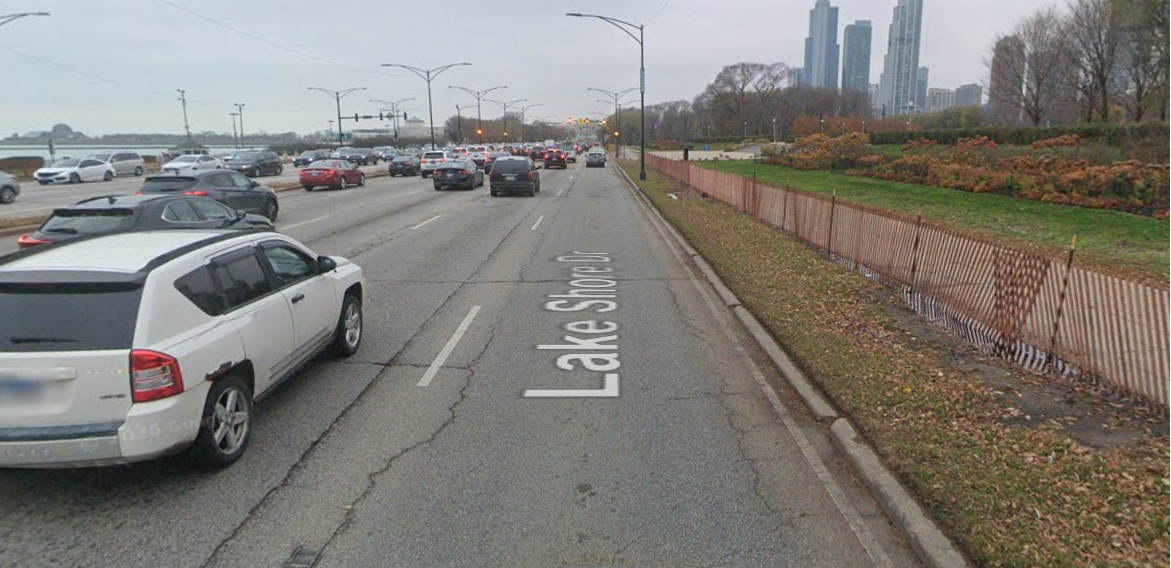
Speaking of Chicago, it's the center of what is by far the largest metro area in the Great Lakes region at nearly ten million inhabitants. I don't know what say about Chicago that people don't already know - it's a city of enormous weight culturally, financially and has been since the second half of the 19th century. Similarly to Milwaukee, a large European immigrant population including German, Swedish, Polish, Irish and Italian came to dominate around the turn of the century - after which the Great Migration saw African-Americans also enter the city in the hundreds of thousands. Finding an appropriate finish location was a bit of a dilemma - as navigating the city center with the peloton would be quite the headache. I settled on having the finish at the lakeshore near some monuments along the shore, one of which being the famous Buckingham Fountain - the central piece of Grant Park, a 319 acre urban park often referred to as "Chicago's front yard". It has been the site of large public gatherings many times, including Abe Lincoln's funeral procession, major protests in 1968 as well as several championship parades for Chicago's major sports teams, the last of which was in 2016 when the Cubs won their storied title after a 108-year drought; so it will fit quite nicely to host the closing ceremonies of this stage race.

buckinghamftn.png
finishline.png

Buckingham Fountain and the finish line itself

What to expect: This stage is as easy as they come, and will with near 100% certainty end in a bunch sprint.


With all this said and done: I think the idea of the tour outweighs the reality of the mostly flat roads. It's a pretty weak route, but it's a consequence trying to fit in most major settlements and the shore of every lake. It would benefit from being more limited in its scope and only being a week long. I'm pretty relieved I finally got around to finishing these writeups as well... on to the next project!
 
Feb 20, 2010
33,223
15,729
28,180
Totally feel you on that one, @jsem94, the research and writeup phase is the biggest handicap to regular posting here, as I've kept myself interested over the years more through that means than the original early point of the thread where it was "point A to point B, look at these roads". It's time for the next Vuelta - I’m afraid there’s quite the backlog of races built up, especially as researching one of them (one that I've been wanting to do for a long time, but have been prevented from doing so by the paralysis of choice) has sent me down the wildest, most bizarre rabbit hole yet, one that has grown so large it cannot go in the Race Design Thread as it’s far too off-topic but has run to absurd length (it's resulted in me writing, no joke, well over 10.000 words on the retirement of a pro wrestler I’d never heard of before December, and I’m willing to wager none of you have either) - but this one is slightly different as it comes with a theme. Back in the early days of the thread I did a “trying to maximise Spanish geography” Vuelta which included both sets of islands (the Balearics and the Canaries) as well as the two largest African exclaves, and I did a Vuelta built around honouring the hometowns of as many legends of Spanish cycling as possible, but largely themes have been more identified around the focal regions or similar, whereas this time I’m attempting to resurrect a style of Vuelta.

The current ‘era’ of the Vuelta sees its identity defined by ‘rampas inhumanas’, short and medium-length climbs that see double-digit average gradients and force gaps by that means. This very much traces its origins back to the 2012 Vuelta, and the runaway success that that - very much despite its idiosyncratic route - proved to be, with a disappointing Giro and Tour that year, and marquee Spanish names who specialised over that very type of climb prevailing daily. ’Twas not always thus, however, and that Vuelta, though perhaps a reflection of a directional shift that had been ongoing for a couple of years prior, was very much a break from the tides of the previous era.

I am trying to design something that represents an innovative and creative reflection of a classic 2000s-era Vuelta design within the parameters of today’s cycling, what the Vuelta could look like if that era’s design principles and focuses had not been replaced by the post-2012 philosophy. But in order to do that, we must first understand what the Vuelta looked like in the 2000s. The race had seemingly finally found its home, having moved to September and become ingrained in the highest level of the world calendar; still the undisputed runt of the GT litter, its identity as a Grand Tour had finally been fully affirmed. Spanish cycling was stupendously strong; the aftermath of the investment in sport (and science) around the 1992 Barcelona Olympics still played a role, and nearly every region was sponsoring a team at some level. A combination of Operación Puerto uncovering the seedy underbelly and the global financial crisis at the end of the decade hitting Spain hard would change that, of course, but for most of the 2000s, there was a very strong Spanish presence, both in terms of the teams and riders, in its home race, without it sinking to the level of provinciality that had plagued the race during the El Correo-El Pueblo Vasco days. The 1980s and 90s had been relatively kind to the Vuelta, with Unipublic’s guidance bringing the race to a wider audience and establishing new iconography of the race during the long absence of País Vasco from the race’s routes.

There were two other factors specific to the 2000s as an era of the Vuelta that need consideration however. They actually both start in the late 90s but their impact was significant on the 2000s editions of the race. Firstly, the riders who contested it. Spanish cycling has historically prized the mountain goat higher than any other traditional cycling nation, and until the Colombians came along in the 1980s, when you thought of the home of wispy, unreliable, mercurial lightweight climbers, you thought of Spain - the country of Vicente Trueba, Julio Jiménez, Federico Bahamontes, Luís Ocaña, José Manuel Fuente and Pedro Delgado. However, the 1990s had brought a new class of Spanish contender to the table, via the influence exerted by the success and popularity of Miguel Indurain: the hulking diesel climber and time trial engine. The Vuelta would see a new class of post-Miguelón GC contenders emerge, Spanish riders for whom the mountains were secondary to the chrono, and who would tempo grind their way to the summits. Spanish GC contention would therefore see the likes of Abraham Olano, Ángel Casero, José Enrique “Búfalo” Gutiérrez, Aitor González, Isidro Nozal, Santos González and Igor González de Galdeano doing battle on behalf of the new wave of diesels against the likes of Fernando Escartín, Roberto Heras, Joseba Beloki, José María Jiménez, Carlos Sastre, Iban Mayo and Óscar Sevilla who would sate the demands of the old guard to retain some of the romantic idealism of Spanish cycling past and while they often carried more popularity than their more pragmatic brethren, the race tended to marginally favour the former.

The other factor was the route itself. The Vuelta had had to undergo a wholesale revamp of its general design in the 1980s, with the Basque region forced off the menu. Unipublic had sought to establish Madrid as a final home of the race, patterned after the Tour’s iconic Paris finale, and as a result the late stages of the race had developed to formula, with transitional stages around historic Castilian cities like Toledo, Ávila and Segovia before a dénouement in the Sierra de Guadarrama. New classic climbs like Sierra Nevada and Lagos de Covadonga had been added to the race’s lore to fill the void left by the classic Basque sawtoothed stages of the past. However, during the 1990s the race had become very formulaic as, in their attempts to rapidly establish lore and iconography around these climbs, these had become almost annual fixtures, and so the race route had become quite predictable. Simultaneously, the move of the race from April to September meant that the weather would inevitably be better, and widened the prospective opportunities for use of climbs especially at altitude. Not just Unipublic, but also the teams and riders themselves, along with enthusiasts and fans, were hunting out new climbs to add to the race, and with the early days of the internet as well, this is the genesis of the strong and vibrant traceur community in Spain.

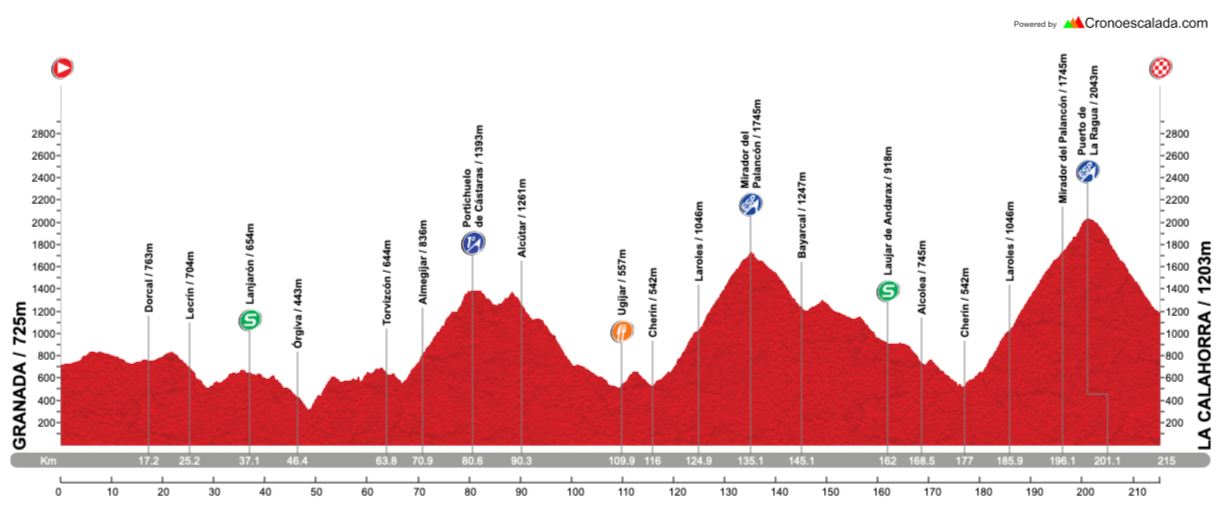
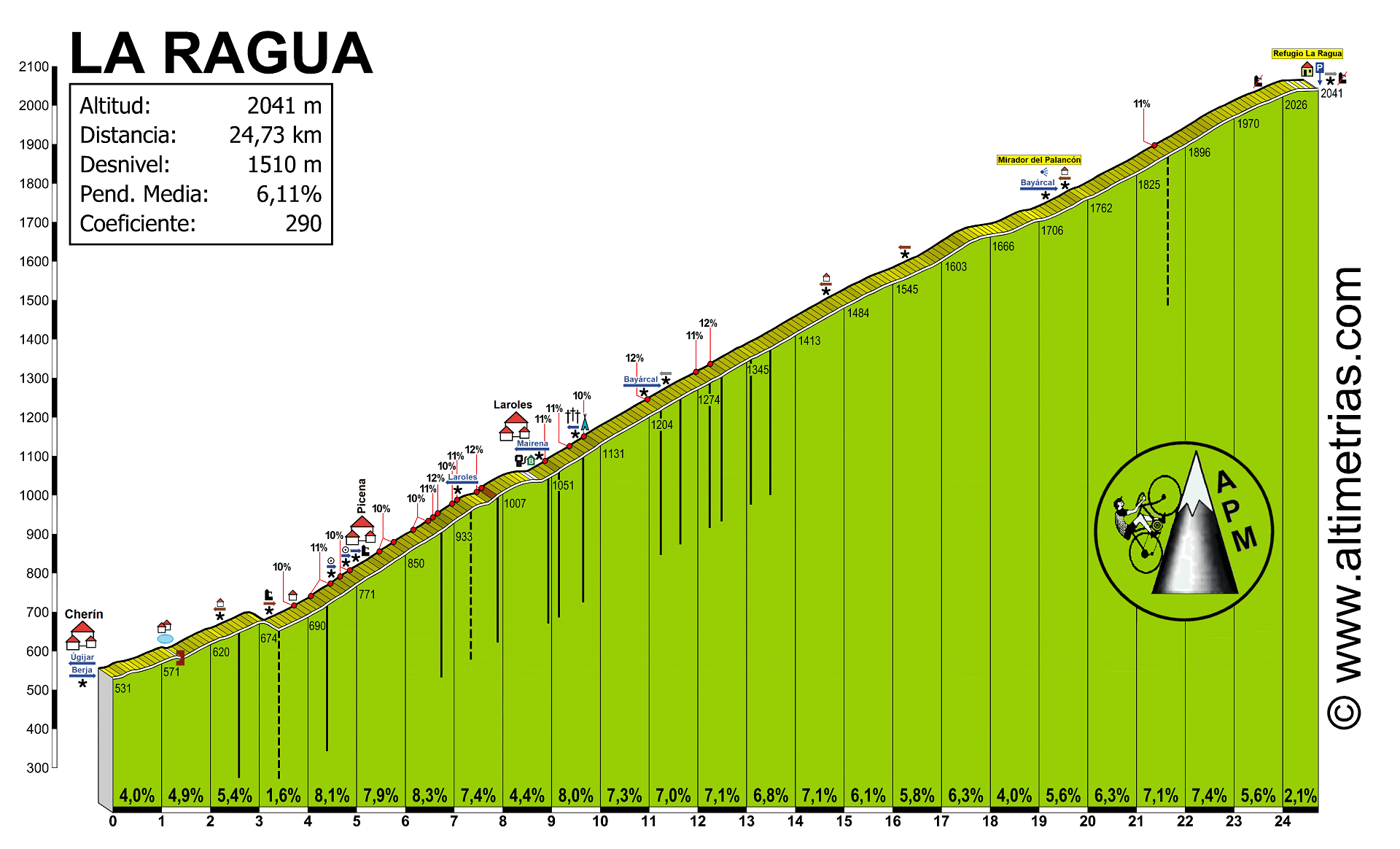
But while the most iconic of Vuelta climbs introduced in this post-September transition may have been the most brutally steep - Anglirú of course being added to the race’s repertoire in 1999 - most of these were more what you’d call ‘classic’ types of climb, where their difficulty was more the product of sustained steepness for long distance than the product of inconsistencies or brutal ramps. There were some, of course - Xorret del Catí was introduced in 2000, and La Pandera in 2002 - but only the latter went on to regular use in the era (four appearances from 2002 to 2009 with only one since!), with even Anglirú taking a layoff from 2002 to 2008. The move of the race to September reducing the risk of weather-related cancellations in the Pyrenees made Andorran climbs safer inclusions; Arcalis (last 13,4km @ 5,9%) would appear five times from 1999 to 2007, while Pal (10,7km @ 6,2%) would arrive in 2001 and La Rabassa (17,3km @ 6,5%) in 2008. The Alto de Aitana (22,2km @ 5,7%) was introduced in 2001, reappearing in 2004 and 2009. La Covatilla (18,4km @ 5,8%) would be introduced in 2004 and repeated two years later. Cálar Alto (22,5km @ 6,3% from the Gérgal side used in the era) would make its debut the same year, and reappear in 2006 and 2009, with its neighbour Velefique (20,1km @ 5,7%) joining it in the latter two sets of stages. The south side of the Puerto de la Ragua (24,7km @ 6,1%) would see its maiden - and to date only - appearance in professional cycling in 2009.

As you can see, therefore, much of the innovation was around climbs whose dimensions are more ‘traditional’ so to speak, which suited a balance of battle between the tempo climbers and the escaladores. Too grindy (2003 did border on this with MTFs at the likes of Port d’Envalira) and the spectacle is damaged by being too easy for the diesels, while tilting things towards what we would see in the 2010s with less TT mileage and more double-digit gradients would make things too easy for the escaladores. Uphill finishes were much fewer in number than they are in the Vuelta nowadays, where we not infrequently count double digits; 2009, for example, only had five stages finishing on an incline, the four MTF stages and the Murallas de Ávila (although a case could be made that Xorret del Catí is more-or-less an MTF), while 2002 was similar without that caveat.

Modern cycling is of course now not what it was in the 2000s, so I have tried to make a Vuelta in the style of the time, but adapted to current racing trends. But while it would have been easy to just do a historical route that just apes the most common finishes of the time (admittedly I have previously used La Pandera and Cálar Alto from Gérgal, rendering them off-limits due to my self-imposed rule around repeating MTFs, but there are still a few of the classics of the era available to me), I felt that while some sops to traditions and common route tropes of the era would be required, we should also honour the spirit of innovation that saw the race broadly expand its repertoire of decisive stages in the 2000s by seeking to add new options of our own - and seeing as so much of recent Vuelta innovation has been about seeking the most brutal ramps imaginable, we should try to keep our innovation in the spirit of that of the 2000s by looking to add climbs in the same vein as those introduced at the time.

I don’t know. It might not work, but it was a fun thought experiment.

Stage 1: Lisboa (PT) - Lisboa (PT), 118km

ywQBvWMO_o.png


WK6cZeZr_o.png


GPM:
Alto de Montes Claros (cat.3) 1,6km @ 7,3%

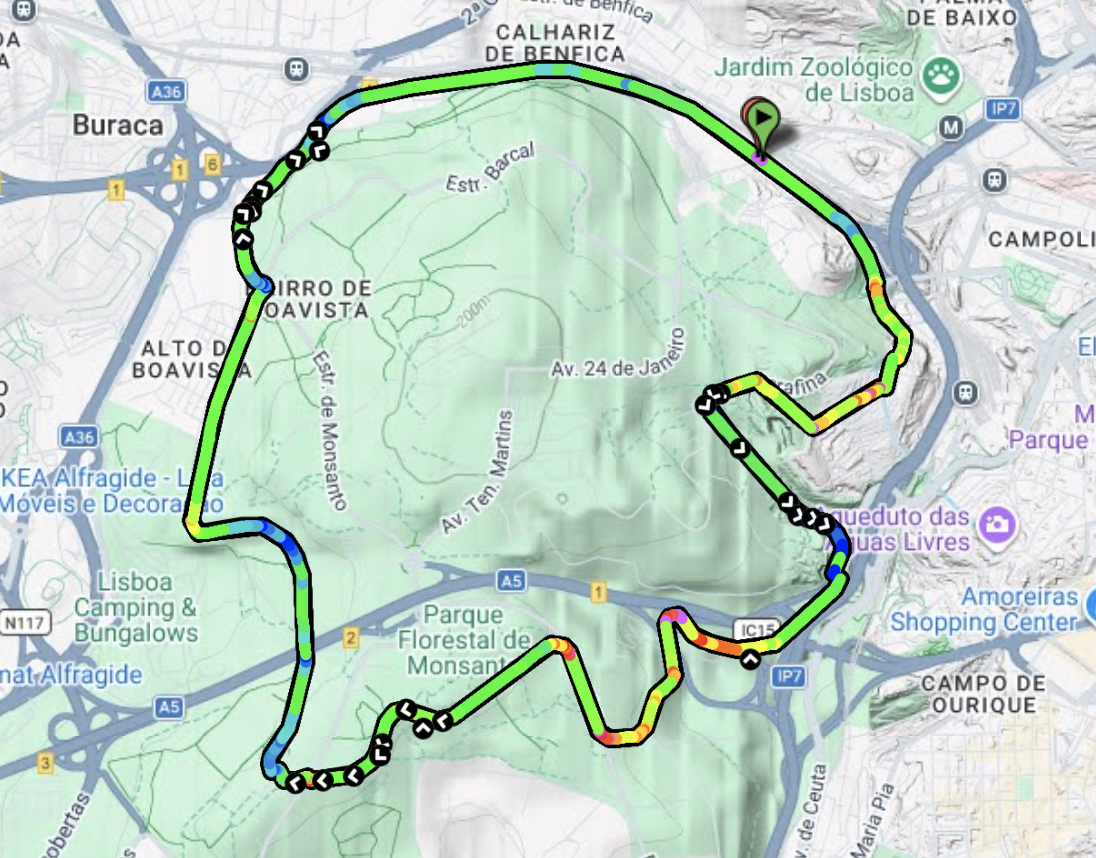
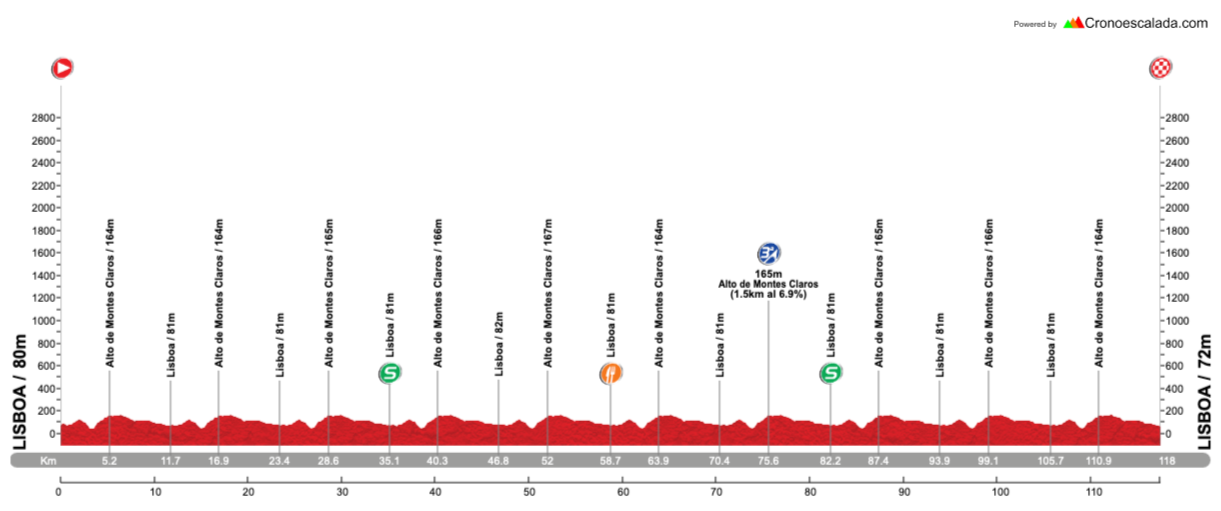
Yes, a slightly unusual start for the race, as we go with an overseas start and for the second time in three routes, we’re setting off from Portugal, this time from the capital rather than from the Algarve as we did before. The city played host to the Vuelta’s first ever overseas Gran Partida, back in 1997, but the race would wait until 2009’s Dutch start to repeat the process. Overseas starts have become more common since ASO’s influence has expanded, as 2017 saw a French start, and three of the last four Vueltas - as well as the 2026 one’s intended start - have been overseas as well. But back in the 2000s, this was rare. The Portuguese start in 1997 saw the race commence with a road stage, as we do here, but unlike that stage this will be a circuit race inspired by something more in keeping with the 2000s timeframe - the 2001 UCI Road World Championships. Held on a course which looped around the Parque Monsanto, these championships were very common to the style of the era, with a couple of smaller climbs mid-circuit and then a wide and fast finish. The overall schedule of races shows an interesting mix of winners; men’s junior road race winner Oleksandr Kvachuk would spend a few years on ProContis but retire with a national title and a stage win in the Tour of Romania his biggest achievements, but women’s junior road race winner Nicole Cooke would win the overall World Cup two years later and the Giro three years later, go on to win World and Olympic titles, and then be written out of history by British Cycling for her tendency to go off script and being perceived as less marketable than Lizzie Deignan. Bitter much? You bet I am. Yaroslav Popovych won the under-23 road race, and of course this is Popovych Mk1, the version that would podium the Giro and in all honesty was already tailing off in his Discovery Channel days; after a few years of being the shell of a domestique collecting a paycheque in the 2010s after first his running buddy Volodymyr Bileka being busted for EPO and then his computer being seized by anti-doping enforcers, we often forget just how good early Popo had been. But the main event from a Spanish perspective, of course, was the men’s Road Race.


Óscar Freire had been a shock for most when he had won the 1999 World Championships, thanks to a late sneak move, and many were worried that the rainbow jersey would be somewhat anonymous. By 2001 that was no longer a fear, with his having moved to Mapei and won two Vuelta stages, several other smaller races, and finished on the podiums of Milan-San Remo, Paris-Tours and the 2000 World Championships in the intervening period. However, one thing that remained one of Óscar’s most endearing but frustrating characteristics was his somewhat air-headed absent-mindedness, and the Lisbon World Championships were famous for this. Firstly, he managed to get lost on a training ride, having taken a wrong turn and forgotten to note the name of his hotel, resulting in him having to take a taxi ride with his bike in his cycling gear driving around landmarks of Lisbon until he spotted a building that looked like the team hotel. Secondly, perhaps a product of the relatively short (11,8km) circuit meaning over 20 laps were required to make World Championship distance, he rolled over to a teammate during the dénouement of the race to ask how many laps were left, only to be met with a puzzled response to the effect of, “what are you on about, we’re entering the final kilometre!”. Óscar, in his inimitable fashion, then went on to win the sprint, of course - one of his most notable characteristics as a rider was his in-race recovery and durability; he would get over more obstacles than most sprinters, and would tend to perform ever better as distance increased, making him formidable in sprints after selective races and in Monument, Classic and championship events where distances were at their highest.

Here, however, this is far from a World Championship level distance. It may be a World Championships course, but we’re only doing ten laps of the circuit for a paltry 118km. This is, after all, day one of a very long race, and one area where I haven’t really played by the 2000s rules is that in the early 2000s the Vuelta did shorten its overall distances - the first half of the decade saw races mostly in the 2900-3100km range, which tended longer as the decade wore on. This stage is short both in reference to the kinds of shorter stages that you would see in those days, and also to help bring the overall distance down to a more acceptable level as I have a few longer stages here.

24703375142_30bbc2a118_k-1024x683.jpg


thumb_800_1397578397.jpg


IMG_6807.jpg

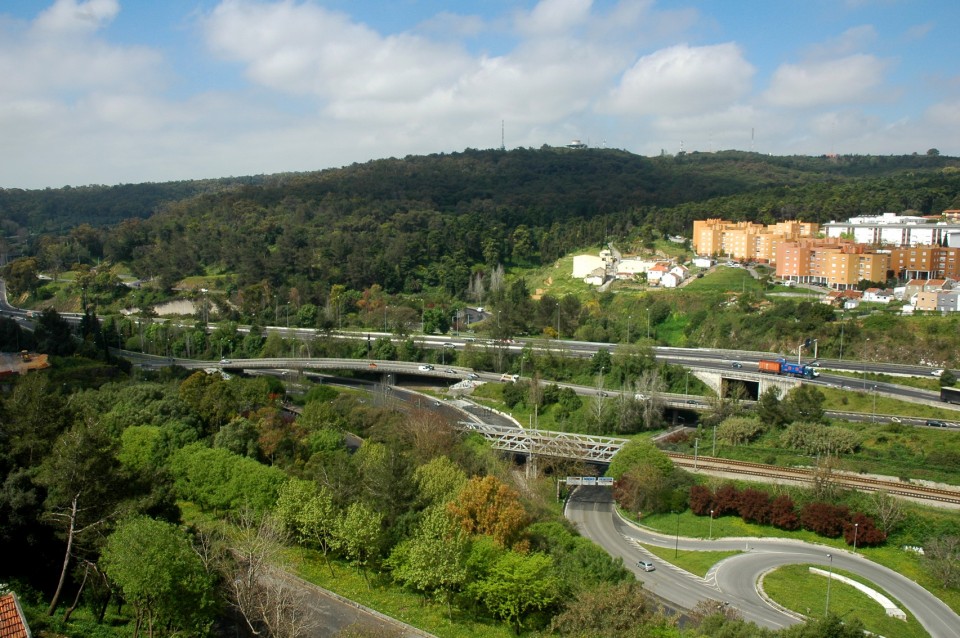
Views from and around Parque Monsanto, around which the 2001 World Championships course looped

So after all that context, we ought to discuss a little more about the circuit itself. Here is the approximation from Italian blog Lasterketa Burua’s brilliant index of World Championships courses - as you can see there are two climbs on the course, one short and very straightforward, the other slightly longer and including at least some gradients that could create a platform for attack. That said, even after 21 laps of the circuit, the race was settled by a sprint of 45 riders, so after just under half that distance we can probably expect a decent sized field to still be together; I might have questioned it ten years or so ago but seeing as we are now seeing speeds accelerate back up to those of the EPO era, I think we are likely to see a sprint of the more durable figures on this one - the chance to pull on the first red jersey and the chance to gain a bit of time may tempt some movement on the Montes Claros climb (we only give out points for one ascent, but the climb is the same - and probably worthy of cat.3 status at least at this point in the race - on all laps) on the last couple of laps, however otherwise I’d expect this to be a sprint finish - however as per my usual rule of thumb, I dislike when we see sprinters take a GT race lead and then not even attempt to defend it. They probably don’t stand a chance of defending it on stage 2… but at least they’ll have had to earn it in the first place.

lisbon.jpg

Lisbon
 
Feb 20, 2010
33,223
15,729
28,180
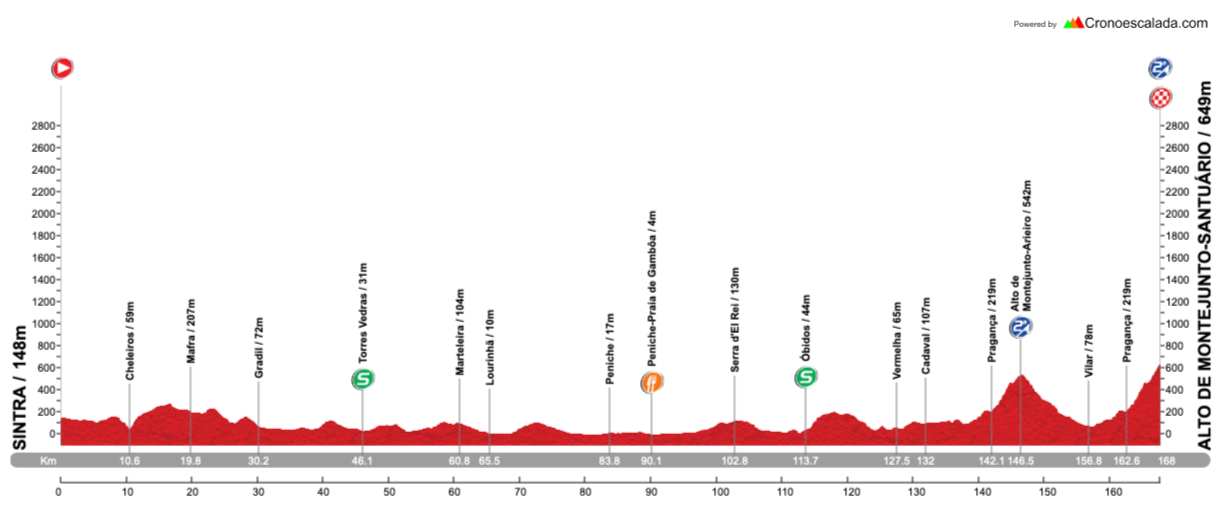
Stage 2: Sintra (PT) - Alto de Montejunto (PT), 168km

zVt8Sdy7_o.png


qPJrvewm_o.png


GPM:
Alto de Montejunto (Arieiro)(cat.2) 4,2km @ 7,4%
Alto de Montejunto (Santuário)(cat.2) 5,0km @ 8,4%

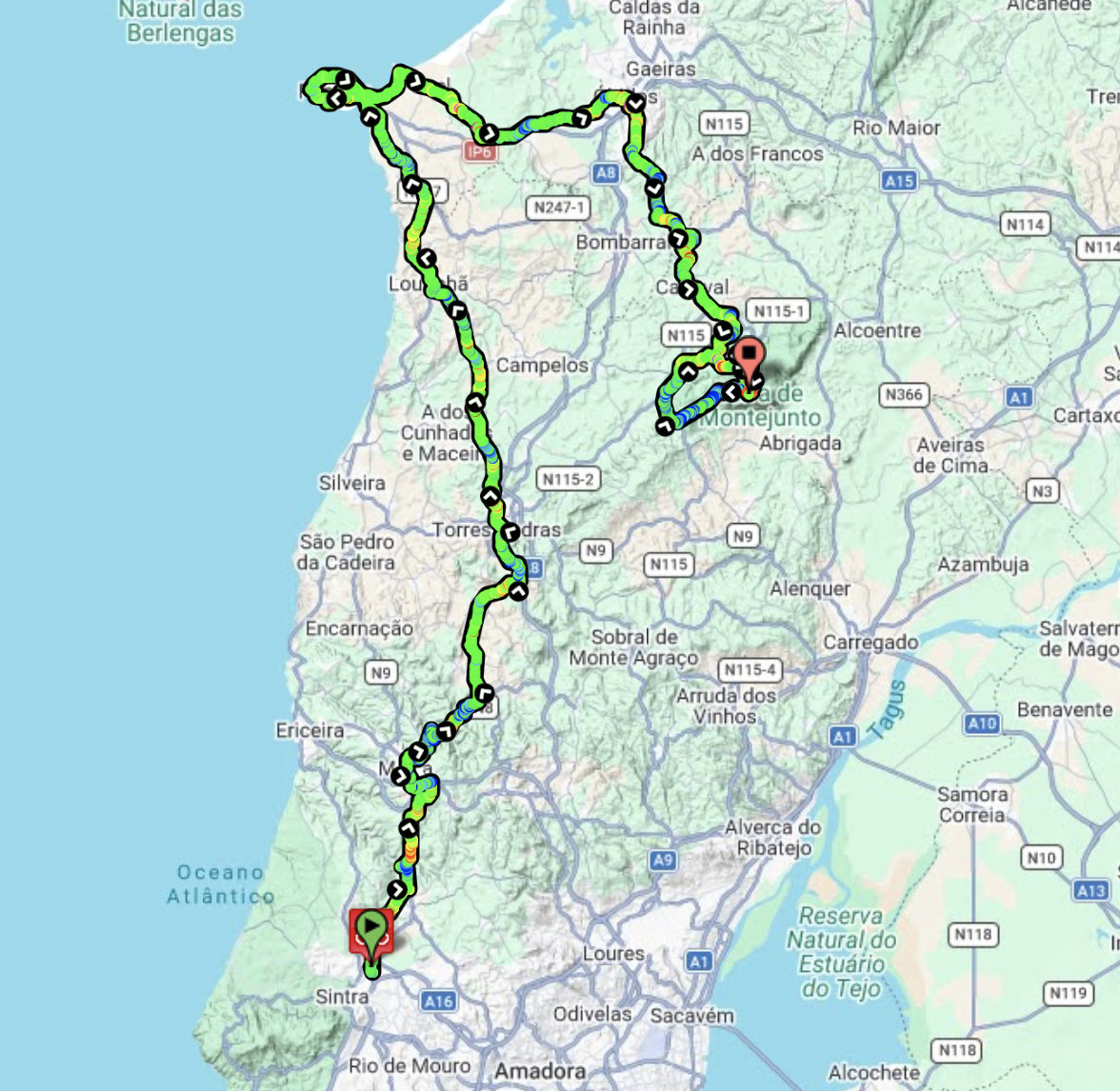
Yes, while we’re still in Portugal, we’re getting an early start on the climbing, which is something slightly out of character and more in keeping with the modern Vuelta, I know, but given the direction of route we’re taking this is the best opportunity for a while to set the GC status quo early from a climbing perspective, Montejunto really won’t open up particularly large gaps especially at this early stage of the race, and we don’t need a 2009-esque slow burn where sprint bonus seconds trade the leader’s jersey around for the first week. Besides, it’s not totally out of character for the race - Lagos de Covadonga featured on stage 5 in 2001 and stage 4 in 2007; Mirador del Fito with a descent finish in Cangas took place on stage 2 in 2003; and La Covatilla featured on stage 5 in 2006. We don’t have too much by way of similar opportunities so we’ve moved the opening climb earlier, but made it less decisive than those in turn.
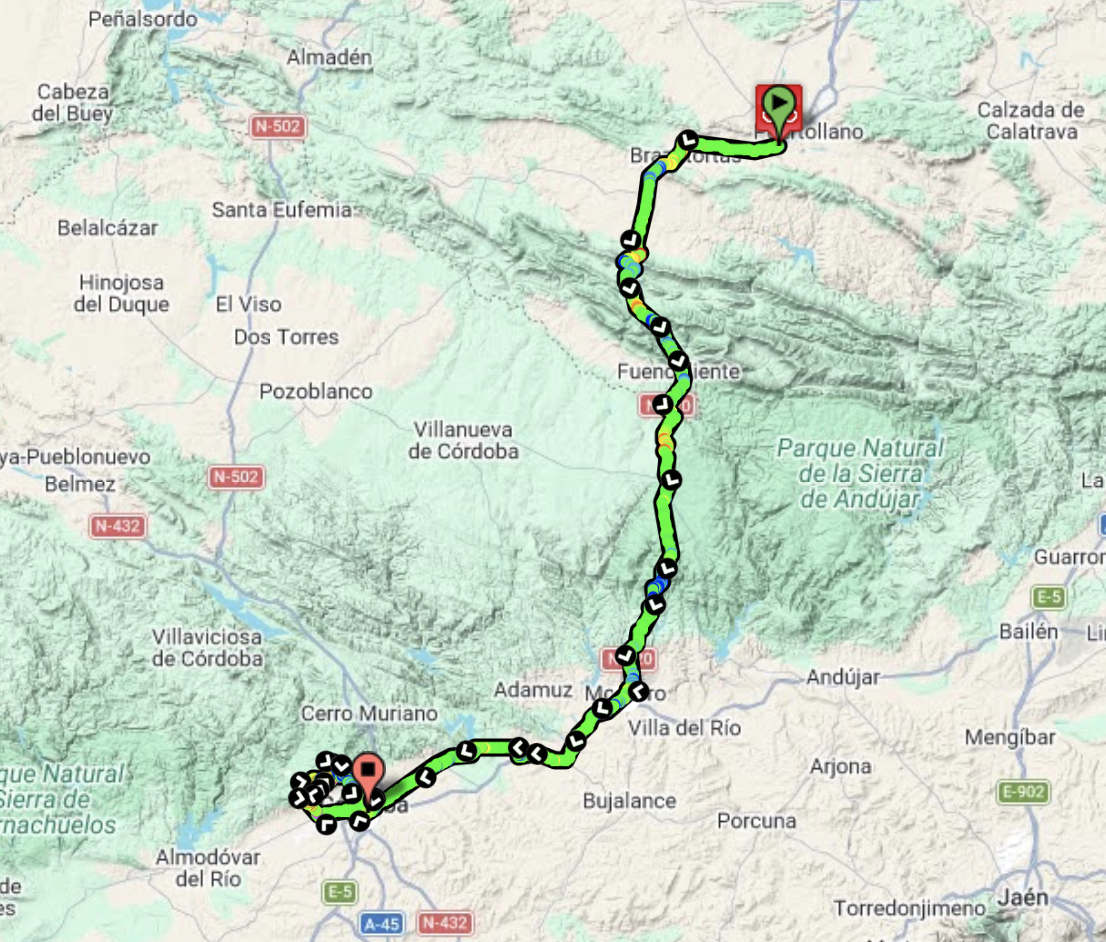
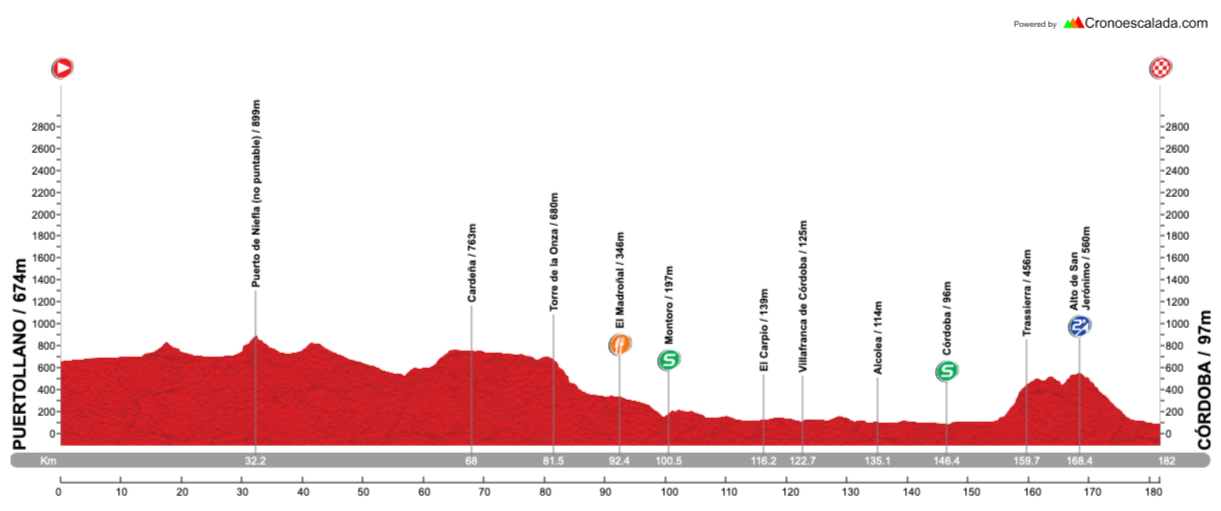
palacio_nacional_sintra_portugal_2019-05-25_dd_78.jpg


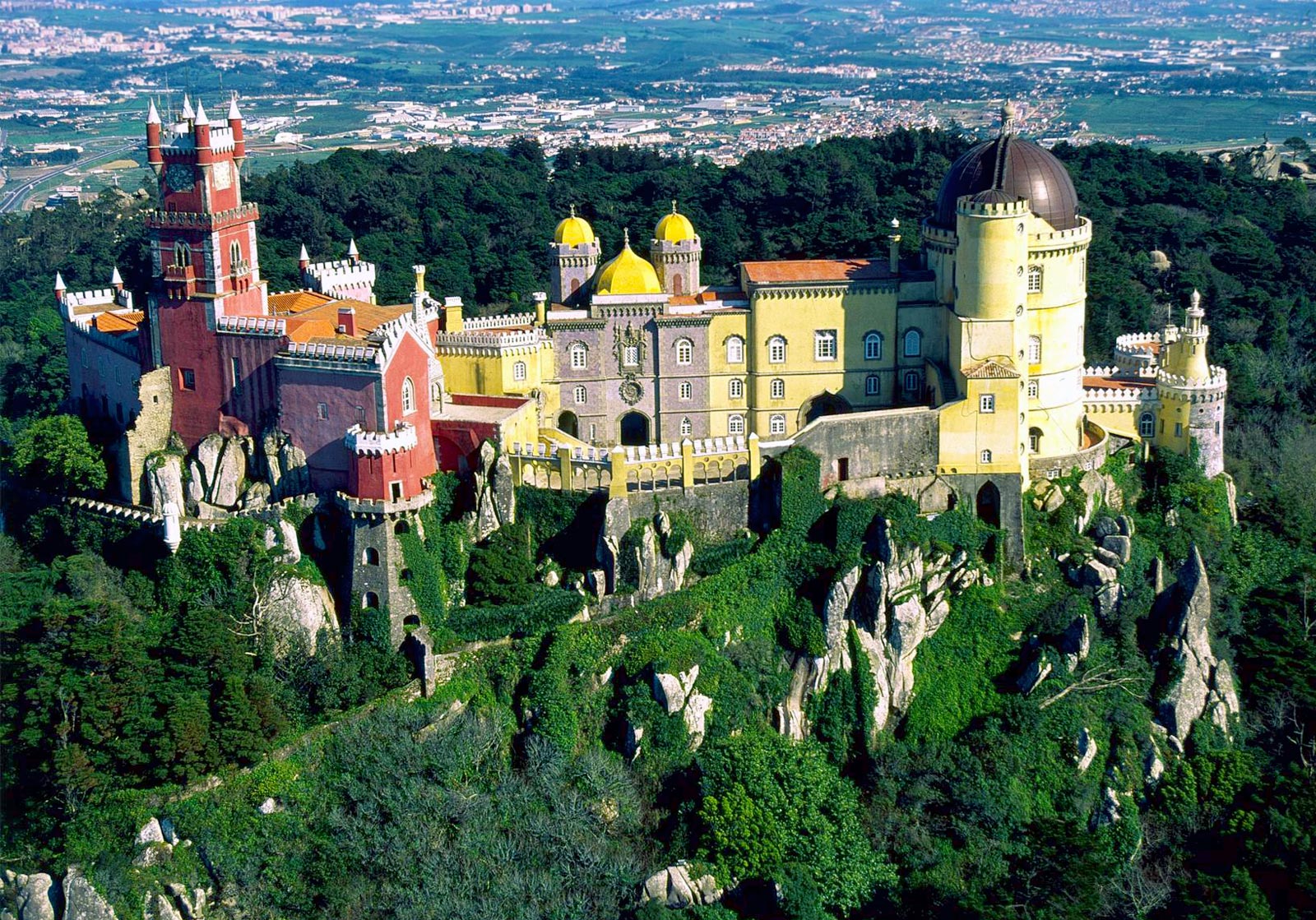
We will be starting, however, in the former royal retreat of Sintra, a picturesque city to the west of Lisbon, the northwestern extent of the Portuguese Riviera, and one of Portugal’s premier tourist attractions, famed for its vast array of palaces, castles, gardens and parks; the inner part of the city is a UNESCO World Heritage Site famous not just for its architecture and prestige but also for its cuisine, as the home of the Queijada de Sintra, a sweet cheese pastry that is somewhere between a cheesecake and a pastel de nata, and which has been an icon of the city for centuries - the retrieval of which is part of a key plot point in Eça de Queirós’ magnum opus Os Maias, Portugal’s greatest literary work, where a trip to Sintra with the intention of retrieving queijadas sees protagonist Carlos da Maia staying - as the author himself once did - at Lawrence’s Hotel, and serves as his first meeting with the mysterious Brazilian Maria Eduarda. The range of architectural marvels and fantastical castles, allied to the forested low-lying mountains of the area, has meant that the city has become a popular site for filming historical and fantasy series - though curiously not the serial adaptation of Os Maias, which was filmed in Brazil and proved a critical hit but a commercial failure.

pena-palace-sintra.jpg

Pena Palace, one of Sintra’s most famous landmarks

Those of you who’ve read my Volta a Portugal routes will be familiar with the cities in the first part of the stage, Sintra, Mafra (another palatial city) and Torres Vedras, the hometown of the greatest Portuguese rider of his generation, and arguably of all time, Joaquim Agostinho. The foremost warmup race for the Volta is July’s Troféu Joaquim Agostinho-GP Torres Vedras, a short stage race around the city and its neighbouring towns and the hills of the area, and that race typically focuses around a mountaintop finish at Montejunto. Agostinho’s legacy is large in Portugal, and to a great extent in Spain too - he made ten GT top 10s, made three podiums, won several stages and in 1974 he fell short of winning the Vuelta by just 11 seconds, winning the final ITT in San Sebastián but not by enough to overcome his deficit to José Manuel Fuente; this would stand as the closest margin a Grand Tour had ever been won by for fifteen years, until of course the 1989 Tour de France. By that point, sadly, Joaquim would be long gone; a late starter in the sport due to his military background fighting in the Guerra do Ultramar, his actual heyday came at a very late age, scoring back to back Tour podiums at the ages of 35 and 36, but he continued racing on into his 40s, and sadly died after a crash where a dog escaped onto the course in the Volta ao Algarve in 1984.

belgaimage-15110906.jpeg


The stage loops around a few well known towns and cities of Portugal’s tourist circuit which will give some good helicam footage to keep the audience happy for the quieter part of the stage, such as Peniche, a scenic town popular with surfers which is renowned for its beaches and as part of an idiomatic expression (an Amigo de Peniche is an untrustworthy or selfish friend who is only interested in friendship as a transaction, inasmuch as it benefits them), or the iconic, picturesque walled city of Óbidos.

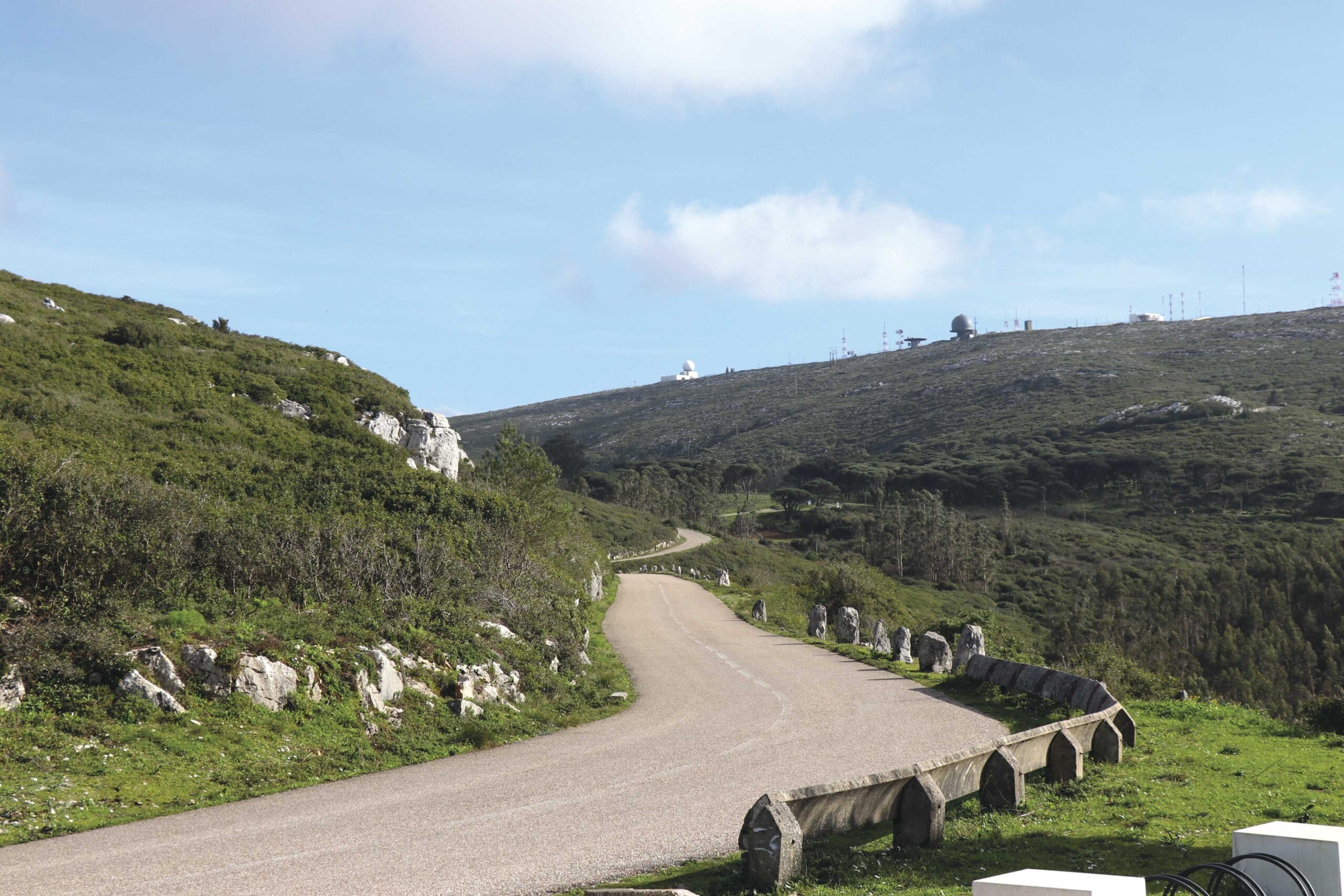
An uncategorised climb after Óbidos takes us to Cadaval and onward to the Serra de Montejunto, and then we are prepared for our finish, as we climb up to Montejunto, another classic Portuguese ascent breaking into my Vueltas (I’ve used Torre from Seia and Senhora da Graça before). It’s a short to medium length, and slightly steeper than average, but not genuinely steep. And, even though we’re in Portugal, we’re also going for a classic Spanish cycling trope: climbing an ascent most of the way to the summit, then looping around and going all the way the second time up. Think Ixua-Arrate, Venta Luisa-Cálar Alto, Tudons-Aitana, Navacerrada-Bola del Mundo… there are a few. Anyway, here’s the profile of the specific side of Montejunto we are going for (we are only categorising from Pragança). The first time we climb to the 8,5km mark, the second time to the finish:

antenas-do-montejunto-lamas-ventosa.png


And here’s the climb:

IMG_5149-scaled.jpg


As you can see, there’s a steeper kilometre in the middle there, which is likely where the moves come, otherwise it’s a final 1500m stomp type finish, and crucially, that’s fine; it’s day 2. There are multiple sides of the climb, but this one matches the one that was climbed - Unipuerto - on the penultimate day of the 2025 Volta a Portugal, and even coming at that late stage in the race, once we get over the breakaway taking the stage win, 16 riders came in within 30 seconds of the time of the first of the GC guys, Alexis Guerin. The climb is not that common in the Volta - as mentioned it’s more typical of the GP Torres Vedras, where it’s a near-annual fixture - and given it came at the end of the race it’s probably moe selective here than we might expect on stage 2, albeit I am climbing much of it twice to add some challenge to the stage. Here’s the stage from the Volta to illustrate the climb - as you can see from the GC battle here I would expect to see a few exploratory moves to try to gain something from the break from secondary riders and stagehunters, and then some short scene-setting action from the GC guys in the last 2km of the stage, with small gaps that prepare us for the days to come. This is longer than a puncheur finish but it’s still not a true mountaintop finish. There will be time for that to come.

 
  • Like
Reactions: TourOfSardinia
Feb 20, 2010
33,223
15,729
28,180
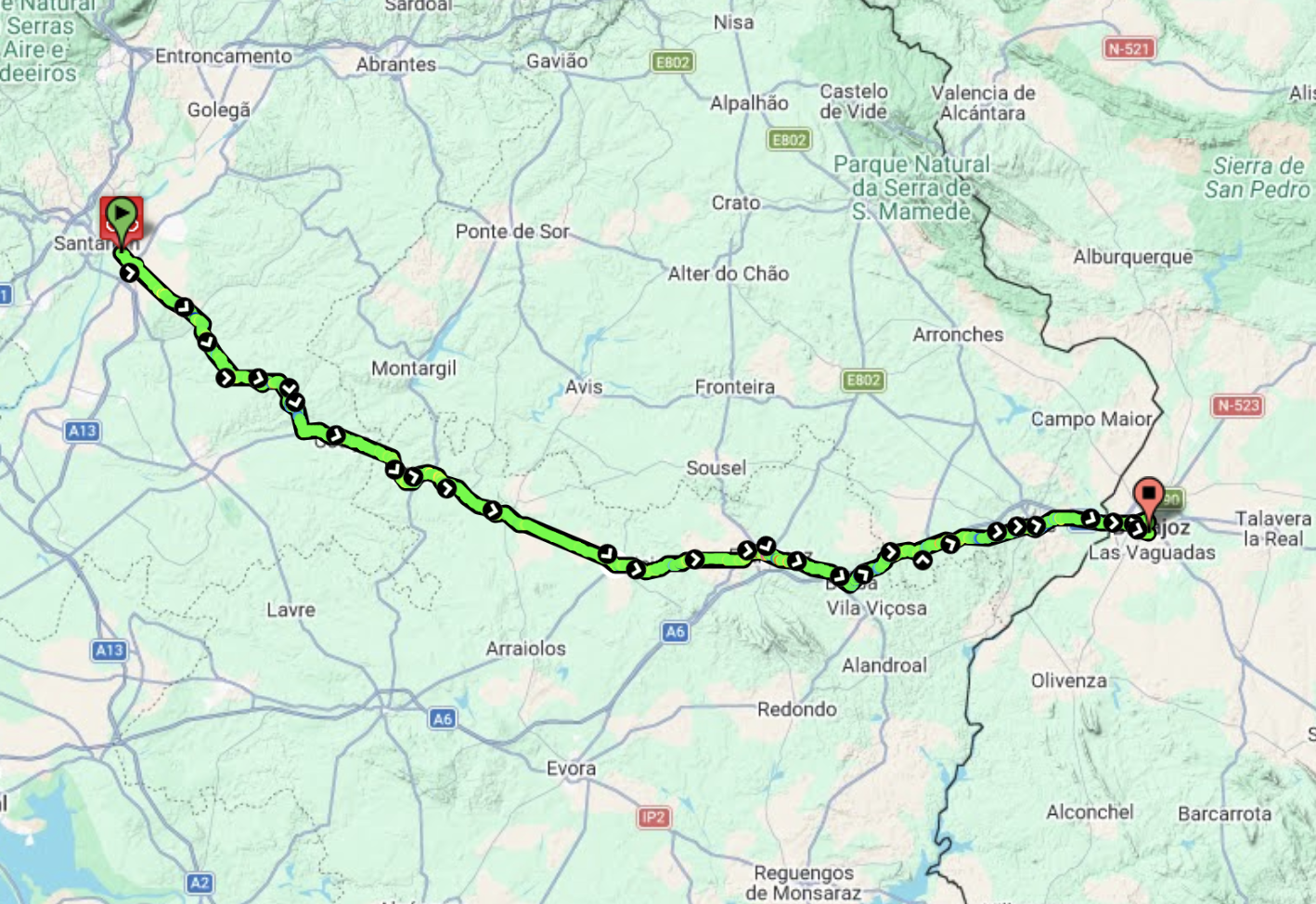
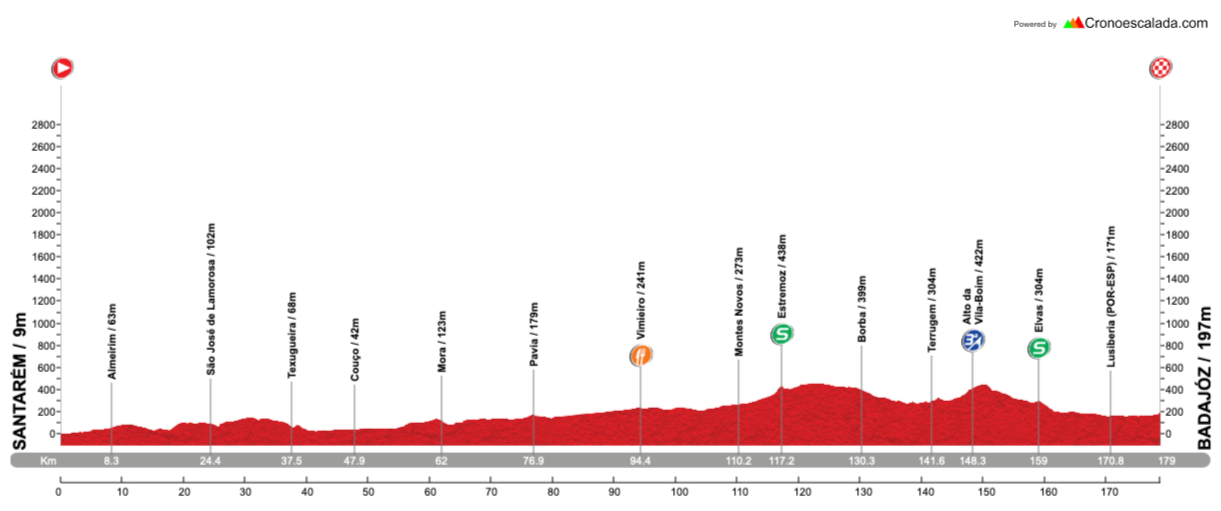
Stage 3: Santarém (PT) - Badajoz, 179km

VOaKeHdJ_o.png


QGwm7C0z_o.png


GPM:
Alto da Vila-Boim (cat.3) 3,1km @ 4,0%

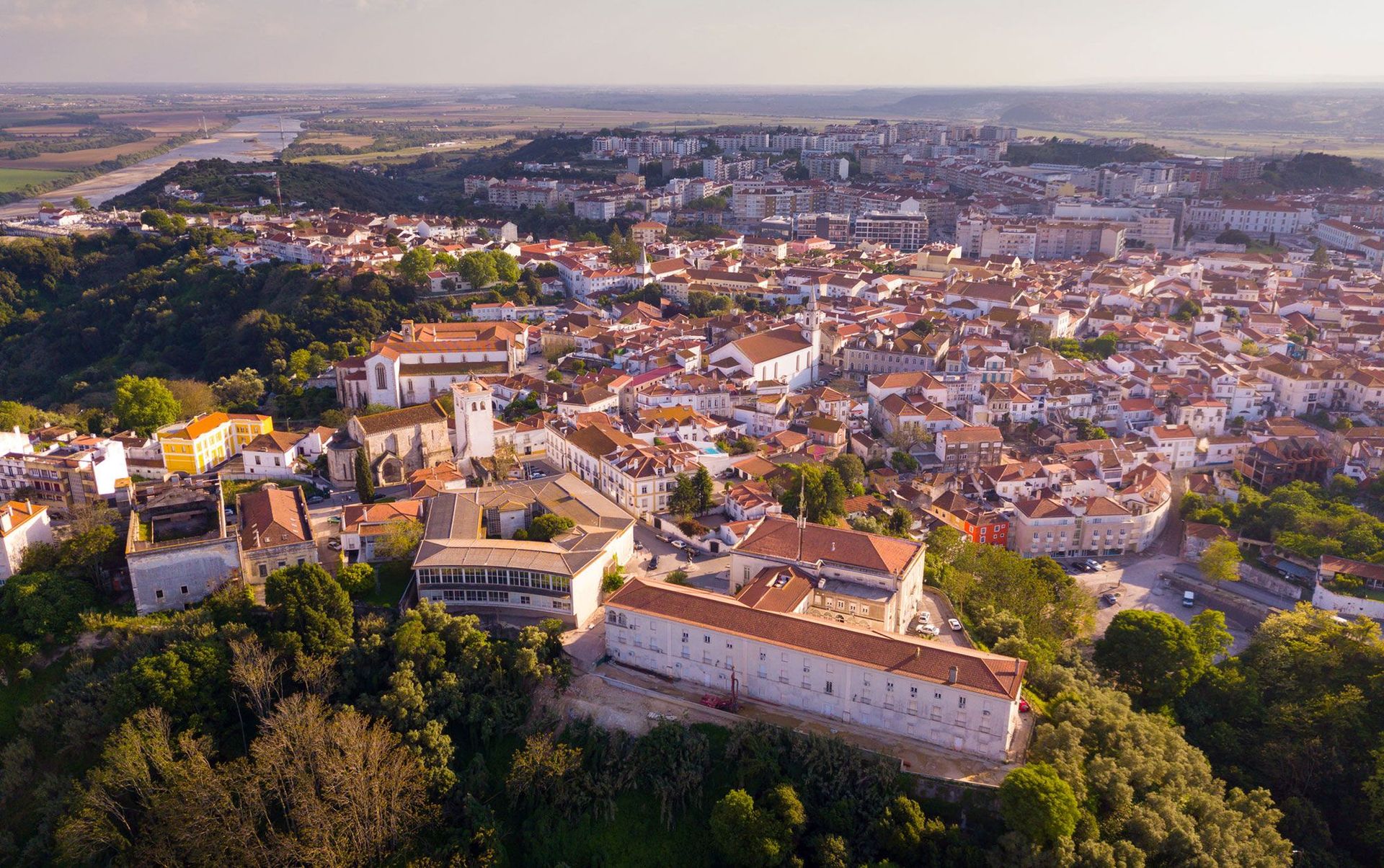
Stage 3 and we’re re-entering Spain, but only at the very end of the stage, as we head through the Portuguese hinterland in the Tagus basin. We start in Santarém, a city with around 30.000 in its confines but about double that in its urban sprawl, the capital city of its eponymous province, which roughly corresponds to the historic region of Ribatejo. It is a historic city whose sons and daughters include the discoverer of Brazil, Pedro Álvares Cabral, and his antecedent, Estácio de Sá, who founded the colonial city of São Sebastião de Rio de Janeiro, which over time grew to become the behemoth that Rio is today, and fought to expel French colonists from Portugal’s South American possessions. It hosted its first finish in the Volta for many years in 2025, but has hosted a number of stage starts in the intervening period. The area around the city also gives the cycling world José Maria Nicolau, a two-time winner of the Volta in its formative years in the 1930s, and Marco Chagas, who won his home race four times in the 1980s and was its record victor until David Blanco’s fifth triumph in 2012 (albeit one acquired by default following disqualification), but the younger generation will be more familiar with him as that calming, deep voice on RTP’s commentary team that guides them through every August with a relaxed, analytical tone.

xlarge_santarem_portugal_d2be548390.jpg


This is, as stages in this area usually are, a transitional stage, probably one for the purists as they say. Pretty flat, high likelihood of baking heat (while not as much as at the Volta, it is still likely late August when we have this stage) and where going in the break is a thankless task. Especially as the kind of minnow teams of the 2000s like Andalucía-CajaSur will not be there to do it for you anymore. The lowlands of Ribatejo and inland Alentejo are not the most geographically exciting parts of Portugal by any means, and this is very much one of “those” Vuelta stages - afraid that they’re as much a part of the Vuelta as anything else, and very much predate the current rampas inhumanas fad, besides, you need some of them for balance. Long stretches of scorched grass and dusty roads beckon us.

webp

The backdrop of most of this stage

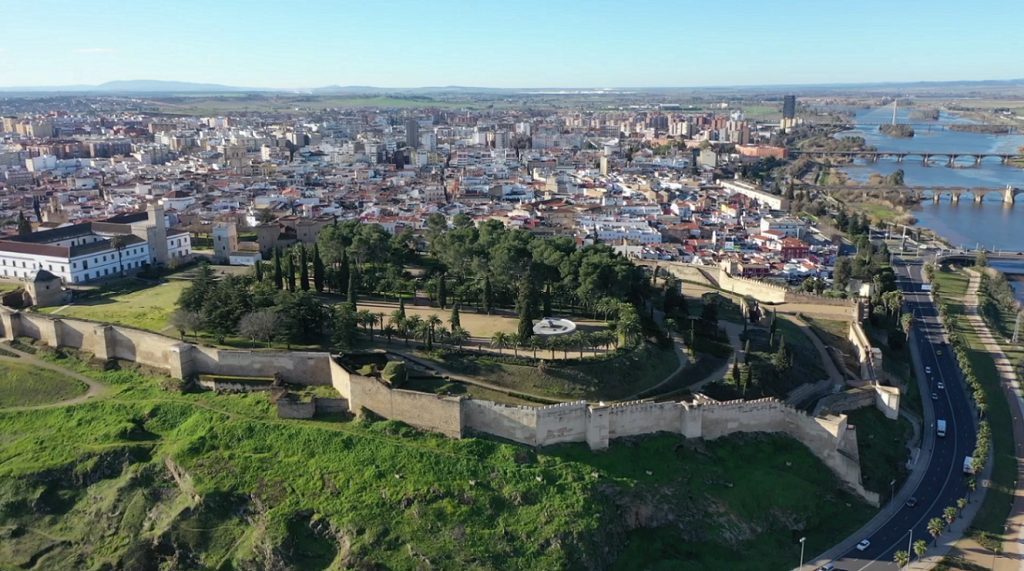
Most of the only noteworthy action will come late on. We have a first intermediate sprint in a hilltop town at Estremoz, which if anything is steeper than (but not sustained for as long as) our one categorised climb of the day; that comes at Vila-Boim with 31km remaining. The intermediate sprint is 1200m at 5,8% - but don’t think that the real GPM is anything other than a bone thrown to the break, as averaging just 4% for 3km and on wide open roads, this isn’t disrupting the sprints. Maybe if the wind is blowing aggressively we can see some action precipitated here, but we’re more likely to see contention for the ruban jaune if a tailwind ensues than we are any other class of action I’m afraid. After this we have a second intermediate sprint in Elvas, and then at 8km from the line we cross the border into Spain, ready for the finish in Badajoz, capital of its own eponymous province within Extremadura, Spain’s least densely populated region, and home to one of the best preserved Moorish citadels in the whole country.

alc-2020-1024x571-1.png


The whole walled citadel deal is fairly comfortably part of the 2000s Vuelta iconography, with regular stages to other cities with similar kinds of scenery (some of which you may see later in the route). We cross the Guadiana via the nearest of the bridges you can see in that image, at 2,5km from home, and whereas my previous stages to Badajoz have finished with a trip through the beautifully preserved Moorish central square but seeing as this one is likely to be a very urgent week one sprint, and one of very few chances for the sprinters (I have tried to deviate slightly from the theme in this department, largely because we almost all agree that minimising the number of stages where a sprint is the only realistic outcome is preferable), so I’d expect a very fast finish here - we therefore have a sweeping few bends around the outside of the city walls and then hopefully a clean sprint before we move on to the following days’ work.
 
  • Like
Reactions: TourOfSardinia
Feb 20, 2010
33,223
15,729
28,180
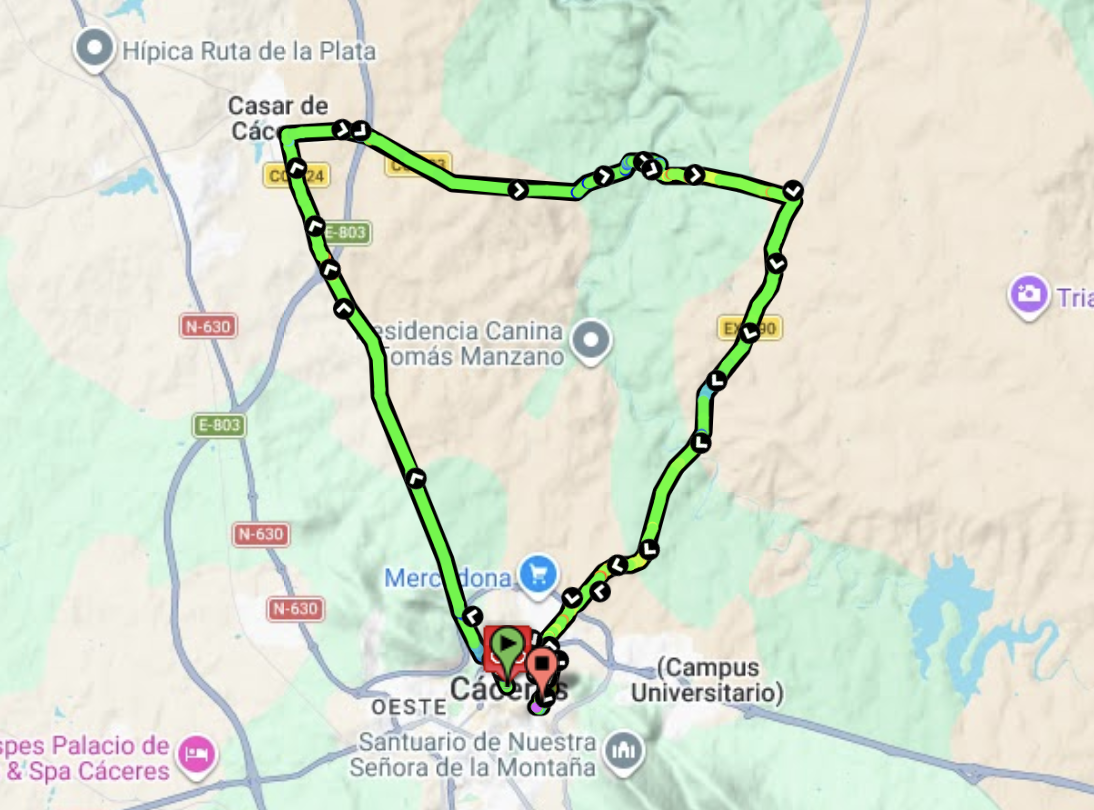
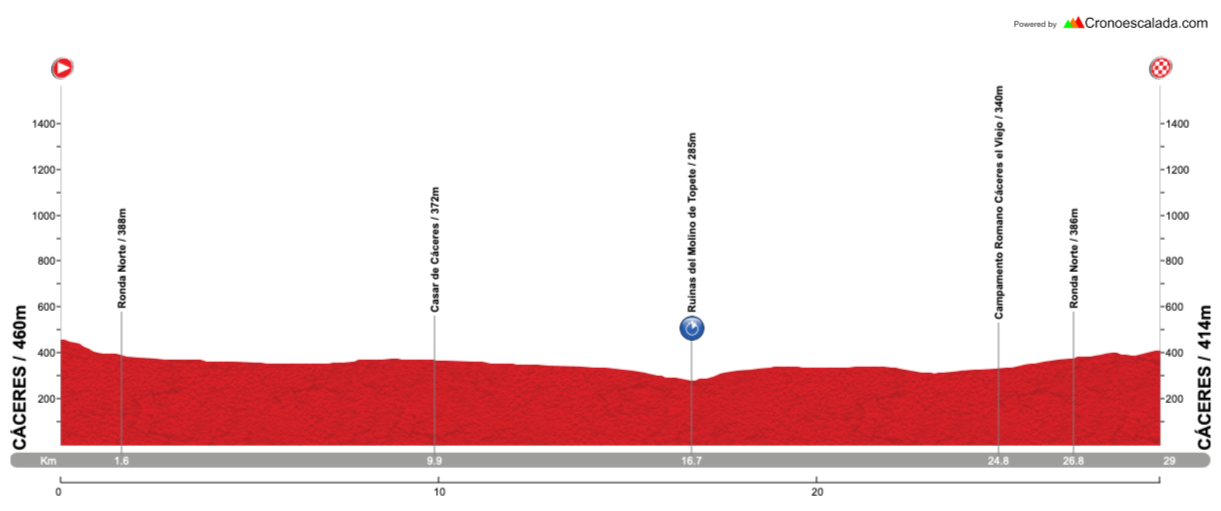
Stage 4: Cáceres - Cáceres, 29,2km (CRI)

tEZsBAPz_o.png


Aia3EgBp_o.png


An early time trial - of the upper end of medium length. Relatively early TTs would typically fit in with the theme, if you look at the routes of the time; 2003 featured a 44km ITT on stage 6, and there was a 42km ITT on stage 5 in 2008. Ordinarily, however, the ITT would come at around stage 8; this usually followed a short ITT or TTT on stage 1, however, so given we have had a road stage on stage 1, we’re ready to go with an early time trial here to balance it off.

adobestock-69658983-1500x993.jpeg


Cáceres, another Extremaduran provincial capital, hosted two Vuelta stages in the 2000s, a breakaway stage at the start of week 3 in 2004 (won by José Cayetano Julià) and a week 1 sprint stage (stage 4, like this, in fact)(won by Erik Zabel) in 2006. More recently it was where Tony Martin’s long solo break was chased down in the final few metres of the race for a sprint, largely because Fabian Cancellara is a small-minded, petty little man. It also hosted the Spanish national championships in 2015, with Alejandro Valverde winning the road race and Jonathan Castroviejo the time trial. Ironically enough, though, my course here, thanks to a lot of out-and-back yardage in the time trial, more accurately reflects the course used for the road race in those championships, but I feel it’s better suited to a Grand Tour TT route anyhow.

Official RFEC summary of 2015 Campeonato de España

Those nationals saw the road race take on 5 laps of a 39,2km circuit, which is similar to ours here - however we excise the first 10km of negotiating the urban part of the circuit in favour of sticking to the more rural area that will be less disruptive. This is the profile of that route from the nationals in more detail, so basically take that with the first 10km removed. The route is rolling but should mostly be for the power riders - the climb there is a fairly consistent 2,2km at 3,5% according to the PRC guys’ analysis of the race route at the time, and they’re usually pretty trustworthy. There is a final repecho of 600m at 5,5% into town (I chose not to append the Santuário de Nuestra Señora de la Virgén de la Montaña puncheur climb, as I felt that in keeping both with the balance I want to keep in the route and in the aim of staying authentic to the time period I was looking at, a more traditional TT for the rouleurs would be more desirable). The ITT, for what it’s worth, was over 45km (which is a proper length for the national championships of a major cycling nation, but probably a bit much for stage 4 of a Grand Tour in the modern setting, even with my attempting to rekindle a bit more of the 2000s-era balance) but was largely out and back style - while I am not averse to this, it does feel a bit strange when the roads don’t have dividers, and having a Grand Tour just doing a cones-down-the-middle-of-the-road ITT seems a bit bush-league; I don’t mind if this occurs for a short stretch of an otherwise circular route, or if they’re going up and down an avenue with a divider, but that kind of limitation is better suited to a national championship with a truncated startlist than the near 200 riders of a Grand Tour in my opinion.

As such we will do the more or less triangular route from Cáceres up to Cásar de Cáceres, across the CC-122 to join the EX-390 back down into town and with only that short last ramp to sap the legs - there’s no need to consider bike changes or any of the new fads here, we’re going to be putting the jersey in the hands of some of the rouleurs who really ought not to have lost too much time on Montejunto. Hell, obviously the logical leader at this point in a real life race on this route would be somebody like Remco Evenepoel, but if we go by the heavily national riders and teams-led type péloton of the early 2000s, Spanish home fans would probably be looking at somebody like Iván Romeo or Raúl García Pierna as the most likely best-placed local riders at this stage.
 
  • Like
Reactions: TourOfSardinia
Feb 20, 2010
33,223
15,729
28,180
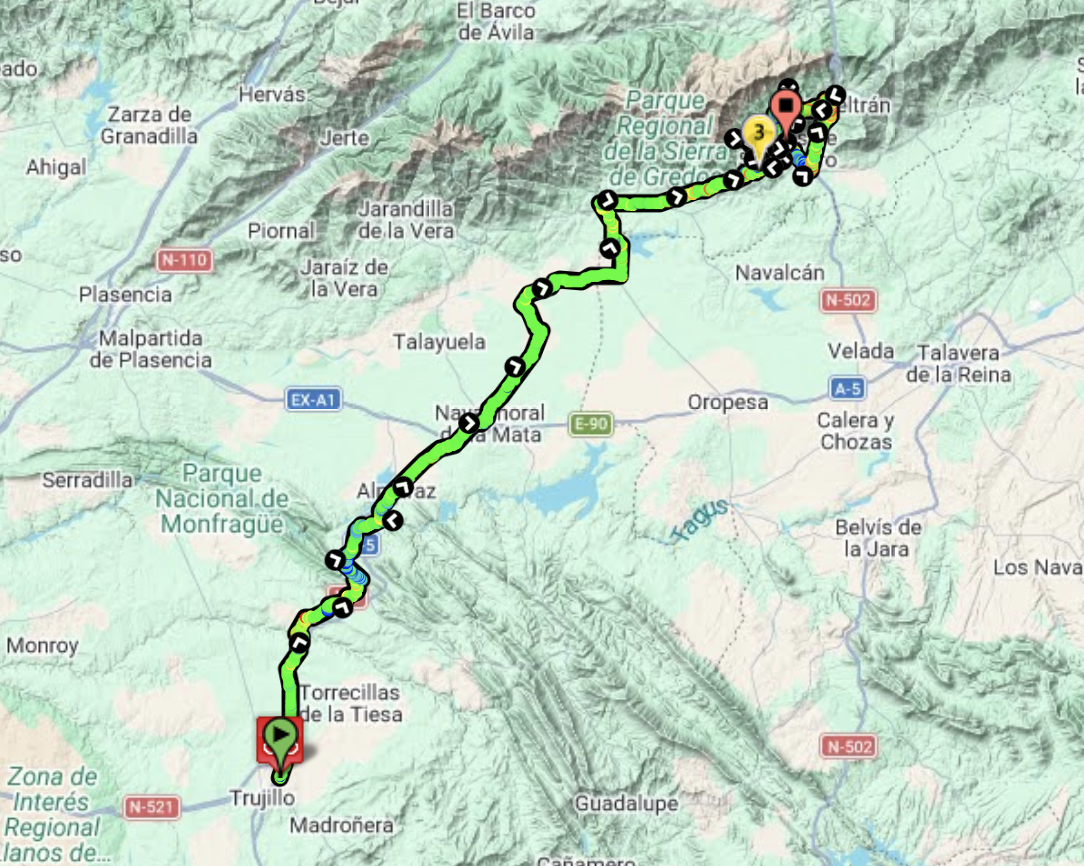
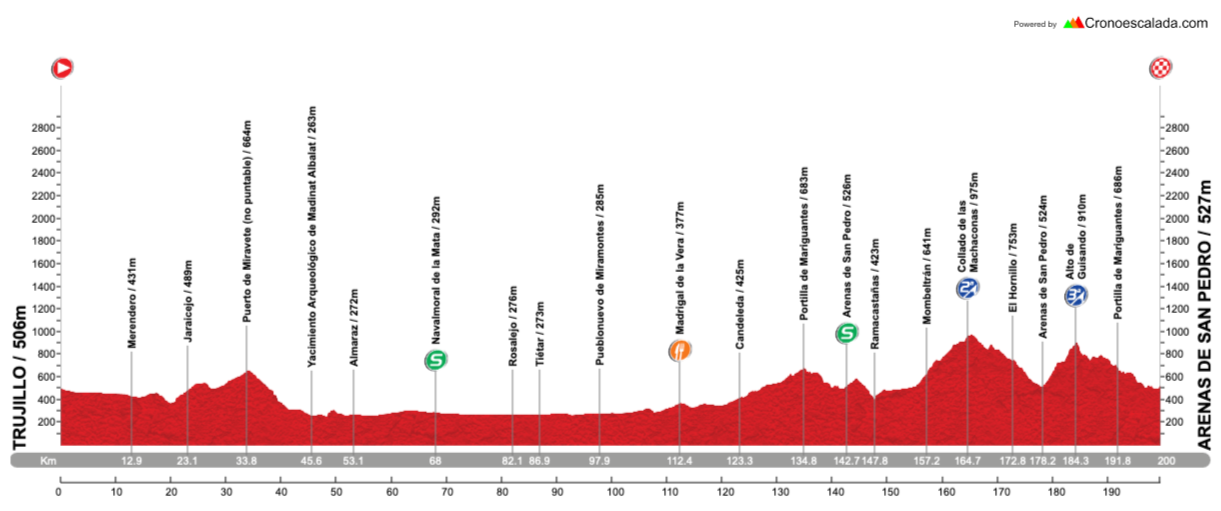
Stage 5: Trujillo - Arenas de San Pedro, 200km

dby51rca_o.png


y6DelgGn_o.png


GPM:
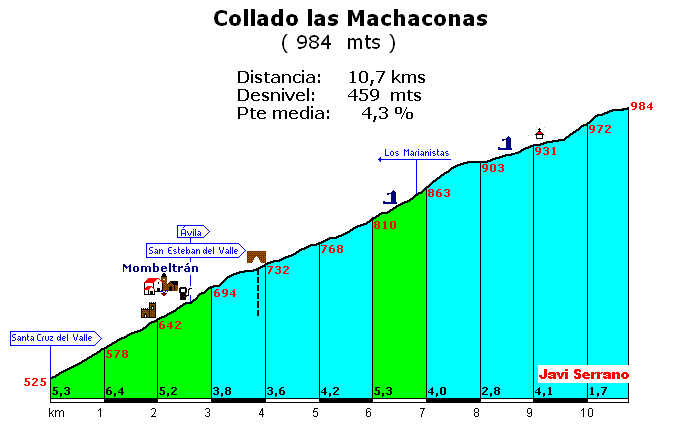
Collado de las Machaconas (cat.2) 10,7km @ 4,3%
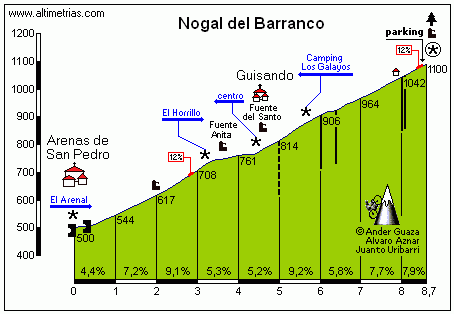
Alto de Güisando (cat.3) 5,6km @ 6,6%

It’s our first longer stage (200km+), and it’s a fairly grinding one with a potential sting in the tail - a relatively common trope in the era, mostly flat to rolling with a couple of climbs near the end and either a downhill finish or a short ramp afterward; there will therefore be a few of these to come, some of which are in very typical formats of the 2000s era, but this one in particular is an innovation using an area well known to traceurs but seemingly not to race organisers - but even within that I think I have something unusual and different to what traceurs do in the area.

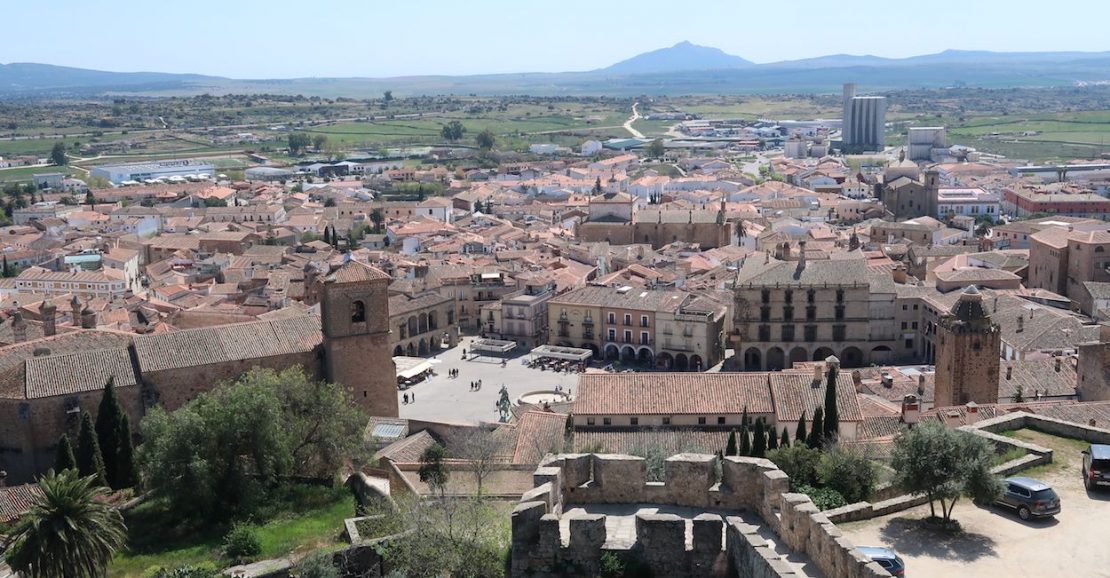
A fortified town of just under 10.000 which lies just to the east of Cáceres, Trujillo is a relatively recent addition to pro cycling, only hosting two high level races, the 2022 Vuelta and the 2024 Vuelta Extremadura Féminas. It is, however, known to traceurs as a common stage host for stepping into the Sierras de Gredos and de Béjar (a similar role to that played in the 2022 Vuelta stage, which finished at the Alto del Piornal). I have used it previously, back in 2022, for a stage to Béjar at a similar point in the race, and talked at length about its connections to the conquistadors.

Originally a Roman outpost called Turgalium, it became one of the main towns of the region under Muslim control, and was fiercely contested during the Reconquista, being at various times under Almohad, Portuguese, Leonese and Castilian control. It expanded beyond its military walls after being granted city status in 1430 by Juan II, and shortly after this expansion, the most famous progenies of Trujillo were born: the conquistadors. The oldest is Francisco de las Casas, who travelled initially with his cousin Hernán Cortés and established a colony in Honduras (centred around the modern day Colón department, whose capital is named Trujillo after the governor’s hometown), but he was preceded as a conquering son of Trujillo by Francisco Pizarro, the second and most famous of the four Pizarro brothers, who would all go on to a life of colonial conquest and rule and who were all born and raised in the city of Trujillo, Extremadura.

Although Francisco was very much the leader, all four Pizarro brothers were key to the conquest of the Inca Empire and the absorption of Peru into the Spanish Empire, by the oft-brutal means of the conquistadors at the time, which included kidnapping emperor Atahualpa, commandeering an entire room full of gold as his ransom, then executing the emperor anyway; having initially been the mayor of Panama City, he attempted to conquer Peru with the help of “Los Trece de la Fama”, a possibly apocryphal 13 men who remained loyal in the face of a seemingly doomed expedition and eventually founded the city of Lima from which he ruled the province; he was however a victim of both his success and his politicking, eventually being assassinated by supporters of Diego de Almagro II. Strangely, the prominent Peruvian city of Trujillo, although named for the hometown of the Pizarros, was not established until later. Following the assassination of Francisco, essentially the claims of the other Pizarros on the colonial provinces lost traction and they faded from the limelight, however their legacy remains strong; Pizarro’s statue stands in Lima as well as Trujillo, and the family bequeathed their hometown the Palacio de la Conquista, which sits on Plaza Mayor at the heart of the city and has been its most famous landmark since.

trujillogeneral-1110x578.jpg

Central Trujillo, with the Plaza Mayor in the foreground and Palacio de la Conquista visible on it

The city was also home to another prominent conquistador, Francisco de Orellana, a cohort and co-expeditionary of Francisco Pizarro who would go on to found the city of Guayaquil in Ecuador. It has never been formally acknowledged whether he was related to the Pizarro brothers, but it seems likely as he is from the same town, supported Pizarro in the conflict with Almagro, and Pizarro is one of the appellations in his full name. De Orellana is nowadays known more for what he didn’t achieve than what he did, being one of the prime exponents of the theory of El Dorado, which has served as a mythical quest in literature and art ever since. As something of a tribute but also as something of a parting shot, Trujillo has been twinned in modern times with the city of Almagro in Ciudad Real, home of the rival conquistador. Nevertheless, the city’s imperial and colonial heritage and the riches brought home by the conquistadors to the city has made it a must-see for those few tourists that make it out to this part of the country. That does not include cyclists it seems, for pro races do not this way come - only ever passing through, usually en route to Cáceres nearby.

While on that occasion we moved northwards into the mountains, here we are heading northeastwards, via the uncategorised (two steps with a final 6km at 2,8%) southern side of the Puerto de Miravete and an intermediate sprint in Navalmoral de la Mata and towards the eastern end of the Sierra de Gredos and the region around Arenas de San Pedro, that strange finger of Ávila - and by extension Castilla y León - that protrudes south of the mountain range into Castilla-La Mancha, in an area where the mountain range and the differences between the two plateaus serves as a natural boundary.

While real life racing is very familiar with a number of the climbs of this particular part of the range - Serranillos, Mijáres and Navalmoral are classics, while Pico and Pedro Bernardo are also well known to real-life racing (the latter often as a stepping stone to Serranillos), and the traceur community is also well-versed in the opportunities afforded by La Centenera, La Erilla and Las Erillas too - the first climb that we take on is in fact not even categorised or really categorisation-worthy, a detour into Candeleda and then instead of the more common CL-501 taking the AV-924 ridge road to Portilla de Mariguantes. This is a long drag of 13,5km but only averages a mostly consistent 2,3% so no points to be given out here. It does, however, enable us to drop in to our stage town of Arenas de San Pedro - hosting the second consecutive Vuelta in the Race Design Thread universe - for our second intermediate sprint, before looping around to the south (to avoid climbing La Parra’s easier side) and then on into the actual categorised climbing of the day.

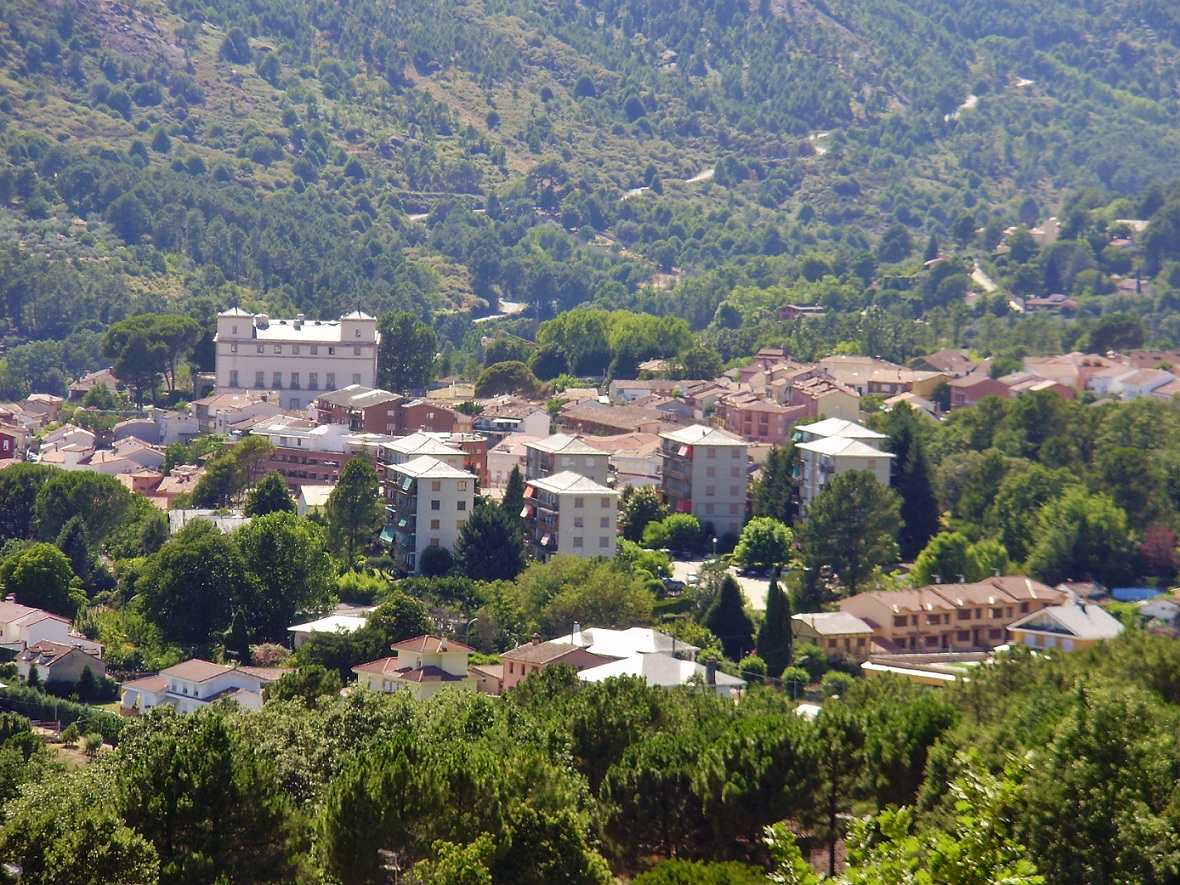
02_Arenas-de-San-Pedro.jpeg

Descending to Arenas de San Pedro

The first of the two categorised climbs of the day is not an especially challenging one, in keeping with a few of these types of stages in the time frame - it is more the fact that the climb is sustained that makes it a challenge and should hopefully drop most of the sprinters. The Collado de las Machaconas is not one of the better known ascents in the region, largely as it is a lower shoulder summit that connects Mombeltrán (a starting point for the Puerto del Pico, Serranillos and the east face of Pedro Bernardo) to El Arenal, a waypoint on the way to La Centenera; as adding La Parra and going into Arenas de San Pedro enables better finish options and also doesn’t cut off the first half of that climb. Machaconas is therefore a highly overlooked climb - I can’t even see that the regular traceur sites have used it in any of their published routes, only forum proposals. It’s probably not surprising - it’s not a glamorous climb or anything, but it does work for this purpose, adding balance to a relatively soft stage that could be for the break but at the very least should not be for the sprinters. The steepest part is the start, into Mombeltrán, and the rest is false flat. This to me is a bit like the Col de l’Escrinet stage of the 2009 Tour which was won by… oh yea, Mark Cavendish.

Machaconas1.gif


Good job I have another climb lined up when the riders get back to Arenas then. We descend into Arenas via El Arenal, so essentially the shallow half of the La Centenera climb, before we take on our final climb of the day, possibly slightly under categorised as a cat.3. Certainly I think in the 2000s this would have been a cat.2 but the Vuelta has got a bit more unpredictable and often a bit stingier with its mountains points in recent years (take Cerler being ESP in 2005, or Braguía getting the same cat.1 status as Albondón or Monachíl in 2006, or the most ridiculous of all, Pla de Beret being ESP not just in 2003 from Vielha, but in 2008 when they only climbed the last 6km of it after the similarly over-categorised Bonaigua), give or take a few over-categorised climbs that are somewhat grandfathered in, such as Mirador del Fito or Navacerrada north. Anyway, our final climb of the day crests at 16km from the line and is again a little-heralded ascent even among traceurs. This is admittedly because for the most part designs using this little ascent west of Arenas de San Pedro will go all the way to the hiking base station at Nogal del Barranco, which features a small car park - definitely on the small side and would be tight but others more familiar with the area seem to think it would be a viable finish. Either way, however, partway up the climb there is a small village called Guisando, and a little above the village there is a campsite. There is a second way down from the campsite back into the village that enables us to loop around without doubling back on ourselves; we could have turned right at the El Hornillo sign on the profile but that would leave a boring flat/uphill false flat back onto the same descent as earlier; or left into the centre of Guisando at that sign. Using the campsite road, however, enables us to add a kilometre averaging 9% to the end of the climb, as it’s not the toughest out there, and this final kilometre after a short flattening out into the village should hopefully create a platform for some meaningful attacks.

NogaldelBarranco.gif

We climb the first 5,6km of this profile. Note the middle and end parts at 9%+

guisandoguisando_f574eb4a_250526100316_1280x857.webp

Guisando on the hillside

From here, it’s a steep first kilometre of descent, with a few twists and turns, before a flattening out and a southward turn toward the previously ascended Portilla de Mariguantes. Then we take the relatively shallow descent back into Arenas de San Pedro and see who has the best finish of those that remain. It could be a reduced sprint, it could be one for the puncheurs, or it could be an outright GC battle. Depending on the Worlds course it could be a tune-up for those too. This could be an intriguing one, especially the day after an ITT and with a GC status quo beginning to be set.
 
  • Like
Reactions: TourOfSardinia
Feb 20, 2010
33,223
15,729
28,180
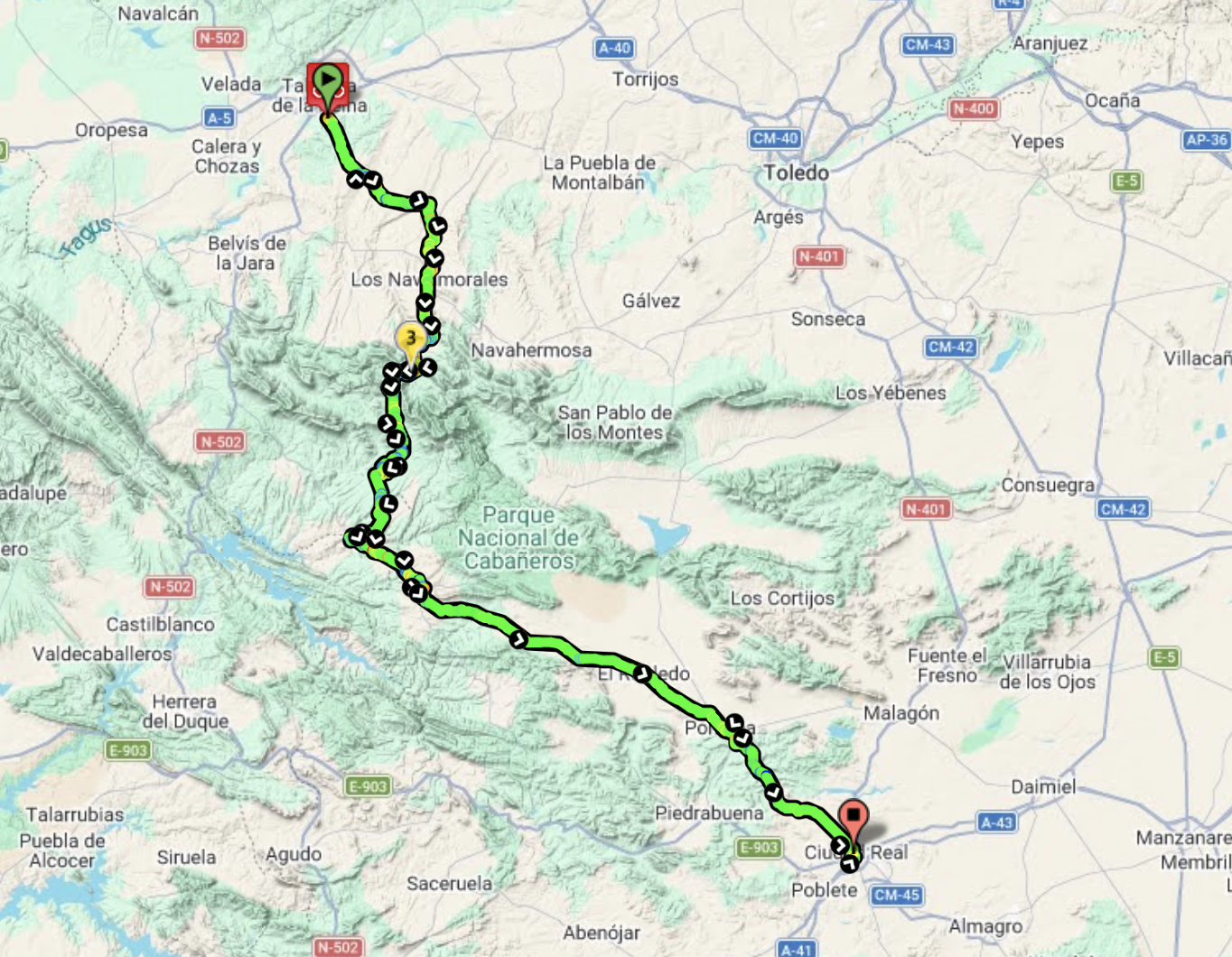
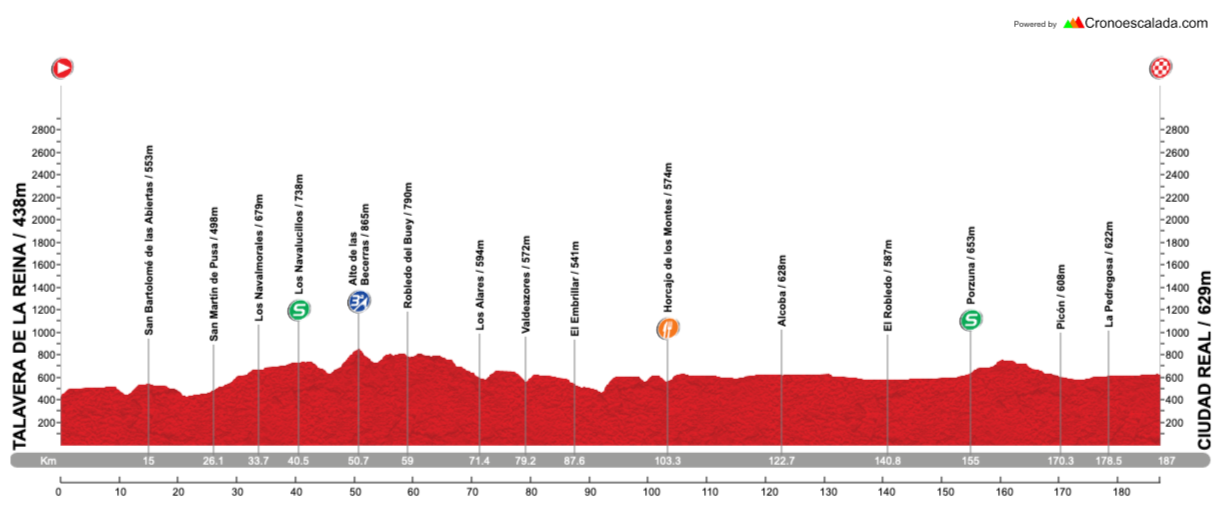
Stage 6: Talavera de la Reina - Ciudad Real, 187km

OgAsTFFw_o.png


i3zOC0A6_o.png


GPM:
Alto de las Becerras (cat.3) 5,1km @ 4,2%

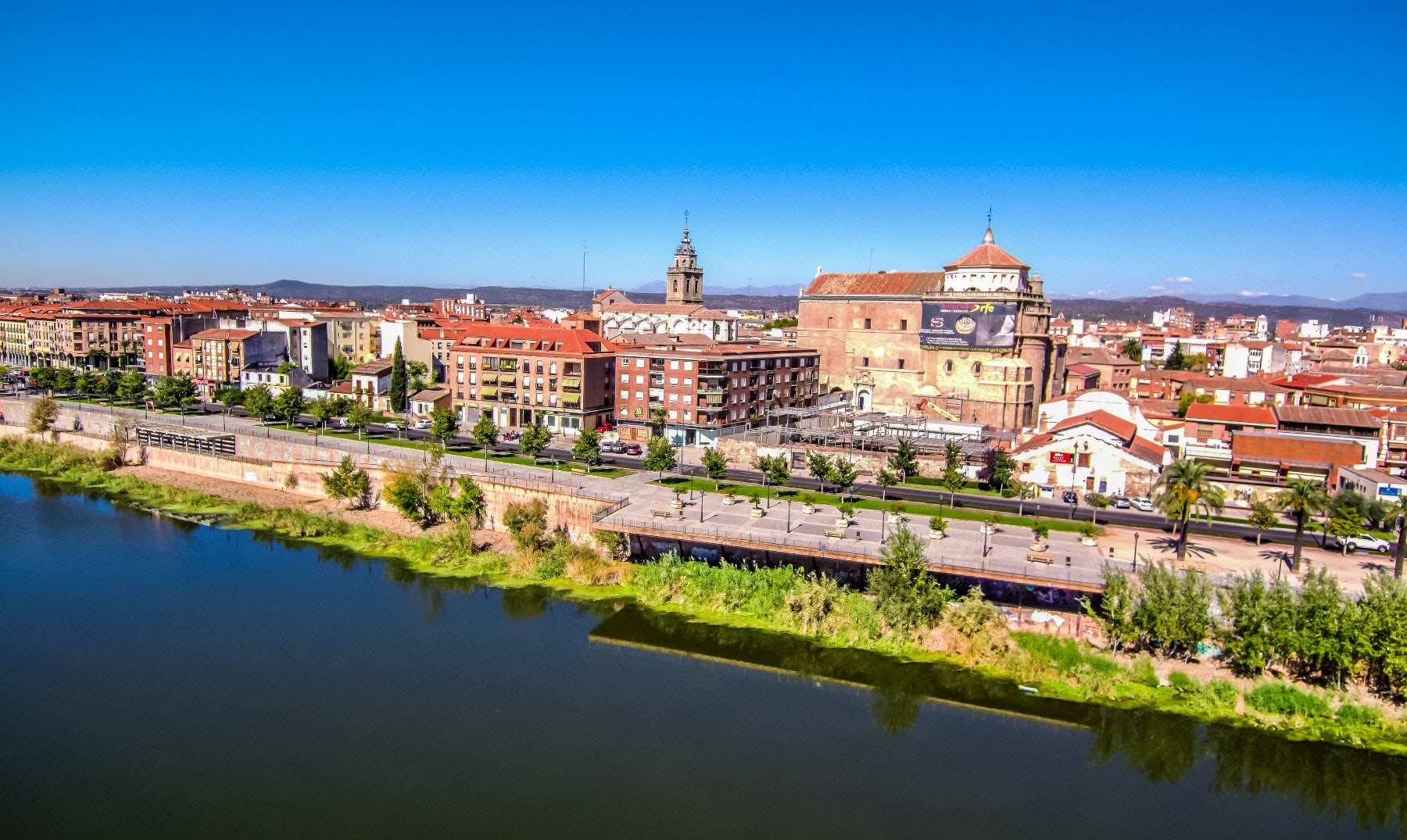
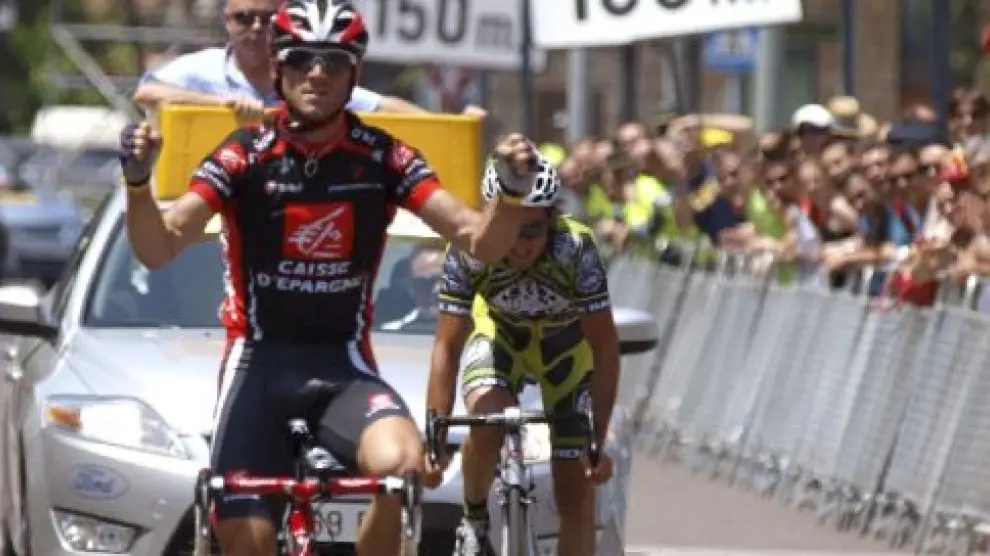
On stage 6 we have our second stage expected to be a bunch sprint, a pure transitional stage linking two relatively common Vuelta hosts, and both which I’ve written plenty about previously. In fact I used Talavera as a stage host in my most recent Vuelta route and quoted myself in that stage as well, so shan’t repeat the process. You know the drill: pottery, royalty, David Arroyo. I’ve even done transitional stages from Talavera de la Reina to Ciudad Real on more than one occasion in the past in this thread - this one from Vuelta #7 in 2016, and this one in Vuelta #10 in 2018. Now, it should be noted that unlike when I had two identical stages up in Salamanca province, all three of these stages have been different, in their specifics but not in their general role. I’ve used both of these cities several times, but both are common Vuelta hosts in real life as well, in addition to being somewhat larger cities to link the Sistema Central to the Sierra Nevada and the other mountains of the south, meaning they will frequently see transitional stages come through here. Often I use Talavera as a means to get to the mountains of Ávila, plus in my 5th Vuelta it was the start of stage 20 in one of the routes I’m most proud of, as the last competitive stage of the race was a 230km odyssey over Mijáres, Mediano, Robledondo and Abantos before an uphill cobbled finish in San Lorenzo de El Escorial. Away from fantasy land, Talavera also hosted the 2008 Spanish nationals on a course which included the Puerto del Piélago, and saw Alejandro Valverde take his first national title.

r%C3%ADo-tajo.jpg

Talavera de la Reina

840189a.jpg

Alejandro Valverde beats Óscar Sevilla to the line

While Talavera’s roles in my races have been somewhat varied thanks to the opportunity to use the city as a platform to enter the Sistema Central from the south or to spark transitional stages heading to the south, that of Ciudad Real has been more consistent; the city is located in the midst of the plains of La Mancha, and indeed those plains are what give the city its biggest claim to fame, for it is the city which has built its legacy around arguably the most famous of all fictional Spaniards, the Ingenious Gentleman Don Quixote de la Mancha. Cervantes’ iconic hidalgo is considered one of the founding works of modern literature, one of the first (if not the first) modern novels, and his doomed attempts to revive the dying age of chivalry along with his down-to-earth, grounded squire Sancho Panza have delighted audiences the world over for centuries, lending multiple languages new coinages relating to the book’s heroes, both direct words (e.g. ‘quixotic’ in English) and idioms (e.g. ‘tilting at windmills’ in English, and the opening cliché, ‘de cuyo hombre no quiero acordame’, in Spanish) as well as inspiring countless works of music, art and literature - especially satire, such as Henry Fielding’s Don Quixote in England which was intended to mock then-Prime Minister Robert Walpole as displaying the unrealistically aspirational characteristics of Quixote, and possibly my very favourite short story, Jorge Luís Borges’ Pierre Menard, Author of the Quixote, which takes the form of an eulogy to a fictitious fin-de-siècle French author whose life had been dedicated to creating a word for word copy of Don Quixote without ever having read it, and satirises literary pretentiousness and self-reference. Nowadays, the city is probably best known, however, for its abandoned white elephant of an airport (at one point named after the Ingenious Gentleman himself), a disastrous failure of an enterprise to create a low-budget alternative to Madrid before sufficient connections to the city were available, and which was destined to fail before it even opened. The airport had a brief revival as essentially a glorified parking unit while many planes were grounded during Covid, freeing up runway, gate and hangar space for more essential transport hubs, but is now returned to its status as an empty husk which receives periodic use for the purposes of filming.

My previous stages to Ciudad Real have usually been flat stages coming from the north or west (I did at one point have a 260+km flat stage from Plasencia in fact) before transitional stages to the south via climbs like Rehoyos, or they have been transitional stages from the south via climbs like Rehoyos and then flat stages going north or west, except for an ITT patterned after 2008 on one occasion. The three stages (including this one) from Talavera have taken different routes - the first from 2016 included no climbs at all, while the second went over the Risco de las Paradas climb, a relatively common one in the area and which I reprised for the similar stage to the windmills of Consuegra in my recently published edition; this stage takes a smaller climb to the west of Risco de las Paradas, and one which is only just worthy of categorisation (tougher than Vila-Boim in stage 3, but there’s more points given out by this stage and late on in the race a climb of these dimensions, averaging just 4,2% with no steep ramps, might not be bothered with from the GPM point of view), but at least gives the breakaway something to fight for in what will otherwise be a long and grinding day through the plains of La Mancha. Do not expect anything too exciting here - the riders should also be well familiar with that final rolling stretch from Porzuna, this is the same as previous stages I’ve done for this route; unless the wind blows - and it could well, but the most likely stretch for this is the part after the rolling terrain in the first half and before Porzuna, so from 80km to 35km remaining - this is almost certainly a sprint in Ciudad Real.

imagenes-47.png


Believe it or not, Ciudad Real has not featured in the Vuelta since 2009 - perhaps the losses involved in the cost of the airport, which opened that year, might be a factor therein. However, we are looking at a 2000s-styled Vuelta here, and so it seemed a must - the city featured on the route every year from 2005 to 2009, with three stage starts, one stage finish (José Luís Arrieta winning from the break as the péloton rolled in 11 minutes down in a week 3 transitional stage in 2006) and one ITT (Levi Leipheimer winning in 2008 and taking the race lead, which would set into motion some minor controversies between the Spanish teams as Caisse d’Épargne tried to keep Leipheimer in the lead to foment disunity between him and Contador, while Euskaltel tried to take the jersey in a breakaway, leading to the men in orange helping Astana distance Valverde despite no real benefit to themselves when he got caught behind a split in a later transitional split). 2007 and 2009 even saw sprint stages from Ciudad Real to Talavera de la Reina, with Daniele Bennati winning the former and Anthony Roux winning the latter after a miscalculation meant the FDJ man’s long-range attempt to survive from the break was caught around 20m after the finishing line as André Greipel’s sprint came up short. As a very typical 2000s host, therefore, it’s a very easy selection for the stage today.
 
  • Like
Reactions: TourOfSardinia
Feb 20, 2010
33,223
15,729
28,180
Stage 7: Puertollano - Córdoba, 182km

xHiuyJI6_o.png


W9ZKzm4i_o.png


GPM:
Alto de San Jerónimo (cat.2) 14,1km @ 3,2%

You must have known it was coming. Does anything say “2000s era Vuelta” more than a descent finish in Córdoba after a climb or two in the Trassierra? These were almost an annual fixture in the era. 2000 and 2006 both featured a flat stage from Málaga on stage 2 that finished in the city, but away from that…

2002:
perfil9.gif


2003:
perfil17.gif


2005:
profile2.gif


2008:
vuelta_espana_et03_G_2008_unipublic.jpg


2009:
etapa-15.gif


As a result, as you can see, this kind of stage was an absolute must-have. The race has been back since, of course, but have tended to climb across the Sierra in the opposite direction, utilising the Alto del 14%, such as this stage in 2011, or this one from 2014 which climbed part of the traditional San Jerónimo climb, descended the other side of it, and then climbed 14% afterward. 2011’s stage looks to mimic what went on in 2002, but the rest of the decade saw them follow the same formula I’ve used here.

Before we get there, though, we have to set off from Castilla-La Mancha, and the start town will be Puertollano. This city of 45.000 is known for the double falsehood of its already-oxymoronic name (it neither has a port, nor is it flat; however the name comes from the fact it lies on the shoulders of the ends of two mountain ridges that protrude from a plain; this gives it the visual appearance of a col (the other meaning of “puerto” of course) but on a plateau (“llano”)). It is the home of former football goalkeeper Santiago Cañizares, whose bleach-blond hair featured at the back for Real Madrid and then Valencia across a 20-year career, and has appeared on the Vuelta’s parcours on six occasions - all of which came between 2000 and 2009. All four stages to finish here have resulted in sprints - won by Alessandro Petacchi, Leonardo Duque, Daniele Bennati and André Greipel respectively.

pi088-1600x900.jpg


There are a couple of uncategorised climbs in the early part of the stage, the most notable being the 3,9km @ 4,8% of Puerto Niefla, as we roll along the meseta. Then after heading through Torre de la Onza we descend down into Andalucía and down to the lower plains for our first meta volante in Montoro. Then it’s a long flat roll up to Córdoba where we have a second intermediate sprint, before our take on the classic circuit around the city to include the Trassierra. And, as mentioned, we’re taking on the most traditional of the ascents in the region, Las Ermitas via San Jerónimo. Where the mountains points are given out changes from year to year, but the overall climb is the same, and the most common GPM takes place at the Alto de Las Ermitas - yet it is always given the name of San Jerónimo in the race’s ascent nomenclature. The most tough part of the climb is the 5km at 7,5% from km1 to just after the formal Alto de San Jerónimo, and the first part of the ascent, from the very start to the first slight descent, is 7km at 5,6%. There’s then a short descent and then 1,5km of slight uphill, another slight descent for a couple of kilometres, then 1,5km at just over 7% before a final down-and-up to the high point in the road. The final summit is at 14km from the line, but this puts the end of the steep part of the ascent at just over 20km from the end. Close enough to the end to create potential for action, but far enough out that it isn’t guaranteed.

erm_med_13.png


Tourism video on the Trassierra

My previous musings on Córdoba from when I posted my 11th Vuelta route:

Córdoba requires little introduction to the average Vuelta enthusiast. It’s a frequent host over the years and especially in the last 30 years or so, when the nearby climbs in the Trassierra, namely San Jerónimo, Alto del 14%, Las Ermitas and Mirador de las Niñas, have led to a tradition of hilly and medium mountain stages in the area, usually finishing - and my stage is no breaker of tradition - at the Palácio de la Merced. Most people, of course, know Córdoba more from its iconic mosque, since the city gave its name Umayyad Emirate, and subsequently Caliphate, of Córdoba, the most prominent polity of al-Andalus in Muslim Spain. The change was nothing more than ceremonial, as Abd ar-Rahman III, facing invasion from the Fatimid Caliphate based in modern Algeria, Libya and Tunisia, raised his own rank to Caliph in order to not be seen as weaker. Originally a Roman settlement named Colonia Patricia, it was taken by the Muslims in 711, and became the provincial capital five years later under the name قرطبة, usually transcribed Qurṭuba. The old Roman centre was converted into an Umayyad medina similar to those seen in Morocco, and it grew to become one of the most advanced and refined cities in the world, with a remarkable level of freedom of religious and artistic expression completely out of keeping with most of the western world at the time, and estimates of the population come the turn of the second millennium range all the way up to a million people, a practically unthinkable number at the time. The Fitna, an Andalucian Muslim civil war, broke out with rebellion in Córdoba, and the Berbers sailed from Morocco across the Straits of Gibraltar and sacked the city in 1013. A short lived Taifa followed before the Almoravids captured the city late in the 11th Century, but they themselves were revolted against 30 years later; eventually warring factions of Muslim Spain turned to the Castilians for assistance against one another even as the reconquista gathered pace, sealing their own fate to a large degree. Córdoba fell to the forces of Ferdinand III in 1236 (on 29 June according to Christian sources, and 30 June to Muslim), and it has remained Spanish since. Its iconic mosque’s centre was destroyed and converted into a cathedral, yet retaining the ornate arches and outer walls, and its unique preservation of Andalusian Muslim architecture within Catholic mores has been part of why it has become a UNESCO World Heritage Site, along with many other Muslim era buildings of the city, such as the Judería (the old Jewish quarter), the Baños Califales, and the Madinat al-Zahra (Medina Azahara) district.

cordoba-things-to-do-mezquita.jpg


No longer the centre of its own world, Córdoba floundered for many centuries and shrunk down under Spanish control, only recovering any of its former glory when it was attached to the Spanish railroad system in the late 19th Century. Despite all of its rich cultural tradition, other than a few flamenco dancers, the main son of the city to stand out to me was Gabi Delgado López, whose family left Spain for Germany due to oppositional activity in the Franco era, and who went on to front controversial electro act D.A.F.. Only kidding, Paco Peña is obviously far more high profile (to say nothing of Roman statesman, poet, philosopher and dramatist Seneca), but I did want to post the Der Mussolini performance video.

Córdoba’s frequent hosting of the Vuelta in the 2000s on similar routes to this gives obvious hints as to what we ought to expect from the race, as does the 1999 national championship road race which took place on a similar course. Ángel Casero won the latter from a group of 14, sprinting it out in the old city, while in the Vuelta a variety of outcomes have been seen. 2002 saw Pablo Lastras win solo, 13” ahead of Luís Pérez Rodríguez and Fabian Jeker with the GC favourites all coming in together at +21” (with 22-year-old débutante Alejandro Valverde outsprinting Erik Zabel for 4th); a year later (in a week 3 stage) David Millar soloed in ahead of the bunch, while a small group of José Alberto Martínez, Óscar Sevilla, Unai Osa and Michael Rasmussen gained a few seconds on a reduced péloton; in 2005 a seven-man break stayed away, with Leonardo Bertagnolli outsprinting Bradley McGee from a group also including Joaquím Rodríguez and Juan António Flecha, while Pablo Lastras, Santos González and Carlos García Quesada gained a few seconds on a larger-than-previous-years group; 2008 saw Tom Boonen win a full sprint; while in 2009, again deep into the race and coming off of three back to back high mountain stages, Caisse d’Épargne were happy to let the break go, and Lars Boom won from a break of 13 that was allowed to gain a full 25 minutes, soloing in from the first of two ascents of the San Jerónimo climb.

Subsequent stages have opened up some other possibilities, such as when Pablo Lastras (a theme is emerging here…) escaped on the descent with a Liquigas trio of Vincenzo Nibali, Valerio Agnoli and Peter Sagan and nearly stole the stage (while Agnoli somehow stole bonus seconds from his own team leader), but that was climbing the Alto del 14% and descending the side that we climb here, so only partially comparable. Nevertheless you’d think either the break sorting it or a group gaining a few seconds seems the most likely outcome here, in one of the Vuelta’s more iconic city finishes, albeit perhaps seeing as they don’t typically finish by the historic centre a little less iconic or visually arresting than the classic Ávila finish or the Segovian stages with the aqueduct. Nevertheless, this was about as sure-fire a finish as you could get when putting this route together (yet ironically, it was the last stage I incorporated).

cordoba_Mosque_December23_GettyImages-950377132.jpg
 
  • Like
Reactions: TourOfSardinia
Feb 20, 2010
33,223
15,729
28,180
Stage 8: Alcaudete - Collado del Algüacíl, 171km

Wvwa7iZq_o.png


DIRVlJtu_o.png


GPM:
Puerto Lobo (cat.2) 8,8km @ 5,4%
Collado de las Sabinas (cat.ESP) 24,8km @ 5,8%
Collado del Algüacíl (cat.ESP) 17,2km @ 6,6%

You know that scene in Commando where Arnold Schwarzenegger delivers the classic one-liner, where he is holding the villainous henchman over a precipitous drop and says, “Remember, Sully, when I said I’d kill you last?” And the villain nods in panicked agreement to acknowledge that he does, only for Arnie to say “I lied” and drop him to his demise? I kind of feel like that right now. Having gone through that whole spiel about the balance of time trialling and climbing and the grinders and ‘classic’ gradient climbs of the 2000s era with less of the rampas inhumanas spamming that we see now, it then seems a bit out there to then unveil this stage, which features not one but two traceur favourites with crazy steep ramps. In my defence, however, I would like to draw attention to two things. Firstly, that the average gradients of these two climbs are not that high and fit in with the overall theme even if that’s largely because of including the gradual section, up to Güéjar Sierra, within the climb stats, and that secondly, these are not truly out of character with the Vuelta of the time. After all, the Sierra Nevada, where these climbs can be found, featured frequently through the decade with them finding tougher routes through it (and the toughest that has been used to date being unveiled in 2009, including El Purche and the Collado de las Sabinas road), and it was also the same decade that gave us the debuts of Sierra de La Pandera and Xorret del Catí. Anglirú, though taking a layoff through the middle of the decade, was still around, and we were only a year in advance of the introductions of Bola del Mundo and Cotobello. This “first half gradual, second half brutal” shape of climb that Algüacíl matches fits well with ascents like Cruz de la Demanda (a classic 90s climb that saw its last usage in 2001), Anglirú and the typical Vuelta side of La Pandera, it’s just… well, most of those climbs can’t be chained as neatly to another brute as this, and the one that can, Anglirú, usually isn’t. This is, however, the only stage of the race where the mountaintop finish features genuine rampas inhumanas and… well, even counting Montejunto, there are only four MTFs in this race anyway. It’s the 2000s.

Alcaudete.jpg


The stage starts in Alcaudete, just south of the line from Córdoba to Jaén and in a corridor between sections of the Sierras Subbéticas, west of well-known Vuelta staples like the puncheur finish of Valdepeñas de Jaén and the then-new and popular mountaintop of Sierra de La Pandera. The city is home to just over 10.000 people and is built on the site of a former Roman settlement called Sosontigi, and a former Moorish fortified town constructed around its main landmark, the Castillo Calatravo. It has only hosted the Vuelta on one occasion, a gradual uphill finish in an intermediate stage won by Alessandro de Marchi from the break of the day.

The first 60km or so of the stage are rolling terrain, slight uphill into Alcalá la Real with around 350-400m altitude gain across around 14-15 kilometres, so not worthy of categorisation, then continuing along to Puerto Lope and dropping down to a more ‘regular’ altitude level around the extended Granada metropolitan area. Granada is, of course, the gateway to the Sierra Nevada, and we are headed into the heart of that most classic of Unipublic-era Vuelta mountain ranges - but first we are taking a smaller, cat.2 climb on the east of the city itself, to the Puerto Lobo via Víznar, which comes out at 8,8km @ 5,4%. Technically speaking it’s actually a higher summit (you can see the pass itself marked around 1500m before the end of the other side of the climb, which we are descending, ahead of the sprint in Granada, a city which - as you might expect, being the gateway to the Sierra Nevada as mentioned - featured prominently in the Vuelta during the 2000s. 2004, 2006 and 2007 all featured similar stages utilising the Alto del Monachíl / El Purche and a descent finish into Granada (with the 2006 stage being a key one for the overall, with Vino dropping Valverde and taking significant time enabling him to take the maillot oro by a few seconds), while in 2005 it hosted the race-opening ITT and in 2008 the race-opening TTT. It would also host stage starts following the Sierra Nevada mountaintop finishes each time these featured in the era - 2002, 2003, 2004 and 2009.

adobestock-159268615.jpeg

Granada’s iconic Alhambra Palace

Back in 2018, I did a bit of a history post of the Sierra Nevada in the Vuelta, because in one of my more idiosyncratic and iconoclastic Vuelta proposals I included an MTT from Granada to Sierra Nevada, in an attempt to breathe some life into the traditional A-395 route which is no longer selective in modern cycling, being steady 5-6% almost all the way on a wide and well-paved highway. That also included me re-posting my handy metro-styled guide to the connectivities of the Sierra Nevada roads, which sadly has been lost to time. That post is here as it’s too long to repurpose as a quote here, but the information about the history of the range in the Vuelta is quite interesting and apposite here. Though the climb appeared several times in the 2000s, the organisers nevertheless did change things up quite considerably in the era, changing starts and finishes to the climb:
2002 and 2003: from Granada to Hoya de la Mora (2511m) on the A-395
2004: ITT from Granada to Pradollano (2127m) via El Purche / Monachíl and then the A-395
2009: from Granada to Area Autocaravanas (2370m) via El Purche / Monachíl and then the A-4025 to Collado de las Sabinas, then continuing up the road toward Hoya de la Mora on the A-395.

Of course, we’re only doing part of that because if you climb the A-395 from Granada or through El Purche, this presents problems for getting to our finish at Collado del Algüacíl. This is as if you climb the A-395 you either have to descend Monachíl and then add a section of flat as you go back through the city, or descend the Alto de Hazallanas which we know contains some serious gradients that could get pretty risky being descended at race pace. If you climb El Purche, then either you can only climb this far (or descend Hazallanas), or you would have to both climb and descend the stretch from El Purche to El Dornajo (adjacent to the Hazallanas summit) with the potential that it might not be sufficient time between the front and rear of the race needing it, making it dangerous. So of course, that left using Hazallanas, which is not very 2000s (it was introduced in 2013) but it is better for the race, bringing that particularly nasty 5km at 11% in the middle of it closer to the finish.

perfil-sabinas2.png


Perhaps unexpectedly though, I’m not climbing that full climb - only as far as the actual Collado de las Sabinas, at 2173m. From here, instead of pressing on as they did in 2009, we will descend back down on the A-395 and go down the standard way. Frustratingly, because of the variety in routes to Sierra Nevada, getting a profile that shows exactly what we are doing is sometimes challenging. At its most basic, then, we climb the profile above until Collado de las Sabinas, then we do the short descent from this side which shows the climb via El Purche and Collado de las Sabinas (also showing the stretch from km13 to km18 that would have to be raced in both directions if we used this side) and then descend this side from right to left, from km8 to the start.

22016091357696497_648302_135.2e16d0ba.fill-1138x640-c100.jpg

Hazallanas road

Stopping at Collado de las Sabinas brings the summit of this climb to just over 40km from the line, and brings the steepest part to being around 50-55km from the line, rather than being over 50 out at the summit and around 60-65km out for the steep parts. Besides, this is still the highest peak of the race so gets the Cima Alberto Fernández, and it’s not like it isn’t still an absolute monster of an ascent, being 25km at almost 6% even including all the false flat and descent around Güéjar Sierra. Without it it’s 16km at nearly 8% anyway, so HC in anybody’s language.

After descending the traditional side and redoing the shallow climb from Pinos Genil to Güéjar Sierra, however, it’s time to introduce something “new” to the Vuelta (it has yet to be seen in racing, but will make its debut in the 2026 race, the unveiling of which postdates when this stage was created), and nevertheless a long-time traceur favourite, the Collado del Algüacíl. Only paved from one side, this beast is in a similar vein to a number of Spanish climbs where the average gradient is somewhat masked thanks to a shallower first half, somewhat like Moncalvillo, Cruz de la Demanda or… well, to be honest, even Angliru. 17km @ 6,6% seems like a strong climb, don’t get me wrong - it puts it statistically along similar lines to Mont Serein, Passo San Pellegrino (east), La Toussuire, Mottarone from Omegna, and perhaps its best facsimile, Col de la Colombière from the north (it’s 17,3km at 6,5% and is steepest in the second half). But even then, Colombière’s steep final 7,5km average 8,6%… whereas with Algüacíl? Well, that final 8,6km average 9,8%. Nearly 10% for over 8km is already borderline HC without the need for the lead-in.

alg_13.png


The Vuelta discovered climbs like Angliru in the late 90s, and introduced La Pandera in the early 2000s. This is a change-of-pace mountaintop and the only one like this in the race, but the sparing use of such mountaintops is in keeping with the time. That final stretch is comparable to classic behemoths like the Colle dell’Agnello, where the final 9km average 10% - this is probably shape-wise the most perfect of all comparisons, if we were to start only in Pontechianale (Casteldelfino would possibly be even more perfect, but extends the lead-in part of the climb); alternatively it’s a good match for my beloved Passo Fedaia, only if the second half was slightly longer and less steep, and it didn’t have the Serrai di Sottoguda. However, both of those climbs are only really used as passes (outside of that MTF in 2008 at Fedaia with Bruno Reverberi’s “seven dwarves” in the most hilarious of their exploits in that race), which is one weakness with Algüacíl. PRC has been proposing this as a finale for a Sierra Nevada stage for almost 15 years at this point while Andalucía Cicloturismo posted a reconnaissance from the climb to assess its suitability back in 2013 - from which I’ve taken the following photographs.

020.jpg


028.jpg


Sadly, as it was December when they did their visua, it gets snowy at the top and the gallery does make it a little harder to make out the space at the clearing at the summit, but the space there is no different to Alto de Abantos (another classic 2000s summit) or Puerto de Velefique, both of which have hosted Vuelta finishes before, and I feel it’s worth showing the guys there a little love for the work that they do and if the real life race believes it can satisfactorily finish there, then surely a fictitious one can. Cyclefiesta also has a briefer description in English. Either way, this is the steepest mountaintop of the whole race and the aim is to open up gaps that mean that the other mountaintops need to be raced more aggressively, as this will be less suited to the diesels, and also will mean that we shouldn’t see fear of later stages dissuade racing here. This one should be hard enough that time gaps simply organically get created regardless of the péloton’s intentions.
 
Feb 20, 2010
33,223
15,729
28,180
Stage 9: Granada - La Calahorra, 215km

KszkOnMJ_o.png


e60nYOWz_o.png


GPM:
Portichuelo de Cástaras (cat.1) 13,1km @ 6,4%
Mirador del Palancón (cat.ESP) 19,4km @ 6,2%
Puerto de La Ragua (cat.ESP) 24,7km @ 6,1%

The second weekend closes with this, a long and grinding mountain stage which features three big climbs (plus a couple of uncategorised smaller ones) with genuine hors catégorie bona fide credentials in the classic vein, very long and medium-gradient, making people suffer with attrition and altitude rather than bludgeoning with rampas inhuamanas… and yet between all the races that have ever taken part in this part of the world, only one - the 2009 Vuelta a España - has used any of them, which seems unthinkable but is in fact the truth.

As is perennially the case, a stage ending in the Sierra Nevada is followed by a stage starting in Granada. As I mentioned before, this is standard operating procedure, so we will continue with it. Those stages were frequently mountain stages, but usually the direction was different and mostly they would be headed to La Pandera. We’re going the other way, towards the southeasternmost corner of the Iberian peninsula, so we start by heading southwards through the rolling terrain that takes us to Órgiva shortly before the 50km mark, this being a town well-known to cycling enthusiasts, often used as a base for investigating the region by cyclotourists. However, well-known summits to spread out from here such as the Puerto de Camacho, Haza del Lino, Cáñar and Capileira must wait; we are headed further east before the climbing begins for us. Well, the climbing begins here - it just isn’t categorised. We climb the first 4,4km of this climb, to the Torvizcón junction here - it averages 7% bang on - but no points are to be given at this stage, as I’m in stingy mode today. Instead we continue along toward Torvizcón itself, and then drop briefly down to the Guadalfeo valley before beginning our first climbing in earnest, the rather classic-sized Portichuelo de Cástaras.

CastarasGuadalfeo.gif


42a.jpg


This lop-sided ascent has never been used in racing, but dimension-wise it seems pretty classic - the kind of climb that isn’t in-and-of-itself a monster in today’s cycling, but is a more than solid cat.1 ascent and comparable to old favourites like the Col d’Aspin, Passo Pordoi, Passo Tonale and Col des Saisies. Obviously without the reputation cached and being lopsided so as to result in a plateau, it is different in character to them - I included it with a short flat run-in to Trévelez in one of my earlier Vuelta routes, and when appended to a finish in that style it is perhaps most akin to the run-in from the Les Rousses stage from the 2017 Tour, with the 11,7km @ 6,4% of the previously unknown Montée de la Combe de Laisia Les Molunes cresting 12km (of mostly plateau riding) from the line. It’s around 9km to Trévelez from the Portichuelo de Cástaras, most of which is flat but it does kick up a little at the end. Being, however, as we aren’t finishing in Trévelez on this occasion, we’re over 100km from the line and I don’t foresee much action. Instead we have a short plateau and descent, 3km at 4% up to the Alto de Bérchules, sometimes known as Alto de la Cruz de Juviles, and then a two-stepped descent and a short plateau, and an uncategorised (3,2km @ 4,6% according to cronoescalada) ramp up from Úgijar to Cherín, where the real stuff begins.

You would definitely be forgiven for looking at the profile and doing a bit of a double take seeing Mirador del Palancón listed as an ESP-category climb on the stage, this being a genuine HC-sized ascent, on the Spanish mainland, that you’ve probably never heard of and that I have never seen used by PRC, APM or elsewhere on here that I can trace. I mean, unless it’s unpaved or there’s some military road or something, surely there can’t be much left of mainland Spain to map, right? Certainly not when it comes to climbs this size? Well, as it turns out… no there isn’t. The actual discovery was not the climb to Mirador del Palancón, so to speak, but more the descent. The fact that the descent is viable suddenly turned this into a climb that you could use in and of itself, whereas previously it was only accessible as part of a bigger climb. That’s because this is another of those classic examples of climbing part of a climb, descending another side of it, and then climbing all the way to the top. Passo Lanciano-Blockhaus, Monachíl or Hazallanas-Sierra Nevada, Rozavientos-Lagunas de Neila, Cruz de Cespedosa-Ancáres, Lagoa Comprida-Torre, Alt de La Rabassa-Naturlandia, all different versions of the same principle in action. The Mirador del Palancón, it turns out, is just a staging point on the way to the much better-known (though little better-known to racing) Puerto de La Ragua, appearing around 80% of the way up the ascent.

Ragua2.gif


The long downhill - over several steps - through Bayarcal, Laujar de Andarax and Alcolea is absolutely endless, but it is, with further investigation, fully and satisfactorily paved, rendering it perfectly usable as a descent. The sheer length of it - over 40km - means that even despite it all, it’s 80km from the line at the summit of Mirador del Palancón, so I don’t expect too much frantic stage action there, but it should mean that with that and Cástaras plus all the uncategorised climbing, plus nearly 180km in the legs when they arrive back in Cherín, that we get some serious action when we come to take the climb on for a second time, yet this time append another 5km of climbing to the end of what was already an ESP-categorised ascent. Statistically, Mirador del Palancón is already comparable to climbs like Albulapass, La Toussuire, Col d’Izoard from Briançon, and probably its best facsimile, Cormet de Roseland (19,3km @ 6% from Bourg-Saint-Maurice and 20,2km @ 6,1% from Beaufort); adding the extra distance to take us to Puerto de la Ragua makes it more akin to the north side of Col de la Madeleine (PRC even directly compared the two), Col de la Bonette from the South, Passo San Bernardino, or the Passo di Gavia from Bormio. This is a tough, tough climb which has only been used once in professional cycling, as mentioned, as an early-stage climb in the 2009 Vuelta’s queen stage to Sierra Nevada, where it was inexplicably only given cat.1 status - presumably due to the distance from the finish, but in a world where Aitana and Bonaigua are cat.ESP, for La Ragua not to merit the title is just absurd.

puerto-de-la-ragua.jpg


The Puerto de La Ragua has appeared more than once in professional cycling, mind - in 1997 it was climbed from the north side. It also almost appeared in my Nordic Series, because when Spain hosted the Winter Universiade in 2015 in Granada, the intention was for the Nordic ski station at the Puerto de La Ragua to host the cross-country skiing and the biathlon; however the venue was not ready in time and these races were relocated to Slovakia, with the former held at Štrbské Pleso and the latter at Brezno-Osrblie. We could have put the finish here as a result of the facilities that were already there, especially with the additional infrastructure that was at least partially constructed and had been intended for that Universiade. But that would have been a little too easy. Instead, we are going to be descending to a finish in La Calahorra, a small town to the north of the Sierra Nevada range. The thing is that La Ragua is a lopsided climb; while we have been climbing for 25km of uphill grind, there’s nevertheless only 14km remaining when we reach the summit; the finishing line is some 650m higher in altitude than the base of the southern side of the climb. This is why the climb was a justifiable cat.1 in 1997 but should have been ESP in 2009 from the south - and it also makes for a similar kind of finish to the traditional La Punt finish that follows Albulapass in the Tour de Suisse. Albulapass’ steep part is slightly longer than Mirador del Palancón but around 3-4km shorter than Puerto de La Ragua in a similar gradient range. I therefore think that those Tour de Suisse stages are perhaps the best indicator to the kind of action we ought to expect here.

La Calahorra is a small town on a short plateau between the Sierras de Nevada and de los Filabres which is renowned for its isolated castle, built in the early 16th Century in the Italian Renaissance style, one of the earliest examples outside of Italy itself. Built atop a dirt track on a small hill (we don’t finish at the castle, we finish at the town underneath it, but if we can hold the presentations up on the hill or with the castle as a backdrop, like the Vuelta a Burgos stages at Ciudad Romana de Clunia, it would be ideal), the castle is an icon of the town and of the whole sparsely-populated region. Because of said sparse population and the dramatic backdrops of the mountains, this area is popular with film crews and appears on a number of occasions in television and film; its highest profile appearance would be in For A Few Dollars More where it appears more due to a continuity error than anything else, but it has appeared as itself or as fictionalised historical castles more prominently in the British musical drama Stardust and more recently in House of the Dragon, a prequel to Game of Thrones.

la-calahorra-spain-p4p1.webp


Perhaps the most iconic appearance of La Calahorra, however, would be as part of the partially-lost and resultantly much-sought-after White Room road movie which was shot by British electronic music iconoclasts The KLF in 1989. Having emerged out of the Stock Aitken Waterman production powerhouse, Jimmy Cauty and Bill Drummond formed a series of alter egos (the Jams, Justified Ancients of MuMu, The Timelords, the KLF) and set about deconstructing popular music, both their own and other people’s, abusing copyright laws, cannibalising parts of their own tracks to construct virtually unrecognisable new pieces, and reusing their few own compositions in a variety of styles to add context and environment. They had planned to make a whole film to accompany their White Room album, but only the road sections were completed, often with ambient or alternative takes of well-known tracks that made it a rarity and a white whale for collectors, circulating largely in bootlegs - especially after the duo’s abrupt and dramatic retirement from the music industry in 1992 - until the release of the 23 Seconds to Eternity set that brought together all of the KLF’s videography (including the 38 minute, Wicker Man-inspired segment almost entirely lacking in music that they aired commercial-free on prime-time MTV in most of Europe at the time). Featuring the duo leaving London despondent at the state of the developing acid house scheme, they slowly explore the east Andalucian hinterland in their Ford Custom US police car, dubbed “Ford Timelord”, seeking solitude and peace in the Spain of Sergio Leone accompanied by samples and re-edits of their material along with their trademark plundertronics in a style that presaged their future album Chill Out, considered an ambient masterpiece - but which fell foul of numerous lawsuits for unauthorised samples, because, well, it’s the KLF. At the 27 minute mark of the White Room movie, they arrive in La Calahorra, and spend several minutes around the town and its castle, before driving over the Puerto de los Blancares and up to Pico Veleta.


Obviously the town and the roads have changed since the KLF’s day. It’s over 35 years ago now, and back when they filmed that, the Vuelta took place in April, and Spain’s biggest star rider was Pedro Delgado. Sierra Nevada had only been raced a couple of times in the Vuelta - in 1981 and 1986 - and it would be almost a decade before La Ragua was discovered, while it would take nearly two decades to see it raced from its harder side. It’s now been almost two decades since we saw it - hence why I’m looking to bring it back here. It’s a climb which deserves to be better known and better loved; thanks partly to its tradition being largely based in the lower mountain ranges of the north where steepness and inconsistency are their calling cards, Spain doesn’t have a large reserve of climbs of this nature to call upon, so it’s bordering on insane that the ones they do have are such rarities.
 
Feb 20, 2010
33,223
15,729
28,180
Stage 10: Baza - Murcia, 191km

A7E5ZaEU_o.png


xtekgeLm_o.png


GPM:
Alto de Cresta del Gallo (cat.3) 4,9km @ 7,0%

We have a slightly extended first shift in the race, because we are going to include this stage as well before the first rest day, a reasonably long but mostly flat stage that will create an interesting balance between the GC men who undoubtedly will want to let an unthreatening break go, preferably with people who lost buckets of time over the two mountain stages at the weekend, and the sprinters’ teams who will want to duke this out if they can back their sprinter to get over the one categorised climb of the day at the end. There’s only a short transfer after the previous day’s exertions, and then we are into Baza, a city of 20.000 which lies at the southern tip of the Altiplano de Granada, just north of the Sierra de Baza, an outcrop of the Sierra de los Filabres. It dates back to pre-Roman times, but its heyday came during the Moorish rule of al-Andalus, when, as a frontier town with the kingdom of Murcia, it was a key commercial centre and in the 11th Century its population was almost treble what it is now. It was one of the last Nasrid cities to capitulate during the Reconquista, and took seven months of siege before finally conceding defeat. Nowadays it is better known to cycling fans as the hometown of mountain bike Olympic bronze medalist David Valero. It has only sporadically appeared on the racing calendar, with two Vuelta stages finishing here, in 1946 and 1976, plus hosting stage starts in 1981 and 1994 immediately following a Sierra Nevada stage, and hosting the start of an actual Sierra Nevada stage in 2011.

64d90307-5f42-4ff0-9964-ee2d3a63c65c_source-aspect-ratio_1600w_0.jpg


The Altiplano de Granada, at least at its eastern end, is not, however, like some of the other high plateaus in Spain, and so we do not have one of those common lopsided passes to deal with. You’ll be familiar with these from all over the Vuelta’s history, with the meseta of Castilla y León being the most common; many classic passes up from the coastal mountains of the north up onto this plateau are Vuelta staples - Escudo, Pajáres, Urkiola, La Sía, Ventana, Somiedo, Orduña, Estacas de Trueba and San Isidro are all examples in the north, while in the Sistema Central Perales, Tornavacas, La Garganta and Pico are all one-sided climbs, while further east you have Mijáres, Serranillos, León, Abantos and Navacerrada where the altitude difference between the two sides is not quite as stark, but there is nevertheless still one side which is clearly harder and longer than the other. That’s not the case here, as the plains are effectively tilted all the way down to the sea and only small and comparatively isolated ranges like the Sierra de Espuña interrupt the flow, so most of today’s stage will be not just flat but microscopically downhill flat as we transition out of Andalucía and into the Comunidad de Murcia. The first 35km are vaguely ascending - at the leg-crushing gradients (ahem) of just under 1%, before a long - really long - downhill drag. I’m talking all the way until the last 15km long, although the first part of it is the “steepest”, with 780m descended in 72km from the high point in the road down to our first intermediate sprint in Lorca (I know, super dangerous having a sprint on a descent…). At 65km to go or so we pass through Totana and we have an intermediate sprint in Alhama de Murcia a few kilometres later, so we could divert into the Sierra de Espuña and add the Collado Bermejo, but realistically it isn’t going to add much to this stage other than bringing the distance up to around 220km and, after the weekend the riders just had, with four legit HC beasts, I’m sure they’ll appreciate my not adding a somewhat unnecessary gradual climb here.

Instead we forge onward to the edges of the Murcia conurbation and take on the Alto de Cresta del Gallo, a small but interesting little climb on the edges of Murcia that had been somewhat in vogue in Spanish cycling in recent times, but as the generation of Murcian superstars led by the Abarcá stalwarts Alejandro Valverde, Francisco Pérez and José Joaquín Rojas as well as former Abarcá alumnus Luís León Sánchez, as well as later stalled prospect Rubén Fernández - all age out, so the fashion for a stage finishing in Murcia after Cresta del Gallo has waned. It has, however, been a regular fixture in the Vuelta a Murcia, which shrunk down from a stage race to a one-day race in the 2010s and has become an almost annual spot, visited as the key-note climb of the race in editions finishing in Murcia (such as 2021 or 2024) and as an early-race warmup in editions finishing in Cartagena (such as 2022 or 2023). Cresta del Gallo has had a couple of specific ‘eras’ in the Vuelta - it was first discovered at the start of the Unipublic era, when the race needed to find alternatives to its Basque homelands, appearing in 1979 and 1981, then it took a long layoff until being reintroduced in 2001 in a stage very similar to this one in character (Carlos Sastre was first over the summit yet somehow finished over three minutes down in the end), before a spell of usage that saw it appear in 2009 (Simon Gerrans winning in what would become his patented style, surviving the thinning down of the break, doing no work and then outsprinting Hesjedal, Fuglsang and Vinokourov), 2010 (Thor Hushovd winning a reduced sprint) and then twice in 2015 (Jasper Stuyven winning a reduced sprint in a stage really remembered only for Peter Sagan being inexcusably hit by a vehicle while in the break, then almost equally inexcusably punching and spitting at the medic’s car when they tried to check on his injuries).

image

View down into Murcia from Cresta del Gallo

CrestaGalloAlgezares.gif

Cresta del Gallo altimetry. We are returning back into town so we take the junction for the Santuário de la Fuensanta just after the 5km mark, making the initial summit at 4,9km our GPM

Obviously the last 2km of the ascent - averaging almost 9% - are going to be where any moves are made, but while 2001 and 2009 may suggest action, 2010 and 2015 contradict this with reduced sprints; on the other hand those earlier stages came off the back of mountain blocks, coming after Aitana and Xorret del Catí mountain stages respectively, meaning that the péloton was keener to let the break duke out the stage. In my stage, these riders will have come off the back of two mountain stages considerably harder than, in all honesty, any stage you can reasonably design in Comunidad Valenciana (you can probably match the cumulative amount of climbing, but not across such monolithic passes), and with a rest day to follow, and so I anticipate the breakaway will settle this one and the GC men will be keen to leave it to a bit of a minor skirmish on the last couple of kilometres of Cresta del Gallo, several minutes after the stagehunters have already been through. However, if they do want to try something, the chance is there; the summit is just 11km from the line, and half of that is the descent. The drawback is that the run-in is mostly very straight and wide-open, which will favour the chase. That’s fine when the chase could be disorganised, as is likely to be the case if the break is settling things, but it’s not so likely when attacking the bunch. I did try to place the finish on Avenida Alejandro Valverde for the lols, but sadly that’s over the northeastern side of town and added a bit to the run-in (though I do go close to it, I would have had to continue on to Avenida Miguel Indurain to lead to it. Ironically, these huge roads named after star cyclists are heavy in car traffic and would be highly disruptive to close), so instead we head straight for the centre of town.

I used Murcia in my last Vuelta route (in a week 3 transitional stage) and requoted myself writing about the city there, so I’ll spare you the repetition this time. I mean, it’s the 7th-largest city in the country, and you don’t need me going eight paragraphs deep on history for cities that appear more often than not in these routes. Hell, I don’t need me going eight paragraphs deep on cities like this over and over either. It’s a large part of what has stalled posting in this thread, as the effort required in the write-ups spiralled ever upwards and after the pandemic saw me go haywire posting at length to fill time, they’ve reached the point where the write-ups take way longer than the races’ actual planning, hence my trying to bring them back down in length again.

adobestock-604027066-1500x1000.jpeg
 
Feb 20, 2010
33,223
15,729
28,180
Stage 11: Albacete - Cuenca, 174km

ESlBJVcd_o.png


NCYATUKj_o.png


GPM:
Alto del Castillo de Cuenca (cat.3) 1,9km @ 8,1%

After the rest day we’re back up and raring to go in Albacete, capital of its eponymous province in Castilla-La Mancha, and a long-time Vuelta stalwart. In fact, back in the formative years of the race (more so the 50s version rather than the sporadic 30s/40s editions admittedly) it was a staple, with echelons frequently being a major feature and seeing the big name overseas teams, especially those from the north of Europe, absolutely bully and obliterate the Spanish domestic péloton teaching them harsh lessons in how to deal with the wind. It was something of a staple at the turn of the millennium too, appearing in five stages from 1999 to 2003, including, notably, a stage in 2003 which ran from Cuenca to Albacete, the exact reverse of this stage. Since the race moved from April to August/September, the weather has been a lot less volatile which has been good for the mountains, but has rendered Albacete’s stages a lot less dynamic, with winners here since then largely being bunch sprinters, save for 2003’s ITT stage.

albacete-panoramica-hd.jpg


This is mostly a fairly quiet, nondescript transitional stage through the plains of La Mancha’s eastern area, passing through small peaceful towns stereotypical to ‘those’ Vuelta stages, baking heat and empty, sand-coloured landscape of scorched grass and barren windswept rocks. We pass through Madrigueras, hometown of former Abarcá domestique Héctor Carretero, and through a number of towns which only have two appearances in any race on PCS’ database… 2003’s Vuelta stage from Cuenca to Albacete and… 2001’s Vuelta stage from Albacete to Cuenca, which bears quite a heavy resemblance to this stage, shall we say. Well, once you account for the quality of graphics, because Vuelta profiles at the turn of the millennium were somewhat minimalistic.

stage18.gif

2001 Vuelta stage, Albacete to Cuenca

Anyway, once arriving in Cuenca, things are very much ‘on brand’. This scenic city, renowned for its casas colgantes, the hanging houses sat precipitously above huge sheer drops and with balconies overhanging cliff faces deep down into the gorge below, is one of the smallest provincial capitals in Spain (not the smallest, that’s Teruel). I included an Albacete to Cuenca stage in a Vuelta route in 2016, and while the route was different (it was the same up to Cuenca, but back then I continued on and added the larger Ciudad Encantada climb before finishing at the castle, whereas here we are being a bit more traditional), I wrote plenty about the history of the city and its appearances in the sport back then, so will reproduce that here.

Although the region was settled in Roman times, Cuenca was originally built during the years of Muslim rule, as the castle of "Kunka" owing to its strategic location at the confluence of two rivers and with the high gorges nearby. The remarkable hilltop architecture and a succession of dramatic churches have made it one of Spain's hidden gems, with the former perhaps best encapsulated by the spectacular casas colgadas, or "hanging houses", which make use of the limited space available on the rocky outcrop by building literally right to the edge of the surface, with balconies 'hanging' over the precipice.

Cuenca was first introduced to the Vuelta in 1955, in an intermediate stage in from the coast at Valencia that enabled Jean Dotto to take the leader's jersey which he kept until the end. Antonio Uliana won the stage that day. An altogether more famous act came the first time the castle hosted the finish, in 1957 when a stage won by famous outsider Tour winner Roger Walkowiak enabled Federico Bahamontes to take the race lead, in the midst of his grand battles with his rival Jesús Loroño, the Basque getting the better of the Eagle in the long run however. In 1973 José Pesarrodona used the same finish to take the opportunity to nab a few days in yellow before the inexorable, irresistible charge of Merckx took the race once and for all, albeit thanks in no small part to a large number of very generous sprint bonuses that had been implemented to help sweeten the deal when searching for the Cannibal's signature to participate. After quite regular interest from the city in the 1950s and 1960s, however, the onset of the coastal tourist industry meant that the earlier Vuelta stages tended to stay close to the coast in the 70s and Cuenca fell out of regular Vuelta usage and became very much an occasional host until the resurgence of interest in the early 2000s, hosting the race four times in six years. However, since 2006 the city has gone without its national Tour.

In fact, the sport of cycling has stayed away from Cuenca for nine years; the last time the sport paid the city any mind was 2007, when the national championships were held around the city, with the road race finishing on the same little climb up to the castle that I use as my finish. I in fact used this finish as the first uphill finish of my very first Vuelta on this thread, albeit one that in retrospect could have done with a lot of improving. My run-in to the line is exactly the same as in those national championships, which you can see here and view the legend of Murito before that legend had truly taken hold. It's a wonderfully scenic finish with some cobbles, some twisty city streets, coming through the castle square, and it looks glorious. It's also not all that easy either - it amounts to the first 1,8km of this profile (as far as the sign for parking). Though it looks tiny on the profile and the Vuelta's inconsistent categorization can be very stingy at times, I do feel this is categorization-worthy as it is the finish, and also considering that the climb when used in 2005 and 2006 was categorized although it was not the finish, it would seem odd not to give points at the line.

adobestock-1141907530-1500x1000.jpeg

The classic tourist view of Cuenca

Brief UNESCO introduction to the city as a whole

As I mentioned back in 2016, Cuenca saw a significant resurgence in appearances in La Vuelta during the 2000s, with four appearances between 2001 and 2006, and five stage finishes as in 2006 the city hosted both a road stage and an ITT. Stages into Cuenca (excepting the ITT) largely followed a fixed format, built around a circuit which included the cobbled climb up to the city’s castle, before descending down through the gorge of the Huécar river back into the city. All four road stages followed that format, with a ~15km circuit being undertaken. Usually they would only climb up to the castle once, with the rest of the challenge depending on where in the race it felt and the direction approached from. For example, 2003’s stage was won in a reduced sprint by Erik Zabel (42 riders contesting it) and 2005’s in similar fashion by Thor Hushovd (36 riders contesting the sprint); 2006’s finish was similar except that an exceptionally aggressive descent by Samuel Sánchez saw him stay away by the skin of his teeth, arms aloft with the sprint of the elites just a handful of metres behind him in a signature victory that gave one of our most prolific forum posters their identity.


The 2001 stage was arguably even more iconic, not for the scope or significance of the victory but for the manner in which it was achieved - this is the first documented high profile example of the “Simeoni” celebration, named because this was where Filippo Simeoni, deep in week 3 and in the break of the day, took a solo victory and crossed the line on foot with his bike held aloft over his head. A controversial move at the time that has now become somewhat accepted, rather like Cipollini’s “everything in yellow” celebration of his maillot jaune, this is one of those images that has become more significant in retrospect than it was at the time, not least because of Simeoni’s relationship with Lance Armstrong which extended into the Texan’s comeback where Simeoni, then the Italian champion, saw his team barred from riding the Giro because the sport’s returning patrón threw a tantrum about the prospect of having to race against the man he once bullied out of a Tour break.

RGRJQJIXFFMMHEUCGXCJPJTNWA.jpg


In 2007, however, the Vuelta disappeared from Cuenca and wouldn’t return for a decade. Instead, the same circuit hosted the national championships, introducing the prospect of the castle as a hilltop finish. It was a very stylish finish, with cobbles and uphill grinding, and Joaquím Rodríguez won the title and earned our first glimpse of the ‘flying fireball’ Caisse d’Épargne Spanish champion’s kit often cited as one of the best national champion’s outfits. I have typically aped this finish when I have done stages in to Cuenca, and I do the same here - I just do the classic circuit, but twice - and a bit - in order to both enable more chances of racing from afar, and also incorporate the uphill finish. The first time they enter the city and climb up to the castle, there are bonus seconds for a meta volante. The second time, there are points in the King of the Mountains classification. The third time, there’s the victory at stake. This could be a good loop of 30km or so of racing at the end, or it could be a Citadel de Namur-esque uphill sprint the last time around. Either way, this should give us some worthwhile action, even if only a few seconds settle it.

2007 National Championships finale
 
Feb 20, 2010
33,223
15,729
28,180
Stage 12: Teruel - Castellón de la Plana, 185km

MjhcWJ7I_o.png


pFyw1q6w_o.png


GPM:
Alto de La Artejuela (cat.3) 7,1km @ 5,4%
Port del Remolcador (cat.3) 7,5km @ 4,9%
Alto Desierto de las Palmas (cat.2) 7,9km @ 5,1%

Transitional stage following a similar kind of format to the Córdoba and Murcia stages here; the climb at the decisive point in the stage is a bit more steady and gradual, but we compensate by adding some more climbing earlier on instead. I’ve used Teruel a number of times, seeing as it’s one of few cities of sizeable population in this area of southern Aragón, which is a frequent area used as to transfer between Catalunya or Comunidad Valenciana and either Madrid, or common race areas in the north. So here’s some extensive detail about it from a 2018 Race Design Thread post.

We begin in the city of Teruel, Spain's smallest provincial capital with just 35.000 inhabitants to Soria's 40.000. Aragón is not a region of large cities; Huesca is also one of the country's smallest provincial capitals, though we are headed toward the more significantly-sized regional capital, Zaragoza. There are a few unusual features about Teruel due to its comparatively isolated location; it is the only mainland provincial capital that is not directly linked to Madrid by rail (the Canarias capitals can be reached by plane, which Teruel can't, but Ceuta and Melilla do not have direct links to Madrid either), and the sparse population of this corner of the peninsula, isolated from the coastal affluence in Comunidad Valenciana and southern Catalunya by the Sistema Ibérico, coupled with the rugged terrain in that area and the difficult transport links to central Spain, led to the Tourist board of the region launching a desperate bid to boost tourism in the area under the slogan ¡Teruel existe! ("Teruel exists").

escalinata-teruel-espana.jpg


But that's not to say that Teruel does not have plenty to offer the tourist; after all, it's a leading part of the UNESCO World Heritage site that is the Mudéjar Architecture of Aragón. As a result there is all manner of spectacular moorish scenery, with buildings and stairways in that style preserved perfectly because it's higher up in the mountains than many of the other Islamic architecture of the al-Andalus era down in the Andalucian pueblos blancos. Even the Catholic architecture of the city is built in the Mudéjar style, so it remains a relatively uniform city aesthetically which helps in keeping with the beauty of it, with towers and church spires of the late middle ages all perfectly thematically aligned with the 12th Century old town. Much of it was damaged in the Civil War, with a year-long battle around the city taking place which saw casualties totalling four times the city's current population. And in those nearby mountains there are some impressive dinosaur bones.

Not that we'll be seeing much of them, as we're staying on the meseta, on a stage that gradually tilts its way down toward sea level, so may well be a chance to challenge the stage speed record, what with the stage featuring no climbs at all and with a stage finish some 800m lower than the start. If the weather doesn't play ball, however, this is going to be one of "those" Vuelta stages. Teruel typically hosts stages of that kind, on those rare occasions that the Vuelta remembers that, like the slogan, Teruel exists. The race hasn't been back since it was the start town of a flat stage in 2005 won by Max van Heeswijk, and the last time it hosted a stage finish was 1999, when an intermediate stage headed over small climbs inland from Valencia, and saw Frank Vandenbroucke outdo Jon Odriozola in a two-up sprint from the breakaway, four minutes ahead of the remainder of their break group and 12 minutes ahead of the péloton.

photo-16.jpeg


With the recent rejuvenation of the Vuelta a Aragón, however, Teruel has returned to cycling for the first time in over a decade this season, with the start of the Caspe stage of the reborn race, a stage which was won by Jon Aberasturi for the Euskadi-Murias team. In my fictitious Vueltas, it has appeared twice - in the very first Vuelta as a start for a transitional stage inland to Cuenca, and in the 8th as both the finish of an intermediate stage along the lines of that 1999 stage but somewhat tougher, featuring the Collado de las Matanzas 35km from the line, and the start of a subsequent flat stage, albeit slightly different (more difficult) than this one.

I frequently use Teruel after stages in the mountains around here - intermediate stages using the Sierra de Albarracín are relatively new to my designs, but climbs like Javalambre and Valdelinares are local - but this time it’s going to be a long vaguely downhill sauntering, at least after the first 6km or so, which ascend at around 4% but without any real challenges that might merit a categorised climb. There’s an early intermediate sprint so any fast men with designs on the points classification (I’m not sure that this won’t go to a GC guy, but we’ll see. The Vuelta’s points jersey went to a couple of GC types at the start o the 2000s, Roberto Heras in 2000, José María Jiménez (!!!) In 2001, but after that it was all sprinters and classics men for the rest of the decade) can try to rack up points keeping the pace of the first hour high, but after that it should calm down. The couple of categorised climbs early on are borderline cat.2/cat.3 but I’ve given them the latter due to their distance from the finish. Both are new to my Vuelta designs and the first, La Artejuela, would be new to the Vuelta entirely too. It seems it was first mapped by Dandolo Todo in 2020 and it consists of 4,4km at 7,3% before a further 2,7km of false flat which lowers the average gradient. With a steepest ramp of 13% it’s not to be sniffed at, but at ~100km from the line it won’t do much to the overall flow of the race.

The second climb is known historically at least, the Port del Remolcador has appeared in the 1977 and 1983 Vueltas (I was surprised, given its proximity to Llucena, to see it was not used in either the national or regional tours’ stages to Mas de la Costa). Looking at the directions of the routes, it is likely that 1977 saw the opposite side of the climb - which was also used in the 2022 Vuelta a la Comunitat Valenciana - but 1983 was from the same side used here and in the women’s 2022 Vuelta a la Comunitat Valenciana. I’ve used this climb once before, from the opposite side, in my 5th Vuelta route back in 2015, in a stage climbing various ascents from the coast up to Valdelinares. Regardless of which side you use, however, Remolcador is a relatively unthreatening grind. The east and south sides are at least long, over 20km if you go all the way from Argelita and nearly as much from La Foia, but at a meagre average; the western sides average more but are shorter. We climb this side but only from the CV190/CV-176 junction at the 7,5km mark. After that we descend through the eastern side towards L’Alcora and then descend on down to our stage town of Castellón de la Plana.

a267f27b-72d4-4213-b991-189c9b7bc470_16-9-discover-aspect-ratio_default_0.jpg

Castellón

Lying slightly inland of the Mediterranean, Valencia’s northernmost provincial capital is home to 170.000 people and intersects the Greenwich Meridian, which the city celebrates with a park and a monument placed on the line. It took its name from a Moorish castle on a nearby hill, but the current settlement does not seem to have existed until after the mudéjares were expelled in the 13th Century. It’s also lagged somewhat behind Valencia in a lot of developments which has led to a bit of resentment and the city establishing itself as something of an underdog, something exacerbated in recent times by the unstable and rocky history of its main sporting team, CD Castellón, a multi-sport club led as so many are by its football team, which hasn’t seen La Liga since the early 90s and was even recently selling 12.000 tickets a week to fourth-tier matches, almost unheard of in Spain. While the team has bounced back somewhat, the fact the city’s urban sprawl is causing it to merge as a conurbation with nearby Vila-Real, and the presence of the overachieving “yellow submarine” of Villarreal CF so close at hand, leads to something of a chip on the shoulder, especially when some of the strongest players to come out of the city, such as Pablo Hernández and Pablo Fornals, end up in Villarreal or Valencia’s academies. Perhaps because of this issue of bleeding talents to nearby teams, tennis player Roberto Bautista Agut is perhaps the best known sportsman to come from the city.

The final 40km or so of this stage is a loop to the north which takes us to Benicassim and then up the Desierto de las Palmas climb. This one is categorised 2nd category despite not really being much more of a challenge than the first two; however, being only 17km from the line, it is much more likely to see action than them, even if only for the stage from the break, or stage hunters from the bunch. You never know, though. Either way, it has a short steeper ramp near the end of the main climb, then there is a short descent and secondary kicker which is not especially tough but does nudge the average gradient down. The first 6km average just under 6% with the steepest part at the end, but the totals for the climb are a little under 8km at a little over 5%.

Desierto500.JPG


Desierto de las Palmas is a bit of an odd choice for the 2000s, I know, having been more of a feature of 2010s cycling, being the decisive climb of the 2011 Spanish nationals (Alberto Contador breaking away dragging José Joaquín Rojas with him, before the latter won a sprint and history excised Contador suggesting Rojas somehow soloed away) and then being used in three consecutive Vueltas from 2015 to 2017. In both of the latter it was an early climb (in 2017 used from the opposite side) for uphill finish stages (to Mas de la Costa and Alcossebre respectively) but in 2015 a virtually identical finish to this was used (and which I also replicated in a 2016 Race Design Thread stage) in a very similar role (a week 2 transitional stage), with Kristian Sbaragli winning a sprint of around 60 riders. The same finish was also used in a 2024 stage of the regional tour, with Alessandro Tonelli winning from the break as Bardiani did a 1-2 on stage 1. The climb did crop up once in the 2000s, though - in the 2004 Vuelta when it was used in stage 6, descending into Castellón like we are here, but then with a flat loop around the city extending the distance from the finish to 25km. Comparing the official profile with PCS' profile based on the route it also appears that the official profile misplaced the summit waypoint suggesting a different route to the top, but actually the climb is the same and the summit was in fact 28km out on that occasion. The longer run-in made it easier to capture the break, and nearly 80 stayed in the bunch with Óscar Freire victorious as he prepared for his successful recapturing of the rainbow jersey later that month. Although the climb is closer to the finish for my stage, I expect a similar kind of outcome of a slightly reduced sprint - much akin to the 2015 stage in fact.

profile06.jpg

2004 Vuelta stage to Castellón

PROFIL-etapa10.png.webp

2015 Vuelta stage to Castellón

Bartolo01.jpg

Desierto de las Palmas climb

67865522ac357.jpg

Desierto de las Palmas descent
 
Feb 20, 2010
33,223
15,729
28,180
Stage 13: Alcossebre - Tarragona, 154km

3dRFWy0Z_o.png


07LKvQNd_o.png


I think it’s a fairly stable trope in GT-length races of mine that stage 13 will tend to either be a time trial or, more commonly, a flat stage as we head toward the penultimate weekend, which I always feel should be where some of the most important GC stages take place, as they are the highest audience share days and coming at a fairly advanced stage in the race where you should have been able to draw audiences in if the racing has been good, or where it is time for the riders to put up or shut up if the racing has not. As a result, I often like to be manoeuvring the riders to where they need to be to that end on stage 13, meaning it is often a transitional stage, either flat or for the baroudeurs. With stage 12 having fulfilled the latter, it is therefore reasonable for the sprinters to have this - I mean, let’s be honest, it’s only the third clear sprint opportunity (they may have had more, with the Córdoba, Murcia and Castellón stages, but they’ll have earned those. This is a stage which is almost certainly going to a sprint) of the race, so the fast men will not want to waste this.

ermita-santa-lucia.jpg


This stage starts in the coastal town of Alcossebre, a relatively small resort area which has a permanent population of only 2.000 but that swells during holiday season. Located at the southern end of the low-lying hills of the Serra d’Irta, it is considered part of the Costa del Azahar, a relatively untapped touristic area free from high-rise hotels as of yet, but becoming more popular as a retreat. It made its Vuelta debut in 2017, hosting a hilltop finish at the Ermita de Santa Llúcia above the town, with Alexey Lutsenko triumphant that day. We are using it solely as a départ, however, and will soon be heading through Alcalá de Xivert, home of 50s and 60s Spanish cycling pioneer Vicente Iturat, who once won the points jersey along with four stages of the Vuelta, and then off through resort towns Benicarló and Vinarós (a frequent host back in the days when the early part of the race was just foreign teams bullying the Spanish domestic riders in flat stages linking the seaside resorts, as the race was focused in its early stages on showcasing the development of Spain, precluding inland stages showing poorer or less developed areas, and focusing on tourist hotbeds), before crossing over into Catalunya.

From here it’s a fairly solid flat run along the coast, mostly hugging the coastline other than a brief stretch through the Ebro delta around the intermediate sprint in Amposta. There are a couple of short stretches where we rise up above sea level, mostly just to avoid having to use the Autopista, so we go up toward the Tossal de Montagut at El Perelló, the second and last time we go above 150m altitude in the day, and even then it takes us 8km to get there, at an average of under 2%. We bypass the town of l’Ametlla de Mar but we do pass the nearby Circuit de Calafat, a smallish racing circuit used primarily for domestic and testing purposes, before our last bit of even remote ascent, an uncategorised repecho on a small ridge just before the second sprint in l’Hospitalet de l’Infant, which encloses the Platja del Torn, a scenic and seemingly secluded beach which looks isolated and unspoiled but is easily walkable from significant urban development, which makes it a popular and idyllic getaway - however it being a relatively accessible beach which is clothing optional has made it highly popular with naturists, so TV directors will need to exercise discretion about use of the helicam.

16886751886637.jpg

Platja del Torn

From here, we are linking the resort towns of southern Catalunya, all being familiar names to the tourist industry - Miami-Platja, Torre del Sol, Cambrils, Salou - which lends a certain 1970s Vuelta vibe to the race seeing as this has been a sprint through all the tourist developments that the era saw. Stages in this area are fairly common across the full scope of racing, and the majority end in sprints, though there’s the occasional anomaly, such as the 2022 Volta a Catalunya stage which was won by Richard Carapaz in a two-up against Sérgio Higuita, foxing the péloton which was led home by Kaden Groves 48 seconds later. 2019’s Volta sprint stage to Vila-Seca is more typical, of course.

I have placed the finish in Tarragona, the provincial capital, because, well, I’ve been collecting a fair few of them. Badajoz, Cáceres, Ciudad Real, Córdoba, Granada, Murcia, Albacete, Cuenca, Teruel, Castellón and now Tarragona… they are going to dry up after this, but we’re still in the hunt for a few of these cities for the time being. Anyway, this one mimics the finish from the 2013 Vuelta stage into Tarragona from Maella which took place on stage 12. That stage was a sprint, but owing to some tricky roads in the final part of the stage it ended up being won by Philippe Gilbert ahead of Edvald Boasson Hagen. That stage featured a lot more attrition - even if not the toughest stage you’ll ever see - than this one did, and so I expect this one will be more traditionally sprinter-favouring.

adobestock-680386409-1500x662.jpeg

Tarragona

Known for its UNESCO-inscribed Roman archaeological complex of Tàrraco (the Catalan name for the city), this is a city known from pre-Roman times; folk etymology attaches its etymology to Biblical or Egyptian origins, the most likely is simply that it is related to “ta-Aragona”, the native Iberian word for the Ebro basin when rendered into the Phoenician language. It was a winter settlement for Emperor Augustus during the Cantabrian campaign, and competed for importance along the Iberian coast with Cartago Nova (Cartagena) as well as hosting possibly the earliest attested significant Jewish community of modern Spain. It was largely a border city during Muslim Spain, and also had a short-lived independent republic after the Normans conquered it in the 12th Century. However, after the union of Barcelona with the Aragonese crown, it became part of Catalonia, to which it remains to this day. Its port status keeps it at a high level of importance even as the city lies a few kilometres inland; it is a key export area to the rest of southern and central Europe and Africa for the developed north of Spain, especially in the automotive industry. It also hosted the 2018 Mediterranean Games and its cycle races; Italy achieved a clean sweep of the gold medals in the event; men’s road race winner Jalel Duranti may have never risen above continental level, but the other three winners are familiar faces at the upper echelons of the sport - Visma-Lease a Bike stalwart Edoardo Affini won the men’s time trial, while Elisa Longo Borghini (who won the women’s road race) and Elena Cecchini (who won the time trial) are both familiar faces to anybody who follows women’s cycling.

This will almost certainly be a sprint. Nobody at the business end is likely to risk much with the weekend to come, I’m afraid.
 
Feb 20, 2010
33,223
15,729
28,180
Stage 14: Terrassa - Estación de Esquí Rassos de Pegüera, 178km

1VrJY5s9_o.png


3XrJsHKg_o.png


GPM:
Collada de Vinyoles (cat.3) 3,7km @ 7,1%
Coll de Fumanyà (cat.1) 14,0km @ 6,2%
Estación de Esquí Rassos de Pegüera (cat.ESP) 18,2km @ 7,2%

The main mountain block of the race begins with this, a challenging stage which introduces new climbs and varies the climbing styles throughout despite a relatively limited number of ascents. The penultimate weekend is where the race really ought to be kicking off in earnest, so here we are. As fits in with my typical philosophy, the beginning part of a mountain block features a mountaintop finish, once more an ESP-category climb and one which fits the features of a traditional, classic style of climb. So we’ve brought a tinge of modern Vuelta with its rampas inhumanas, but kept away from the finish line.

terrassa-llicencia.jpeg


This stage begins in Terrassa, another city in the Barcelona extended metropolitan area (I used Sabadell last time out) with a touch under 250.000 inhabitants. It was known as Tarrasa during Franco’s time, but the Castilian name has more or less entirely fallen out of use since the restoration of the monarchy. It is a long-forgotten home for cycling, having not been seen since 1992; it was a frequent host of the Volta a Catalunya in the 1930s and 1940s, but hasn’t seen that race since 1950, while it appeared in the Setmana Catalana four times from 1965 to 1992. It is best known for its distinctive modernist Masia Freixa landmark, which despite location and appearances is not actually a Gaudí, actually being a work of Lluís Muncunill commissioned by the industrialist Josep Freixa (hence the name of the building). The city is well-known for its movie and television studios, as well as a sporting heritage that saw it as the first location to bring popular sports like basketball and field hockey into Catalonia, as well as being the hometown and birthplace of two major Catalan-Spanish footballers of recent times, Xavi Hernández (usually known mononymously as ‘Xavi’), a late-blooming midfielder who thrived in Pep Guardiola’s Barcelona side and went on to win the World and European titles as well as multiple Champions League trophies, and Dani Olmo, who was joint top scorer in Spain’s return to the top of the European hierarchy in 2024.

Unlike in my previous stage which set off northeastwards from the Barcelona urban sprawl, however, this time we start by heading northwest and northwards through the pass between the Muntanya de Montserrat - common in the Volta a Catalunya of course - and Munt i L’Obac ranges towards Manresa, and then over a long rolling stretch towards the Serra de Queralt, some of the pre-Pyrenean ranges that serve to introduce the high mountains to the second weekend. There’s quite a bit of low-gradient climbing in the early part of the stage, but nothing worthy of categorisation - closest would be the 4,9km @ 3,7% followed by 2,6km @ 4,3% into Prats de Lluçanes, hometown of Jordi Riera, a former rider caught in the centre of a small-time doping ring whose biggest name client was a pre-WT Victor de la Parte and who found themselves shopped to the police after trying to solicit business from Xavier Tondó.

berga-16.jpg


Unusually, both intermediate sprints will be in the same town, the Berguesan capital of Bergà - once before and once after a 61km circuit which leads us up a couple of climbs, before the second time through serves as the base of our finishing climb. This also means that despite being in the same location, both sprints are of fundamentally different types; the first comes after 4,5km of climbing at around 4% and so may suit some punchy types or be akin to the kind of sprints you see often in the Volta a Portugal (but, being over 70km from the finish, will be liable to going to the break), whereas the second sprint is after a flat (slightly downhill false flat preceding it) approach, but comes around 10km of undulating terrain after the descent of a cat.1 mountain. The first climb leads us to a first cat.3 climb, the Collada de Vinyoles, which is short but sharp, and thanks to a benign second half, rather hides its true power behind a seemingly unspectacular 7% average - having 1,7km at 12% in the middle with a steepest kilometre over 13% and a max gradient of 18% is more the kind of thing we associate with today’s Vuelta than the 2000s. This climb often appears paired with Sant Isidre in traceur proposals, such as this one from PRC which utilises it early in the stage. However, as we noted from the excellent Volta a Catalunya stage to Santuari de Queralt in 2024, you don’t actually have to go through Vinyoles if descending Sant Isidre - and therefore you don’t have to go through Sant Isidre when climbing Vinyoles. It would beef up the stage - but it wasn’t my intention, we have that to come.

Instead, we descend into Figols and turn north before looping around to take on the Coll de Fumanyà through Vallcebre. We could have taken on the more consistently steep side (with the steeper average) with less flat, but it would have meant that the final climb is a lot more disconnected (I’ve already used the logical follow-on climb to this, which would be the Coll de Pal, in a previous Vuelta), and also meant descending the very steep final part of the Vallcebre side (not that this would be impossible, but it lends itself better to the short drop and then climb again to Pradell, rather than a longer challenging steep descent). You can see how this connects from that PRC stage in fact, and as you can see from the profile, the latter part of Fumanyà is very steep and, cresting at 40km from home, is potentially close enough for some secondary contenders to consider it - primary ones will likely show patience in view of the stages to come.

fumanyapeguera01.PNG

We complete the first 14km of this - unfortunately the dirt road between Coll de Pegüera and the ski station is not suitable for racing. Note the final 5km averaging 9,4% but being extremely inconsistent, including some false flat but also gradients up to 23%.

Yup, if you were told a climb had two sides, 14km @ 6,2% and 11,5km @ 7,9%, and you were climbing the former, you’d probably think you got off lightly - but not a bit of it. Fumanyà south is far from easy, but the maximums don’t get as high, and it wears its steeper gradients - approaching 9% average kilometres - near the bottom. We then descend from this summit through this side - neatly sandwiched as a middle ground between the traditional side of Acebo and the traditional side of Alpe d’huez - before 10km of up and down leading back to Bergà.

I did actually have a similar run-in to a stage many, many moons ago, in my 5th Vuelta which was posted back in 2015. That stage was coming from the east, and went over the Collada de Tosses, before doing a loop through Vallcebre, first climbing Pradell, and then Fumanyà, only because of the descent from Pradell, only categorising the final 5km of it (which I felt still merited cat.1 in fairness, but I’ve kept it at that here). Then, I went back and climbed Sant Isidre before returning to Bergà, and so effectively the run-in was similar to the 2024 Volta stage, but with an extra steep climb thrown in between Pradell and Sant Isidre. Like me, the real life organisers finished at Santuari de Queralt, a relatively low gradient cat.2 climb (or even just cat.3 if you skip all the false flat at the start by going straight through the upper part of Bergà as we did then). On this occasion, however, no Sant Isidre, because we don’t need to beef up the intermediates when we’re going for a much more challenging final climb - the seemingly forgotten ESP grind to the ski station at Rasos de Pegüera.

Rasos.gif


rasos-de-peguera-berga-upload-42660-1024x0.jpg


maxresdefault.jpg


The small ski station is one of the most historic in Catalunya, after a group of Swiss hikers demonstrated its potential for skiing back in 1908. It is both the oldest ski resort in the region and the closest to Barcelona, which has kept a steady stream of customers travelling to the site year on year. It is however relatively small and has increasingly struggled with reliable snow. The station eventually closed in 2004, but 2009 saw extensive plans to reinvigorate it. While the restoration of the alpine runs has not come to fruition, there remain trails for XC skiing, snowshoeing, mountain biking, hiking and other activities that keep the site operational in at least some form, just not its original or traditional one.

Back when Unipublic first took control of La Vuelta, and were hunting out sites that they could incorporate into the race to add variety to the mountains now that the race’s established hunting grounds in País Vasco were off the table, Rasos de Pegüera was one of the first mountains to put its name forward. It hosted mountaintop finishes in the 1981 and 1984 Vueltas, with Vicente Belda and Éric Caritoux the respective winners (it forming a large part of the latter’s eventual GC triumph, in fact). However, the Vuelta would then stop coming to town, and it would only reappear in professional cycling in the late 90s, when the Setmana Catalana would host a couple of mountaintop finishes there and one final Vuelta finish, Alex Zülle triumphing at the summit in 1999, would see it sign off from the highest level seemingly forever. In the Setmana, Michael Boogerd would win here in 1998, but it was a tough time for all concerned, truth be told; both the race and the Rasos de Pegüera station were ailing, and after Danilo di Luca beat self-same Boogerd on the climb in the 2001 edition of the race, the station would have closed within three years, and the race would last just one more edition beyond that. As a result, the results sheet the last time racing came to town for Rasos includes many long-forgotten names and those that evoke a certain impression of the era they were in - Alex Zülle, Manuel Beltrán, Marcos Serrano, Leonardo Piepoli, Laurent Dufaux, Tyler Hamilton, Jan Ullrich and some guy called “not assigned” who finished in 8th and would go on to win the Tour de France that year. We can, however, watch the 1998 stage.


As you can see, it’s very much a classic style of climb, 18km at over 7% but, apart from a short steep stretch directly out of Bergà, it never gets over 10% for a kilometre or more, and indeed after that stretch (which reaches 14%) it never exceeds 12% again - but it keeps on climbing for a seeming eternity. This is the kind of climb that you think of when you think of a ‘classic’ HC climb - not a Zoncolan-alike, those are relatively recent discoveries, and not an eternity-at-4-or-5% grinder, but this kind of thing - approaching 20km in length and averaging a medium-tough amount. To demonstrate how well this fits into the pantheon of great hors catégorie climbs around the world, it matches up statistically pretty closely to the likes of Gavia from Ponte di Legno (19km @ 7,2%), Tourmalet from Luz-Saint-Sauveur (18,9km @ 7,4%), Col d’Aubisque from Gourette (17,2km @ 7%), Haza del Lino via Polopos (18,4km @ 7%), Kühtaisattel from the Ötztal (17,8km @ 7%), Pipay-les-Sept-Laux (18,7km @ 7,1%), Monte Etna from Zafferana Etnea (18,5km @ 7,3%) or from Linguaglossa (18,5km @ 6,8%), Sustenpass from Wassen (17,7km @ 7,4%), Crêt de Châtillon from Annecy (17,4km @ 7%) and Albulapass north (18,1km @ 6,8%) - not a bad list of comparable to bring to mind, no?

I’m under few illusions that this will be more than a stretching of the legs for the best of the best. The gaps were never that huge when they raced here in the past, but they were there. The likelihood is that that kilometre at 9,1% around 4km from home is where it’s decisive; the hope is that after the challenge of Fumanyà the steep part leaving Bergà rids us of a lot of domestiques and there are few left to pace through the first 2/3 of the climb. However the final 4km do have a lot more of the steeper gradients and will likely be where the decisive pushes are made. This one is the start of a mountain bloc, so I don’t envision it being too aggressive as there is a lot more climbing to come; however I see this design as being a bit like the 2010 Morzine-Avoriaz stage in the Tour, where the penultimate climb told us who wasn’t feeling it and wouldn’t play a role in the Pyrenees, then the final climb told us who was.
 
Feb 20, 2010
33,223
15,729
28,180
Stage 15: Bergà - Port-Ainé, 190km

ZpnnYU4P_o.png


ZPNPsYtS_o.png


GPM:
Coll de Port (cat.1) 13,0km @ 5,9%
Coll d’Arnat (cat.2) 9,0km @ 5,0%
Port del Cantó (cat.1) 25,0km @ 4,4%
Alt d’Enviny (cat.2) 8,1km @ 6,3%
Port Ainé (cat.ESP) 18,7km @ 6,6%

Strangely, in terms of the type of climbs and the routes taken this might be the most 2000s-coded of all of the stages here, yet of the five climbs categorised on the stage, the Vuelta has only ever seen two of them - and one of those only once - and features a mountaintop finish which was not discovered by professional racing until 2012. It does, however, rather kindly feature more or less no transfer, with the stage departing from Bergà, the town at the foot of yesterday’s mountaintop finish, so this is quite typical of the era, with regular things like Cangas de Onis after Lagos de Covadonga and Andorra la Vella after the various MTFs in the principality, Alp after Supermolina in 2000 and 2001, Granada after Sierra Nevada in 2002, 2003 and 2009, Béjar after La Covatilla in 2002 and 2004, Vielha after Pla de Beret in 2003 and 2008 and Ponferrada after El Morredero in 2006.

The stage begins with an uncategorised but reasonably challenging opening ascent, not quite the full climb shown here (you can see Bergà partway up) but as you can see, averaging around 4% or just over for the first 9km of the stage, so we can hopefully at least get a pretty strong breakaway for this one, especially bearing in mind there is also an early intermediate sprint in Sant Llorenç de Morunys, a small town (barely more than a village) which serves as the gateway to the Port del Compte ski resort. That intermediate sprint is itself after 2km at 5,5% so hardly one for the purest of sprinters - yet simultaneously it seems unlikely any of the GC contenders would care enough to go all out. We then climb the Coll de Port, a transitory pass through the Serra del Verd which is bizarrely unknown to the Vuelta - it has cropped up in the Volta a Catalunya a couple of times, however, exclusively as a lead-in climb on the way to Andorra. Those stages would follow through the easy side of the Coll de la Traba and descend into La Seu d’Urgell; we are instead heading through the somewhat unknown Colldarnat climb, a pass above Montán de Tost, which from the west is a known “unknown” climb (paradox though that is, I mean a climb well known to cyclotourists but not to racing), thanks mainly to a parade of switchbacks that have earned it the somewhat lofty and exaggerative nickname of “Stelvio Català”. It’s a fairly straightforward cat.2 ascent, mostly tempo climbing, and then a winding descent of 11km at 5,6%. The climb is a bit narrow and beaten but is perfectly passable from satellite view, while the descent is technical, but is well paved and accessible.

AVvXsEjNQYc_1db_MkAo2i-lZXTtkr65yeTkzL9N1zQ85SwePxrXPBpANI-iP1NThQZt1vvnash9t27X6S2XJH9dkpSEjQysckq8zGmJvh1eus76-oaTC0C_YyYeV2c4mVZ5dG59tzjKQvSsZNxu1X_9-kpgvV9u0qCUYfWObQ5hBAkTFWa-HsOdEfAb0g=w640-h480

Winding descent of Colldarnat, from 1001 Puertos’ profile

Now, however, we are on more familiar ground. The Segre valley road is one of the main routes by which the Vuelta, Volta, Setmana Catalana and even the Tour on occasion have traversed western Catalunya, using it to access Andorra and the Val d’Aran, especially via La Seu d’Urgell where the Segre valley - towards Alp and La Molina - and the Valira valley - up into Andorra - divide. The most famous climb directly out of this valley would be the Port del Cantó, a large but very well known pass which has been seen countless times in racing. While it may have appeared in the Setmana Catalana earlier, the first record I see of the climb’s use in racing is, surprisingly enough, the 1974 Tour de France, where are long stage over Envalira and finishing in La Seu d’Urgell (!!!) was followed by a mountain stage to the then-brand new summit of Pla d’Adet which crossed Cantó and Bonaigua before re-entering France; 38-year-old Raymond Poulidor would take the stage win that day. This would be almost entirely replicated with more-accurate profile in the 1993 stage from Andorra, the other time the Tour has visited the climb from this side (2016’s stage from Vielha to Arcalis also used the climb but from the slightly tougher western face). The Vuelta has, however, been over the climb no fewer than 15 times, plus a cancelled stage from 1991 where the weather prevented the climb’s use, while the Volta a Catalunya has used the climb frequently in recent years - historically the organisers have used the western face as a lead-in to Andorran summit finishes, but more recently they’ve been using it as I do here, from its more gradual, multi-stepped eastern side - long but unthreatening for the most part, with only the first few kilometres offering significant challenge - as a route to Port-Ainé’s ski station.

image

New views from the Port del Cantó

Canto%252C+Adrall+perfil.jpg

A classic, but not the most decisive classic

While many of those Port-Ainé Volta a Catalunya stages have gone straight to the summit finish after the descent of Cantó, however (see sample stages from 2012 and 2024), we have a little intermediate climb to add, which puts Cantó’s summit around 60km from the line. This is hardly a shocking surprise or anything - this is the Alto de Enviny, a cat.2 ascent of 8km at just over 6% which comes just over 30km from the line. This climb appears in several of PRC’s proposals for use of Port-Ainé and the Val d’Aran climbs, and is also known to racing, appearing as an intermediate climb in the 2008 Vuelta Pla de Beret stage and in the same role it occupies for me in the 2016 Volta a Catalunya Port-Ainé stage.

PRC’s Port-Ainé proposal page can be found here and dates back to before the Volta a Catalunya discovered the climb. Both of their proposals feature the same run-in as I do here, and match the 2016 Volta stage - but like me, with a couple of lead-in climbs before Cantó to beef up fatigue (they had an Andorra start with Ordino and La Rabassa as one option, and going over Port del Compte from Solsona via Coll de Jou and Coll de la Traba as the other, but the latter one includes the finish of the Coll de Port so you can see how the Coll de la Traba option would stack up against my Colldarnat innovation), so I’m hardly reinventing the wheel here. This is probably the best way to incorporate Port-Ainé where there is the chance of action preceding it - the alternative would be to approach over Bonaigua from the Val d’Aran and that would leave a long and gradual climb before a very long downhill false flat through the valley ahead of the final climb which is not going to be particularly decisive. Here, at least, the climbs back directly onto the finish, which is another classic-styled HC - slightly longer than Rasos de Pegüera, but slightly less steep. Again, the steepest stuff is at the very bottom and the very top.

PortAine.gif


PRC’s comparative that they used was Superbagnères, I have this more along the lines of Großglockner from Franz-Josefs-Höhe (20km @ 6,3%), Passo Valles (19,9km @ 6,3%), Coll de Pal (19,3km @ 6,6%), Monte Beigua (19km @ 6,7%), Etna from Nicolosi (17,6km @ 6,7%), Col de Saint-Panthaléon (16,9km @ 7,1%) or La Toussuire from Jarrier (18,5km @ 6,2%) - perhaps not as decisive as Rasos was, but in a stage with more accumulated fatigue. Since its discovery by the Volta a Catalunya in 2012, the climb to the Port-Ainé station has been included five times; the first was, however, annulled by weather and time gaps were not recorded, resulting in a very messy edition of the race where the break being allowed to go in stage 1 ended up settling the GC, while the main contenders were battling over placements in flat and intermediate stages because countback became essential to settling final positions. A do-over the following year ensued, with Dan Martin winning the stage ahead of Purito Rodríguez and Nairo Quintana; these three would be set to settle the GC between them, only for Michele Scarponi to push up to the podium on the final day. In 2016, Thomas de Gendt won - from the break, as is his tendency - while Nairoman rectified his previous error by being the best placed of the GC fighters, ahead of Richie Porte and Alberto Contador. 2021’s return to the climb saw Esteban Chaves win ahead of a surprisingly large bunch as the climb was coming off the back of a prior MTF at VallTer2000; Michael Woods won the sprint for 2nd, but Adam Yates would retain his hold on the leader’s jersey. 2024’s race took place in 2024 and had Tadej Pogačar on the startlist, so Tadej Pogačar won comprehensively.

In three of the four finished stages, there is an approximate gap of a minute from 1st to 10th, at least from the GC men (so once de Gendt’s time from the break in 2016 is factored out). The climb has been becoming less decisive as riders become more familiar with it (if you omit Pogačar’s time as outlying because of his dominance, there’s only 32” between 2nd and 11th). 1st to 20th is, however, pretty consistently between 2’00 and 2’30. Of course, that’s only four days into the race usually, whereas this will be after two weeks of racing and a harder stage with more cumulative climbing. Here’s a couple of the previous editions to offer the extremes of action and inaction we can look for.

2013 stage

2021 stage

This will hopefully be a decent stage with accumulation of fatigue after two weeks’ worth of racing and some time to warm the diesels up here as well as the hope that setting up a domestique train will be harder on the final climb.

foto-hotel-ad79ea1.jpg
 
Feb 20, 2010
33,223
15,729
28,180
Stage 16: Vielha - Pierrefitte-Nestelas (FR), 154km

Oc9T2dCr_o.png


9i1nFDel_o.png


GPM:
Coll de Portillón (cat.2) 8,2km @ 7,0%
Col de Peyresourde (cat.1) 13,8km @ 6,9%
Col d’Aspin (cat.1) 12,0km @ 6,6%
Col du Tourmalet (cat.ESP) 17,1km @ 7,4%
Col de Trabaou (cat.1) 9,5km @ 7,7%

After the finish in Port-Ainé, it’s a transfer over the Port de la Bonaigua without having to cross it on the bike for the riders. This is more because Rialp is rather too small to host a stage start in the Vuelta, while Tremp to the south of Port-Ainé gives us too long a stage. So instead, we head over to Vielha, the main town of the Val d’Aran, for the start of a stage which spends most of its duration in France and is a slight deviation from my 2000s-era plan back towards the kind of stages we saw in the 1990s in the Vuelta, when deviations into France to use the more reputed Pyrenean climbs to the north of the border were common. 1992 saw a stage from Vielha to an MTF at Luz Ardiden (a stage which bore more than a slight resemblance to this one), while 1995 saw a similar stage from Naut-Aran (a smaller town in the Val d’Aran) to the same MTF, but by a longer and less mountainous (!) route. The Vuelta did, however, take a similar trip to me but in the opposite direction in 2003, that year of grinding 5% tempo climbs with Isidro Nozal dieseling his way around in gold. Stage 7 would be from Huesca to Cam Basque over Pourtalet and Aubisque, before stage 8 saw a partial reverse of my stage, with Aspin, Peyresourde and Portillón from their western sides before a Val d’Aran finish at Pla de Beret. In lieu of an Andorra finish (something very typical of most eras since Unipublic took over the Vuelta), this type of stage is something that I feel is a 2000s Vuelta-styled mountain stage - not long and nothing super steep, but continuous - and a worthy inclusion.

vielha-3.jpg


When cycling stops off in the Val d’Aran, Vielha is more often than not the host. First introduced to the Volta in 1973 and the Vuelta in 1980, it seldom hosts finishes (1980 and 1983 its only two stage finishes in the Vuelta) but does hold regular starts after finishes typically at Pla de Beret - most recently a transitional stage to Sabiñánigo in 2008 in the Vuelta, and the previously mentioned 2016 Arcalis MTF stage in the Tour, though it did appear most recently for a descent stage finish after the tunnel above it to the south in the 2018 Volta a Catalunya. Here, however, we’re doing something very similar to that 1992 Vuelta stage, so we’re heading into France very early on and collecting well-trodden Tour de France summits like starter-level Pokémon, with our only innovation coming right at the end.

Vueltaespana92etapa9.png

1992 Vuelta stage, won by the great climber Laudelino Cubino ahead of eventual GC winner Tony Rominger

I don’t think we really need to give you all a primer in the climbs of this stage until pretty late on, in fairness. I’ve covered all of these at length before. Portillón as a border climb accessible via a flat road to the north to get to Bossost and above Luchon has meant that it has been a Tour de France staple over the years, climbed no fewer than 20 times in the Tour and twice in the Vuelta, as well as occasional appearances in the Volta a Catalunya and Route du Sud. It has been cat.1 on 10 occasions in Le Tour, and cat.2 on 10 occasions - a perfect split, which does not seem to specifically matter as to which side is climbed, even though this eastern face is marginally easier (slightly shorter and less steep). It has been cat.1 every time it has been used since 1999 however - but I feel cat.2 is more appropriate given the profile and the categorisation of the climbs to come. After an intermediate sprint in Luchon, we have perhaps the best known summit of all, the Col de Peyresourde. This one dates all the way back to the 1910 Tour de France, and has been seen no fewer than SEVENTY times in Le Tour, and twice in the Vuelta to boot. The longest spell without the Peyresourde in the history of the Tour de France is four editions, from 1965 to 1968. While the addition of Port de Balès to the race in the 2000s has meant that we often now skip the first few kilometres of the Luchon side, this is regardless a climb that there’s simply no excuse for any self-respecting pro cyclist not to be intimately familiar with. And yes, that includes the descent - I’m looking specifically in your direction here, Ilnur Zakarin

Here, however, we are taking the descend northwest, so rather than going to Loudenvielle and the Col d’Azet, we are instead going to Arreau and moving on to another familiar face, the Col d’Aspin. Cresting just inside 80km from the line, this is also an intimately familiar climb to the Tour, which has also seen use in the Vuelta, Route du Sud, and so on and so forth. It is similarly common to Peyresourde, dating back to the formative days of the Tour likewise, but has become increasingly less selective in recent times - a lack of particularly challenging gradients and its proximity to tougher climbs have meant that it seldom sees particularly aggressive action nowadays - at least not from the riders, in case any particularly antisocial or unruly fans feel like replicating the controversy of 1950, when stones and bottles being thrown at the leading riders - and Gino Bartali being allegedly threatened with a knife - resulted in the Italian team withdrawing en masse despite Fiorenzo Magni having inherited the maillot jaune on the day. However, the eastern side of the climb is still a perfectly reasonable cat.1, analogous to the likes of Passo Tonale, Pal (the Andorran one), Senhora da Graça and Oropa. But of course, we’re using it to lead on to one of my least favourite HC climbs in world cycling, the Col du Tourmalet.

B7NM5pcTWKKgHQhACurNAL.jpg


Tourmalet2.gif


Overrated and overused though I may personally find it, one thing that is pretty indisputable about the Tourmalet is that its HC credentials are more than legit, especially from the Campan side, with the final 9km at 9%, similar to the Colle Agnello. It’s been a mountaintop finish a few times lately, but is better used as a pass. I waxed lyrical about it back in one of my Tour routes, and I don’t intend to write positive content about it again, so here’s that screed reproduced.

So, the Tourmalet. Every cycling fan knows this monolith. You'd have to have been living under a rock and hiding away from the Tour de France to an extent Echoes can only dream of to not be aware of it. It was introduced to Le Tour all the way back in 1910 when it was one of those climbs that led to Octave Lapize's legendary shout of "vous êtes des assassins!" and the race has gone back to the well repeatedly since. It has been scaled by all of the greats, from the era of Lapize through Nicolas Frantz, to being one of the climbs won by the race's first King of the Mountains, the Spanish featherweight and template for generations of Spanish cyclists Vicente Trueba, to Coppi and Bartali, to the great era of Spanish climbers with Bahamontes and Julio Jiménez, who between them led over the summit for 5 consecutive editions in the mid 60s (only missing 1966, when the climb was not visited), Lucien van Impe, to being a favourite of Lale Cubino, a point-accumulating special for Virenque mk I in the mid-90s - in both the Tour and the Vuelta, which started using it in the era - to its more recent role as a mid-stage points-accumulator for GPM candidates such as Voeckler in 2012 and Majka in 2015, or as an attractive setting for a blossoming bromance as Andy Schleck and Alberto Contador embarrassed us all with a dismal display of mutual affection in 2010, or even worse than that, as a checkpoint in two of the most disgraceful mountain stages ever produced by Christian Prudhomme, the back to front breakaway stage in 2010 where Garmin strangled the break to prevent Horner and Plaza threatening Hesjedal's 10th place, Armstrong tried to get a final stage win only to launch one of the most pathetic sprints ever seen and be beaten in an incredibly cathartic manner by the highly-reputed Pierrick Fédrigo, and Carlos Barredo attempted a 45km flat solo at the end, and my absolute most despised stage design possibly of all time, the disgrace of 2009 when Grégory Rast led a bunch of 70+ over the summit, and Óscar Freire and José Joaquín Rojas would have been sprinting for the win if anybody had helped Caisse d'Épargne chase the two leaders who only just clung on.

Back then, the summit was just 30km out as we were finishing in Luz Ardiden, like in the 1992 Vuelta stage I have, to this point, faithfully reproduced. Instead, however, there are 49km remaining here, so this may impact what action we see. However, it is also the last day before the rest day, off the back of two tough mountain stages, and it is the best attacking platform of the day, so hopefully it can play a significant role. We then have the long, sinuous descent down to Luz-Saint-Sauveur that many will know well, before my one piece of innovation - the final climb being not the mountaintop finish as people might have expected, but the Col du Trabaou, on the shoulders of Luz Ardiden. Of course, this isn’t really true innovation - it’s been a traceur Kardashian for some time, if only because it adds a touch of variety to an extremely well-trodden rectangle of the Pyrenees; the box with its corners at Pau, Gourette, Luchon and Tarbes contains the vast majority of the Tour’s Pyrenean favourites and wringing something new out of this area is increasingly difficult. Brullnux introduced this climb in the thread back in 2017, and later that same year it even appeared in the Route du Sud, in the Gavarnie-Gèdre MTF stage. Both of those climbs, however, ascended the northern part of the road, the ‘new’ one, and unfortunately none of the coverage of the race began early enough to show the ascent, however checking Google satellite view, that north side looks perfectly suitable to descend in a race, leaving us climbing this side as far as the arrow for Viscos at 4km from the summit:

LuzArdiden.gif


This leaves us with a slightly flat kilometre before descending where only the last kilometre and a half are steep, as can be seen from this profile - again skipping the final 4km as these are shared between both sides. This is a col which has never been used outside of that one Route du Sud stage, but of course riders will know from Luz Ardiden - but without that final stretch, will it affect which the best ramps to use to attack are? It is almost 10km and just under 8%; this renders it similar to Menté west, Bormio 2000, Agnès south, Azet west, and Ax-3-Domaines. The summit of the climb is at 19km from the line, the first 10 of which is the descent and then there’s just a final 8-9km of downhill false flat into our finishing town of Pierrefitte-Nestelas, a small town at the convergence of the Gavarnie and Cauterets torrents that served as a staging point on the way to Luz-Saint-Sauveur until industrial development meant that the convenient access to hydro power made it a hub for metalwork and power generation. It has never hosted a Grand Tour, but it has popped up in the Route du Sud a few times, usually as a stage start, but hosting a stage finish in 2009 for a stage over the Tourmalet won by Przemysław Niemiec (who coincidentally also won the previous year’s stage that started in the town). It has also appeared in the Tour de l’Avenir as a stage start in 1999, and a few times in both the men’s and women’s Tours des Pyrénées, the men in 2010 (in a stage also won by apparent Pierrefitte-Nestalas specialist Przemysław Niemiec) and the women each year from 2022 to 2024, usually as the start of the queen stage, varying the summit finish year on year. This will be the last stage of the big mountain block in the second half of the race, before we head for our dénouement after the second rest day, so it will be interesting to see if some tired legs lead to some significant gaps.

im6165.jpg
 
Feb 20, 2010
33,223
15,729
28,180
Stage 17: Pau (FR) - Estella-Lizarra (Basilica del Puy), 223km

bnwZmoOd_o.png


lnf64SdF_o.png


GPM:
Col d’Osquich (cat.3) 5,0km @ 6,1%
Puerto de Ibañeta (cat.1) 17,9km @ 4,5%
Alto de Etxauri (cat.2) 6,7km @ 6,5%

The final week of the race begins with a long intermediate stage that takes us back across the border into the race’s homeland. And of course, it’s a rest day and stage start in the single most ubiquitous city in cycling. Yes, other places may appear more often overall, hosting passages or smaller races, but the fact that Pau is an annual fixture and frequently features in significant and high profile stages with GC impact has meant that it has become a universally recognised city of cycling, featuring as a staple in the Tour de France, often for more than one stage, and also appearing in the Route du Sud; the Tour des Pyrénées; the women’s precursor to an actual Tour, La Course; at one stage the Critérium International; and on occasion when crossing the border, the Vuelta a España too. It was therefore the most logical host for the rest day and the départ for this stage. We all know about Pau, and I don’t even have to mention the two motor racing circuits (the permanent Pau-Arnos facility and the more famous street circuit), the currently overachieving Section Paloise rugby team or the largest Basque pelota facility in Europe. It is the hometown of cyclists Stéphane Augé and Mathieu Ladagnous, although their styles as riders were not really conducive to the kinds of stages typically beginning or ending here.

Pau.jpg


This is a relatively long stage which passes through areas where Basque culture remains significant and prominent, but the language and separatist sentiment are less commonly encountered than in Euskadi proper. The first part of the stage passes through well-known areas around cities like Oloron-Sainte-Marie, and then we enter the seven Basque provinces proper, through Mauléon-Licharre, capital of Soule, the easternmost of the three Iparraldean regions. This leads us to our first climb, a cat.3 (a little too short for cat.2, especially this far from the finish) rise to the Col d’Osquich. The next stretch through the valleys takes us to Saint-Jean-Pied-de-Port, a traceur favourite as a gateway to so many of the Iparraldean monsters that are popular with us lot - Errozate, Bagargui, Artaburu, Ahusquy, Inharpu, Arnostéguy - so it might be something of a disappointment to see me instead take on the much less threatening Puerto de Ibañeta. However, where we are in the race (almost 100km from the finish), we do not need or want these double digit gradient monstrosities with ribbons of tarmac thinner than Janež Brajkovič, so the chugging ascent is preferred here.

Ibaneta1.gif

First 18km only

Now back across the border into Spain (which we crossed early in the climb), we have some uncategorised climbing - we are doing this profile from right to left, as Ibañeta is one of those lopsided climbs you often see in Spain. As you can see, Erró is noticeable climbing, but just not big enough to categorise at this stage of the race. We then head through Pamplona for our second intermediate sprint, on our third stretch of plateau riding of the day, before the final categorised climb of the day, to the Mirador de Etxauri, a snaking cat.2 ascent which crests at 27km from the line and features a number of switchbacks as it climbs up a scenic gorge popular with rock climbers. It’s a pretty consistent ascent, just under 7km at 6,5% which is surprising in this neck of the woods, as of course the Basque-Navarrese cycling world is known for its inconsistent and steep climbs. This climb hasn’t been seen in the Vuelta since 1955, but pops up occasionally in the Itzulia - usually in those “Itzulia flat” stages. The other side appeared in 2023 and is the one we descend - it’s much more characteristically inconsistent but similarly unthreatening gradient-wise.

wp-16797654552631330509518703437364.jpg


The run-in is not easy here - it includes an uncategorised 1400m at 6% to Muru at 5km from the line, and then a descent into the middle of Estella-Lizarra before the 800m at 7,7% to the finish at the Basilica del Puy. These climbs should be familiar to many from the GP Miguel Indurain, a one-day race in Estella-Lizarra which was originally the GP Navarra when it originally commenced in the 1950s, and precedes the Itzulia every year. It boasts a strong winner’s list including José Pérez-Francés, Francisco Gabica, Vicente López Carril, Miguel María Lasa, Txomin Perurena, Indurain himself, Pedro Delgado, Alex Zülle, Paco Mancebo, Joaquím Rodríguez, Samuel Sánchez, Alejandro Valverde and Simon Yates. Muru appears annually - or at least part of it does - as part of the run-in after the final marked climb of the race, Eraul, while the Basilica del Puy has not been seen in recent years, but featured as an uphill finish for the race periodically, most recently from 2012 to 2017. It’s - as you can see from the profile above - not the longest or steepest, but it does get up to 13% and does allow for a solid battle for the stage win if the breakaway settles it, or for a few seconds to be gained or lost from the pack.

adobestock-232040287-1500x1000.jpeg

Estella-Lizarra

2017 GP Miguel Indurain with uphill finish at Basilica del Puy

This stage is, in effect, intended as a transitional early-week-3 stage, one well set for the breakaway to settle, but where the GC guys could get involved if they are particularly keen. The intention is for this to be something like the Ávila stages we often see where the climbing is gradual and Navalmoral - which isn’t usually big enough to be decisive on its own, unless Frank Vandenbroucke is in 1999 mode - is the nearest challenge to the line save for the small, not categorization-worthy inner city finish, and which proliferated in the 2000s. Also stages like the 2004 Morella stage, 2005 Santuário de la Bien Aparecida stage, 2007 Reinosa stage and especially the 2008 Ponferrada stage were what I had in mind for this one. I expect the bunch to settle for letting the break contest the stage, and therefore a large group to go, with them then likely to be battling for this one from Etxauri onwards and either leaving us with a solo escapee hanging on during those final ramps, or a small group that then settles their differences on that final climb, similar to those GP Miguel Indurain editions. This one probably needs you to be a decent climber-puncheur type, but not a good enough one to be a GC contender, so this will be for either a GC contender who has had a pajará and dropped out of contention (like we saw from, say, Remco Evenepoel in 2023, some of those ATV riders like Matteo Jorgenson, or some of those riders like Julien Alaphilippe or Tom Pidcock who might be able to replicate unexpected GC runs or might not) or the type of riders who we see in hilly or medium mountain classics but not in GC battles - the kind of successors to the roles people like Michael Woods, Dan Martin, Rui Costa, Ion Izagirre and Luís León Sánchez played in recent years. Somebody like Ben Healy would surely be licking their lips at this kind of profile deep in the race.
 
Feb 20, 2010
33,223
15,729
28,180
Stage 18: Logroño - Aranda de Duero, 190km

t5ImbRPP_o.png


NWIgD1jZ_o.png


GPM:
Puerto del Collado (cat.3) 3,9km @ 6,0%

Last chance for the sprinters on stage 18 (minor spoiler alert), as we transition southward toward Madrid for the finale of the race via a transitional flat stage. There’s actually quite a lot of up and down in the stage - the high point of the stage is almost 1000m higher altitude than the stage start - but very little of it is at enough of a gradient to be decisive or get rid of any but the most miserable climber, of the kind that you’d likely anticipate not to have survived this deep into the race. The Vuelta doesn’t tend to attract the deepest sprinting field regardless, but we should be expecting the ones that are still in the race at this point to be able to survive this kind of climbing.

1200px-Vista_de_Logro%C3%B1o_01.jpg


Logroño is a frequent Vuelta host, thanks to its convenient location between many staple towns and cities - both accessing the Basque region prior to 1979 and post-2011, and as an excellent staging post between areas like Burgos and Cantabria, and Aragón and Soria, during the 80s, 90s and 2000s. I included it as a stage finish in my last Vuelta, as a transitional sprint stage once more, so I’ll reproduce to avoid repeating myself too much.

Logroño is a long-time host of the Vuelta, of course, having first been seen in 1941 and having been seen a few times on the way into and out of the Basque region during the El Correo-El Pueblo Vasco days. It became especially common, strangely, in the late 70s and early 80s, largely as it was one of the closest spots to the cycling-mad Basque region without needing to take security risk. Winners in the city include the likes of Bernard Hinault and Gerben Karstens. In recent times we have seen some rather characterless sprint stages here, including a couple of very tedious circuit races in the 2010s. It has also appeared in a huge number of editions (as you might expect) of the Vuelta a La Rioja, both as a stage race and a one-day race, but also the Circuito del Norte in the early days of Spanish cycling, and a few editions of the Vuelta al País Vasco in the 1970s. The most recent Vuelta stage into the city was an ITT in 2017, but we are going to go with the same finish as those dull sprint circuits in the early 2010s - not because they were ideal, but because it was a pretty comfortable and safe finish and the stage is not expected to give us anything but a sprint.

In the 2000s, It appeared in 2001 (a sprint stage to Zaragoza won by…er… Igor González de Galdeano), 2005 (a sprint stage to Burgos won by Alessandro Petacchi), and 2007 (a sprint stage finishing in Logroño won by Óscar Freire) so it’s a fair option. But in order to get to Aranda de Duero, where we are finishing today, we need to traverse the western arm of the Sistema Ibérico. This is the range that is home to climbs like Cruz de la Demanda, Valdezcaray, Lagunas de Neila, Moncalvillo and Laguna Negra de Urbión, however we are just passing through here and aiming for the path of least resistance here - taking us through the Najerilla valley to the Embalse de Mansilla before continuing out of La Rioja and into the Provincia de Burgos. This takes us to the village of Neila and the one categorised climb of the day, the rather tautologously-named Puerto del Collado. This climb is relatively well-known as it frequently features from its opposite side in the Lagunas de Neila stages of the Vuelta a Burgos - however in the traditional stage route, this side would be descended. It’s not the most exciting climb in the world, but it’s a decent enough cat.3. The descent is basically 2km of 5-6% and then 8km of false flat - coincides with the first 10km of this side of Neila - but being nearly 100km from the line, this is just to give the break something to chase - not likely to be of much significance to the GPM by this stage though.

1200px-Embalse_de_Mansilla.JPG

Embalse de Mansilla

We then have the uncategorised Collado del Vilviestre - this often gets cat.3 in the Vuelta a Burgos, but it doesn’t merit it in the Vuelta a España. After this it’s essentially a slow reduction in altitude as we head deeper into the meseta, seeing as the finish is almost 500m lower than the summit of Vilviestre, but there isn’t really anything after that first 3km from that peak that could class as a “descent”. It’s then essentially 40km of slightly downhill rolling terrain that then backs into 35km of pan-flat into our finishing city of Aranda de Duero.

I’ve somehow not used Aranda de Duero in a decade - it’s one of the few cities of reasonable size in the south of Burgos province, but I’ve tended to move around to the west of here when going into the Sistema Central in recent routes, possibly as the Sierra de Guadarrama offers limited scope for innovation. However, the Sierra de Guadarrama was very central to the Vuelta’s dénouement in the 2000s, so we are heading that way this time around. It’s a city of over 30.000 which is the centre of the Ribera del Duero wine region, and is known for its spectacular interconnected web of wine cellars and caves. It is also the hometown of Sara Martín Martín, the 2025 Spanish national champion, who has become part of the furniture at Movistar’s women’s team in recent years. It has only hosted the Vuelta twice before, hosting stage starts in 2006 and 2017 respectively, both of which were flat stages. It more typically hosts stage finishes in the Vuelta a Burgos, usually flat stages with the likes of Yauheni Hutarovich, Marcel Wüst and Juan Sebastián Molano winning here, or ITTs won by the likes of Abraham Olano and Aleksejs Saramotins. There have been a couple of stages of the old women’s Vuelta a Castilla y León back in the early 2000s, and a couple of stages of the women’s Vuelta a Burgos recently, won by perennial Libertine Seguros favourites (checks notes)… er… Lotte Kopecky and Lorena Wiebes. This is a straight run-in with us moving the finish to the south of the city to ensure a safe run-in; I expect the typical sprint outcome to prevail.

Aranda-del-duero.jpg
 
Feb 20, 2010
33,223
15,729
28,180
Stage 19: Sepúlveda - Ávila, 174km

oCnfxwfo_o.png


adHpxP3l_o.png


GPM:
Puerto de Navafría (cat.2) 11,6km @ 5,1%
Puerto de Cotos (cat.2) 13,6km @ 4,9%
Alto del León (cat.2) 8,7km @ 6,4%

Week 3, and we’re doing what is basically an essential component of a 2000s Vuelta - the one location (other than Madrid, of course) even more essential than Córdoba - the Murallas de Ávila, an almost ever-present stage host during the era, being a regular host in the 1990s and continuing that role in the 2000s, hosting a stage finish in 2000 (stage 19), 2002 (stage 19), 2004 (stage 18), 2005 (stage 18), 2007 (stage 18), and 2009 (stage 18) as well as, most years, a following stage start (2005 was a start and finish in the same spot). So here we are, finishing a stage in Ávila in week 3, because we’re doing a 2000s Vuelta so it’s only fair and right.

1200px-Sep%C3%BAlveda1_21.8.2002.jpg

Sepúlveda

DSCF9701-1024x683.jpg

Hoces del Duratón

The stage start, by contrast, is a rarity in professional cycling. Sepúlveda in Segovia is a small town which has two claims to fame; for the only battle in the Peninsular War in which Napoleon’s Imperial Guard themselves fought (a surprise attack with the aim of slowing Napoleon’s progress toward Madrid and to buy the Spanish time to prepare for the ultimately unsuccessful Battle of Somosierra), and as the gateway to the Hoces del Río Duratón national park, a scenic beauty spot in the gorges as the river winds through the earth and plays host to many rare birds of prey. From what I can tell it has only hosted professional cycling once, a stage of the women’s Vuelta a Castilla y León in 2005. I have had it as a stage host once before in my many Vueltas.

This stage is a typical medium mountain stage to Ávila in terms of its profile and role within the race, however coming from an unusual direction meaning the route to get there is uncharacteristic. Most of the time stages to Ávila in the Vuelta come from either the west (Salamanca or Béjar most commonly) or the south (Toledo, Talavera de la Reina), enabling climbs of the Sierra de Gredos to play major roles in the stage, with some combination of the likes of Peña Negra, Serranillos, Pedro Bernardo and Mijáres, preceding the usual Navalmoral and Murallas de Ávila finish. Here, however, we are approaching from the northeast, and so the climbs involved will be more akin to those sometimes seen in the stages coming out of Ávila, such as the 2009 La Granja stage. This moves the categorised climbs further from the finish, but enables us to give a better taste of the good old Sierra de Guadarrama, which provides the inevitable conclusion to the mountain stages of any 2000s era Vuelta.

First up is the Puerto de Navafría, one of the less commonly-used climbs of the region. It has actually only been used 10 times in the Vuelta, and six of those came between 1980 and 1987. It did appear in our timeframe once, in the 2008 Segovia stage which has a very similar profile and characteristics to this stage here. That stage climbs the opposite side of the climb, but the Guadarrama climbs before a long run-in and then some slightly uphill cobbles at the finish seems pretty apt for this one, no? The climb from this side is mostly diesel grinding at 4-5% before a final 3km at 7%, for an overall average of 5% - no massive issue but it’s long enough to force a strong break. It’s then followed by the Puerto de Cotos, which is then followed by a plateau to the Puerto de Navacerrada, making it the easiest side of this classic climb. Cotos debuted in the Vuelta in 1974, but like most of the climbs in this region, it became a regular once Unipublic took over the race and moved the finish to Madrid. It has appeared 20 times from this side (descents from Navacerrada through this are counted many a time beyond that), but surprisingly only once in the 2000s, in the 2004 Navacerrada stage. It has surprisingly been more decisive since that era, despite being an everpresent in the 80s and 90s; the 2015 Cercedilla stage where this was the final climb of the race wound up being dramatic and GC-concluding, while 2019 featured an almost identical stage (as usual the Vuelta tries to recapture lightning in a bottle with unsuccessful results) and 2022 featured a Valdesquí finale. Cotos isn’t much of a climb in and of itself, however, so being 98km from the finish it isn’t going to do anything here other than add suffering into the legs for later.

Descending through Navacerrada takes us to the Alto del León, or Puerto de Guadarrama, the oldest climb in the history of the Vuelta a España. It had been through over 20 passes in the race by the time Cotos was discovered, having even been passed from both sides in both 1935 and 1936; this pass has appeared no fewer than 42 times across the course of the race’s history, and the gap in its use between 2011 and 2024 is by FAR the longest layoff it has had since the race was inaugurated. Before that it had never been more than 5 editions without the ascent, even when the climbs around Madrid were peripheral and little-used during the El Correo-El Pueblo Vasco days. It has been there for much of history, most notably José Recio and Pedro Delgado building a lead that didn’t match the one on the chalkboards in the infamous “Stolen Vuelta”. The climb isn’t exactly the most taxing - it’s a cat.2 climb in today’s parlance, it’s well paved, wide and features no gradients over 13%, but it does have 5km at 7,8% in the middle. Cresting at 66km from home it’s the last categorised climb of the day, so this is very much a stage where the break will either survive and battle on the rest of the canvas, or the péloton will use this as a platform to hold together and then chase the break on the flat.

LeonGuada.gif


We have a sprint in San Rafael at the bottom of the short descent of this lopsided climb (tempting though a Los Ángeles de San Rafael puncheur finish would have been, that is more a 90s feature). If this does go to the break then the uncategorised Puerto de la Cruz de Hierro at 33km from home is probably the best platform to attack from distance on, 4,3km @ 4,6% is not super tough but it’s enough from a reduced group for sure. This descent will then lead us onto a short stretch along a plateau before it’s time for the ever popular Ávila finish. It’s not even very steep, this little cobbled climb into the city, but it’s scenic and we all enjoy a good finish here.

spain-1566998_1280.webp

The iconic walls of Ávila

murallas-de-avila-upload-35463-1024x0.JPG

Cobbled climbing

murallas-de-avila.png

Climbfinder profile

We all know what the Ávila finish is like. It’s a standard. This one will probably fulfil the same kind of role as 2000s Ávila stages; 2000’s saw the pack break up by small time increments late on, mostly on the short uphill puncheur finish. Txente García Acosta won solo in 2002 ahead of a pack which split by a few seconds likewise, Aitor González gaining a few seconds to the line. 2004 saw the break shatter into a few parts with Javi Pascual outsprinting Iván Parra while the bunch did their usual thing a couple of minutes later. A larger break splintered to pieces the following year, with Nicki Sørensen beating the two previous Ávila stage winners. Luís Pérez Rodríguez took Andalucía-CajaSur’s biggest ever win in 2007, solo ahead of a GC contenders’ group that broke away from the rest on the earlier climbs, while in 2009 Phil Deignan outfoxed Roman Kreuziger and Jakob Fuglsang on the run-in from a larger break, while the GC guys lost nearly ten minutes, with Evans, Samuel Sánchez, Valverde and, perplexingly, David García Dapena gaining a second on the remainder of the contenders. I therefore expect we will see a similar stage here - the break take it, possibly with somebody solo and possibly with a small number splintering off of the break on the climbs or on the flat run-in to the city, and then duking it out on the final uphill. The GC mix will come in a few minutes later, with a bit of tentative action to see if anybody’s feeling bad ahead of the race’s dénouement and gain a thimbleful of seconds if they’re available.

But once in a while, we can hope somebody can be inspired and deliver us this.


TRENDING THREADS