


- Feb 20, 2010
- 33,269
- 15,819
- 28,180
This stage really over-delivered. The parcours over the three days is actually rather disappointing for what Yorkshire has to offer, but for once, rather than the riders neutering a good route, they actually delivered on the opportunities the organizers gave them (which is something of a rarity in modern cycling).
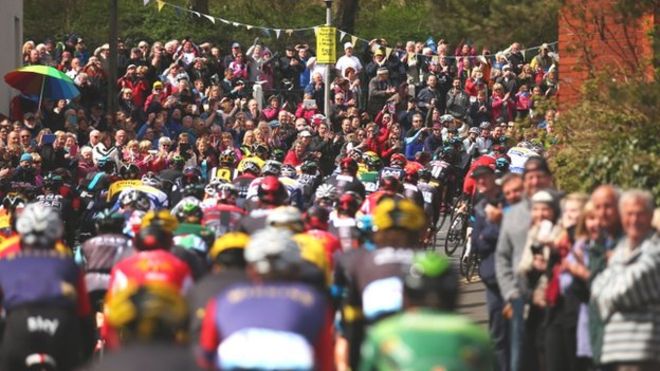
The factor of it being new and cycling being on people's minds in the UK at the time makes for a good spectacle as well. Maybe in a few years when it becomes part of the scenery people won't make such a big deal of it, or maybe if the bottom falls out of British cycling like happened with German cycling it will all go awry but now is the time to strike while the iron is hot.
I don't know about World Tour races, this and the Tour of Britain being .HC seem right to me - you've got a good mix of teams while still giving the national teams something to target thus ensuring they still get the benefit of development opportunities testing themselves against the top riders when they roll into town.
With all the posts of medium mountain possibilities around Britain, what I've said before and what I continue to believe is that the Tour of Britain should market itself as the stage race par excellence for Classics riders. There are cobbled hills in West Yorkshire that could make a monster stage (this was my attempt to prove that) as well as the short killer climb in Swansea they used in 2010. There are potential behemoth Ardennes-type stages in North Yorkshire with the climbs of the old Milk Raceas well as the Dartmoor climbs and Peak District climbs often used in the Tour of Britain; Scotland, the Lake District and Wales have some potential short-to-mid length steep climbs to bait the Lombardia types; throw in a nice stage baiting the wind and a TT of 15-20km and you could have one of the toughest stage races around. You could almost have a stage to mimic the style of each monument (Roubaix would obviously be the hardest to mimic, but a long flat stage with a couple of climbs near the end, a stage with a number of cobbled hills, an up-and-down all day stage and a tough climbing day with some medium mountains and shorter ones close to the end), a sprint, an ITT and an echelon-bait stage, and there's a week's pain right there.
The problem is that road cycling has been sold in Britain on the success in the Tour. Like the German boom in cycling before it, in fact. The Deutschlandtour's biggest flaw was that as a result of that it aimed to ape the style of the Tour, meaning Austrian MTFs and not making enough use of the excellent mid-mountain terrain or the massive amounts of cobbled roads left in the former DDR to make a race that truly made use of the characteristics of bike racing in Germany. The Brits are getting by fine for the moment, especially with the patronage of Wiggins, whose decision to target Roubaix the last couple of years is beneficial as he can show up for more or less any parcours and have an interest; I can't really see any present British races holding any interest for Froome, for example. Hopefully British cycling is able to successfully avoid these traps (the lack of proper Alpine-sized climbs will help in this respect) and make their races something that is truly representative of what racing in Britain can be about.
The factor of it being new and cycling being on people's minds in the UK at the time makes for a good spectacle as well. Maybe in a few years when it becomes part of the scenery people won't make such a big deal of it, or maybe if the bottom falls out of British cycling like happened with German cycling it will all go awry but now is the time to strike while the iron is hot.
I don't know about World Tour races, this and the Tour of Britain being .HC seem right to me - you've got a good mix of teams while still giving the national teams something to target thus ensuring they still get the benefit of development opportunities testing themselves against the top riders when they roll into town.
With all the posts of medium mountain possibilities around Britain, what I've said before and what I continue to believe is that the Tour of Britain should market itself as the stage race par excellence for Classics riders. There are cobbled hills in West Yorkshire that could make a monster stage (this was my attempt to prove that) as well as the short killer climb in Swansea they used in 2010. There are potential behemoth Ardennes-type stages in North Yorkshire with the climbs of the old Milk Raceas well as the Dartmoor climbs and Peak District climbs often used in the Tour of Britain; Scotland, the Lake District and Wales have some potential short-to-mid length steep climbs to bait the Lombardia types; throw in a nice stage baiting the wind and a TT of 15-20km and you could have one of the toughest stage races around. You could almost have a stage to mimic the style of each monument (Roubaix would obviously be the hardest to mimic, but a long flat stage with a couple of climbs near the end, a stage with a number of cobbled hills, an up-and-down all day stage and a tough climbing day with some medium mountains and shorter ones close to the end), a sprint, an ITT and an echelon-bait stage, and there's a week's pain right there.
The problem is that road cycling has been sold in Britain on the success in the Tour. Like the German boom in cycling before it, in fact. The Deutschlandtour's biggest flaw was that as a result of that it aimed to ape the style of the Tour, meaning Austrian MTFs and not making enough use of the excellent mid-mountain terrain or the massive amounts of cobbled roads left in the former DDR to make a race that truly made use of the characteristics of bike racing in Germany. The Brits are getting by fine for the moment, especially with the patronage of Wiggins, whose decision to target Roubaix the last couple of years is beneficial as he can show up for more or less any parcours and have an interest; I can't really see any present British races holding any interest for Froome, for example. Hopefully British cycling is able to successfully avoid these traps (the lack of proper Alpine-sized climbs will help in this respect) and make their races something that is truly representative of what racing in Britain can be about.




 Facebook
 Twitter
 Instagram